Berita & analisis pasar
Tetap selangkah lebih maju di pasar dengan wawasan ahli, berita, dan analisis teknikal untuk memandu keputusan trading Anda.
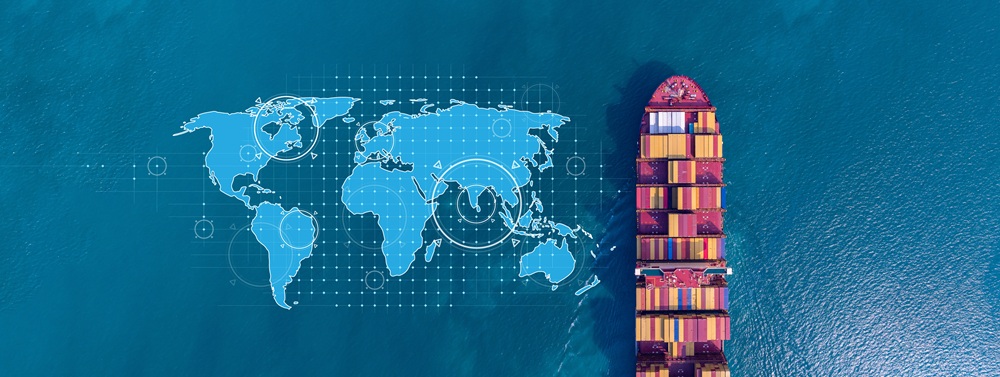
Pengumuman gencatan senjata 8 April dan diskusi paralel seputar gencatan senjata 45 hari belum menyelesaikan gangguan Selat Hormuz. Mereka, untuk saat ini, membatasi skenario terburuk, tetapi lalu lintas tanker tetap pada sebagian kecil dari tingkat normal dan permintaan Iran untuk biaya transit menandakan perubahan struktural, bukan yang sementara.
Apa yang dimulai sebagai konflik regional telah menjadi kejutan energi global, dan pertanyaan bagi pasar bukan lagi apakah Hormuz terganggu, tetapi seberapa permanen gangguan itu mengubah dasar harga untuk minyak.
Kuncinya yang menarik
- Sekitar 20 juta barel per hari (bpd) minyak dan produk minyak bumi biasanya melewati Selat Hormuz antara Iran dan Oman, setara dengan sekitar seperlima dari konsumsi minyak global dan sekitar 30% dari perdagangan minyak laut global.
- Ini adalah kejutan aliran, bukan masalah inventaris. Pasar minyak bergantung pada throughput berkelanjutan, bukan penyimpanan statis.
- Jika gangguan berlanjut lebih dari beberapa minggu, Brent dapat bergeser dari lonjakan jangka pendek ke guncangan harga yang lebih luas, dengan risiko stagflasi.
- Lalu lintas kapal tanker melalui selat turun dari sekitar 135 kapal per hari menjadi kurang dari 15 kapal pada puncak gangguan, pengurangan sekitar 85%, dengan lebih dari 150 kapal berlabuh, dialihkan, atau tertunda.
- Gencatan senjata dua minggu diumumkan pada 8 April, dengan negosiasi gencatan senjata selama 45 hari sedang berlangsung. Iran secara terpisah telah mengisyaratkan permintaan biaya transit pada kapal-kapal yang menggunakan selat, yang, jika diformalkan, akan mewakili dasar geopolitik permanen pada biaya energi.
- Pasar telah mulai berputar menjauh dari pertumbuhan dan eksposur teknologi terhadap nama energi dan pertahanan, mencerminkan pandangan bahwa kenaikan minyak menjadi biaya struktural daripada premi risiko sementara.
Titik Chokepoint Minyak Paling Kritis di Dunia
Selat Hormuz menangani sekitar 20 juta barel per hari minyak dan produk minyak bumi, setara dengan sekitar 20% dari konsumsi minyak global dan sekitar 30% dari perdagangan minyak laut global. Dengan permintaan minyak global mendekati 104 juta barel per hari dan kapasitas cadangan terbatas, pasar sudah seimbang sebelum eskalasi terbaru.
Selat ini juga merupakan koridor penting untuk gas alam cair. Sekitar 290 juta meter kubik LNG transit setiap hari rata-rata pada tahun 2024, mewakili sekitar 20% dari perdagangan LNG global, dengan pasar Asia sebagai tujuan utama.
Badan Energi Internasional (IEA) telah menggambarkan Hormuz sebagai titik henti transit minyak yang paling penting di dunia, mencatat bahwa bahkan gangguan sebagian dapat memicu pergerakan harga yang terlalu besar. Minyak mentah Brent telah bergerak di atas US $100 per barel, mencerminkan keketatan fisik dan kenaikan premi risiko geopolitik.

Kapal tanker menganggur karena aliran lambat
Data pengiriman dan asuransi sekarang menunjukkan ketegangan secara real time. Lebih dari 85 kapal induk minyak mentah besar dilaporkan terdampar di Teluk Persia, sementara lebih dari 150 kapal telah berlabuh, dialihkan atau ditunda karena operator menilai kembali keselamatan dan asuransi. Itu akan meninggalkan sekitar 120 juta hingga 150 juta barel minyak mentah menganggur di laut.
Volume tersebut hanya mewakili enam hingga tujuh hari throughput Hormuz normal, atau sedikit lebih dari satu hari konsumsi minyak global.
Data pengiriman dan asuransi yang diperbarui sekarang mengkonfirmasi lebih dari 150 kapal telah berlabuh, dialihkan, atau tertunda, naik dari 85 yang awalnya dilaporkan. Cakupan konsumsi global 1,3 hari dari minyak mentah yang tidak digunakan tetap menjadi kendala yang mengikat: ini adalah kejutan aliran, bukan masalah penyimpanan, dan gencatan senjata belum diterjemahkan ke dalam throughput yang dipulihkan secara bermakna.
Pasar yang dibangun di atas aliran, bukan penyimpanan
Pasar minyak berfungsi pada pergerakan terus menerus. Kilang, pabrik petrokimia, dan rantai pasokan global dikalibrasi untuk pengiriman yang stabil di sepanjang jalur laut yang dapat diprediksi. Ketika aliran melalui titik henti yang membawa sekitar seperlima dari konsumsi minyak global dan sekitar 30% dari perdagangan minyak laut global terganggu, sistem dapat bergerak dari keseimbangan ke defisit dalam beberapa hari.
Kapasitas produksi cadangan, sebagian besar terkonsentrasi di OPEC, diperkirakan hanya 3 juta hingga 5 juta barel per hari. Itu jauh di bawah volume yang berisiko jika aliran Hormuz sangat terganggu.
Risiko inflasi dan limpahan makro
Dampak inflasi dari kejutan minyak biasanya datang dalam gelombang. Harga bahan bakar dan energi yang lebih tinggi dapat mengangkat inflasi utama dengan cepat karena biaya bensin, solar, dan listrik bergerak lebih tinggi.
Seiring waktu, biaya energi yang lebih tinggi dapat melewati pengiriman, makanan, manufaktur, dan layanan. Jika gangguan berlanjut, kombinasi peningkatan inflasi dan pertumbuhan yang lebih lambat dapat meningkatkan risiko lingkungan stagflasi dan membuat bank sentral menghadapi pertukaran yang sulit.
Tidak ada offset yang mudah, sistem dengan sedikit kelonggaran
Apa yang membuat episode saat ini sangat akut adalah kurangnya kelonggaran dalam sistem global.
Pasokan dan permintaan global mendekati 103 juta hingga 104 juta barel per hari meninggalkan sedikit bantalan cadangan ketika chokepoint penanganan hampir 20 juta barel per hari, atau sekitar seperlima dari konsumsi minyak global, terganggu. Diperkirakan kapasitas cadangan 3 juta hingga 5 juta barel per hari, sebagian besar di dalam OPEC, hanya akan mencakup sebagian kecil dari volume yang berisiko.
Rute alternatif, termasuk jaringan pipa yang melewati Hormuz dan mengalihkan rute pengiriman, hanya dapat mengimbangi sebagian arus yang hilang, dan biasanya dengan biaya yang lebih tinggi dan dengan waktu tunggu yang lebih lama.
Intinya
Sampai transit melalui Selat Hormuz dipulihkan dan dipandang aman secara kredibel, aliran minyak global kemungkinan akan tetap terganggu dan premi risiko meningkat. Bagi investor, pembuat kebijakan dan pembuat keputusan perusahaan, pertanyaan intinya adalah apakah minyak dapat bergerak ke tempat yang seharusnya, setiap hari, tanpa gangguan.

It was a monumental year for two of the biggest electric car makers – Tesla and NIO in 2020. The stocks of both companies rose significantly over the last 12 months with NIO gaining over 1000% and Tesla by over 350% - reaching new record highs. With such gains, both companies have attracted significant public interest and a lot of investors have been keeping a close eye on both of the company’s progress.
But recently, we have seen a bump in the road for both companies with the share price of NIO, Tesla, and other electric car makers dropping, causing concern for the investors. But should this be a concern or an opportunity for investors? I think there would be two sides, but I guess most investors would look at it as an opportunity, seeing that the share price has dropped despite the future prospects for both companies.
There were a lot of doubters for Tesla in its early days when Elon Musk’s company was burning through cash each day, but that hasn’t stopped the company evolve into what it is today and at one point making Musk the richest person in the world. Also – the future of the world is green. A lot of countries around the world have already banned the sale of new diesel and petrol cars from 2030 onwards.
However, I think the world is still some way away from being ready for most people to own an electric car, especially from the infrastructure perspective. Most people would probably think that you will need to charge your electric car at a charging station (or at home) and wait hours for it to be done - which in some cases will probably be true. However, the infrastructure for electric cars must be more advanced than that.
We live in a world where we expect everything straight away and the same will happen with charging electric cars - that is why we are seeing companies working on battery swap stations which will make the process quick and easy. The battery in electric cars has long-range and will probably increase over time. For example, NIO’s model ET7 has a battery range of around 621 miles (around 1,000 km).
This means you could drive from London to Paris and back with the same battery charge (the quickest route from London to Paris is 292.3 miles according to Google Maps). But with all the positives, there are and will be challenges for the electric car manufacturers. This week NIO announced that the global chip shortage will have an impact on their car production in the second quarter of the year.
They highlighted that the shortage of semiconductors and batteries will mean that the company will have to cut its production capacity from 10,000 to 7,500 vehicles. The share price of NIO have fallen by over 25% in the last month, trading at around $42 per share. Tesla shares have also seen a drop in the last month, down by 20% - trading at $677 per share.
You can trade Tesla (TSLA) and NIO (NIO) and many other stocks from the ASX, NYSE, and the NASDAQ with GO Markets as a Share CFD. Click here for more information. Capital at risk.

Bitcoin has seen a resurgence in recent days on the back of the Ukraine/Russian conflict. The price has risen 15% as money has poured into the cryptocurrency. Western countries have placed economic sanctions as an attempt to reduce military conduct from Russia.
This includes excluding several Russian banks from the SWIFT network. Consequently, the Rouble collapsed and in order to protect the Russian economy the Central Bank raised interest rates to 20%. The central banks also restricted foreigners from selling securities.
In response, many Russian citizens have turned to crypto currency as an alternative Rouble. Russian denominated Bitcoin volumes touched 9-month highs in the past week to signify this shift. Technical Analysis The long-term trend of BTC/USD is showing an exhausted double top.
For this to be confirmed the price needs to continue to move down and break through the support level at $28,892. If the price can break through the neckline, then the next price target should be at around $50,000.

This is only Part 2 of a 3-part series containing a full 21 page analysis, highlighting the global opportunities as a result of the introduction of negative interest rates in Japan. Click here to access the full analysis. After looking at the reasons why the Bank of Japan decided to opt for negative interest rates in the first part of this series, we will now see the factors that can help explain why the yen is not going south.
When there is nothing out there: As discussed earlier, part of BOJ’s decision to go into negative rates was to push financial institutions, companies and investors to move their money out of the banks and put those funds to work. However, this is easier said than done. Equity markets across the world are almost in a bear market.
Emerging economies (i.e. China, Brazil) are all weak or at least not inviting. The economic outlook for the developed countries (including U.S) has sharply declined in recent weeks.
The outlook for the commodities is still not clear (to say the least). World indices and commodities performance from 21/5/2015 to 17 Feb 2016 Measured from close to close Germany Shanghai US Australia Japan Commodities Return -21.0% -36.7% -9.6% -12.8% -21.6% -26.7% Max. Draw Down -25.2% -41.4% -14.2% -15.0% -26.0% -29.8% Therefore, not only do the cash rich Japanese companies have nowhere to go, but in the face of current global uncertainty, they became more conservative and started to roll back their foreign investments and wound up their carry trades.
What is a carry trade? A carry trade uses currencies with lower rates to buy those currencies with higher interest rates. For example, a hypothetical carry trader in Japan could borrow from a local bank, convert the proceeds to a foreign currency (shorting the yen) and invest the money in a foreign country (long the foreign currency) to collect a higher interest (in practice, it gets a little more complicated than this, but the idea is the same).
Since the interest that the carry trader receives from the foreign bank is more than the interest he/she has to pay to the Japanese banks, the carry trade makes money. The Risk off Scenario The biggest risk to the carry trades is the currency fluctuations. When risk-off events (such as the existing market turmoil or the commodity rout) forces the currency of the higher interest rate to rapidly depreciate, the Japanese investors would rush back to close those carry trades by selling the foreign currency and buying back the yen.
The unwinding of the carry trades will naturally bid the yen up. To us, this seems to be the biggest driver of JPY’s strength these days. Yen has had a prolonged history of low interest rates.
Therefore, it has been the world’s funding currency for various carry trades for many years. Given this, it is not surprising to see yen strengthening each time there is some sort of a crisis. The red line in the chart below is the S&P 500 index and the black line is the Japanese yen versus US dollar.
The squares on the chart highlight the four most recent market corrections. As you can see, each time that market posted a significant decline in the past 10 years, yen responded by a notable appreciation against the US dollar. To put this relationship into context, the chart below shows yen (the black line) vs the VIX index (the red line).
VIX or the Volatility index is a measure of market nervousness. It has an inverse relationship with the equity markets. Each time traders get worried about stocks, the VIX index increases in value.
The blue line on the lower section of this chart is the 50 day moving average of a 20-day correlation between net changes in yen and VIX. As you can see, there is a generally high correlation between yen and VIX. So whenever VIX rises (as a result of chaos in the stock market) yen rises too.
Impact on Japan Equities: Currency market is not the only market which has disappointed Kuroda. Japanese equities did not behave well either by showcasing higher volatility than the rest of major indices. The table below compares Japan’s stocks return and maximum drawdown from 29 of Jan (when the negative interest rates were announced) through to 17 of Feb 2016.
As you can see Nikkei has depreciated more than any other major indices. Major indices performance since 29 of Jan Japan US Australia Germany Return -9.60% -0.69% -1.33% -4.30% Max. Drawdown -14.65% -5.73% -5.45% -10.67% Additionally, since the beginning of February there has been three cases that Nikkei 225‘s daily returns stretched beyond their three or five times standard deviation band.
On Monday the 15 th of February, Japan’s equities rallied by almost 7.15% (measured from close to close on the cash index) after dropping by more than 5% just in the preceding trading day. A move like this represents five times the standard deviation of the average daily ranges. History has only seen 12 of these moves since 1965.
The number of times Nikkei 225 daily range has gone Beyond 3 and 5 standard deviation since 1965 Index Above 5 Sigma Below 5 Sigma Above 3 Sigma Below 3 Sigma $N225 12 19 107 81 To make the situation worse, we only need to remind ourselves that Japan’s stock market has an inverse relationship to its currency. This is because most of these companies are export driven and cannot naturally perform when yen is too expensive. The chart below clearly shows this relationship.
The black line is JPY against US dollar and the red line is the Nikkei 225 index. Notice how the pair has gone almost perfectly in the opposite direction since 2005. So based on the above, as long as Mr.
Kuroda is not capable of controlling its own currency and as long as the global market turmoil remains intact, the negative interest rates do not seem to be able to help him. But if for some reason, yen starts to depreciate again, except for the banking sector, other sectors may get back on their feet. The reason we are pessimistic on banks is that, as it turns out, Japanese banks (like other European banks) are not intending to pass the negative interest rates on to their customers.
Therefore, further advancement into negative rate territory will eat into banks’ profit margin. The table shows the performance and maximum draw down of Japan’s banking sector (Measured by TOPIX 1615 banks ETF) between 29 of January to 17 of February period. As you can see, banks have massively underperformed the Nikkei 225.
Banks vs the rest of the market in Japan Nikkei 225 Japanese Banks Return -9.6% -20.3% Max Drawdown -14.65% -26.3% Want Access to the Full 21 Page Report? If you want to take advantage of the trading opportunities around the introduction of negative interest rates in Japan, then click here to download the full 21-page analysis. Ramin Rouzabadi (CFA, CMT) | Trading Analyst Ramin is a broadly skilled investment analyst with over 13 years of domestic and international market experience in equities and derivatives.
With his financial analysis (CFA) and market technician (CMT) background, Ramin is adept at identifying market opportunities and is experienced in developing statistically sound investment strategies. Ramin is a co-founder of exantera.com which is a financial website dedicated to risk analysis and quantitative market updates. Connect with Ramin: Twitter | LinkedIn | Ramin's posts


Procter & Gamble Co. reported its second quarter fiscal year 2022 earnings before the opening bell on Wednesday. The US consumer goods company reported total revenue of $20.953 billion, above analyst forecast of $20.335 billion. Earnings per share at $1.66 per share vs. $1.65 a share expected by the analysts on Wall Street.
Jon Moeller, President and Chief Executive Officer commented on the latest results: ''We delivered very strong top-line growth and made sequential progress on earnings in the face of significant cost headwinds.'' ''These results keep us on track to deliver our earnings outlook and to raise estimates for sales growth, cash productivity and cash return to shareowners. Our focus remains on the strategies of superiority, productivity, constructive disruption and continually improving P&G’s organization structure and culture. These strategies have enabled us to build and sustain strong momentum.
They remain the right strategies to deliver balanced growth and value creation,'' Moeller added. Procter & Gamble Co. chart (1Y) Shares of Procter & Gamble trading higher after the latest results – up by around 4% during the trading day on Wednesday. The stock is up by 23% in the past year at $163.27 per share.
Procter & Gamble Co. is the 19 th largest company in the world and with a total market cap of $395.64 billion. You can trade Procter & Gamble Co. (PG) and many other stocks from the NYSE, NASDAQ and the ASX with GO Markets as a Share CFD. Sources: Procter & Gamble Co., TradingView, CompaniesMarketCap


Netflix released its Q4 2021 financial results after the US market close on Thursday. The online streaming service company reported total revenue of $7.709 billion in the quarter, slightly falling short of analyst forecast of $7.71 billion. Earnings per share at $1.33 a share, above analyst estimate of $0.88 a share. ''We achieved several milestones in 2021: we had the biggest TV show of the year (Squid Game), our two biggest film releases of all time (Red Notice and Don’t Look Up) and Netflix was the most Emmy-winning and most nominated TV network and the most Oscar-winning and nominated movie studio of 2021.
Full year revenue of $30 billion grew 19% year over year while operating income of $6.2 billion rose 35% year over year. We finished Q4 with 222m paid memberships (with 8.3m paid net adds in Q4). Even in a world of uncertainty and increasing competition, we’re optimistic about our long-term growth prospects as streaming supplants linear entertainment around the world.
We're continually improving Netflix so that we can please our members, grow our share of leisure time and lead in this transition,'' the company wrote in a letter to shareholders following the latest results. Netflix chart (1Y) Share price of Netlfix traded lower on Thursday, down by 1.48% at $508.25 per share. The stock is down by 12% in the past year.
Netlfix is the 46 th largest company in the world, with a total market cap of $225.13 billion. You can trade Netflix (NFLX) and many other stocks from the NYSE, NASDAQ, HKEX and the ASX with GO Markets as a Share CFD. Sources: Netlfix, TradingView, CompaniesMarketCap


It is set to be a busy week over in the US with major companies, including General Electric, Johnson & Johnson, Microsoft, Tesla, Apple and McDonald's set to release their earnings figures for the previous quarter. International Business Machines Co. (IBM) released their latest figures after the closing bell on Monday. The US technology giant reported total revenue of $16.695 billion in Q4, beating analyst forecast of $15.96 billion.
Earnings per share reported at $3.35 per share, also beating Wall Street analyst estimates of $3.39 per share. Arvind Krishna, IBM chairman and CEO commented on the latest results following the announcement: "We increased revenue in the fourth quarter with hybrid cloud adoption driving growth in software and consulting." "Our fourth-quarter results give us confidence in our ability to deliver our objectives of sustained mid-single digit revenue growth and strong free cash flow in 2022," Krishna added. International Business Machines Co. chart (1Y) Shares of IBM little changed on Monday, ending the day down by 0.41%.
The stock is up by 8.64% in the past year at $128.82 per share. IBM is the 123 rd largest company in the world and with a total market cap of $115.46 billion. You can trade International Business Machines Co. (IBM) and many other stocks from the NYSE, NASDAQ, HKEX and the ASX with GO Markets as a Share CFD.
Sources: International Business Machines Co., TradingView, CompaniesMarketCap