

市场资讯及洞察
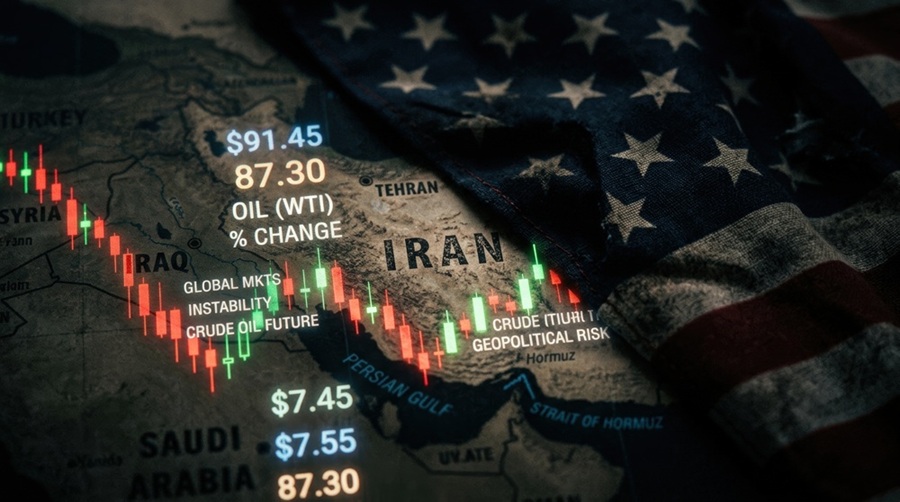
石油市场习惯于在停止结算之前就看上去已经定下来了。这就是现在的设置。
随着伊朗周边冲突的加剧,霍尔木兹海峡的交通量急剧下降,越来越多的船只因关闭AIS或自动识别系统而陷入黑暗,这些信号通常显示船只在哪里移动。霍尔木兹不只是另一条航道。它是世界上最重要的能源阻塞点之一,因此,当能见度开始消失时,供应风险就会回到对话的中心。
为什么现在这很重要
这很重要,有两个原因。
头条新闻是一回事。市场影响是另一回事。石油不仅关乎有多少桶,还关系到这些桶能否流动,谁愿意为它们投保,买家准备等待多长时间,以及交易者认为他们需要在多大风险的基础上定价。
目前,有三件事同时发生冲突:航运中断、外交脆弱以及市场已经严重倾向于一个方向。这种组合可以使布伦特原油的走势比基本面本身通常所暗示的要快。
是什么推动了这一举动
1 供应能见度恶化
第一个驱动程序很简单。市场看得更少,这往往会让市场更加紧张。
通过霍尔木兹的过境量急剧下降,而越来越多的交通量涉及不再广播标准跟踪信号的船只。简而言之,正常通过重要走廊的船只越来越少,越来越多的活动也变得越来越难以追踪。这并不自动意味着供应即将崩溃。但这确实意味着不确定性正在上升。
2 伊朗的储存缓冲区可能有限
第二个驱动因素是伊朗的出口和储存限制。
陆上储存容量估计约为4000万桶,市场正在关注有人所说的16天红线。到那时,长期的出口中断可能会开始迫使减产,以避免对储油库造成损害。对于新读者来说,要点很简单。如果石油不能储存足够长的时间,问题可能不再是出口延迟,而是开始成为真正的供应问题。
3 定位可以放大移动
第三个驱动因素是定位,这只是市场简写,说明在下一步行动发生之前交易者已经如何进行设置。
在这种情况下,投机性原油头寸显得严重片面。这很重要,因为当市场向一个方向倾斜得太远时,触发急剧调整并不需要太多时间。新的地缘政治冲击可能迫使交易者迅速采取行动,而一旦开始,价格的上涨幅度可能会超过单纯基础新闻所能证明的合理性。
为什么市场在乎
石油冲击很少能在能源市场内得到控制。
较高的原油价格可能会开始出现在运费、制造业和家庭能源账单中。这意味着通货膨胀预期可能会再次开始攀升。各国央行已经在努力管理粘性通货膨胀和疲软增长之间的艰难平衡,因此石油价格上涨会使这项工作变得更加艰难。
这不仅仅是一个关于石油生产商获得提振的故事。当能源成本上升时,航空公司、运输公司和其他对燃料敏感的企业可能会迅速承受压力。如果石油价格上涨使通货膨胀保持强于预期,则更广泛的股市可能还必须重新考虑政策前景。
连锁反应远不止石油
还有一个货币角度,它不如最初出现的那么简单。
当原材料价格上涨时,与大宗商品挂钩的货币,例如澳元,通常会获得支撑。但是这种关系不是自动的。如果石油价格因为全球需求改善而攀升,那可能会有所帮助。如果由于地缘政治风险激增而攀升,则市场可能会转向避险模式,即使大宗商品价格上涨,这也可能打压澳元。
这就是让这种举动比乍一看更有趣的原因。同样的石油涨势可以支撑市场的一个部分,同时给另一部分带来压力。
框架中的资产和名称
布伦特原油仍然是广泛供应风险中最明显的解读。如果交易者想要最简洁的头条新闻表达,通常是他们首先看的地方。
- 埃克森美孚是画面中最明显的名字之一。油价上涨可以支撑已实现的销售价格和短期的盈利势头,尽管这从来都不像石油上涨、囤积那么简单。成本、生产结构和更广泛的情绪仍然很重要。
- NexTera Energy 又增加了一层。这个故事不仅仅是关于化石燃料的。当能源安全成为一个更大的问题时,国内电力弹性、电网投资和替代发电的理由也将得到加强。
- 澳元/美元是另一个值得关注的市场。澳大利亚与大宗商品周期密切相关,因此原材料价格走强有时可以支撑该货币。但是,如果市场对恐惧的反应大于对增长的反应,那么通常的顺风可能不会成立。
对于新读者来说,关键是石油走势不会以整齐的、可预测的线条在市场中传播。它们不均匀地向外波动,帮助某些资产,给其他资产施加压力,有时两者兼而有之。
可能会出什么问题
强烈的叙述与单向交易不同。
停火可以比预期更快地稳定航运。欧佩克+可以通过提高产量来抵消部分紧张局势。来自中国的需求数据可能会令人失望,将焦点转移到消费疲软而不是供应受限上。而且,如果地缘政治溢价消退,石油回落的速度可能比当前情绪所暗示的要快。
对于新读者来说,要点很简单。石油涨势可以是真实的,但不是永久性的。短期内,中断风险可能证明此举是合理的,然后如果这些风险缓解或需求疲软,则迅速逆转。
市场不再孤立地对石油进行定价。这是定价可见性、运输安全性以及供应中断蔓延到通货膨胀、货币和更广泛的风险情绪中的风险。
这就是为什么Hormuz很重要,即使对于从未自己交易过一桶原油的读者来说也是如此。


The Main Headlines of the RBA August Statement By Philip Lowe, Governor: Monetary Policy Decision The Board decided to leave the cash rate unchanged at 1.00 per cent. The outlook for the global economy remains reasonable. The persistent downside risks to the global economy combined with subdued inflation have led a number of central banks to reduce interest rates this year and further monetary easing is widely expected.
The Australian dollar is at its lowest level of recent times. Inflation to increase gradually, but it is likely to take longer than earlier expected for inflation to return to 2 per cent. Wages growth remains subdued and there is little upward pressure at present, with strong labour demand being met by more supply.
Conditions in most housing markets remain soft, although there are some signs of a turnaround, especially in Sydney and Melbourne. It is reasonable to expect that an extended period of low-interest rates will be required in Australia to make progress. The Board will continue to monitor developments in the labour market closely and ease monetary policy further if needed to support sustainable growth in the economy and the achievement of the inflation target over time
One Country, Two Systems The Hong Kong protests have reached a point where it is threatening the “one country, two systems” that exists between the special international financial hub and the mainland. It started with demonstrations against the extradition bill which later turned into a movement against the Hong Kong’s government. Millions marched through the streets, groups stormed through government buildings and protesters also brought the city’s international airport to a standstill for two days.
Months of unrest is now taking a toll on the city’s economy. Hong Kong is one of the world’s busiest business locations, and by crippling the airport and the city, companies operating in the financial hub are experiencing some serious disruptions. Does China need Hong Kong to stay as it is?
The autonomy given to Hong Kong back in 1997 when China regained control of the city was mostly respected because China needed the city to remain as it is: “The financial centre of China” The three months of protests forced traders to reassess China’s stance and dependency of Hong-Kong. Back in 1997, China was not part of the World Trade Organisation (WTO). After a lengthy process of negotiations and significant changes to the Chinese economy, China became a member of the WTO.
It means that China no longer has to rely on Hong Kong to get access to the global trade market. In 1997, the special status given to Hong Kong benefitted the mainland economy. However, when we look at the GDP figures over the years, we can see that Hong Kong’s economy relative to China has fallen from 18% to less than 3%.
Hong Kong GDP (US$) China GDP (US$) In 1997 177 Billion 962 Billion In 2018 362 Billion 13 Trillion Source: World Bank China has undergone enormous economic growth over the years and also launched a series of policies to expand its expansion. In terms of growth engines, Hong Kong has been lagging. However, GDP figures alone may not be a good indicator to assess the appeal of Hong Kong relative to China.
Hong Kong has retained the Number 1 title as the world’s freest economy for years and has an economic freedom score of 90.2. When you look at the GDP per capita, Hong Kong outshined China. There is a positive correlation with economic freedom and average GDP per capita.
Countries with more economic freedom tend to have higher GDP per capita income. Source: World Bank Rather than monitoring the economic size, it is more meaningful to use the GDP per capita as an indicator of economic performance to make cross-country comparisons of average living standards and economic wellbeing. GDP per capita is a straightforward division of the total GDP by the population.
The gap in the social, political, cultural and educational development between the city and the mainland is also probably what makes Hong Kong stands out in Asia. Impact of the Protests As Hong Kong battled one of its worst political crises in decades coupled with an escalation of a trade war between the US and China, fears of an immediate recession in Hong Kong are crippling the markets. On Wednesday, it was reported that the private sector activity plunged to a decade-low in August.
The Manufacturing PMI has recorded a decline in the last 17 months. Stocks Hong Kong stocks experienced a sharp pullback over the months. The sell-off sparked by trade tensions were exuberated in Hong Kong due to the protests.
Retail, Property and Casino stocks were among the worst performers after the rallies caused major disruptions to the international airport and transport networks. After weeks of unrest, Carrie Lam offers to withdraw the controversial extradition bill in an attempt to bring some calm. Hong Kong stocks bolstered higher and the MSCI gained by over three standard deviations on Wednesday.
Source: Bloomberg Terminal The Property Index led the gains with nearly 7.5% rise following the announcement on the offer to withdraw of the extradition bill. Source: Bloomberg Terminal Hong Kong Dollar The Hong Kong Dollar has been pegged against the US dollar for decades. The peg has been pretty resilient over the years and has survived a few financial crises.
However, the currency is now faced with: A slowing global economy; A trade war between the US and China; and A domestic social unrest. The Hong Kong Dollar is pegged in a tight range of around HK$7.75 – 7.85. The HKD peg helps in preserving confidence and reducing foreign exchange risk.
Investors are comfortable with the peg as it is much more robust in withstanding currency attacks. Source: Bloomberg Terminal However, amid the global headwinds, the HKD appear to be weakening this year but it is unlikely that the currency will trade significantly outside the currency’s range. The central bank will buy local dollars if it gets too weak and sells to curb excessive strength.
Source: Bloomberg Terminal Overall, it is a solid currency peg which is shielded from the current turmoil. China has refrained from intervening despite threatening to do so as the city remains an important gateway and stable financial centre for China. Beijing considered Shenzhen as the “next” Hong Kong given its strategic location and proximity to Hong Kong.
However, in the near future, no other Chinese city appear to be able to immediately step in the role of Hong Kong’s city.
The oil industry has remained pressurized by a supply glut and the ongoing uncertainty on the demand outlook with respect to the structural changes in the energy market and the pandemic. The recent vaccine updates and hopes that the pandemic may soon be under control, is providing support to a fundamentally battered energy market. As the year comes to an end, oil traders were eyeing OPEC and its allies’ commitments to production cuts for direction.
The 12 th OPEC and non-OPEC Ministerial Meeting was initially delayed as OPEC+ needed more time to reach a deal which kept the oil traders on edge. After tough negotiations, the meeting concluded on a positive note on Thursday: The Meeting reaffirmed the continued commitment of the participating countries to a stable market. The Meeting emphasized that it was vital that participants, and all major producers, remain fully committed to efforts aimed at balancing and stabilizing the market.
It noted that renewed lockdowns, due to more stringent COVID-19 containment measures, continue to impact the global economy and oil demand recovery, with prevailing uncertainties over the winter months. In light of the current oil market fundamentals and the outlook for 2021, the Meeting agreed to reconfirm the existing commitment from 12 April 2020, then amended in June and September 2020, to gradually return 2 mb/d, given consideration to market conditions. Beginning in January 2021, participating countries decided to voluntary adjust production by 0.5 mb/d from 7.7 mb/d to 7.2 mb/d.
OPEC and its allies expect stockpiles to fall in the first quarter by delaying the return on supply compared to the original plan. Crude oil prices firmed higher buoyed by the compromise deal despite this week’s bearish oil reports: The United States EIA Crude Oil Stocks Change registered at -0.679M above expectations (-2.358M) on November 27. API reported a much larger-than-expected inventory level of 4.146M.
As of writing, WTI Crude oil (Nymex) and Brent Crude (ICE) were trading at around $46.40 and $49.67 respectively and the US oil is poised to post its fifth weekly gain. The vaccine updates and OPEC deal have helped the crude oil prices to pare majority of the losses seen during COVID March lows. Source: GO MT4
On 8 March 2020, Saudi Arabia initiated an oil price war with Russia, triggering a rout in the oil market at a time where the world is facing a pandemic and many countries forced to shut down their activities and borders. Crude oil prices have lost nearly half of their prices, battled by a simultaneous demand and supply shock. Last Thursday, President Trump tweeted about expectations of substantial production cuts, which has lifted hopes that OPEC and its allies will intervene to bring some stability in the oil and gas industry.
The Blame Game Delayed the OPEC meeting President Trump’s actions resulted in an emergency OPEC meeting which was initially scheduled to take place on Monday. Over the weekend, the rift seemed to have widened as Russia dragged Saudi Arabia into the hostilities against the US Shale oil industry. The blame game has caused the meeting to be postponed which is “likely” going to take place on Thursday.
Multilateral Support Needed Unprecedented measures are needed to tackle an unprecedented crisis. Are we going to see an alliance of oil producers other than OPEC+? A supply glut and weak demand have sent prices into a freefall, which is prompting growing calls of a multilateral commitment of oil producers to regularise the oil market.
Among all the noises currently in the oil industry, traders need to pay particular attention to key factors: Russia and Saudi Arabia Market participants will need to monitor whether Russia and Saudi Arabia are willing to look passed the blame game and go back to the negotiable table. The first calming factor will be that both oil producers are able to resolve their differences and start a dialogue to cut oil production. The US to Join Efforts It is clear that for the interest of all producers, the efforts should not only come from OPEC+ members.
Ever since the US President tweeted about the hopes of a truce between Saudi Arabia and Russia, the US has been under increased pressure to join global forces in cutting production amid crashing oil prices. EIA Reports The US Energy Information Administration slashed its expectations for US crude oil production by more than 1 million barrels - a day ahead of the much-awaited meeting. Despite the projected cuts by the EIA, the US is still expected to formally commit to production cuts.
It appears to be the decisive factor that will restore peace in the industry. G20 Meeting It is reported that the G20 group of leading world economies will meet on Friday to host an emergency meeting with energy ministers. The aim of the meeting will focus on bringing nations together in an effort to stablilise the world energy markets.
Dual Meeting The OPEC meeting followed by the G20 meeting could be a turning point for the oil and gas industry. Global efforts by OPEC+ members along with other key members, including the US, Canada and Brazil, among others, are key in bringing back confidence at a time where the oil market is facing the brunt of a pandemic. Saudi Arabia has delayed setting May delivery prices of oil in anticipation that the meeting will end in a net positive.
As of writing, we note that President Trump stated that he was not asked to participate in cutting production but “may” consider such a scenario if it would help to resolve the international disputes. As the week comes to an end, attention will remain fixated on the upcoming meetings and any developments that will help investors to gauge the thinking of oil producers.
An election-driven month With just a few days to month's end, the dynamics driving markets have changed compared to a few weeks ago. Risk sentiment was sliding under the influence of politics, mostly by the uncertainty around the US Presidential Election. More recently investors have breathed a sigh of relief on a series of positive vaccine updates, despite continued uncertainties.
Global equities The election mayhem and a probable contested election, the gridlock in Congress, another wave of lockdowns, Brexit and vaccines updates were the same predominant themes driving the stock market this month. Pfizer and BioNTech, Moderna and AstraZeneca issued statements of the progress of the vaccines trials boosting global equities: Pfizer and BioNTech They provided two main updates across the month. After announcing a 90% efficacy rate, they conduct the final efficacy analysis in their ongoing Phase 3 study, and their mRNA-based COVID-19 vaccine candidate met all the study’s primary efficacy endpoints.
The analysis of the data indicates a vaccine efficacy rate of 95%. Moderna The Phase 3 study met the statistical criteria with a vaccine efficacy of 94.5%. AstraZeneca The positive high-level results from an interim analysis of clinical trials of AZD1222 in the UK and Brazil showed the vaccine was highly effective in preventing COVID-19, the primary endpoint, and no hospitalisations or severe cases of the disease were reported in participants receiving the vaccine.
There was a total of 131 COVID-19 cases in the interim analysis. After the recent promising vaccine updates, investors shifted from high-flying tech stocks into cyclical stocks on the hopes of a quicker economic reopening than initially expected. Source: Bloomberg Terminal A contested election, stimulus gridlock and more lockdowns The US sharemarket is faced with a Joe Biden Presidency and a Republican Senate and the reassurance that there might not be a major shift in policies given the gridlocked Congress.
However, investors remained cautious and wary given the uncertainties on the stimulus relief package and the ramping efforts of President Trump claiming fraud at the 2020 election. In a pandemic-induced environment where the lack of timely fiscal support from the government is heavily impacting the economy and the level of confidence in the markets, the refusal of President Trump to coordinate transition efforts with President-elect Joe Biden adds another layer of uncertainty for markets. On the virus front, the US states have resumed lockdowns in an attempt to curb the spread of the outbreak following daily records of coronavirus cases and deaths.
Towards the end of the month, positive vaccine and political news have steered the US markets: Vaccinations Pfizer and BioNTech SE submitted a request to the U.S. Food and Drug Administration (FDA) for Emergency Use Authorization (EUA) of their mRNA vaccine candidate, which will potentially enable the use of the vaccine in high-risk populations in the U.S. by the middle to end of December 2020. They also announced their intention to roll submissions across the globe including in Australia, Canada, Europe, Japan and the U.K, and plan to submit applications immediately to other regulatory agencies around the world.
As per the announcement and Dr Moncef Slaoui, Americans could receive a COVID-19 vaccine as soon as the 11th of December. Politics The General Services Administration (GSA) which can ascertain the winner of a Presidential election based on certain criteria and govern under the law for presidential transitions, has recognised Joe Biden as the “apparent winner” and extended around $8 million in transition funding and making other resources available to the Biden transition team. In addition to the transition funding, the state of Michigan officially certifies the election results for Joe Biden, fuelling hopes that there is a less chance of a contested election.
The Dow Jones Industrial Average, the blue-chip index topped 30,000 for the first time. It was another milestone for the US stock market amid the pandemic. Another notable event was the announcements coming from Tesla and Amazon: Tesla: The electric car maker announced it is set to join the S&P500 on December 21.
The Company also received a trading upgrade to a buy-equivalent citing “ the company on the verge of a profound shift ” from Morgan Stanley after its debut declaration. The Company’s share price rallied following the announcement, highlighting the dominance of mega-cap growth stocks on the S&P500 benchmark. Amazon: Amazon launches its online pharmacy - the Amazon Pharmacy earlier this month capturing the pharmacy business.
It is a game-changer for the online retailer giant as it will allow customers to order medication or prescription refills to be delivered to their front door within days. Its emergence in the prescription drug space will definitely have some impact on drugstores. The share price of its rival companies CVS Health Corp, Wallgreens Boots Alliance Inc, Rite Aid and GoodRx took a blow on the launch.
Europe & UK – Lockdowns & Brexit The European markets were also underpinned by more national or localised lockdowns and Brexit negotiations. Even though the European Union appeared more optimistic around the negotiations with the UK, there is still much uncertainty around Brexit. The countries like France and Belgium are urging the EU to also step up preparations of a no-deal Brexit.
While investors welcomed the vaccine updates, the eurozone economy seems to be lagging compared to its peers. The latest PMI figures in the UK, US and Australia also indicated a strong recovery in the manufacturing and services sector while the Eurozone and Germany failed to recover as expected. Like the other markets, encouraging vaccine news was the bullish trigger in the European markets.
ASX - back in black After the release of the Federal Budget, Australian shares started to decouple from US and European stocks as investors endorsed the government blitz which boosted confidence. During the month of November, the Australian share market has rallied significantly on the back of: The easing of lockdown restrictions in the second most populated state and the second’s largest city in the country. The positive vaccine updates coming from Pfizer and BioNTech, Moderna and AstraZeneca.
The confidence in the Australian economy as compared to other major countries. Historically low-interest rates. Even though the RBA slashed interest rates to a historic low, there is a level of reassurance that the lower level of interest rates will stay for a longer period which means that the central bank is not expecting a deterioration in the Australian economy fuelling investors’ confidence.
The Asia-Pacific Free Trade Agreement has provided another level of confidence at a time of global trade uncertainty. It has also elevated expectations that both countries might initiate some sort of dialogue after the Chinese Communist Party has frozen all communications with Australian ministers. Earlier this week, the ASX briefly erased 2020 losses before retreating slightly lower as of writing.
Forex market In the forex market, major currencies were stronger against the US dollar. The greenback struggled against its peers following fresh daily records on the virus front, mixed economic data, a dovish central bank and a stimulus gridlock. Safe-haven currencies like the greenback, Japanese Yen and Swiss franc were among the worst performers as compared to commodity-related currencies and the British Pound.
Source: Bloomberg Terminal The Antipodeans currencies were among the top gainers lifted by the better containment of the virus as compared to other major economies. The additional funding from the central banks, governments, renewed confidence, and economic data have helped the Australian and New Zealand dollar to edge higher. As of writing, the AUDUSD pair is currently trading above the 0.73 level.
Source: GO MT4 The GBPUSD pair reclaimed the 1.33 level following encouraging Brexit headlines and the overall broad optimism in the markets despite the national lockdown. Source: GO MT4 Oil – Broad optimism Crude oil prices have remained pressurised by the uncertainty on the demand outlook and a supply glut. The broad optimism in the markets triggered largely by vaccine updates and hopes that the pandemic may soon be under control, is providing support to a fundamentally battered energy market.
As of writing, WTI Crude oil (Nymex) and Brent Crude (ICE) were trading higher around $45.87 and $48.83. Traders will likely keep monitoring weekly oil reports and OPEC commitments to production cuts for fresh trading impetus. Gold slides Gold plummeted below the psychological mark at $1,900 on the first announcement of Pfizer and BioNTech that its vaccine has a 90% efficacy rate.
For the remaining on the month, the precious metal remained underpinned by vaccine trials news and the US stimulus gridlock. As of writing, the XAUUSD pair has dropped to its lowest point in four months and is currently trading around $1,810. From the health crisis point of view, the vaccine updates are fuelling the hopes of a quicker recovery and providing reassurance to investors.
However, the amount of stimulus injected into the global economy over the last couple of months is evidence that the economic and financial recovery might take some time. Source: GO MT4 Despite the recent sell-off, the precious metal is currently holding up above the $1,800 mark. Any breach below this level may trigger a deeper sell-off.
Netflix’s Second-Quarter Results Netflix, Inc. (NASDAQ: NFLX) has released its second-quarter 2019 earnings report on Wednesday after the US close. The company tumbled by more than 10% in after-hours trading as the streaming giant missed new memberships forecasts. Below are the main highlights of the financial results: New paid memberships grew only by 2.7 million compared to 5 million forecasted.
In comparison to the Q2 2018, paid membership was less by 2.8 million. Profit in the second quarter of 2019 fell to $271m. The missed forecasts were across all regions, but it has been more prominent in the region with the price hikes.
However, the company didn’t think that the price increase was the issue. The Company blamed the miss in new subscribers on a lack of original content rather than competition. “We don’t believe the competition was a factor since there wasn’t a material change in the competitive landscape during Q2, and competitive intensity and our penetration is varied across regions (while our over-forecast was in every region). Rather, we think Q2’s content slate drove less growth in paid net adds than we anticipated” Netflix moved away from licensed shows and is relying more on its original films, anime shows and programs.
The lack of strong content could have been the reason that the streaming company failed to bring in more subscribers. In the face of serious competition with other companies like Disney, Apple, Hotstar, YouTube, among others offering streaming entertainment, Netflix will have to upstage its original content and stay relevant. The company see subscribers picking up in Q3 due to the release of new seasons of popular shows.
Also, popular shows like The Office and Friends will be wound down over the coming years, which will help to free up budget to allow Netflix to create more original content. The rise of competition and the type of content are the major factors that Netflix will have to tackle to achieve the large projected ticks in subscribers in the third quarter. Click here for more information on trading Share CFDs, also, see our Index Trading page for information in trading Indicies.