

市场资讯及洞察
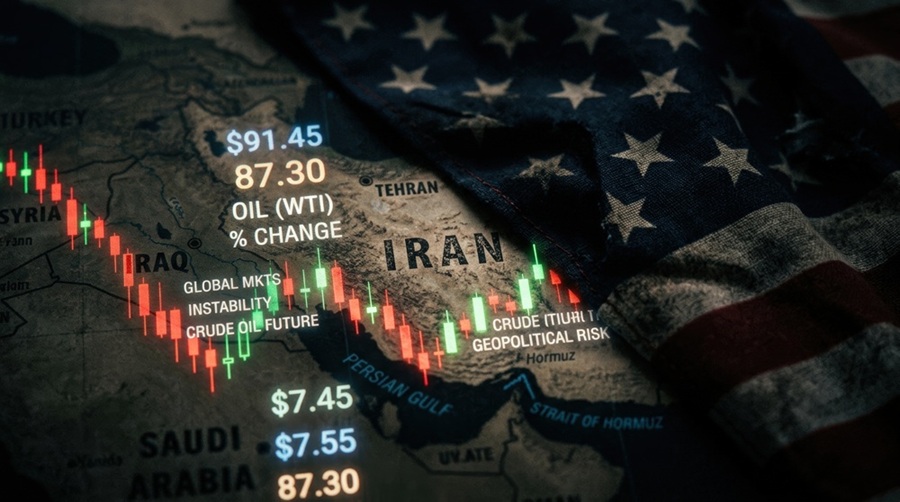
石油市场习惯于在停止结算之前就看上去已经定下来了。这就是现在的设置。
随着伊朗周边冲突的加剧,霍尔木兹海峡的交通量急剧下降,越来越多的船只因关闭AIS或自动识别系统而陷入黑暗,这些信号通常显示船只在哪里移动。霍尔木兹不只是另一条航道。它是世界上最重要的能源阻塞点之一,因此,当能见度开始消失时,供应风险就会回到对话的中心。
为什么现在这很重要
这很重要,有两个原因。
头条新闻是一回事。市场影响是另一回事。石油不仅关乎有多少桶,还关系到这些桶能否流动,谁愿意为它们投保,买家准备等待多长时间,以及交易者认为他们需要在多大风险的基础上定价。
目前,有三件事同时发生冲突:航运中断、外交脆弱以及市场已经严重倾向于一个方向。这种组合可以使布伦特原油的走势比基本面本身通常所暗示的要快。
是什么推动了这一举动
1 供应能见度恶化
第一个驱动程序很简单。市场看得更少,这往往会让市场更加紧张。
通过霍尔木兹的过境量急剧下降,而越来越多的交通量涉及不再广播标准跟踪信号的船只。简而言之,正常通过重要走廊的船只越来越少,越来越多的活动也变得越来越难以追踪。这并不自动意味着供应即将崩溃。但这确实意味着不确定性正在上升。
2 伊朗的储存缓冲区可能有限
第二个驱动因素是伊朗的出口和储存限制。
陆上储存容量估计约为4000万桶,市场正在关注有人所说的16天红线。到那时,长期的出口中断可能会开始迫使减产,以避免对储油库造成损害。对于新读者来说,要点很简单。如果石油不能储存足够长的时间,问题可能不再是出口延迟,而是开始成为真正的供应问题。
3 定位可以放大移动
第三个驱动因素是定位,这只是市场简写,说明在下一步行动发生之前交易者已经如何进行设置。
在这种情况下,投机性原油头寸显得严重片面。这很重要,因为当市场向一个方向倾斜得太远时,触发急剧调整并不需要太多时间。新的地缘政治冲击可能迫使交易者迅速采取行动,而一旦开始,价格的上涨幅度可能会超过单纯基础新闻所能证明的合理性。
为什么市场在乎
石油冲击很少能在能源市场内得到控制。
较高的原油价格可能会开始出现在运费、制造业和家庭能源账单中。这意味着通货膨胀预期可能会再次开始攀升。各国央行已经在努力管理粘性通货膨胀和疲软增长之间的艰难平衡,因此石油价格上涨会使这项工作变得更加艰难。
这不仅仅是一个关于石油生产商获得提振的故事。当能源成本上升时,航空公司、运输公司和其他对燃料敏感的企业可能会迅速承受压力。如果石油价格上涨使通货膨胀保持强于预期,则更广泛的股市可能还必须重新考虑政策前景。
连锁反应远不止石油
还有一个货币角度,它不如最初出现的那么简单。
当原材料价格上涨时,与大宗商品挂钩的货币,例如澳元,通常会获得支撑。但是这种关系不是自动的。如果石油价格因为全球需求改善而攀升,那可能会有所帮助。如果由于地缘政治风险激增而攀升,则市场可能会转向避险模式,即使大宗商品价格上涨,这也可能打压澳元。
这就是让这种举动比乍一看更有趣的原因。同样的石油涨势可以支撑市场的一个部分,同时给另一部分带来压力。
框架中的资产和名称
布伦特原油仍然是广泛供应风险中最明显的解读。如果交易者想要最简洁的头条新闻表达,通常是他们首先看的地方。
- 埃克森美孚是画面中最明显的名字之一。油价上涨可以支撑已实现的销售价格和短期的盈利势头,尽管这从来都不像石油上涨、囤积那么简单。成本、生产结构和更广泛的情绪仍然很重要。
- NexTera Energy 又增加了一层。这个故事不仅仅是关于化石燃料的。当能源安全成为一个更大的问题时,国内电力弹性、电网投资和替代发电的理由也将得到加强。
- 澳元/美元是另一个值得关注的市场。澳大利亚与大宗商品周期密切相关,因此原材料价格走强有时可以支撑该货币。但是,如果市场对恐惧的反应大于对增长的反应,那么通常的顺风可能不会成立。
对于新读者来说,关键是石油走势不会以整齐的、可预测的线条在市场中传播。它们不均匀地向外波动,帮助某些资产,给其他资产施加压力,有时两者兼而有之。
可能会出什么问题
强烈的叙述与单向交易不同。
停火可以比预期更快地稳定航运。欧佩克+可以通过提高产量来抵消部分紧张局势。来自中国的需求数据可能会令人失望,将焦点转移到消费疲软而不是供应受限上。而且,如果地缘政治溢价消退,石油回落的速度可能比当前情绪所暗示的要快。
对于新读者来说,要点很简单。石油涨势可以是真实的,但不是永久性的。短期内,中断风险可能证明此举是合理的,然后如果这些风险缓解或需求疲软,则迅速逆转。
市场不再孤立地对石油进行定价。这是定价可见性、运输安全性以及供应中断蔓延到通货膨胀、货币和更广泛的风险情绪中的风险。
这就是为什么Hormuz很重要,即使对于从未自己交易过一桶原油的读者来说也是如此。


The G20 Summit The G20 Summit is an international forum for the governments and central bank governors from 19 countries and the European Union to discuss global economic challenges. Non-member countries can also be invited to attend the summit. The Group of Twenty nations attending the summit represents more than 80% of the global GDP, which is why it is one of the most important events for the financial markets.
In the light of mounting geopolitical risks, and rising threats of protectionism, these face-to-face communications about pressing global economic and financial issues will be of utmost significance. Japan will take on the G20 chair and the main themes for the summit will be as per the following: Global Economy Trade and Investment Innovation Environment and Energy Employment Women’s Empowerment Development Health President Trump-Xi Meeting Aside from the main event, many leaders also hold side meetings. This time, the attention will be on President Trump and Xi meeting.
Investors had a breather on the news that the meeting between the leaders of the world’s largest economies will actually take place. Best Scenario Both parties are facing mounting pressures to reach a deal. In the US, farmers are being hit the hardest from retaliatory tariffs from China, which are causing some political backlash for President Trump.
China, on the other side, is trying to sustain growth. While it is “unlikely” that both leaders will agree on deep structural differences at the summit, it remains a faint possibility. Worst Scenario It is hard to foretell how the one-to-one meeting will go and how President Trump will handle the trade talks.
It may highly depend on the impulses of the US President. The Probable Scenario Investors are expecting a similar “show” that took place in Buenos Aires – some kind of cease-fire and promises to initiate more negotiations. Investors are aware of the long road ahead for a trade deal.
Any signs of de-escalation of trade tensions will bring some momentary relief because as long as there is some sort of dialogue without tariff threats, it will be positive for markets. Other Important Issues Populism The populist parties generally come with disruptive policies which result in a spike in economic and financial volatility. Bloomberg reported that around 70% of the world’s most important economies are under the control of populist governments or non-democratic regimes.
While this forum is supposed to be a powerhouse for global trade and investment and the associated global economic challenges, the increasing number of populist leaders may make it difficult for leaders to find unity. Iran Tensions The tensions between the US and Iran are set to loom large. Allies and rivals of the US criticized the last-minute pullback on Iran strikes.
We note that President Trump did not lose time in telling other countries why should the US protect the shipping routes for other countries when the US has become by far the largest producer of energy. President Emmanuel Macron plans to discuss the current flare-up with President Trump as the EU is increasingly concerned over the risk of conflict. We expect the discussions around the Iran risks to gather some attention as well.
Hong-Kong Protests It is unlikely that the Hong-Kong protests will be discussed at the summit. Beijing could not have been clearer when it says it won’t allow the protests to be brought up at the G20 as no foreign force has the right to interfere in its domestic affairs. Stock markets The stock market is in a similar stage as it was back in 2018 ahead of the summit.
The announcement of the meeting between China and the US at the summit had buoyed up the stock markets at a time when major central banks turned dovish as well. On Monday, we saw the hopes of trade progress waned, and stock markets struggled to find a firm direction. We expect the shadow of the G20 meeting to remain on the stock markets.
Would stocks rally after the G20 summit as it did after the last summit back in December 2018? As of writing, the US Treasury Secretary, Steven Mnuchin comments raised hopes of trade progress: ‘We were about 90% of the way’ on China trade deal, and there’s a ‘path to complete this.’ However, President Trump’s comments were less optimistic, which temper the “90% complete” remarks. It is increasingly difficult to rely on the messages coming from the White House.
Earlier this week, we saw President Trump ramping pressure on Iran to later pullback the strikes on the country at the very last-minute which prompted remarks from both allies and rivals. The incoherence in the trade messages forced investors to navigate the markets cautiously. Stocks are finding “cautious” upside momentum while investors are also pouring money in metals.
Gold reached a high of $1,439 this week. Leading up to the G20 summit, it is hard to see how can a trade deal be negotiated in the next couple of days or at the summit, but investors expect a hold off on the next round of tariffs and a promise to return to the negotiable table. *Please click on the link for below for the list of the G20 members and the invited countries and international organizations that will be present in Japan. https://g20.org/en/summit/about/#participants
Wednesday was the bearer of bad news for Australia. Despite the buoyant employment report which briefly lifted its local currency, the Australian dollar plummeted on Westpac’s rate cut forecasts and the news of China’s Coal Ban. Simmering diplomatic tensions could be the trigger behind the ban.
The news that the Dalian port in China has blocked imports from Australia emerged on Wednesday. It was also reported: The port would cap the overall coal imports for 2019. Other major ports elsewhere in China have delayed clearing times.
The delayed cargoes would not be included in the 12 million tonnes under the 2019 quota. Dalian, Bayuquan, Panjin, Dandong and Beiliang are the five harbours overseen by Dalian customs which will not allow Australian coal to clear through customs. Imports from Russia and Indonesia will not be affected.
Beijing and Canberra’s clash back in 2017 over cybersecurity and China’s influence in Pacific Island nations were already showing signs of Australia’s deteriorating ties with China. However, tensions increased again last month when Australia withdrew the visa of a prominent Chinese businessman, just months after barring Huawei from supplying equipment to its 5G broadband network. At the moment, the comments from China are: The goals are to better safeguard the legal rights and interests of Chinese importers and to protect the environment.
Customs were inspecting and testing coal imports for safety and quality Beijing has been trying to restrict imports of coal more generally to support domestic prices. The coal ban put additional pressure on the Australian dollar which plummeted against major currencies. The AUDUSD pair lost its recent bullish momentum and dropped to 0.70 level.
AUDUSD (Hourly Chart) Source: GO MT4
The European Union Top Jobs The European Central Bank (“ECB”) President The European leaders nominated Christine Lagarde, a French lawyer and a politician serving as Managing Director and Chairwoman of the International Monetary Fund ("IMF") as the ECB President. The ECB is responsible for the monetary policy of the nineteen EU member countries. If elected, Christine Lagarde will be the first ECB president without any direct experience in setting central bank policy.
Being a lawyer and a politician rather than an economist, her nomination came as a surprise. However, her experience as the leader of the IMF and as a former French finance minister combined with her comments and opinions on central-banking issues over the years might have reassured governments of EU countries that her nomination will keep the euro-zone monetary policy steady. Christine Lagarde will probably face several challenges: Boosting Growth in the Eurozone Keep the eurozone together despite the rise of populist parties Display independence at a time where central banks’ independence is being threatened amid populist governments.
European Markets The European share market rose on the news of the nomination. Christine Lagarde reinforced the expectations that she will follow the footsteps of Mario Draghi, which is why the prospects of more stimulus package to support the ailing eurozone economy sent European shares higher. World Equity Indices (% Change) Source: Bloomberg Terminal The Shared Currency The Euro struggled to find the upside direction following the recent dovish ECB comments.
The nomination meant that at least in the short-to-mid-term, Christine Lagarde would continue with the easing policies which will oscillate sentiment for the shared currency. The EURUSD pair moved from a high of 1.1371 to a low of 1.1269 this week. EURUSD (1 Month Chart) Source: Bloomberg Terminal Other EU Top Jobs European Commission President: Ursula Von Der Leyen is a German politician servicing as Minister of Defence since 2013.
She will be the 13 th commission president if elected. She will also be the first woman in the post. European Council President: Charles Michel is a lawyer and the interim Belgium Prime Minister who was nominated to replace Donald Tusk.
He resigned over his support for the UN immigration pact but stayed in the caretaker role until the next elections. The convention is that the role is filled by former heads of state and government. European Parliament President: David Maria Sassoli is an Italian politician and a journalist and as President will act as the speaker of the house, chairing debates in the plenary and ensuring parliamentary procedures are followed.
High Representative of the Union for foreign affairs and security policy: Josep Borrell has been Spanish foreign minister under socialist Pedro Sanchez. He will be the chief coordinator and representative of the Common Foreign and Security Policy within the European Union.
A “Dovish” or “Hawkish” Rate Cut The Federal Reserve (Fed) is poised for its first-rate cut in a decade-long of economic expansion. Trade protectionism and a slowing world economy are the two primary factors behind the global push towards easing policies. As the world’s central banks are in a race to cut interest rate to stimulate their economies, the focus will be on the Fed this week which is likely going to engage in its first-rate reversal since the financial crisis.
Source: Bloomberg Terminal It should be highlighted that the US interest rate is still in the low levels despite years of economic growth. It is around half levels it was before the financial crisis. If the Fed starts a rate cut cycle, the central bank will have limited room to lift its economy, in case of future downturns.
American Economy The US economy remains strong, and a look at the recent economic figures may not by its own justify an interest rate cut. However, the Fed is mostly concerned about the slowing world growth, the effects of the ongoing trade war and subdued inflation. The labour market has remained the bright spot of the US economy.
Total nonfarm payroll employment increased by 224k in June and it is forecasted to come around 170k for July. In the latest report, the most prominent jobs gains were in the professional and business services, health care, transportation and warehousing. The unemployment rate in the US is near a 50-year low.
Wages have also risen in the past few days. Growth in consumer spending has also bounced back in the second quarter. Despite a low unemployment and strong overall growth, inflation pressure remains muted which is the source of worry for the central bank.
Gross Domestic Product increased at an annual rate of 3.1% in June. Last Friday, the annual preliminary GDP figure was significantly lower at 2.1% from 3.1% in the first quarter. However, it came above expectations as markets forecasted a drop to 1.8%.
Business Investment growth and the manufacturing sector have slowed notably, and the weak growth is mostly due to trade tensions and the rising threats of trade protectionism. The housing sector is also showing some signs of distress. All in all, the Fed does not see the economy in distress and will likely cut interest rate as a preventative measure.
A 25 or 50 Basis Points ? Market participants are pricing nearly 80% probability of a 25bps and above 20% probability of a 50bps rate cut. There were mixed messages on the dovishness of FOMC members which did not fully convince the markets that the Fed will engage in an aggressive rate cut cycle in the coming months.
If the Fed slashes interest rate this week, it will likely be a quarter-point precautionary cut. If the Fed is cutting interest rate for preemptive reasons in the face of a slowing economy and trade tensions, a 50 basis point might signal that the US economy is in distress which does not seem to be the aim of the Fed. Also, a 50 bps might signal that the Fed made a policy mistake in December in hiking rate.
The rate cut should have pleased President Trump, but President Trump renews attack on the Fed and is already telling the Federal Reserve that the quarter-point cut will not be enough. Stock Market To some extent, the rate cut has already been priced-in at least one rate cut as we have seen some record highs in the stock markets based on the return to the lower rate world. S&P500 reached a record high at 3,027.98 points Source: Bloomberg Terminal Nasdaq Composite reached an all-time high at 8,293.33.
Source: Bloomberg Terminal The ASX200 briefly rose to an all-time high at 6,875 on Tuesday before retreating to high levels seen in 2007. The Australian share market has returned to levels seen before the global financial crisis. Source: Bloomberg Terminal The stock markets are being buoyed mostly by monetary easing policies.
However, the fears of a fragile global trade system and volatile political climate are forcing investors to stay cautious. Yesterday’s tweets from the US President reiterates that actions in the global stock markets are a Tweet Away ! Many dubbed this week as one of the “busiest weeks of the year” because trade negotiations have resumed this week, and the markets are waiting to see if the Fed will lead the global push to lower rates.
Tesla Second Quarter 2019 Update Tesla, the electric car maker, reported its second-quarter earnings on Wednesday in late US trading hours. Despite record production and deliveries, Tesla missed revenue estimates. The company reported a net loss of $408 million.
Its share price fell by more than 20% since the beginning of the year after reaching a high of $380. Source: Bloomberg Terminal After the release of the second-quarter results, we saw a drop of 12% in the after-trading hours. Despite the wider-than-expected loss, the company reported a recovery compared to the first quarter: Net loss declined significantly compared to Q1.
The company ended the quarter with the highest level of cash and cash equivalents, which is $5.0bn. Model 3 has also received the highest ever ratings from stringent testing protocols. Model 3 deliveries reached an all-time record of 77,634 and were the best selling premium vehicle in the US.
Gigafactory Shanghai is taking place, and in quarter 2, they started moving machinery into the facility. The second generation of Model 3 which is a more cost-effective version, could be a long-term opportunity for Tesla. Preparations for Model Y started in Fremont in the second quarter.
Even though the earnings missed expectations, the company has improved, generated free cash flow and is sitting on more capital. “This quarter, we are simplifying our approach to guidance. We are most focused on expanding our manufacturing footprint in new regions, launching new products and continuing to improve the customer experience, while generating and using cash sustainably.” Click here for more information on trading Share CFDs, also, see our Index Trading page for information in trading Indicies.
Record-Highs in the Stock Market Global Stock Market Record Highs Amid geopolitical tensions, mixed earnings report and less-dovish central banks, this week, we still saw some more record highs in the stock market. Nasdaq Composite closed at a record high at 8,321.50 on Wednesday as technology stocks rallied on strong earnings, trade optimism, and a US budget deal at the beginning of the week. S&P 500 also traded at an all-time high at 3,019.56 on Wednesday, which brings its annual percentage change to 19.82%.
However, the momentum slowed down towards the end of the week with mixed earnings and less-dovish central banks. S&P500 widely regarded as the best single gauge of large-cap US stocks dropped by 0.50% while Nasdaq Composite finished 1% lower on Thursday. US500 (S&P500) – 15 Mins Chart Source: GO MT4 In the Australian share market, the All Ordinaries index, the oldest share index, which is made up of 500 largest companies listed on the ASX, reached an all-time at 6,901.90 on Thursday.
Source: Bloomberg Terminal The S&P/ASX200 was just 10 points away from its best close ever. Unlike the ECB, the RBA Governor Lowe was more dovish during his speech stating that “if demand is not sufficient, the Board is prepared to provide additional support by easing monetary policy further.” Major Earnings Reports As the week progressed, earnings went from being strong to mixed. Attention was mostly on the major companies from the FAANG Group.
Amazon: Amazon reported its quarterly updates after the closing bell, and shares of Amazon slipped by 2.5% in the after-hours trading. The company saw earnings of $2.6bn, and revenue was $63.4bn, which is up from the $52.9 billion a year ago. However, the figures came below estimates, and it is the first time Amazon reported income below analysts’ consensus.
The main highlight for Amazon was Prime Day, which was the largest shopping event in Amazon history. The weaker-than-expected profit is mostly due to the investment in expediting deliveries to Prime customers, which the company previously announced. The actual cost of speeding shipping was higher than anticipated, and it will be one of the key metrics investors will be monitoring for the next quarter.
Third Quarter 2019 Guidance Net sales are expected to be between $66.0 billion and $70.0 billion, or to grow between 17% and 24% compared with third-quarter 2018. This guidance anticipates an unfavourable impact of approximately 30 basis points from foreign exchange rates. Operating income is expected to be between $2.1 billion and $3.1 billion, compared with $3.7 billion in third quarter2018.
This guidance assumes, among other things, that no additional business acquisitions, investments, restructurings, or legal settlements are concluded. Source: Bloomberg Terminal Google: Google’s parent company, Alphabet, reported higher than expected revenue at a time where the tech giant is facing increasing scrutiny from the US regulators. The second-quarter revenue is $38.9 bn, which is a rise of 19% compared to 2018 Q2.
Its share price rose more than 7% in the after-hours trading. Source: Bloomberg Terminal Facebook: Facebook’s earnings beat forecasts despite data scandal. The 2019 figures include an additional $2.0 billion legal expense related to the U.S Federal Trade Commission (FTC) settlement. "We had a strong quarter and our business and community continue to grow," said Mark Zuckerberg, Facebook founder and CEO. "We are investing in building stronger privacy protections for everyone and on delivering new experiences for the people who use our services." We also note that Facebook struck a $5 billion settlement with the FTC following the 2018 Cambridge Analytica scandal.
Shares were on the downside despite upbeat results as the CFO expects “more pronounced deceleration in the fourth quarter and into 2020, partially driven by ad-targeting related headwinds and uncertainties”. Source: Bloomberg Terminal