

市场资讯及洞察
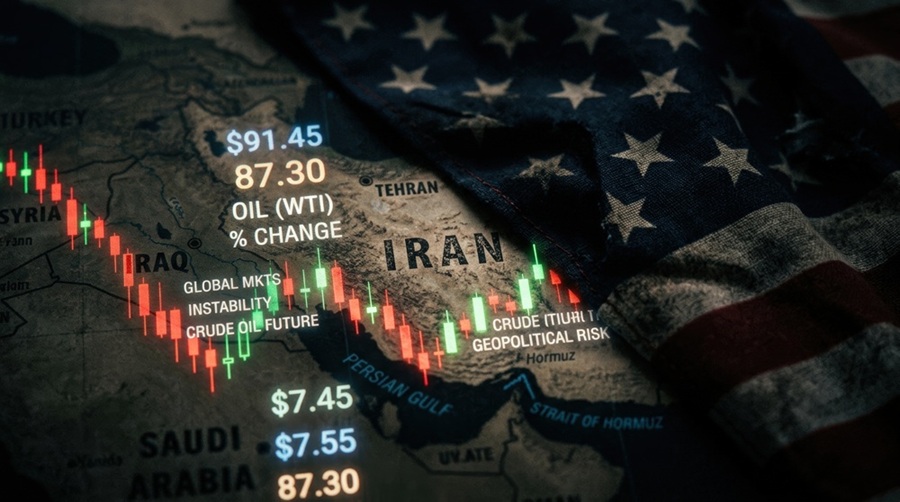
石油市场习惯于在停止结算之前就看上去已经定下来了。这就是现在的设置。
随着伊朗周边冲突的加剧,霍尔木兹海峡的交通量急剧下降,越来越多的船只因关闭AIS或自动识别系统而陷入黑暗,这些信号通常显示船只在哪里移动。霍尔木兹不只是另一条航道。它是世界上最重要的能源阻塞点之一,因此,当能见度开始消失时,供应风险就会回到对话的中心。
为什么现在这很重要
这很重要,有两个原因。
头条新闻是一回事。市场影响是另一回事。石油不仅关乎有多少桶,还关系到这些桶能否流动,谁愿意为它们投保,买家准备等待多长时间,以及交易者认为他们需要在多大风险的基础上定价。
目前,有三件事同时发生冲突:航运中断、外交脆弱以及市场已经严重倾向于一个方向。这种组合可以使布伦特原油的走势比基本面本身通常所暗示的要快。
是什么推动了这一举动
1 供应能见度恶化
第一个驱动程序很简单。市场看得更少,这往往会让市场更加紧张。
通过霍尔木兹的过境量急剧下降,而越来越多的交通量涉及不再广播标准跟踪信号的船只。简而言之,正常通过重要走廊的船只越来越少,越来越多的活动也变得越来越难以追踪。这并不自动意味着供应即将崩溃。但这确实意味着不确定性正在上升。
2 伊朗的储存缓冲区可能有限
第二个驱动因素是伊朗的出口和储存限制。
陆上储存容量估计约为4000万桶,市场正在关注有人所说的16天红线。到那时,长期的出口中断可能会开始迫使减产,以避免对储油库造成损害。对于新读者来说,要点很简单。如果石油不能储存足够长的时间,问题可能不再是出口延迟,而是开始成为真正的供应问题。
3 定位可以放大移动
第三个驱动因素是定位,这只是市场简写,说明在下一步行动发生之前交易者已经如何进行设置。
在这种情况下,投机性原油头寸显得严重片面。这很重要,因为当市场向一个方向倾斜得太远时,触发急剧调整并不需要太多时间。新的地缘政治冲击可能迫使交易者迅速采取行动,而一旦开始,价格的上涨幅度可能会超过单纯基础新闻所能证明的合理性。
为什么市场在乎
石油冲击很少能在能源市场内得到控制。
较高的原油价格可能会开始出现在运费、制造业和家庭能源账单中。这意味着通货膨胀预期可能会再次开始攀升。各国央行已经在努力管理粘性通货膨胀和疲软增长之间的艰难平衡,因此石油价格上涨会使这项工作变得更加艰难。
这不仅仅是一个关于石油生产商获得提振的故事。当能源成本上升时,航空公司、运输公司和其他对燃料敏感的企业可能会迅速承受压力。如果石油价格上涨使通货膨胀保持强于预期,则更广泛的股市可能还必须重新考虑政策前景。
连锁反应远不止石油
还有一个货币角度,它不如最初出现的那么简单。
当原材料价格上涨时,与大宗商品挂钩的货币,例如澳元,通常会获得支撑。但是这种关系不是自动的。如果石油价格因为全球需求改善而攀升,那可能会有所帮助。如果由于地缘政治风险激增而攀升,则市场可能会转向避险模式,即使大宗商品价格上涨,这也可能打压澳元。
这就是让这种举动比乍一看更有趣的原因。同样的石油涨势可以支撑市场的一个部分,同时给另一部分带来压力。
框架中的资产和名称
布伦特原油仍然是广泛供应风险中最明显的解读。如果交易者想要最简洁的头条新闻表达,通常是他们首先看的地方。
- 埃克森美孚是画面中最明显的名字之一。油价上涨可以支撑已实现的销售价格和短期的盈利势头,尽管这从来都不像石油上涨、囤积那么简单。成本、生产结构和更广泛的情绪仍然很重要。
- NexTera Energy 又增加了一层。这个故事不仅仅是关于化石燃料的。当能源安全成为一个更大的问题时,国内电力弹性、电网投资和替代发电的理由也将得到加强。
- 澳元/美元是另一个值得关注的市场。澳大利亚与大宗商品周期密切相关,因此原材料价格走强有时可以支撑该货币。但是,如果市场对恐惧的反应大于对增长的反应,那么通常的顺风可能不会成立。
对于新读者来说,关键是石油走势不会以整齐的、可预测的线条在市场中传播。它们不均匀地向外波动,帮助某些资产,给其他资产施加压力,有时两者兼而有之。
可能会出什么问题
强烈的叙述与单向交易不同。
停火可以比预期更快地稳定航运。欧佩克+可以通过提高产量来抵消部分紧张局势。来自中国的需求数据可能会令人失望,将焦点转移到消费疲软而不是供应受限上。而且,如果地缘政治溢价消退,石油回落的速度可能比当前情绪所暗示的要快。
对于新读者来说,要点很简单。石油涨势可以是真实的,但不是永久性的。短期内,中断风险可能证明此举是合理的,然后如果这些风险缓解或需求疲软,则迅速逆转。
市场不再孤立地对石油进行定价。这是定价可见性、运输安全性以及供应中断蔓延到通货膨胀、货币和更广泛的风险情绪中的风险。
这就是为什么Hormuz很重要,即使对于从未自己交易过一桶原油的读者来说也是如此。


After a stellar year in 2017, investors were taken aback by the massive swings in the markets in 2018. The turmoil in the financial markets has created an environment of panic and fears about a global recession. Even though the risk of a recession is not on the horizon yet, we do expect 2019 to remain volatile.
Prudent investors will likely favour cautious positioning. Economic Growth Slowing Global Growth will be the dominant factor that will drive markets’ sentiment across various asset classes, as external crosswinds have exacerbated fears of decelerating economic growth. A series of surveys on the Manufacturing activities released at the beginning of the year have shown that major economies are likely to see slower activity in 2019.
So far, the weakness in China has been significantly higher than other major economies, and is expected to weaken further. China made its first bank’s reserve requirement ratios in 2019 on the 4 th of January, after mounting pressure from the US tariffs and its weakest growth since the global financial crisis. Aside from trade tensions, the US government shutdown and the gridlock in Washington will not be market-friendly.
The fiscal stimulus will fade which will hurt the US economic performance. Overall, we expect investors to keep an eye on the role of China in tackling slow domestic growth in the first quarter as the country will probably fight back with stronger monetary and fiscal policies. Economic growth will be slower compared to last year as the sugar tide from fiscal stimulus will fade, but we do not expect a recession in 2019.
Central Banks The Federal Reserve (Fed) will stay in the limelight among the major central banks in the near term. The markets are expecting the Fed to end its hike cycles in 2019 and there are still many uncertainties in the Fed’s messages, despite the “patient” pledge from Jerome Powell on Friday. The Fed is trying to walk on the fine line on data-dependency, and until there is more clarity on the rate path or more dovish signals, investors will stay prudent in their positioning.
It is unlikely that other central banks like the European Central Bank, Bank of Japan or Reserve Bank of Australia will hike in the near term. However, a rate hike by the ECB in September is possible. We may see investors switching their attention from the Fed to the ECB towards the second half of the year.
The Bank of England will remain underpinned by Brexit uncertainties as its economy remains vulnerable to Brexit risks. The first quarter of 2019 will provide more insights into the economy, once the uncertainty around Brexit reduces. We do not expect the BoE to alter interest rate until there is more clarity on Brexit.
Geopolitical Risks Against the global growth backdrop, political risks will also pose challenges for investors. There have been a lot of political noises and speculations in 2018 which significantly drove the overreactions in the markets. However, in 2019 investors may be better equipped to separate signals from noises.
European political risks may be calmer but will remain a worry, given the backlash from populist parties and Italy’s fiscal dispute with Brussels. The budget agreement was deemed as a “borderline compromise” that prevented the EU from opening a debt procedure. More importantly, the tensions between ruling parties in Italy is another threat that can plunge the country into another political chaos and dampen risk sentiment in the Eurozone area.
The relationship between the US and China- the world two biggest economies will remain the biggest risk for the global economy in 2019. The rise of China is a potential threat for the US, and the markets are not expecting a quick resolution of the cold trade war despite the G20 trade truce. The first quarter of the year will remain gripped by trade headlines.
In the US, the government shutdown continues and is among the longest one since 1980. President Trump lost the majority in the House of Representatives, and Washington is trapped in gridlock. Therefore, another fiscal boost is extremely low.
At the same time, we also anticipate more drama and threatened government shutdowns during the year with a Democrat-controlled House. The Technology Sector Technology stocks have been the primary driver of the global stock markets in the past decade. The overall performance of the tech sector was outstanding since the financial crisis.
However, 2018 has shown us that the tech giants are facing their own unique challenges and have went into a freefall. Investors are worried about future earnings, and the markets’ reactions after Apple’s rare revenue warning statement is an example of how fragile investors’ sentiment is toward earnings forecasts for 2019. Fundamentals are still here and supportive, and we can see the technology sector improving towards the end of the year.
However, the uncertainties and volatility around the growth of this sector may persist for the first half of the year which can prompt investors to diversify to cope with any downside. This article is written by a GO Markets Analyst and is based on their independent analysis. They remain fully responsible for the views expressed as well as any remaining error or omissions.
Trading Forex and Derivatives carries a high level of risk. For more information on trading Forex, check out our regular free Forex webinars.
Without any doubt it was a difficult year for the stock markets. Recently nearly all equity indices have erased their 2018 gains. October has also lived up to its reputation in being the worst month for equities.
The stock markets bled red, and investors were anxious and cautious. The equity markets have gone through their longest bull run, and markets participants were only expecting a correction of 10% at some point. However, the recent massive sell-off prompted increased fears as the markets were navigating into a sea of headwinds, with growing concerns that it is more than just the markets correcting themselves.
Has Jerome Powell emerged as the saviour? The policy divergence between the US and the other major central banks was the dominant driver that had altered the spectrum of the buoyancy in the markets at the beginning of the year. A hawkish Fed prevented the equity markets to outperform in 2018.
A sudden dovish shift whereby a few Fed officers appeared to be less hawkish has captured the markets’ attention. Chairman of the he Federal Reserve, Jerome Powell’s comments were the trigger: “ interest rates are close to neutral ” compared to “interest rates are a long way from neutral” which were embraced by equity traders. Wall Street slowly moved into green again as the possibility of fewer rate hikes boosted equity benchmarks: The Dow Jones Average Industrial surged by 600 points to close at 25,366.43 S&P500 jumped by 2.3% to finish at 2,743.79 Nasdaq Composite advanced by 2.95% to end at 7,291.59 Jerome Powell appears to have just put a floor under stocks!
Source: Bloomberg Is the renewed optimism justified? It would make sense to say “yes” as the Fed risk has resolved itself and now the markets have “one less” headwind to think about. When the markets dropped as much as 10%, such dovish news is deemed favourable as it plays an essential part to the bottoming process.
However, while the change in language does indicate “dovishness” and be the reason for the market to cheer up, the price action might be exaggerated or could lose steam as trade tariffs with China is far from resolved even though there is more optimism regarding trade negotiations. The stock markets are still fragile and vulnerable to: Peaked earnings Slow growth in China Reduction in global demand Brexit jitters The rout in oil markets Regulatory measures We have also seen that technology investors had a rough two months having witnessed the FAANG group wiping off $1 trillion in market value. Fundamental and external risks have forced investors to stop and think.
Apple shares fell in a bear market territory shaking up the technology sector this month. Being the bellwether of technology stocks, the rout in Apple shares over the decrease in iPhone sales put downward pressure Wall Street. Apple erased $190 billion in five weeks and it lost its $US1 trillion valuation.
Trump tariffs threat on iPhones did little to help Apple in staging a recovery. Source: Bloomberg If it were not for the relief bounce in late November, Amazon was down by 21% since the first of October losing $200 billion market cap at some point. Fundamentals are not flashing red signals that justified such a massive sell-off.
The stock’s recent decline may be an overreaction, but it appears that fears were elevated after the disappointing revenue forecasts. Source: Bloomberg Other big stocks in the FAANG group are facing regulatory headwinds and concerns over the valuations of such big names. Regulation has just started to come down on companies and will likely get tougher.
These highflying stocks have grown so large that institutional investors are wary to go back to that overweight position. Are investors seeking more large-cap value over large gap growth? Overall, the equity markets were mostly hit by two major headwinds: Higher rates and Trade tariffs.
Now that Powell cleared investor’s doubts regarding interest rate. The attention now moves to the G20 summit. Traders are contemplating different scenarios on how the summit will unfold.
The most likely situation given the conflicting news from the White House will be that: Both parties will announce some kind of negotiation to somewhat calm the markets, but the US will most probably increase tariffs as expected. Whether the Stock Market will end in the green or still be flashing red, it may very well depend on President Trump.
The World Economic Outlook has further shifted to the downside. The growth estimates for 2019 and 2020 were downgraded in October 2018 mainly due to trade tensions. The recent further downward revisions were the result of the weakening momentum in key industrialised economies.
The table below depicts the “Weakening Global Expansion”: The outlook for Developed Economies Eurozone Area: The most significant revisions came from Europe- mainly Germany and Italy. Germany is experiencing weakness in the auto industry, following new fuel emissions standards and soft private investment. Italy is facing weak domestic demand and high borrowing costs.
France is being dragged by yellow vest protests and weak industrial production. In addition to the above, the rise in populism in the Eurozone area, Brexit and cross-border spillovers are some other Europe-specific factors that are weighing on economic activity. United States: Washington is in gridlock, and the fiscal sugar rush died down.
The US expansion continues, but growth momentum will soften. In comparison with the Eurozone area, the US’s growth will remain high. The prolonged US government shutdown is also posing risks to economic activity.
Japan and the United Kingdom: Despite natural disasters in Japan and Brexit in the UK, IMF has upgraded growth forecasts for these two economies. Japan’s fiscal support and mitigating measures to the tax hike enabled the IMF to revise the estimates to the upside. Given that the uncertainty around Brexit is eliminated and a deal has been reached, the UK economy is expected to move up because data has shown that it is not as sluggish as the Eurozone area.
The Outlook for Emerging & Developing Economies China: Despite the recent stimulus program which will tackle some of the impacts of trade frictions, China’s economy is forecasted to slow towards the lower range of 6%. A combination of financial regulatory tightening, trade dispute and rout in commodity prices have caused a deeper slowdown than initially forecasted. The warnings from IMF is a reminder that China’s slowdown will have a global impact.
Saudi Arabia: Tumbling oil prices have forced IMF to also lower growth forecasts for Saudi Arabia. India and Brazil: “India’s economy is poised to pick up in 2019, benefiting from lower oil prices and a slower pace of monetary tightening than previously expected, as inflation pressures ease.” The main factor behind the revisions is the declining commodity prices, which will eventually aid policy easing. Brazil’s recovery is expected to continue, which allowed IMF to upgrade its forecasts.
These moderate downward revisions to forecasts which were already revised down in October 2018 are warnings that investors will be keen to keep an eye on. IMF stretched the importance of recognising the growing risks, even though we are not anticipating a significant downturn at this stage. This may be the reason why the World Economic Outlook is placing more emphasis on the Multilateral Cooperation, and call for policies as well to reverse the current headwinds and prepare for the forecasted downturn.
As of writing, the concerns about the global economic outlook have resurfaced with IMF warnings and its impact on risk sentiment can be seen in the Asian markets today.
It might be difficult to stay optimistic in such plunging markets. Global equities are in a bear market and investors are moving away from riskier assets. Amid the mayhem, there may still be some buying opportunities if investors are selective about certain stocks.
We are facing a global pandemic that is slowly forcing major countries into lockdown and halting global activity. Investors are therefore tapping into sectors that offer bargains or where they see long-term growth opportunities. The health care sector seems to be on investors’ watchlists.
It should be highlighted not all health care stocks are performing the same way. Our attention turns to two stocks that have so far outperformed amid the coronavirus outbreak. Moderna Inc (NASDAQ: MRNA) In the US markets, Moderna Inc. is standing out.
As several companies are racing against time to create a vaccine for the COVID-19, Moderna Inc. is among the first to develop a vaccine against coronavirus. For a relatively young and small company, the Massachusetts-based biotechnology firm has performed its first human trial of the coronavirus vaccine on Monday. Ever since they received funding from the CEPI to accelerate the development of messenger RNA Vaccine against the novel coronavirus, the biotech company became popular among investors.
Moderna Inc. is among the best-positioned mRNA company with 16 Phase 1 trial started and five out of their first five modalities demonstrating success in the clinic. As of writing, the company’s share price is currently trading at $26.57 after reaching an all-time high of $31.48 last week. Source: Bloomberg Terminal For the past month, the company’s share price is currently up by more than 40%!
The coronavirus vaccine could be a key turning point for the success of Moderna, which is yet to produce a proven product on the market using its mRNA technology. Share Price & Information Moderna, Inc. is a Cambridge, Massachusetts-based biotechnology company focused on drug discovery and drug development based on messenger RNA (mRNA). In January, Moderna announced the development of a vaccine to inhibit COVID-19 coronavirus.
NASDAQ Profile NASDAQ:MRNA Market Cap: 8,741,616,884 Today's High/Low: $29.81/$26.25 Get in touch with your account manager to find out how you can start trading Moderna Inc today. Don't have an account? Sign up here.
Fisher & Paykel Healthcare Corp Ltd (ASX:FPH) In the Australian share market, Fisher & Paykel Healthcare Corp Ltd is among the best performers. The company is a manufacturer, designer and marketer of products and systems for use in respiratory care, acute care, and the treatment of obstructive sleep apnea. Fisher & Paykel Healthcare’s share price added above 40% since the widespread of the COVID-19 (Year to Date).
With a rise of 85% in the last 6 months, the company is currently the best performing stock of the S&P/ASX200. Back-to-Back Upgrades While most companies are downgrading forecasts in this bear market environment, the company has issued two upgrades since the beginning of the year. Vitera, a new full face mask used in the treatment of obstructive sleep apnoea has outperformed in the early stages.
The company also received clearance to sell the mask in the US sooner than expected which contributed meaningfully in driving its share price to new record highs. The company also delivered a strong financial performance for the six months to 30 September 2019: Net profit after tax was up by 24% at $121.2million Operation revenue rose by 12% at $570.9 million The COVID-19 outbreak has substantially increased demand for certain products, which has enabled the company to upgrade its revenue and earnings guidance for the financial year ended 31 March 2020 a couple of times since January. Taking into consideration exchange rate revisions, the company is now expecting: Full-year operating revenue to be approximately $1.24 billion instead of $1.19 billion in November’s guidance.
Net profit after tax to be within the range of approximately $275 million to $280 million instead of approximately $255 million to $265 million back in November. On the supply side, the fact that the company does not have a manufacturing facility in China, they are not expecting major supply disruptions. Overall, the company is also making progress with other major initiatives and is establishing a presence in more countries while undertaking numerous other studies.
The continuous growth of Fisher and Paykel in the near and medium-term is looking promising.
Liquidity Crisis High levels of liquidity happen when there is both supply and demand for an asset, meaning transactions can take place easily. A market is considered to be liquid if it can absorb liquidity trades with significant changes in price. A liquidity crisis is, therefore, an acute shortage or drying up of liquidity.
In simple terms, it occurs when there is a simultaneous increase in demand and a decrease in the supply of liquidity across many financial institutions or businesses. As the impact of the coronavirus has rattles markets, global central bankers and governments are ramping up efforts to address liquidity issues across markets. Gold – A Highly Liquid Asset In times of uncertainties, investors generally seek safety with traditional haven assets like Gold.
Why is Gold also selling off? Gold is set apart as it has a feature of a liquid asset just like cash. Investors are on the hunt for liquidity which is prompting the gold market sell-off.
An environment of thin liquidity and high volatility is forcing investors to unlock capital in gold to fulfil liquidity requirements. Gold was seen outperforming this year which makes it a profitable asset- prompting investors to take profit. As the turmoil in global stocks intensifies, investors are looking for ways to cash in to meet margin calls.
At the same time, the safe-haven status of the gold is being hammered by a stronger US dollar. Despite the Fed’s bold emergency rate cuts, the greenback made an impressive comeback against its peers. Another wave of global easing hits markets, making the US dollar the preferred choice compared to other major currencies.
The unusual tandem between the US dollar and Gold seen since the beginning of the year seems to have also faltered at the start of March. Gold has recently lost some of its haven appeal as investors search for liquidity, but it has remained around elevated levels seen in the past 12 months. On Tuesday, reports of a big stimulus package of more by $1 trillion have helped the gold to rebound slightly Source: Bloomberg Terminal Gold Stocks Gold is a victim of the sell-off because of its outperformance and liquidity features which are beneficial to investors during times of financial crisis.
However, gold miners’ stocks have the potential to rally in anticipation that the price of precious metals will go up once the markets stabilise. In the Australian share market, the rebound on Tuesday was mostly driven by the gold mining stocks, which surged by more than 15% despite a fall in gold price. Source: Bloomberg Terminal It is therefore not uncommon for gold to act as a source of liquidity at the start of a liquidity crisis.
As investors are convinced that central banks’ intervention measures like rate cuts and quantitative easing will inject enough liquidity in the financial market, Gold will likely find buyers.
In the wake of the global financial crisis, the G20 summit has become a popular forum of global governance and cooperation. In the heat of the disaster, G20 members came together to sustain global financial stability. The G20 has been a useful pool of information and decision making that have steered the global financial markets since 2008.
G7 Summit The Group of Seven consists of the most industrialised and advanced countries in the world representing 58% of global net worth and 30% of the world’s economy. The G7 Summit focuses on the broader array of economic and political challenges. G20 Summit The financial crisis in 2008 recognize the era where countries need to seek more cooperation among themselves to promote a sound global financial system.
Therefore, the G20 is primarily dedicated to international economic cooperation and allows China, India and other emerging nations to take a more significant global role. It acknowledges the shift towards emerging economies. G20 accounts for 84% of global investment and 63% of the world’s population.
Argentina has set “Building Consensus for fair and sustainable development” as the slogan for the leaders’ summit this year concentrating on three key priorities “ the future of work, infrastructure for development and food security. ” However, protectionism measures have been the main talks ahead of the summit. In the meeting in Bali earlier this year, all the members agreed that heightened trade and geopolitical tensions are among the most critical downside risks in the short and medium term. The G20 summit is, therefore, the “Golden Opportunity” for Trump and other leaders to engage in trade talks.
Face- to face meetings might be better to ease trade frictions. As of writing, news that China has outlined a series of trade concessions are emerging. Hence, investors are optimistic that the G20 meeting might bring more positive news than anticipated couple of weeks before given that the US-China decided to restart trade negotiations.
The Summit has the potential to move the financial markets, and any headlines will likely go under intense scrutiny. Mark Your Calendar – 30 November – 01 December!! *Follow us on Twitter for more updates regarding the upcoming G20 summit