

市场资讯及洞察
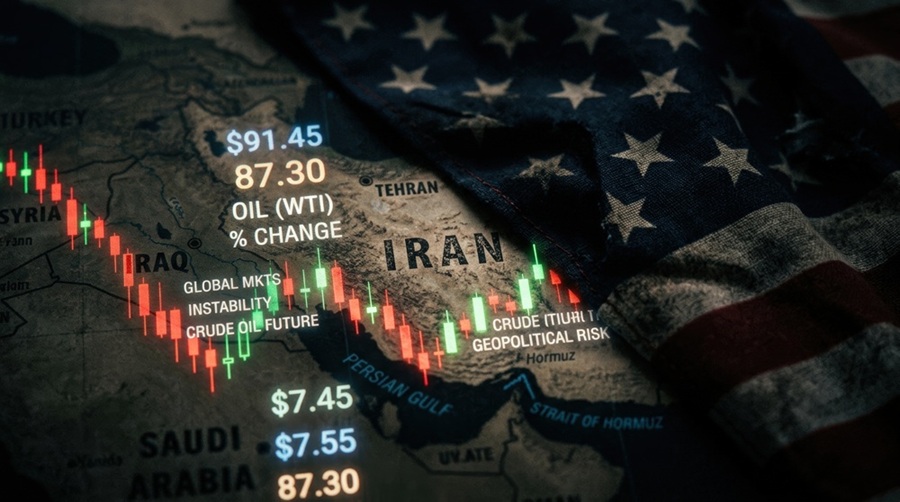
石油市场习惯于在停止结算之前就看上去已经定下来了。这就是现在的设置。
随着伊朗周边冲突的加剧,霍尔木兹海峡的交通量急剧下降,越来越多的船只因关闭AIS或自动识别系统而陷入黑暗,这些信号通常显示船只在哪里移动。霍尔木兹不只是另一条航道。它是世界上最重要的能源阻塞点之一,因此,当能见度开始消失时,供应风险就会回到对话的中心。
为什么现在这很重要
这很重要,有两个原因。
头条新闻是一回事。市场影响是另一回事。石油不仅关乎有多少桶,还关系到这些桶能否流动,谁愿意为它们投保,买家准备等待多长时间,以及交易者认为他们需要在多大风险的基础上定价。
目前,有三件事同时发生冲突:航运中断、外交脆弱以及市场已经严重倾向于一个方向。这种组合可以使布伦特原油的走势比基本面本身通常所暗示的要快。
是什么推动了这一举动
1 供应能见度恶化
第一个驱动程序很简单。市场看得更少,这往往会让市场更加紧张。
通过霍尔木兹的过境量急剧下降,而越来越多的交通量涉及不再广播标准跟踪信号的船只。简而言之,正常通过重要走廊的船只越来越少,越来越多的活动也变得越来越难以追踪。这并不自动意味着供应即将崩溃。但这确实意味着不确定性正在上升。
2 伊朗的储存缓冲区可能有限
第二个驱动因素是伊朗的出口和储存限制。
陆上储存容量估计约为4000万桶,市场正在关注有人所说的16天红线。到那时,长期的出口中断可能会开始迫使减产,以避免对储油库造成损害。对于新读者来说,要点很简单。如果石油不能储存足够长的时间,问题可能不再是出口延迟,而是开始成为真正的供应问题。
3 定位可以放大移动
第三个驱动因素是定位,这只是市场简写,说明在下一步行动发生之前交易者已经如何进行设置。
在这种情况下,投机性原油头寸显得严重片面。这很重要,因为当市场向一个方向倾斜得太远时,触发急剧调整并不需要太多时间。新的地缘政治冲击可能迫使交易者迅速采取行动,而一旦开始,价格的上涨幅度可能会超过单纯基础新闻所能证明的合理性。
为什么市场在乎
石油冲击很少能在能源市场内得到控制。
较高的原油价格可能会开始出现在运费、制造业和家庭能源账单中。这意味着通货膨胀预期可能会再次开始攀升。各国央行已经在努力管理粘性通货膨胀和疲软增长之间的艰难平衡,因此石油价格上涨会使这项工作变得更加艰难。
这不仅仅是一个关于石油生产商获得提振的故事。当能源成本上升时,航空公司、运输公司和其他对燃料敏感的企业可能会迅速承受压力。如果石油价格上涨使通货膨胀保持强于预期,则更广泛的股市可能还必须重新考虑政策前景。
连锁反应远不止石油
还有一个货币角度,它不如最初出现的那么简单。
当原材料价格上涨时,与大宗商品挂钩的货币,例如澳元,通常会获得支撑。但是这种关系不是自动的。如果石油价格因为全球需求改善而攀升,那可能会有所帮助。如果由于地缘政治风险激增而攀升,则市场可能会转向避险模式,即使大宗商品价格上涨,这也可能打压澳元。
这就是让这种举动比乍一看更有趣的原因。同样的石油涨势可以支撑市场的一个部分,同时给另一部分带来压力。
框架中的资产和名称
布伦特原油仍然是广泛供应风险中最明显的解读。如果交易者想要最简洁的头条新闻表达,通常是他们首先看的地方。
- 埃克森美孚是画面中最明显的名字之一。油价上涨可以支撑已实现的销售价格和短期的盈利势头,尽管这从来都不像石油上涨、囤积那么简单。成本、生产结构和更广泛的情绪仍然很重要。
- NexTera Energy 又增加了一层。这个故事不仅仅是关于化石燃料的。当能源安全成为一个更大的问题时,国内电力弹性、电网投资和替代发电的理由也将得到加强。
- 澳元/美元是另一个值得关注的市场。澳大利亚与大宗商品周期密切相关,因此原材料价格走强有时可以支撑该货币。但是,如果市场对恐惧的反应大于对增长的反应,那么通常的顺风可能不会成立。
对于新读者来说,关键是石油走势不会以整齐的、可预测的线条在市场中传播。它们不均匀地向外波动,帮助某些资产,给其他资产施加压力,有时两者兼而有之。
可能会出什么问题
强烈的叙述与单向交易不同。
停火可以比预期更快地稳定航运。欧佩克+可以通过提高产量来抵消部分紧张局势。来自中国的需求数据可能会令人失望,将焦点转移到消费疲软而不是供应受限上。而且,如果地缘政治溢价消退,石油回落的速度可能比当前情绪所暗示的要快。
对于新读者来说,要点很简单。石油涨势可以是真实的,但不是永久性的。短期内,中断风险可能证明此举是合理的,然后如果这些风险缓解或需求疲软,则迅速逆转。
市场不再孤立地对石油进行定价。这是定价可见性、运输安全性以及供应中断蔓延到通货膨胀、货币和更广泛的风险情绪中的风险。
这就是为什么Hormuz很重要,即使对于从未自己交易过一桶原油的读者来说也是如此。


The Political Event of the Year 2020 The most-waited political event of the year is fast approaching: the US elections will take place on the 3 rd of November. The nominees of the two main political parties - Republican and Democratic party are yet to be announced at the Presidential Nominating Convention. However, the clear frontrunners are President Trump and Joe Biden.
Without any doubt, this election will be widely monitored as US politics may affect the global economy, alliances and trade agreements. Markets were rattled by the long-drawn trade war between the world’s two powerful economies. Even though we kick-started 2020 with positive trade negotiations, the tussle between the US and China over the transparency of the coronavirus outbreak worsen the already fragile relationship.
Ahead of the Presidential election, investors are bracing for the tensions between the US and China to get worse as it is a politically-motivated move by President Trump to win another term. Rightly so, the recent new tech war between the two countries are keeping the markets on edge. The COVID-19 Effect In modern times, history has shown that an incumbent President has a clear advantage and usually wins re-election.
The last president to lose re-election was George W Bush which was mostly due to an economic recession. Therefore, in recent history, an incumbent President has never failed to win a second term unless a recession has occurred during their time as president. At the beginning of the year, the odds of President Trump winning the election was high.
US-China Tensions & COVID-19 The Trump administration had a tough stance against China which had bode well with a majority of Americans. As per Pew Research Center: 73% of US Adults say they have an unfavourable view of China. Around two-thirds of Americans (64%) say China has done a bad job dealing with the coronavirus outbreak.
Around three-quarters (78%) place a great deal or fair amount of the blame for the global spread of the coronavirus on the Chinese government’s initial handling of the COVID-19 outbreak in Wuhan. However, as the virus continues to spread across the globe, the US recorded around 5.3 million of coronavirus cases with more than 165,000 deaths. The US was hit the hardest by the pandemic and the handling of the outbreak by the Trump administration was questioned.
The President has failed to timely respond to the crisis, is also being blamed for sidelining the advice of the experts and played down the severity of the coronavirus crisis. Strong US economy Heading into the election year, the US President was confident that its hard stance on China and a thriving US economy with a historically strong labour market and greater economic security will be the focal points of his election campaign. However, the US economy contracted due to the various forms of lockdown amid the pandemic.
The preliminary Q2 GDP figures show that the US is poised to shrink by a 32.9% – the deepest decline in decades. The pandemic continues to wreak havoc across the globe and the outlook for the third quarter remains murky. COVID-19 Changed the Odds As per the latest polls, the odds have changed – the battleground states look good for Joe Biden.
The presumptive Democratic nominee even has big leads over states like Michigan, Pennsylvania and Wisconsin where the Republicans won by margins of less than 1% in the last election: The most recent data suggest that even Republicans supporters are questioning its response to the coronavirus pandemic. COVID-19 is unlikely to fade away by the election date and combined with the uncertainty about the state of the US economy – the current polls show that Joe Biden is running well ahead of President Trump. Republicans and Democrats: Policies and Markets Under any presidential campaign, tax policies are the primary factor for the markets because of its direct impact on corporate valuation.
The Republicans are supposedly considered as more “market-friendly” compared to Democrats. Cutting Taxes vs Raising Taxes In simpler words, the Republicans encourage tax cuts and believe in an income tax system that does not unfairly target those who create jobs and wealth while Democrats support a more progressive tax structure to provide more services and reduce economic inequality by making sure that the wealthiest Americans pay the highest amount in taxes. After the 2016 election, markets rallied on the assumption of promises of tax cuts and faster economic growth.
However, the trade war has created an uncertain environment for investors and the economy did not progress in the way expected. For Joe Biden to see through this agenda, he plans to make new, bold investments and speed up the timetable for many of the 10-year investments he has already announced. He will pay for the ongoing costs of the plan by reversing some of Trump’s tax cuts for corporations and imposing common-sense tax reforms that finally make sure the wealthiest Americans pay their fair share.
Stock Market Performance by President The below interactive chart shows the percentage gain in the Dow Jones Industrial Average by Presidential term. Despite the pro-business policies, the Dow performed better under Barack Obama over the same time frame as compared to President Trump. Generally, a Democratic win means higher taxes which will negatively affect corporate valuation and the stock market.
However, we have seen that there are higher market returns under Democrats as both the combination of higher taxes and government spending stimulate the economy and support the markets. Source: MacroTrends The Need for More Fiscal Stimulus In a pandemic-induced environment, markets are in a need of more fiscal support from the government. The Fed Chair Jerome Powell has also emphasised on the importance of fiscal stimulus to support the economy.
The Democrats seem to be in favour of more government spending than the Republicans. A Democratic Sweep – Bad for Markets? Leading up to the election date, volatility may be high but markets will eventually adjust to either the Republicans or Democrats policy changes.
Investment opportunities will arise irrespective of a Democratic or Republican win. Some investors may concentrate on certain industries or sectors that can be impacted as the opposing views of both parties on renewable energy, climate, trade policies and health care could affect stocks related to those industries. But most importantly, this election will be geared towards finding a government that will fight the pandemic more effectively and also eased trade tensions with key allies.
A democratic sweep may not be as disastrous as investors fret as historically stocks did also well under the Democrats and in some cases even better than under the Republicans.
Which safe-haven to choose in 2020 – Gold or the Mighty Dollar? In times of uncertainties – be it economical, political or policy-related, investors generally seek safety with haven assets like the US dollar, Japanese Yen, Swiss franc or Gold. Our attention today is on Gold and the US dollar, both of which have had an interesting start to the year so far.
Gold Major equity indices reached fresh record highs in January. Yet, gold price remains in elevated levels around $1,550. It is a situation of “cautious” risk appetite.
The narrative is simple. Investors are still navigating in an environment with high levels of uncertainties, despite easing trade tensions and receding recession fears: QE and record low-interest rates Geopolitical tensions Global growth uncertainties Growing global debt China’s commitment to Phase One Major central banks are pumping money into the economy through quantitative easing and are reducing interest rates to stimulate the economy, hence driving demand for riskier assets. Hard assets like gold are therefore generally sought as investors are hedging against poor fundamentals and the long-term headwinds.
Currently, the fears that the Coronavirus may spread to more countries and dent economic growth are also boosting the short-term outlook for gold. US Dollar Index We are seeing a stronger US dollar but the greenback acting as a safe-haven will likely face some limitations. The Federal Reserve cut interest rates three times last year, mainly due to weaker global growth and trade tensions.
Lower rates and still a stronger US dollar? The US dollar is gaining a competitive advantage over its peers in the currencies market. The US economy is stronger and the Fed is considered to be less-dovish than other central banks.
While some might still need to reduce interest rate further in 2020, the Fed is expected to remain on pause with the expectations of being among the first central banks to be able to start hiking again in 2021. The Tandem Given that gold is internationally quoted against the US dollar, any appreciation or depreciation of the greenback will generally cause an inverse reaction in the price of gold. A strong dollar will therefore negatively affect the price of gold.
Since the beginning of the year, instead of a negative correlation, both the US dollar Index which represents the performance of the greenback against a basket of currencies and the XAUUSD pair are moving in tandem. An alignment which is unusual but occasionally occurs during periods of heightened geopolitical and economic risks. Source: Bloomberg Quantitative Easing and Central Bank Gold Hoarding Quantitative easing is a controversial and unconventional monetary measure used by central banks to pump money into their economies.
Recession fears and lack of inflation growth despite a decade of low- interest rate have forced central banks to reconsider QE in 2019. The ECB has resumed the QE process while the Fed is providing liquidity in the repo markets. While the Fed denies that the interventions are not technically a new phase of QE, such liquidity interventions in the markets instilled fears of a struggling global economy.
As a result, QE is triggering a rally in gold. The Favourite Mighty Dollar At the same time, the US dollar is being favoured in the currencies market as it retains a positive interest rate differential with many countries. Overall, investors are looking for the next best alternative.
The US economy is not shielded from the global headwinds, but are perceived as performing better in comparison to other major countries. Is Gold a Better Safe-Haven? As major economies engage in easing monetary policies, central banks are also piling up on gold.
Emerging markets like China and Russia have also increased their gold reserves over concerns on currencies like the US dollar and Euro. Why? To diversify away from the US dollar?
A stock rally and a stronger dollar do not seem to have tamed the rise of gold. The stock rally is being driven by the QE process, easing trade tensions and receding recession fears, while the US dollar is being favoured over its peers. However, we note that a partial trade deal and a global economy poised for a mini-recovery could limit the potential upside of the US dollar.
The “by-default” strengthening of the US dollar could limit the effectiveness of the actions enacted by the Fed to shelter its economy from global headwinds. Also, the global growth narrative is dependent on China’s commitment to Phase One. Both are moving together, but the magnitude is different.
The current sentiment is positive yet fragile due to the uncertainties, which is creating a favourable environment for the precious metal. About GO Markets GO Markets was established in Australia in 2006 as a provider of online CFD trading services. For over a decade we have positioned ourselves as a firmly trusted and leading global regulated CFD provider.
Traders can access hundreds of CFD instruments including Forex, Shares, Indices and Commodities. Follow us and keep up to date with the latest market news and analysis.
Tyson Foods & Skyworks Earnings Reports Tyson Foods and Skyworks are among the two major earnings results released on Monday. The meat processor reported its quarterly results before the open while Skyworks Solutions issued its reports after market close. Tyson Foods, Inc. (NYSE: TSN) Tyson Foods is one of the largest processors and marketer of chicken beef and pork.
The company is considered as one of the world’s largest food companies and a leader in protein. The lockdown measures have seen temporary plant closures, reduced, member attendance, and supply chain volatility, which have forced the company to adjust its product mix and redirect products accordingly. Second Quarter Highlights: GAAP EPS of $1.00, down 15% from the prior year; Adjusted EPS of $0.77, down 36% from the prior year GAAP and Adjusted operating income of $501 million Total Company GAAP and adjusted operating margin of 4.6% Record total Company sales of $10,888 million Secured $1.5 billion term loan facility Tyson Foods has welcomed the actions of the government to strengthen the food supply chain and prioritising support for meat and poultry processors last week, but the company is still anticipating to operate under multiple challenges related to the pandemic which is expected to drive operating costs higher and negatively impact volumes for the remainder of fiscal year 2020.
Given the uncertainty, the Company withdrew its annual guidance and warned of shortages of protein in grocery stores across the US, mainly due to the closures of facilities and a lack of workers. Also, almost 900 employees at a processing plant in Indiana were tested positive for COVID-19. Amid a gloomy outlook for the meat market, the shortages have driven prices of protein like pork and beef higher.
Source: Bloomberg The company’s share price which has remained quite resilient in the month of April tumbled by almost 8% on Monday to $55.32. Skyworks Solutions, Inc. (Nasdaq: SWKS) The semiconductors manufacturer is an innovator of high-performance analog semiconductors connecting people, pace and things. The company’s wireless technologies are playing a key role as the world goes remote.
Leveraged our Sky5® platform across flagship 5G handset launches at Samsung, Oppo, Vivo, Xiaomi and other Tier-1 players Expanded our technology reach across our customized Diversity Receive platforms, with new 5G-centric solutions being deployed across a growing set of customers Ramped wireless remote patient monitoring systems with GE Extended our market leadership in Wi-Fi 6 home and enterprise-grade gateways at Cisco Enabled home security systems at Honeywell Accelerated content across multiple automotive leaders including Volkswagen, Renault, Hyundai and Nissan Launched asset tracking and fleet management solutions at Juniper and Blackberry Powered 5G mobile hotspots with Verizon and AT&T, supporting work-from-home trends Supported 5G Massive MIMO and small cell base station deployments across the U.S., Europe and Japan The company reported earnings of $1.34 per share on revenue of $766m which came above estimates. However, Skyworks provided a weaker guidance outlook for its third quarter between $670m and $710m in revenue. Its share price struggled to find a firm direction in after-hours trading.
Walt Disney, Activision Blizzard, and Beyond Meat are among the few that are expected to report earnings on Tuesday. After the warnings of shortages by the meat giant, Tyson Foods, Beyond Meat will be on investors’ watchlist.
Monday started on a buoyant note as the weekend negotiations between the US and the Chinese officials on structural issues, including intellectual property protection, technology transfer, agriculture among others were productive which encouraged President Trump to extend the 1 st March deadline. Asian stocks and trade-sensitive currencies like the Antipodeans are flashing green. Given that the deadline has been extended, the chances of a trade deal between the two world largest economies also rises which is boding well with investors.
MSCI Asia Pacific Index rose by 0.5% as of writing. Asian stocks edged higher as investors are cheering up the latest signs of progress. Source: Bloomberg Terminal In the Australian share market, the real estate sector was the biggest dragger on the ASX today.
However, the broad optimism in the market helped the index to close in positive territory despite paring gains in the afternoon trade. USDCNH – The Yuan is climbing higher sending the USDCNH pair to its lowest level since July 2018. USDCNH (Weekly Chart) Source: GO MT4 The Antipodeans being trade-sensitive currencies are finding buyers on trade optimism.
However, we can see that AUDUSD and NZDUSD are finding resistance as domestic fundamentals are keeping a lid on the gains. After a strong Retail Sales figures, the NZD pairs gapped higher on the open. However, the pairs are unable to keep the bullish momentum due to the weak fundamentals.
On the technical side, the pairs are in the overbought conditions as per the RSI. NZDUSD and AUDUSD (Hourly Chart) Source: GO MT4 The move in the financial markets in the Asian session following the “delay” announcement has not been huge, but it lifted sentiment and brought relief to the markets!
Investors generally piled-up in the Gold and the US dollar as those assets are viewed as safe-haven during times of crisis or uncertainties- be it economical, political or policy uncertainties. 2020 has been a year of extreme uncertainty and volatility which saw the world battling an unprecedented and paralleled health and economic crisis in modern times. Gold With the passing months and fears of second waves of an outbreak, the predominant uncertainty for the markets is when will the world recover from both crises. In such an environment of doubt, investors are either hedging or seeking safety from volatile investments with haven assets like the gold.
The precious metal has been on a tremendous rally since the pandemic rattled the markets. Aside from the economic and health crisis, geopolitical tensions, massive stimulus packages and the uncertainty on the US election have fuelled the rally in gold. The XAUUSD pair has even traded around the elevated levels seen during the financial crisis and reached a high of $2,075 in the month of July.
Source: GO MT4 Since August, the XAUUSD pair has been trading within a range as investors digested some positive vaccines updates, improving economic data and easing lockdown restrictions. The indecisiveness of investors is reflected by the Doji candle on the monthly chart found at the top of the upside trend which suggested a sign of possible reversal of price direction. Source: GO MT4 Technical Bearish Signal Recently, the gold has plummeted and flashed a bearish signal after dropping below its 50-day moving average.
The move has flagged further potential downside risks for the precious metal. Generally, the gold is quoted in dollar terms and moves in the opposite direction with the US dollar. As the greenback gathers strength, the XAUUSD pair is struggling to firm to the upside despite the geopolitical and economic uncertainties.
Most importantly, the pair broke the key psychological level of $1,900 to trade around the $1,865 level on Wednesday. Even though gold may be poised for further downside dragged by the strengthening dollar, the precious metal remains at elevated levels. Traders are to keep monitoring geopolitical headlines, central banks decisions, inflation levels, and leading economic data for fresh trading impetus.
The US Dollar At the start of the pandemic, investors rushed to the mighty dollar when they were confronted with the scale of the crisis. However, as the outbreak furiously spread across the globe, the US soon emerged as the country hit the hardest. The crippling effect of the pandemic on the US economy has caused the US dollar to lose its haven status and its preference over its peers.
Also, while the US was battling a political deadlock, the European Union has shown an unprecedented sense of unity which prompted investors to shift their focus away from the greenback to riskier currencies. Source: GO MT4 However, the US dollar made an impressive comeback this week. As Europe grappled with a second wave of an outbreak which may give rise to further lockdown restrictions, the US dollar is seen rising over the virus fears.
At the same time, a rout in the technology sector and a fragile risk sentiment in the stock market has helped the greenback to regain its safe-haven status. Major US equity benchmarks retreated sharply by more than 1.5% on four occasions since the end of August. Technical Bullish Signal On the technical side, the US dollar index broke out of its bearish downtrend to test the 50-day moving average on the back of its haven status amid the financial market volatility.
Recently, central banks have been more dovish which has also provided some support to the US dollar. We have seen more central banks looking at negative interest rates and other easing monetary policies as viable options. At such inflection point for the US dollar and the Gold, the guidance from central banks and governments will continue to drive the action in those haven assets while investors await news and updates on the vaccine front.
The Perfect Storm Brewing in the Oil Market The oil and gas industry has been undergoing significant challenges due to the structural shift within the industry. A pandemic-induced economic downturn and an oil price war have now added another layer of uncertainty to the oil markets. Tensions between Saudi Arabia and Russia have disrupted the stability that the oil industry requires to be able to remain afloat during such difficult times.
Demand and Supply Shock The oil market is facing both a demand and supply shock, simultaneously. In other words, there is a flood of supply at a moment of diminishing demand. Demand: Different forms of lockdowns across the globe due to the pandemic means empty roads, grounded aircraft, plunging car sales and disrupted supply chains.
These industries are key consumers of oil. Supply: An oil price war between Saudi Arabia and Russia was the tip of the iceberg and triggered the flash crash in March. The oil kingdom raised output to full capacity to fight a price war with its rivals, destabilising the oil market at a critical time during the coronavirus pandemic.
Tensions among oil producers are not uncommon but crude oil prices experienced steep declines, due to weak fundamentals and geopolitical tensions. Multi-year Low The flash crash in March has nearly halved crude oil prices. During the month, trading was highly volatile - WTI and Brent Crude traded more than 45% lower to a multi-year low at $20.50 and $24.
Stimulus Packages Brought Some Stability The bold actions from central bankers and governments to implement new and massive monetary and fiscal packages to stem the downturn helped the oil market from a temporary bottom. As of writing, WTI and Brent Crude have stabilised and have consolidated around the $22 and $26 levels, respectively. USOUSD AND UKOUSD (Monthly Chart) Source: GO MT4 An Oil Storage Problem Global activities are slowing down on a massive scale, sapping demand while big producers like Saudi Arabia and Russia tugged in a price war are raising productions.
At this rate, giant oil producers are set to run out of storage capacities within a few weeks or months. The US and Saudi Arabia Negotiations The oil market had a breather this week. Risk sentiment has improved, and it was also reported that the US and Saudi Arabia are in discussions to end the price war and bring some stability to the oil markets.
Investors will rely on political intervention to halt the freefall. An oil storage problem, higher storage costs, faltering demand and a significant rise in production are creating a perfect storm for the oil market.