The primary reason for the drop in price is the economic slowdown that has become prevalent in the global market. As fears of a recession continue to grow, the price of Oil has continued to drop. To make matters worse, the G7 have set a $60 per barrel price cap.
This price cap was created to restrict Russia’s ability generate revenue from its oil exports by making the G7 Oil more competitive. From a fundamental perspective this may push the price lower towards the price cap. On the contrary, Russia has threatened to reduce its supply which would force the price to rise.
The situation remains volatile and subject to geopolitical shifts. From a technical perspective the price of Brent Oil is now at its lowest level for the year and below the levels prior to the Russia and Ukraine war. The price is also now well below the 200 day and 50 day moving averages and is dropping at a fast rate.
The price is currently resting on the $76 support levels with the next point of support at $70. If this level fails, as stated above the logical support is $60 based on the price cap. It is also interesting to note that the price of Brent is at its lowest RSI level since December 2021.
In recent times every time since 2022, it has been this low the price has bounced in the short term. On the weekly chart, the price is very similar although the RSI has more room to go before it hits the oversold level. This indicates that there may be more of a sell off before a bounce occurs.
With global volatility still high and fears of a recession continuing to grow, the price of oil may continue to fall.
By
GO Markets
The information provided is of general nature only and does not take into account your personal objectives, financial situations or needs. Before acting on any information provided, you should consider whether the information is suitable for you and your personal circumstances and if necessary, seek appropriate professional advice. All opinions, conclusions, forecasts or recommendations are reasonably held at the time of compilation but are subject to change without notice. Past performance is not an indication of future performance. Go Markets Pty Ltd, ABN 85 081 864 039, AFSL 254963 is a CFD issuer, and trading carries significant risks and is not suitable for everyone. You do not own or have any interest in the rights to the underlying assets. You should consider the appropriateness by reviewing our TMD, FSG, PDS and other CFD legal documents to ensure you understand the risks before you invest in CFDs. 免责声明:文章来自 GO Markets 分析师和参与者,基于他们的独立分析或个人经验。表达的观点、意见或交易风格仅代表作者个人,不代表 GO Markets 立场。建议,(如有),具有“普遍”性,并非基于您的个人目标、财务状况或需求。在根据建议采取行动之前,请考虑该建议(如有)对您的目标、财务状况和需求的适用程度。如果建议与购买特定金融产品有关,您应该在做出任何决定之前了解并考虑该产品的产品披露声明 (PDS) 和金融服务指南 (FSG)。
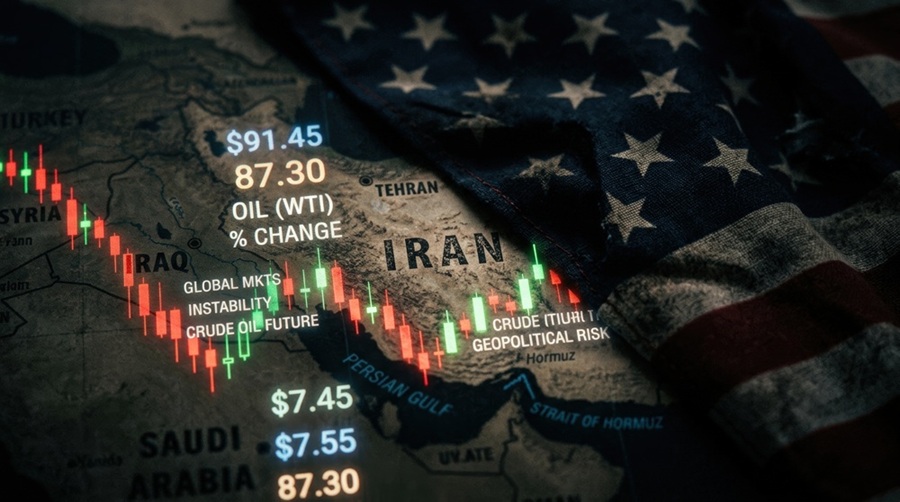
A headline about a civilisation "dying tonight" is built to overwhelm, but the more telling signal may be the calm underneath it, because markets are starting to treat this cycle of sharp escalation followed by sudden de-escalation as a pattern, not a surprise.
全球顶级大厂对最前沿先进制程晶圆以及高端先进封装的贪婪蚕食速度,已经远远把底层供应链的常态扩产周期甩在了身后。这种持仓超载带来的**内生脆性风险**,正在强行迫使顶级 AI 巨头未雨绸缪地去寻找替代制造水源 —— 这绝非他们要脱离或抛弃台积电,而是因为在风控准则上,大厂绝不能将万亿美元的算力帝国单边绑死在单一地理节点的供应链上。
一颗顶级 AI 算力大芯片的诞生,绝不仅仅是将光刻机在晶圆上蚀刻出电路那么简单。工程师必须在微观层面上,将算力核心的核心中央处理器、海量的高带宽显存(HBM)以及其他异构组件,以极度变态的物理密度进行拼装互联,使其在财务能效比上能像一个闭环整体那样爆发出超级算力。这一道决定生死的终极组装工艺,在行业内被统称为高级先进封装。
看涨英特尔(Intel) Foundry 战略的长线逻辑极具说服力:**全球 AI 基础设施建设资本支出依旧高亢暴动**,台积电的物理承载力逼近绝对瓶颈,跨国巨头急切需要一个在技术、地缘和产权安全上完全靠得住的第二制造温床。如果英特尔能够成功将目前传出的多项大厂试单测试意向真正沉淀为流水线上的量产出货,华尔街将乐此不疲地对其转型前景执行暴利重新计价。
更底层的风险在于**全球 AI 硬件资本支出的大周期拐点**。倘若在 5 月 27 日核心宏观数据和美债收益率冲高的双重压制下,谷歌、微软、亚马逊或 Meta 等超大规模云厂商在下半年对数据中心等重资产砸钱的步伐出现边际失速,那么整场芯片战争所赖以生存的总蛋糕都将面临残酷的系统性估值倍数(Valuation Multiple)大清洗,届时全行业泥沙俱下,任何个股的微观进展都绝无可能在大雪崩中逆势独活。
作为坐在交易面板前的你,未来决定多空头寸生死存亡的终极监测变量包括:顶级大厂生产性订单的最终法律合同落地、18A 制程的量产良率拐点、英特尔代工单元经营性亏损的边际改善情况、台积电先进封装的扩产速度,以及全球超大规模云厂商的 AI 资本开支大盘有无发生见顶刹车。