

市场资讯及洞察

石油市场习惯于在停止结算之前就看上去已经定下来了。这就是现在的设置。
随着伊朗周边冲突的加剧,霍尔木兹海峡的交通量急剧下降,越来越多的船只因关闭AIS或自动识别系统而陷入黑暗,这些信号通常显示船只在哪里移动。霍尔木兹不只是另一条航道。它是世界上最重要的能源阻塞点之一,因此,当能见度开始消失时,供应风险就会回到对话的中心。
为什么现在这很重要
这很重要,有两个原因。
头条新闻是一回事。市场影响是另一回事。石油不仅关乎有多少桶,还关系到这些桶能否流动,谁愿意为它们投保,买家准备等待多长时间,以及交易者认为他们需要在多大风险的基础上定价。
目前,有三件事同时发生冲突:航运中断、外交脆弱以及市场已经严重倾向于一个方向。这种组合可以使布伦特原油的走势比基本面本身通常所暗示的要快。
是什么推动了这一举动
1 供应能见度恶化
第一个驱动程序很简单。市场看得更少,这往往会让市场更加紧张。
通过霍尔木兹的过境量急剧下降,而越来越多的交通量涉及不再广播标准跟踪信号的船只。简而言之,正常通过重要走廊的船只越来越少,越来越多的活动也变得越来越难以追踪。这并不自动意味着供应即将崩溃。但这确实意味着不确定性正在上升。
2 伊朗的储存缓冲区可能有限
第二个驱动因素是伊朗的出口和储存限制。
陆上储存容量估计约为4000万桶,市场正在关注有人所说的16天红线。到那时,长期的出口中断可能会开始迫使减产,以避免对储油库造成损害。对于新读者来说,要点很简单。如果石油不能储存足够长的时间,问题可能不再是出口延迟,而是开始成为真正的供应问题。
3 定位可以放大移动
第三个驱动因素是定位,这只是市场简写,说明在下一步行动发生之前交易者已经如何进行设置。
在这种情况下,投机性原油头寸显得严重片面。这很重要,因为当市场向一个方向倾斜得太远时,触发急剧调整并不需要太多时间。新的地缘政治冲击可能迫使交易者迅速采取行动,而一旦开始,价格的上涨幅度可能会超过单纯基础新闻所能证明的合理性。
为什么市场在乎
石油冲击很少能在能源市场内得到控制。
较高的原油价格可能会开始出现在运费、制造业和家庭能源账单中。这意味着通货膨胀预期可能会再次开始攀升。各国央行已经在努力管理粘性通货膨胀和疲软增长之间的艰难平衡,因此石油价格上涨会使这项工作变得更加艰难。
这不仅仅是一个关于石油生产商获得提振的故事。当能源成本上升时,航空公司、运输公司和其他对燃料敏感的企业可能会迅速承受压力。如果石油价格上涨使通货膨胀保持强于预期,则更广泛的股市可能还必须重新考虑政策前景。
连锁反应远不止石油
还有一个货币角度,它不如最初出现的那么简单。
当原材料价格上涨时,与大宗商品挂钩的货币,例如澳元,通常会获得支撑。但是这种关系不是自动的。如果石油价格因为全球需求改善而攀升,那可能会有所帮助。如果由于地缘政治风险激增而攀升,则市场可能会转向避险模式,即使大宗商品价格上涨,这也可能打压澳元。
这就是让这种举动比乍一看更有趣的原因。同样的石油涨势可以支撑市场的一个部分,同时给另一部分带来压力。
框架中的资产和名称
布伦特原油仍然是广泛供应风险中最明显的解读。如果交易者想要最简洁的头条新闻表达,通常是他们首先看的地方。
- 埃克森美孚是画面中最明显的名字之一。油价上涨可以支撑已实现的销售价格和短期的盈利势头,尽管这从来都不像石油上涨、囤积那么简单。成本、生产结构和更广泛的情绪仍然很重要。
- NexTera Energy 又增加了一层。这个故事不仅仅是关于化石燃料的。当能源安全成为一个更大的问题时,国内电力弹性、电网投资和替代发电的理由也将得到加强。
- 澳元/美元是另一个值得关注的市场。澳大利亚与大宗商品周期密切相关,因此原材料价格走强有时可以支撑该货币。但是,如果市场对恐惧的反应大于对增长的反应,那么通常的顺风可能不会成立。
对于新读者来说,关键是石油走势不会以整齐的、可预测的线条在市场中传播。它们不均匀地向外波动,帮助某些资产,给其他资产施加压力,有时两者兼而有之。
可能会出什么问题
强烈的叙述与单向交易不同。
停火可以比预期更快地稳定航运。欧佩克+可以通过提高产量来抵消部分紧张局势。来自中国的需求数据可能会令人失望,将焦点转移到消费疲软而不是供应受限上。而且,如果地缘政治溢价消退,石油回落的速度可能比当前情绪所暗示的要快。
对于新读者来说,要点很简单。石油涨势可以是真实的,但不是永久性的。短期内,中断风险可能证明此举是合理的,然后如果这些风险缓解或需求疲软,则迅速逆转。
市场不再孤立地对石油进行定价。这是定价可见性、运输安全性以及供应中断蔓延到通货膨胀、货币和更广泛的风险情绪中的风险。
这就是为什么Hormuz很重要,即使对于从未自己交易过一桶原油的读者来说也是如此。
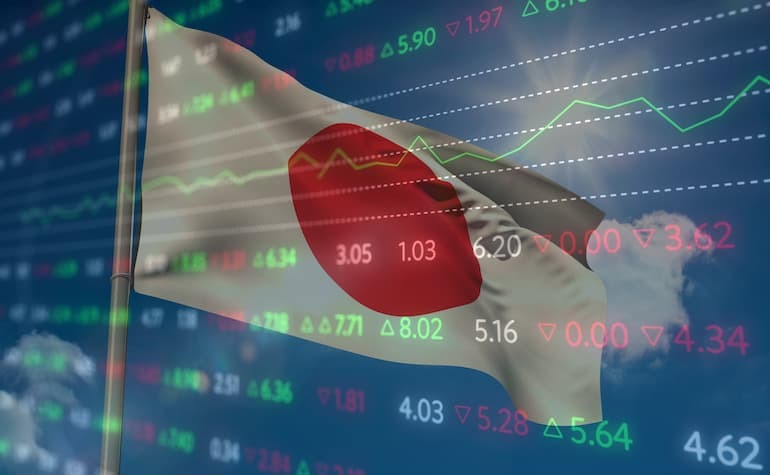

The Bank of Japan is due to hold its first monetary policy meeting under new Governor Ueda on the 29th of April 2023. Since his appointment, Governor Ueda has frequently indicated that the BoJ will continue with its current easing stance on monetary policy with targets for long and short-term interest rates. Although headline and core inflation runs above 3% and the 10Y JGB yields have again climbed close to the ceiling at 0.50%, it is unlikely that Gov Ueda would introduce a widening of the Yield Curve Control (YCC) at this meeting.
However, while a lack of action from the BoJ is widely expected, this could still result in a further weakening of the Japanese Yen across the board. The USDJPY currently trades along the 134 price level, with the upside capped by the 135 resistance level which coincides with the 61.8% Fibonacci retracement level from the longer term. A weakening of the Yen could see the USDJPY break above the resistance level and climb higher toward the next key resistance level at 138.
This potential move higher is also signaled by the cross-over on the MACD indicator. Alternatively, if the BoJ surprises markets by announcing a widening of the YCC or an adjustment to the current monetary policy, this could result in a sharp strengthening of the Japanese Yen. In this scenario, the GBPJPY could reverse strongly from the resistance area of 168 to trade significantly to the downside toward the immediate support level at 165.50 which aligns with the 23.6% Fibonacci retracement level.
Bank of England announced the latest policy decision on Thursday, raising interest rates for the 12th consecutive time from 4.25% to 4.5%, which was in line with expectations. Bank of England’s Monetary Policy Committee voted by a majority of 7-2 to raise interest rates to 4.5%. Two members voted to maintain the interest rate unchanged at 4.25%.
The current interest rate is at its highest level since October 2008. Inflation UK’s annual inflation rate decreased from 10.4% to 10.1% in April and remains high. The bank expects inflation to continue falling in Q2 and in the near term. ''CPI inflation is expected to fall sharply from April, in part as large rises in the price level one year ago drop out of the annual comparison.
In addition, the extension in the Spring Budget of the Energy Price Guarantee and declines in wholesale energy prices will both lower the contribution from household energy bills to CPI inflation. However, food price inflation is likely to fall back more slowly than previously expected. Alongside news in other goods prices, this explains why the Committee’s modal expectation for CPI inflation now falls back more slowly than in the February Report.'' Economic outlook As for the economy, the central bank expects it to remain flat but there are signs potential growth. ''UK GDP is expected to be flat over the first half of this year, although underlying output, excluding the estimated impact of strikes and an extra bank holiday, is projected to grow modestly.
Economic activity has been less weak than expected in February, and the Committee now judges that the path of demand is likely to be materially stronger than expected in the February Report, albeit still subdued by historical standards. The improved outlook reflects stronger global growth, lower energy prices, the fiscal support in the Spring Budget, and the possibility that a tight labour market leads to lower precautionary saving by households.'' The unemployment is expected to remain below 4% until the end of next year. Market reaction The Pound was weaker against the US dollar on Thursday, down by around -0.93% at 1.25089.
FTSE100 was down by -0.14% at 7733.41. The next Bank of England rate decision will be on 22 nd June. Source: Bank of England, Trading Economics, MetaTrader 5
Major Asian stock indexes are following the lead from Wall St where US stocks finished broadly lower in a choppy, low volume session as economic news disappointed, Fed talking heads remained hawkish and a mixed batch of earnings. The ASX200 and Nikkei down around 0.24% while the Hang Seng down just over 0.5 a % FX Markets Have mostly continued with US dollar strength, the Aussie and Kiwi dollars have both declined against the greenback in the Asian session so far. The Aussie dollar is looking to test the 0.67 level where it found support yesterday, and the Kiwi dollar in similar action looking to also test yesterdays lows at 0.6150.
Both the Aussie and Kiwi suffering from a risk off mood to the markets on the weak economic data released in the US overnight. The JPY is bucking the USD strength trend though with a Hotter than expected CPI figure released today supporting the Yen as well as safe haven flows. core inflation came in at 3.1% vs 3% expected. We also have a BoJ meeting next week, the first for the new governor and one where we may get a hawkish surprise regarding The BoJ policies going forward which seems to be adding to Yen strength. commodities Gold has modestly declined this morning, but holding just above the 2000 USD an ounce level where there has been a real battle between the bulls and the bears the last few days and will be an important level to watch going into tonight's US and European session.
World’s largest company Apple Inc. (NASDAQ: APPL) announced the latest financial results after the market closed in the US on Thursday. After disappointing results last quarter, the company bounced back in the fiscal 2023 second quarter ended April 1, 2023, topping revenue and earnings per share (EPS) estimates. Company overview • Founded: April 1, 1976 • Headquarters: 1 Apple Park Way, Cupertino, California, United States • Number of employees: 164,000 (2022) • Industry: consumer electronics, software services, online services • Key people: Arthur D.
Levinson (chairman), Tim Cook (CEO), Jeff Williams (COO), Luca Maestri (CFO) The results Apple reported revenue of $94.836 billion for the quarter vs. $92.906 billion expected. Revenues were up down by 3% from the same period last year. EPS reported at $1.52 per share (unchanged year-over-year) vs. $1.429 per share expected.
The company announced a dividend of $0.24 per share. CEO commentary "We are pleased to report an all-time record in Services and a March quarter record for iPhone despite the challenging macroeconomic environment, and to have our installed base of active devices reach an all-time high," Apple’s CEO, Tim Cook said in a letter to investors. "We continue to invest for the long term and lead with our values, including making major progress toward building carbon neutral products and supply chains by 2030," Cook concluded. The stock was down by just shy of 1% at market close on Thursday at $165.77 a share.
Share price rose by around +2% in after-hours following the latest results. Stock performance • 1 month: +0.69% • 3 months: +9.93% • Year-to-date: +27.60% • 1 year: +5.75% Apple price targets • Rosenblatt: $173 • Baird: $180 • B of A Securities: $173 • Deutsche Bank: $170 • Barclays: $149 • JP Morgan: $190 • Wedbush: $205 • Credit Suisse: $188 Apple is the largest company in the world with a market cap of $2.640 trillion, according to CompaniesMarketCap. You can trade Apple Inc. (NASDAQ: APPL) and many other stocks from the NYSE, NASDAQ, HKEX, ASX, LSE and DE with GO Markets as a Share CFD.
Sources: Apple Inc., TradingView, MarketWatch, MetaTrader 5, Benzinga, CompaniesMarketCap, Wikipedia

American Express Company (NYSE: AXP) announced first quarter financial results before the market open on Thursday, setting a new quarterly revenue record. Company overview Founded: March 18, 1850 Headquarters: New York, United States Number of employees: 77,300 (December 2022) Industry: Banking, financial services Key people: Stephen J. Squeri (Chairman & CEO), Jeffrey C.
Campbell (Executive VP & CFO) The results American Express reported revenue that broke all previous quarterly records at $14.281 billion (up by 16% from the same period last year) vs. $13.981 billion expected. Earnings per share (EPS) reported at $2.40 per share (down by 12% year-over-year), falling short of analyst estimate of $2.656 per share. CEO commentary ''Our first-quarter results reflect strong growth in Card Member spending and continued high engagement with our premium products, tracking with the full-year 2023 guidance we provided in January, which we are reaffirming today, for revenue growth of 15 percent to 17 percent and earnings per share of $11.00 to $11.40,'' Stephen J.
Squeri, Chairman and CEO of the company said in a press release to investors. ''Revenue grew 22 percent from a year earlier to reach a quarterly record, as Card Member spending rose 16 percent on an FX-adjusted basis. Travel and Entertainment spending was particularly robust, growing 39 percent on an FX-adjusted basis and in March, we saw a record level of reservations booked on our Resy restaurant platform. We also saw an acceleration in spending in our International Card Services segment, which increased 29 percent on an FX-adjusted basis.
Spending on Goods and Services around the globe grew 9 percent on an FX-adjusted basis.'' ''Our customers have been resilient thus far in the face of slower macroeconomic growth, elevated inflation and higher interest rates, with credit performance remaining best-in-class. That said, we’re mindful of the mixed signals in the external environment.'' ''Based on our performance to date and the momentum we see in our business, we remain confident in our ability to achieve our longer-term growth plan aspirations,'' Squeri concluded. The stock was down by around -1% on Thursday at $162.41 per share.
Stock performance 1 month: -0.26% 3 months: +10.54% Year-to-date: +9.87% 1 year: -12.60% American Express price targets SVB Securities: $220 Piper Sandler: $179 BMO Capital: $197 Citigroup: $152 Jefferies: $170 American Express is the 109 th largest company in the world with a market cap of $120.91 billion, according to CompaniesMarketCap. You can trade American Express Company (NYSE: AXP) and many other stocks from the NYSE, NASDAQ, HKEX, ASX, LSE and DE with GO Markets as a Share CFD. Sources: American Express Company, TradingView, MarketWatch, MetaTrader 5, TipRanks, CompaniesMarketCap, Wikipedia

USD was firmer on Tuesday amid a light news calendar sparse in any key risk events. The US Dollar index again having a choppy session in a tight range with EURUSD weakness giving the Dollar a tailwind, also helping the greenback was ramped up US growth forecasts from Goldman Sachs and the World Bank hitting the wires. EUR was the G10 underperformer to see EURUSD hit lows of 1.0668 before finding support at a Fib level, this following a miss in German Industrial orders and an ECB consumers survey showing a sharp decline in inflation expectations.
Adding to the dovish tone was comments from ECB member Knot (a known hawk) who made some dovish comments declaring “the worst of inflation is behind us”. More ECB talk is scheduled for Wednesday which could add to this narrative. CAD managed to eke out some gains against the Dollar in a whipsawing session, USDCAD seeing a low low of 1.3391, breaching the key support level at 1.34.CAD was initially weighed on by lower oil prices, but an improved growth outlook saw Crude oil rebound with the CAD following suit.
Later today CAD traders will have all eyes on the BoC rate decision where the Central Bank is expected to hold rates at 4.5%, but there is a distinct possibility of a 25bps hike in the wake of the recent beats on GDP and CPI readings. Current market pricing has a 46% chance of a hike priced in, so will be line ball. GBP and JPY were modestly higher against the USD on the session.
JPY pared some of its initial strength by a rise in UST yields widening the UST-JGB differential. GBPUSD traded within a tight range, printing a low of 1.2392 and a high of 1.2458. Weak home building figures and a rising recession fear capping gains on cable as the BoE's aggressive rate hiking campaign appears to be slowing the economy.
AUD was the clear G10 outperformer after the RBA surprised the market again with a 25bps hike to 4.10%, which along with a hawkish RBA statement noting further rate hikes “may be required” seeing AUDUSD hit a high of 0.6685, falling just short of the 200DMA at 0.6692 and holding most of the gains post announcement throughout the session. For AUD watchers today Q1 GDP will be released today at 11:30 AEST, though it could have limited impact given the RBA already opted to hike rates yesterday. Calendar of today’s major risk events: