If you’re familiar with the US dollar Index, you might have noticed it has moved in a repetitive pattern for the past few years. You need to treat every six months as a cycle, at the end of this cycle (June, December), the Fed will generally raise interest rates. Here’s a look at how this pattern may look: The Cycle Jan-Feb and July-Aug is the adjustment period, and since there is still a half year to go before the end of the cycle, it is unlikely to hold this high position all the time, so investors tend to take the profit and close positions causing the DXY to drop.
The media suggesting that the dollar would fall to 85, I remember this vividly because at the time I spent three or four articles on debating with those who challenged my belief that the USD will go up, not down. In May and November, the price will often soar brutally, not even giving the herd a chance to catch up. June Dec, Fed announces the rate hike, causing the momentum to fizzle and all those previous excuses to maintain the price turn to dust.
This final process completes the end of the cycle. Eight weeks and falling? For the past eight weeks, the USD has held below 95 levels.
Similarly, the US 10-year bond returns cannot break the 3% ceiling. it is it likely that they will fall? At present, there are two reasons why this may occur: There is only one country in the world to raise interest rates which is the USA. All other major countries within the EU, China, and Japan have no plans to raise interest rates.
Although this strategy has the potential to harm the US's opponents in some ways (for example, the Chinese stock market recently dropped dramatically), it doesn't make themselves better off. If the US 10-Year yield does breach upwards of 3%, it may harm all US companies and its domestic economy. Therefore, keeping the return around 3%, but not breaking it, seems a better option.
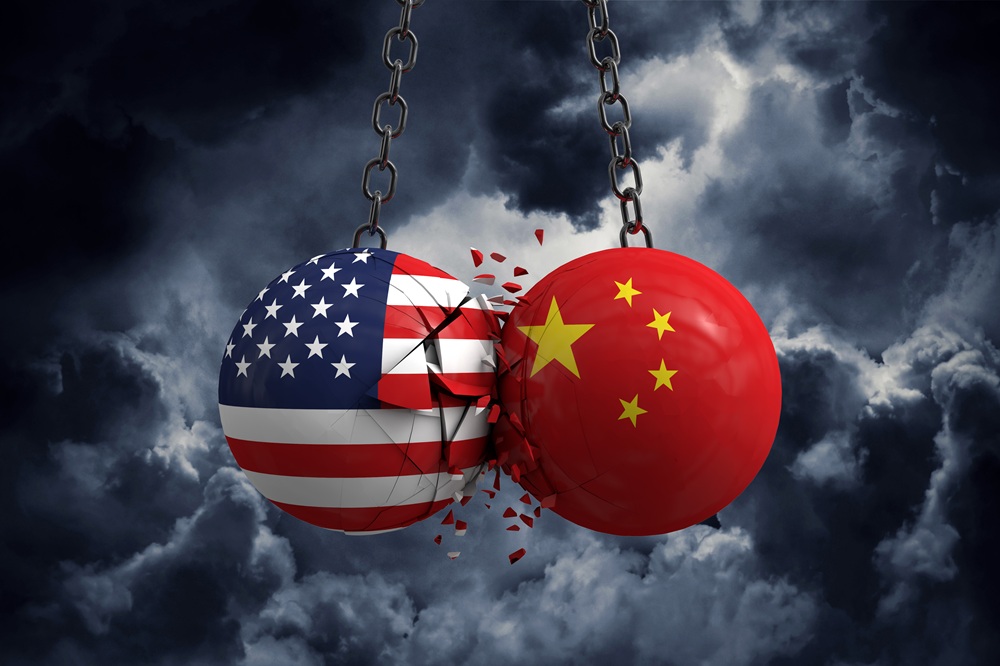
The recent decline in CNY seems like a deliberate attempt by China to employ counteractive measures against the US's trade war. The devaluation of CNY has numerous benefits. For example, it can offset the domestic exceeded hot money, create inflation to dilute debts, make export goods cheaper, offset the tariffs brought by trade wars, and so on.
US vs. China Ultimately, the manipulation of monetary policies has both positive and negative effects and deciding who may win a trade war between the US and China is too hard to call. We will wait and see.
This article is written by a GO Markets Analyst and is based on their independent analysis. They remain fully responsible for the views expressed as well as any remaining error or omissions. Trading Forex and Derivatives carries a high level of risk.
Lanson Chen GO Markets Analyst

The information provided is of general nature only and does not take into account your personal objectives, financial situations or needs. Before acting on any information provided, you should consider whether the information is suitable for you and your personal circumstances and if necessary, seek appropriate professional advice. All opinions, conclusions, forecasts or recommendations are reasonably held at the time of compilation but are subject to change without notice. Past performance is not an indication of future performance. Go Markets Pty Ltd, ABN 85 081 864 039, AFSL 254963 is a CFD issuer, and trading carries significant risks and is not suitable for everyone. You do not own or have any interest in the rights to the underlying assets. You should consider the appropriateness by reviewing our TMD, FSG, PDS and other CFD legal documents to ensure you understand the risks before you invest in CFDs. 免责声明:文章来自 GO Markets 分析师和参与者,基于他们的独立分析或个人经验。表达的观点、意见或交易风格仅代表作者个人,不代表 GO Markets 立场。建议,(如有),具有“普遍”性,并非基于您的个人目标、财务状况或需求。在根据建议采取行动之前,请考虑该建议(如有)对您的目标、财务状况和需求的适用程度。如果建议与购买特定金融产品有关,您应该在做出任何决定之前了解并考虑该产品的产品披露声明 (PDS) 和金融服务指南 (FSG)。