

市场资讯及洞察
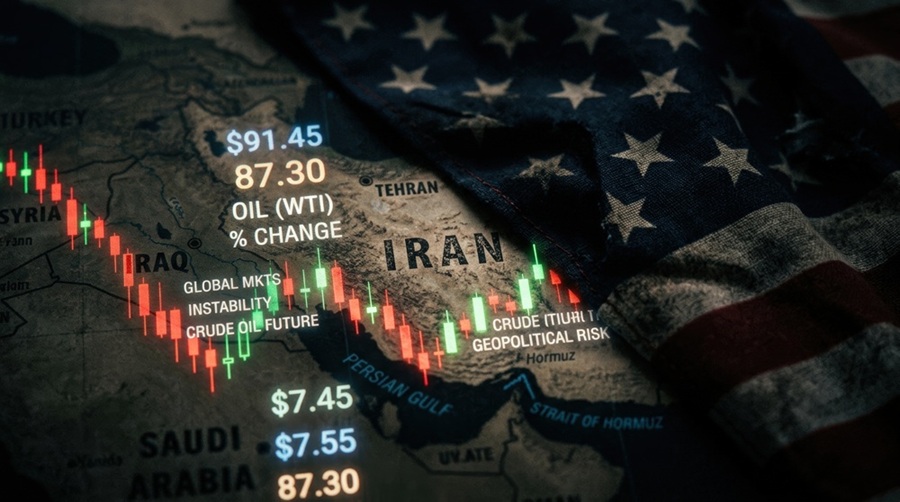
石油市场习惯于在停止结算之前就看上去已经定下来了。这就是现在的设置。
随着伊朗周边冲突的加剧,霍尔木兹海峡的交通量急剧下降,越来越多的船只因关闭AIS或自动识别系统而陷入黑暗,这些信号通常显示船只在哪里移动。霍尔木兹不只是另一条航道。它是世界上最重要的能源阻塞点之一,因此,当能见度开始消失时,供应风险就会回到对话的中心。
为什么现在这很重要
这很重要,有两个原因。
头条新闻是一回事。市场影响是另一回事。石油不仅关乎有多少桶,还关系到这些桶能否流动,谁愿意为它们投保,买家准备等待多长时间,以及交易者认为他们需要在多大风险的基础上定价。
目前,有三件事同时发生冲突:航运中断、外交脆弱以及市场已经严重倾向于一个方向。这种组合可以使布伦特原油的走势比基本面本身通常所暗示的要快。
是什么推动了这一举动
1 供应能见度恶化
第一个驱动程序很简单。市场看得更少,这往往会让市场更加紧张。
通过霍尔木兹的过境量急剧下降,而越来越多的交通量涉及不再广播标准跟踪信号的船只。简而言之,正常通过重要走廊的船只越来越少,越来越多的活动也变得越来越难以追踪。这并不自动意味着供应即将崩溃。但这确实意味着不确定性正在上升。
2 伊朗的储存缓冲区可能有限
第二个驱动因素是伊朗的出口和储存限制。
陆上储存容量估计约为4000万桶,市场正在关注有人所说的16天红线。到那时,长期的出口中断可能会开始迫使减产,以避免对储油库造成损害。对于新读者来说,要点很简单。如果石油不能储存足够长的时间,问题可能不再是出口延迟,而是开始成为真正的供应问题。
3 定位可以放大移动
第三个驱动因素是定位,这只是市场简写,说明在下一步行动发生之前交易者已经如何进行设置。
在这种情况下,投机性原油头寸显得严重片面。这很重要,因为当市场向一个方向倾斜得太远时,触发急剧调整并不需要太多时间。新的地缘政治冲击可能迫使交易者迅速采取行动,而一旦开始,价格的上涨幅度可能会超过单纯基础新闻所能证明的合理性。
为什么市场在乎
石油冲击很少能在能源市场内得到控制。
较高的原油价格可能会开始出现在运费、制造业和家庭能源账单中。这意味着通货膨胀预期可能会再次开始攀升。各国央行已经在努力管理粘性通货膨胀和疲软增长之间的艰难平衡,因此石油价格上涨会使这项工作变得更加艰难。
这不仅仅是一个关于石油生产商获得提振的故事。当能源成本上升时,航空公司、运输公司和其他对燃料敏感的企业可能会迅速承受压力。如果石油价格上涨使通货膨胀保持强于预期,则更广泛的股市可能还必须重新考虑政策前景。
连锁反应远不止石油
还有一个货币角度,它不如最初出现的那么简单。
当原材料价格上涨时,与大宗商品挂钩的货币,例如澳元,通常会获得支撑。但是这种关系不是自动的。如果石油价格因为全球需求改善而攀升,那可能会有所帮助。如果由于地缘政治风险激增而攀升,则市场可能会转向避险模式,即使大宗商品价格上涨,这也可能打压澳元。
这就是让这种举动比乍一看更有趣的原因。同样的石油涨势可以支撑市场的一个部分,同时给另一部分带来压力。
框架中的资产和名称
布伦特原油仍然是广泛供应风险中最明显的解读。如果交易者想要最简洁的头条新闻表达,通常是他们首先看的地方。
- 埃克森美孚是画面中最明显的名字之一。油价上涨可以支撑已实现的销售价格和短期的盈利势头,尽管这从来都不像石油上涨、囤积那么简单。成本、生产结构和更广泛的情绪仍然很重要。
- NexTera Energy 又增加了一层。这个故事不仅仅是关于化石燃料的。当能源安全成为一个更大的问题时,国内电力弹性、电网投资和替代发电的理由也将得到加强。
- 澳元/美元是另一个值得关注的市场。澳大利亚与大宗商品周期密切相关,因此原材料价格走强有时可以支撑该货币。但是,如果市场对恐惧的反应大于对增长的反应,那么通常的顺风可能不会成立。
对于新读者来说,关键是石油走势不会以整齐的、可预测的线条在市场中传播。它们不均匀地向外波动,帮助某些资产,给其他资产施加压力,有时两者兼而有之。
可能会出什么问题
强烈的叙述与单向交易不同。
停火可以比预期更快地稳定航运。欧佩克+可以通过提高产量来抵消部分紧张局势。来自中国的需求数据可能会令人失望,将焦点转移到消费疲软而不是供应受限上。而且,如果地缘政治溢价消退,石油回落的速度可能比当前情绪所暗示的要快。
对于新读者来说,要点很简单。石油涨势可以是真实的,但不是永久性的。短期内,中断风险可能证明此举是合理的,然后如果这些风险缓解或需求疲软,则迅速逆转。
市场不再孤立地对石油进行定价。这是定价可见性、运输安全性以及供应中断蔓延到通货膨胀、货币和更广泛的风险情绪中的风险。
这就是为什么Hormuz很重要,即使对于从未自己交易过一桶原油的读者来说也是如此。


Damien Loh is the Chief Investment Officer of Ensemble Capital, and former Executive Director at J.P. Morgan Singapore. Ensemble Capital is a fund manager focused on global absolute returns, through an AI & human investing approach in Singapore.
Damien is a super fascinating guy with a long career ahead of him in this new world of AI-driven investments. In this episode we covered: Insight from his time at J.P. Morgan How he got into finance and trading Ensemble Capital, the AI system Investment time frames How they approach risk
Alex Saunders who is affectionately known as “Nugget”, is one of Australia’s foremost market commentators and educators in the digital asset space. The Founder of popular media and education in Nuggets News, Alex’s passion for crypto was born from a frustration of traditional financial markets that many first adopters feel in this space. His education has allowed many traders to steer clear of scams in the industry, focusing instead on developing a framework and community that centres on high-value projects.
In this episode we covered: What Alex loves about Tasmania Pharmacy over dentistry How he got into crypto Banking and financial services The current and future state of crypto His approach to value-investing
Chris Gore ( Linkedin ) is the CEO of GO Markets, Company Secretary and Responsible Manager for their AFSL licence. He’s a long-serving staff member at GO Markets and an industry veteran in the OTC Derivatives market and commentary business, with over a decade of experience. Chris is most known for showing a level-headed approach in an often unsettled industry.
This is a fascinating episode where we cover: Favourite podcasts What’s to come in Forex & how the industry has changed The future of GO Markets The state of the global economy Looking back at the 2016 U.S. Election
Quinn Perrott ( Linkedin ) is the Co-Founder & General Manager of TRAction Fintech, a regulatory technology business. Quinn has been a long time operator in the Retail Forex space, whether it’s running leading businesses like City Index and AxiTrader, or deciding to create a business in the niche space of regulatory technology. He has a unique perspective as a long time operator, with his knowledge helping average traders to understand the market and industry participants to better understand their business.
This episode covers: Living in Cyprus Quinn’s path to Forex Starting TRAction Fintech What Quinn misses about the FX/CFD businesses New regulation from GFC How blockchain tech can impact reporting
Adam Taylor ( Linkedin ) is a Director of GO Markets London. Adam has a brilliant ability to see patterns, whether it’s playing Chess, or using Point & Figure Analysis to better understand the sentiment in the market. This chat was a great insight into what makes a GO Markets London Director tick, plus how things are looking within the UK.
This episode covers numerous topics, including: The game of Chess Moving from Scotland to Australia His progression within GO Markets The UK market, Brexit Risk management Fundamental & technical analysis - Transcript: Disclaimer: Go Markets is a derivatives broker and Jordan Michaelides is the managing director of Neuralle Media. All opinions expressed by Jordan and podcast guests are solely their own and do not reflect the opinions of Go Markets, an AFSL license holder. This podcast is for informational purposes only and should not be relied upon as a basis for financial decisions nor as an indication of future performance.
Clients of Go Markets may hold positions in the derivatives mentioned. A financial services guide and product disclosure statement for our products are available at the www.gomarkets.com website. Jordan Michaelides: In this episode we spoke with Adam Taylor.
Adam is a director of Go Markets and head of Go Markets UK. What I like about Adam is that he has a brilliant ability to see patterns, whether it's playing chess or using a point and figure analysis to better understand the sentiment in the market. During my own time at Go Markets, Adam was always the cool cucumber you look to when you wanted an opinion or topic settled, with a very, very useful skill set for someone previously tasked with the majority of risk management in the business.
This chat with Adam was a great insight into what makes a Go Markets director tick, plus how things are looking within the UK, particularly with Brexit happening at the same time. We covered numerous topics including chess, moving from Scotland to Australia, his progression within Go Markets, the UK market itself and what's happening with Brexit, or what should happen happen over the next few months, risk management, fundamental and technical analysis as well. If you enjoy this episode, do consider subscribing on your podcast app share with your friends.
Let's get into the episode with Adam. Adam, thanks for joining us. What’s the time over there, about 8am?
How’s the weather in good old London town? Adam Taylor: About 9am, and it is absolutely freezing. Everyone’s huddled together at the stations.
Jordan Michaelides: I love London personally. I know my partner absolutely hates it, but, there's something a bit kooky about London. I've always been a big fan of Sherlock Holmes, whenever I watch the Sherlock series from the BBC and I hear that introduction music, I just think of London and get that cool, spooky feeling.
I don't know why. But, enough of me rambling on about that First question for you, how good are you at chess? Adam Taylor: How good am I at chess.
I have been able to navigate my way around the chessboard. There is a danger of me telling you how good I am though Jordan, and the danger is either yourself or anyone listening probably wont want to play me. Jordan Michaelides: *laughs* Adam Taylor: It happens all the time.
It's very frustrating. Jordan Michaelides: That was the thing that I noticed what I was looking at your profile, I've worked for you for a few years and knew you liked chess and we spoke about it a few times, but I had no idea that you were a coach. How did you get into that space?
Adam Taylor: When I was at university in Brisbane, as any student knows you just try to try to make money where you can. I had several jobs at the time working behind a bar at a resort, those sort of things. I was lucky enough to notice a job advertisement for a chess coach on the gold coast and it basically involved traveling around schools and teaching groups of children how to improve the game and take them to tournaments and things.
It was fantastic because, I got a lot out of it. Jordan Michaelides: What a brilliant job to have at uni. Another interesting thing when I was looking at your profile, like you moved from Scotland, and you’ll have to fill us in at what age, but you moved out to the Gold Coast and I was just thinking what a shock in terms of the weather, right?
Adam Taylor: It was huge. This was back in 2000, I was about 15, 16 at the time. Coming from dreary, cold Scotland to the harsh summer of Queensland was a big shock.
Jordan Michaelides: Definitely. Why you guys came out here? Adam Taylor: My mother is a teacher and she always wanted to live in Australia, She got an opportunity to teach in Australia, so I moved with my mother and my two younger sisters.
It was very exciting times. Jordan Michaelides: We obviously get a lot of ponds that move out but I never hear… you obviously would see a lot of Scottish types that will move out because of the nicer weather, but it's one of those funny things where you moved from Scotland to the gold coast and that weather differential is huge. Which part of Scotland are you from?
Adam Taylor: I'm originally from Fife, which is on the east coast of Scotland. Jordan Michaelides: I've not been there. I know I've been to in Inverness, Edingurgh, Stirling, it's a great place.
I do love Scotland. Do you get up there much now that you're living out of London? Adam Taylor: Not as much as I'd like to, but it's close enough.
There are plans to do a lot more trips in the future. Jordan Michaelides: Now, thinking about that time during your childhood, I was curious with what you've done now, what did you think you're going to be when you were a kid? Adam Taylor: When I was a kid, I wanted to be a geologist.
I was very passionate about being a geologist. I was one of those kids that had a rock collection and my idea of a top day out was heading to the beach searching for fossils. I was such a nerd.
I think my saving grace was the fact that I was a half decent footballer, so my street cred was still intact. Jordan Michaelides: Where did this come from, do you think? What was the archetype that you had in your head?
Was it like the cliche David Attenborough, or did you have some other ideas in your head, do you remember reading a sort of geography books? I remember reading books, I was a real bookworm, and seeing how they'd show the layers of where the dinosaurs sit in the Earth's core and all that sort of stuff and I'd love looking at that, but I never sort of saw myself as someone who'd go find a few rocks. Do you know what I mean?
Adam Taylor: I know exactly what you mean. I think it all stemmed from my father. He sort of had an interest it in, a sort of a hobby, obviously when you're a young age you're very impressionable and that's how I got interested into it.
Jordan Michaelides: Speaking of your father, one thing we ask a lot of our guests, because I think it sort of illuminates a little bit about who they are, is what lessons they've learned from either of their parents. You may see that through your own personality or something that you use as a way to make decisions on a daily or weekly basis. Growing up and knowing who you are today, are there any particular principles that you've learned from your parents directly or indirectly?
Adam Taylor: That's a difficult question to answer. I think probably more so my grandfather, I think I learned a lot of life lessons through him. I remember him being very patient.
He was very doting on everyone, he was always interested in making sure everyone else was okay, keeping everyone connected and communicating. I think I get a lot from him. Parents, I think as a kid you learn by example and, I hope my parents aren't listening to this *laughs*, because I think indirectly I've learned what not to do.
Certain things growing up, I used to think, why did they make that decision? Why didn't they do this? And, you know, in fairness to them you can only work with the information you have the time.
Jordan Michaelides: You're a parent now as well, a very fresh parent, so you know how tough it can be and how it can be into the future as well. Adam Taylor: Exactly, but that's what excites me the most about being a new parent. I'm looking forward to trying to do those things for my own children going forward.
Jordan Michaelides: Will you teach your child chess, do you think? Adam Taylor: Of course, yeah. Jordan Michaelides: That was one of the things I loved to do with my dad when I was a kid, he would come home quite late and maybe once a week, me and my brother, one at a time would play my dad.
We had a lot of enjoyment with that because it was a real, real challenge because dad's so good, how do you beat dad? I think there was a turning point where we were 14 or something like that. That stuff is really enjoyable.
Adam Taylor: It's funny you should say that because that’s something my father taught me indirectly as well, playing chess, he was always a really good chess player. I would play him for several years as a kid growing up, like yourself in the evenings, on the weekends, and I would lose every single time. Every single time.
It taught me persistence, every time I'm learning something new, I'm refining the process, until I got to about the age of 16 and I started beating him. Jordan Michaelides: I was talking to my partner about this today. In an age where a lot of kids are given participation awards, I think having real competitive support, whether it's chess, whether it's martial arts or soccer or whatever, I think that stuff is really, really useful.
As you said, it teaches you persistence, it teaches you to be competitive as well as patient. Adam Taylor: For a kid it’s very hard to play something while losing constantly and keep motivated, so yeah, it's a good lesson. Jordan Michaelides: I was looking at your early career; you were initially a chess coach then had a few different jobs before you eventually fell into the word of Forex and CFDs.
How did you get into this? Adam Taylor: I was studying architecture in Brisbane at the time but I was a bit directionless. I was doing architecture, but not really knowing why.
I guess I'd always had an interest in historical buildings and had some skills that were useful for that career. It just so happened that at the time I stumbled across a book by Robert Kiyosaki called Rich Dad Poor Dad, and basically I'd always avoided finance, I'd never been interested in numbers or mathematics, it was just an area that I wasn't interested in. What ended up happening was I was going to the library for architecture books and I'd come out with 20 business finance books and became a sponge.
Jordan Michaelides: And those books, were they just personal finance books, like Rich Dad Poor Dad, or were they varied, investing, business management etc? Do you remember some of the names of those books at all? Adam Taylor: Not off the top of my head but it was it was a quite a range of finance books.
I just couldn't believe that I'd ignored this space for so long. I guess no one in my family was financially literate. N one had taught me any of these areas of knowledge.
I felt like I missed out and I just wanted to catch up. I got really interested after seeing a couple of stock charts and thought ‘what’s this’, the more I found out it just became like a giant chess board. I saw the markets as a place with strengths and weaknesses and combinations, you know, playing out moves and that's what got me hooked.
Jordan Michaelides: You're very technical, you like looking for patterns and it's always been sort of a feather in your cap, if that makes sense. It’s one of those areas that you're really good at. I know you've studied to become, I don't know if you're still doing it now, if you finished it, but certified financial technician, and we'll get into more about technical analysis but that has been a really interesting observation from my perspective, how maybe that excitement for chess and looking for patterns and pattern recognition is what piqued your interest in this area as well.
Now, I know you worked your way up in Go Markets in the business from technical analysts all the way up to doing a bit of risk management and now running the UK business as director. How have you seen your progression over that period of time? Adam Taylor: I've actually seen it as quite a natural progression.
Chris Gore, our CEO, pointed out in the previous podcast Go Markets is quite a unique place for employment. A lot of employees are encouraged to try different things in play to the individual strengths. And I've been fortunate enough to move between the different departments get a real good grounding of how everything works, but I always had an eye on the trading desk, obviously.
I started off in sales, moved to support, new accounts, and as a director now I’m able to understand each department's role much more. Jordan Michaelides: I think you're definitely right. They'll allow you to float through two different teams, I definitely think that that skill set of sort of a Jack of all trades but specialists in that technical aspect has definitely helped you.
Now, on the UK, obviously you're based there in London as we discussed, the UK market is super fascinating, particularly because of Brexit, which I think is coming up in March this year, but also since the GFC, the arrival of FinTech companies or tech companies that really pushing the finance system over there has been huge. I'm curious as to your time now, you've had about two years since 2016 in London, what have you learned so far? What have been the most interesting observations being based in the city?
Adam Taylor: For starters is totally different from Melbourne and Australia obviously. There's so much more going on this side of the world. Something that I've learned, is you've got to try and remain flexible to potential changes and just take the time to do things properly.
Avoid looking for shortcuts, especially when it comes to sort of regulatory guidelines, it's just a constant state of refinement. You know, as technology progresses, all these different systems have to be monitored and a lot of due diligence codes into the process. It's constantly evolving, you've just got to take your time.
Jordan Michaelides: Were you there during the Brexit vote as well? Adam Taylor: Ah, Brexit, my favorite word. We have a running joke in the office that when I was in Australia I didn't vote during the Brexit referendum rather, and that I have no right to complain, basically, but my response every time is that, well, look, I've come back to face some music, I’m here *laughs*.
I think Brexit is a positive thing longer term. It might take several years but once we establish more deals in different countries like the US, China, Canada and things, I think things will largely improve. Jordan Michaelides: I remember the day of the vote thinking, Jesus, what have they done?
But now I think that migration element through the Syrian refugees really brought all of this to a head. People have been focused on that, I think if you look at it from a different perspective and, you know, here in Australia being involved in the FinTech space, we've had the mayor of the city of London came out with other dignitaries from the UK and it's very rare that he would make a visit to Australia, and you get this sense that… there's always a funny bit about the UKs foreign policy for the EU being totally focused on making it disconnected and breaking it up and all that sort of stuff to keep everyone fighting in between each other and not worried about the UK itself. There's that funny element where people think that Brexit is just a way to bring down the European union and make everyone squabble amongst each other, but honestly I can see the pivot towards Asia and I think that's the big thing for me, the number one free trade deal that they've highlighted these dignitaries that came out last year is the Australian free trade deal and it's basically already there.
As soon as Brexit is done in March, then both governments will sign a free trade deal, which basically allows the UK to backdoor into Asia. That's been the most interesting thing from my perspective. Obviously there's the short term ramifications, but I think in the long-term when the EU is, well, what is the EU growing at each year?
Not even 1% as a block? You know, birth rates are down, relying on immigration which causes political angst, I can totally see why it's a smart deal now in the long term, but we're saying that we need hindsight. Five years from now we'll see what happens.
One of the other elements of your job or has been part of your job is this sort of trading risk management. I know when I left the business you were extensively managing the risk for the firm, I remember the days of us in a very basic way looking at our exposure and you turned that into a bit of an art form where the business was managing it a lot more closely. Based on your experience, whether it's profiling, client trading, managing liquidity provider positions or exposures, what lessons you could impart to novices about how you view risk and exposure.
Adam Taylor: I'm sure you'd agree, seeing how everything operates on the back end of these platforms, it's kind of like peeking behind the curtain, the wizard of Oz, there's so much going on, so many layers to this in terms of technology, liquidity providers and everything, which makes the trading side work. I think that when it comes to novice traders, I think we have to dispel this notion of when you're sitting in front of the platform there's someone on the other side who's pitted against you because it's just not true. If a trade goes wrong for a novice, it's quite common for someone to get frustrated and think that it's the broker or it's technology or these sorts of scenarios.
I think if the novice understood that most brokers, more particularly us, were interested in longevity of a client. You know, we want to have a relationship for several years, we want to do everything to help you to continue trading for a long period of time. In terms of risk management, everything's set up so that clients can get the best possible price and just make everything as smooth as possible.
I think it’s just getting it into the consciousness that is, it's a bigger picture. Jordan Michaelides: Also a lot of this stuff is on the individual, it sounds like you're saying that a lot of this is on the individual in a way. You mentioned before about the longevity of a client.
In this sort of business, in the retail Forex business, you want the client to stay around for a long time because the only money you're making off their trade is either a commission or a spread, generally in this business model. Some people will try and make money off their book, but by and large, most retail brokers seem to just net that exposure off with a liquidity provider as you said. So that's ne of the major elements of running this business is dealing with liquidity providers.
I think that's a good point, that it’s getting out of this mindset that there's someone there trying to make you do bad and maybe it's more on you, your own processes and also how you think about trading. That's a good point. Adam Taylor: Yeah.
You’re part of a bigger picture and, it's taken responsibility for your trade, seeing how you can improve yourself, asking certain questions, you know, am I trading at illiquid times or do I trade during a major announcements Basically building your own plan. Jordan Michaelides: Now, we're getting to the end, so I need to ask one more key question around your career. And that to me is this analysis element, this fundamental versus technical analysis.
I know analysis has been a core element of your career. We know speaking before about chess and its impact and maybe, I believe, that impacted your interest in looking for patterns. From your perspective, one, what is the differences between fundamental and technical analysis and two, why do you think you were so drawn into technical analysis over fundamental?
Adam Taylor: Well firstly, obviously fundamental is more news driven. You’re analyzing the business, the core, elements of that business and what makes it tick. Whereas technical analysis is more price driven, price action, on the charts and that sort of thing.
In terms of where the analytical insight came from, I've always been a very visual person and it's just seeing patterns and pattern recognition, That's what drew me to a technical analysis. Jordan Michaelides: It’s such a fascinating area. I remember for years I didn't really think much of technical analysis, I was always more of a fundamentals person cause I liked hearing about the story.
It's funny how both you and I have these different traits and therefore that impacted the area of preference. I remember reading a really interesting peace called ‘Support For Resistance’ by Carol Ostler when she was working at the federal reserve bank of New York. She was speaking about how technical analysis is applicable or where it is applicable and particularly in foreign exchange, Sort of like a peer reviewed piece of research, which is super interesting.
I know you've become well known, I saw this on a few comments and blog posts here and there when I was searching your name that people had commented on your point and figure analysis. It's like you’re the point and figure guy. Where did that come from?
Specifically point and figure analysis. Adam Taylor: I think every technical analysts, and people within the trading industry, you're drawn towards some things. What I like about point and figure is, well, first off it was one of the original areas of technical analysis that was developed back in the trading pits,, in the early 1920s, if not before then.
You've got these people without any technology whatsoever scribbling down on bits of paper and trying to come up with a system that they could work with. And this was one which developed over the years. What I like about it is it's simplicity.
You're removing the time element for starters, it's purely based on supply and demand, which as we know that’s what the markets are all about. You're seeing psychological levels of where price is looking to go. Jordan Michaelides: I'm just looking on Wikipedia now… the technique is over a hundred years old, 1898.
Adam Taylor: It's become like a lost art in a sense. It's not something that's developed with the technology. I think it's kind of been forgotten about, I'm trying to get a bit of a resurgence in the area.
Jordan Michaelides: This reminds me of making a certain type of steel that was made somewhere in Iran back in the day, and every now and then these sort of artifacts pop up but they don't know how to forge this steel anymore, which is super interesting. I totally agree. I think things sometimes get lost.
Warren Buffet and Charlie Munger have spoken a lot about how in this day and age with computers, people are often looking for these crazy, machine learning driven ways of mathematically calculating things when oftentimes there's just a simple process involved that takes patience. We've got to jump into some short, fast questions to finish off. I know you've had a new bub, maybe give us an idea of what your current morning and evening routine looks like.
Adam Taylor: I’m not even sure what it looks like at the moment to be honest. I'm literally changing nappies and trying to fit in a bit of sleep here and there, give my wife a bit of a break. Ask me again in about six months and we'll see.
Jordan Michaelides: If you had to gift a book to the audience, what would be the one book that's had the most impact on you that you'd give to them? Adam Taylor: I would have to see ‘Think And Grow Rich’ by Napoleon Hill. Jordan Michaelides: I think that's a bit of a classic, right?
Napoleon Hill. Good choice. Now, best purchase and under $200.
Can you think of one? Adam Taylor: That’s easy, because it's been very recent. It's basically this device which makes bottles for babies, does the right milk temperature and everything, takes the thought right out of it.
At 2am in the morning it’s a godsend. Jordan Michaelides: Last question for you before we finish, if you could have a billboard anywhere in the world, where would it be, first of all, location's important what do you think it would say? What do you think you would have on it?
Adam Taylor: I think I would have a billboard which says ‘keys, phone and wallet’ and I'd put it right outside my house just near the front door. That's what I do. I’m always terrible, I'm always missing one of them, now and again.
I’m sure my wife would agree with that. Jordan Michaelides: Adam, we've just passed 31 minutes. Thanks for doing this with us.
I know you've had an exciting few months. Thank you so much for joining us. Adam Taylor: Thank you Jordan.
Cheers.
Sophie Gerber ( Linkedin ) is a leader in the space of legal & compliance in the finance industry within Australia, publishing regularly across the industry. The breadth of both business, whether it’s Sophie Grace or TRAction FinTech, clearly highlight the array of Sophie’s knowledge. Her blog posts are quite brilliant in their ability to sort through the weeds that must exist within this space.
This episode covers numerous topics, including: Starting Sophie Grace Common mistakes with new financial businesses The Royal Commission How the industry could change for the better Her role at TRAction FinTech