

市场资讯及洞察

石油市场习惯于在停止结算之前就看上去已经定下来了。这就是现在的设置。
随着伊朗周边冲突的加剧,霍尔木兹海峡的交通量急剧下降,越来越多的船只因关闭AIS或自动识别系统而陷入黑暗,这些信号通常显示船只在哪里移动。霍尔木兹不只是另一条航道。它是世界上最重要的能源阻塞点之一,因此,当能见度开始消失时,供应风险就会回到对话的中心。
为什么现在这很重要
这很重要,有两个原因。
头条新闻是一回事。市场影响是另一回事。石油不仅关乎有多少桶,还关系到这些桶能否流动,谁愿意为它们投保,买家准备等待多长时间,以及交易者认为他们需要在多大风险的基础上定价。
目前,有三件事同时发生冲突:航运中断、外交脆弱以及市场已经严重倾向于一个方向。这种组合可以使布伦特原油的走势比基本面本身通常所暗示的要快。
是什么推动了这一举动
1 供应能见度恶化
第一个驱动程序很简单。市场看得更少,这往往会让市场更加紧张。
通过霍尔木兹的过境量急剧下降,而越来越多的交通量涉及不再广播标准跟踪信号的船只。简而言之,正常通过重要走廊的船只越来越少,越来越多的活动也变得越来越难以追踪。这并不自动意味着供应即将崩溃。但这确实意味着不确定性正在上升。
2 伊朗的储存缓冲区可能有限
第二个驱动因素是伊朗的出口和储存限制。
陆上储存容量估计约为4000万桶,市场正在关注有人所说的16天红线。到那时,长期的出口中断可能会开始迫使减产,以避免对储油库造成损害。对于新读者来说,要点很简单。如果石油不能储存足够长的时间,问题可能不再是出口延迟,而是开始成为真正的供应问题。
3 定位可以放大移动
第三个驱动因素是定位,这只是市场简写,说明在下一步行动发生之前交易者已经如何进行设置。
在这种情况下,投机性原油头寸显得严重片面。这很重要,因为当市场向一个方向倾斜得太远时,触发急剧调整并不需要太多时间。新的地缘政治冲击可能迫使交易者迅速采取行动,而一旦开始,价格的上涨幅度可能会超过单纯基础新闻所能证明的合理性。
为什么市场在乎
石油冲击很少能在能源市场内得到控制。
较高的原油价格可能会开始出现在运费、制造业和家庭能源账单中。这意味着通货膨胀预期可能会再次开始攀升。各国央行已经在努力管理粘性通货膨胀和疲软增长之间的艰难平衡,因此石油价格上涨会使这项工作变得更加艰难。
这不仅仅是一个关于石油生产商获得提振的故事。当能源成本上升时,航空公司、运输公司和其他对燃料敏感的企业可能会迅速承受压力。如果石油价格上涨使通货膨胀保持强于预期,则更广泛的股市可能还必须重新考虑政策前景。
连锁反应远不止石油
还有一个货币角度,它不如最初出现的那么简单。
当原材料价格上涨时,与大宗商品挂钩的货币,例如澳元,通常会获得支撑。但是这种关系不是自动的。如果石油价格因为全球需求改善而攀升,那可能会有所帮助。如果由于地缘政治风险激增而攀升,则市场可能会转向避险模式,即使大宗商品价格上涨,这也可能打压澳元。
这就是让这种举动比乍一看更有趣的原因。同样的石油涨势可以支撑市场的一个部分,同时给另一部分带来压力。
框架中的资产和名称
布伦特原油仍然是广泛供应风险中最明显的解读。如果交易者想要最简洁的头条新闻表达,通常是他们首先看的地方。
- 埃克森美孚是画面中最明显的名字之一。油价上涨可以支撑已实现的销售价格和短期的盈利势头,尽管这从来都不像石油上涨、囤积那么简单。成本、生产结构和更广泛的情绪仍然很重要。
- NexTera Energy 又增加了一层。这个故事不仅仅是关于化石燃料的。当能源安全成为一个更大的问题时,国内电力弹性、电网投资和替代发电的理由也将得到加强。
- 澳元/美元是另一个值得关注的市场。澳大利亚与大宗商品周期密切相关,因此原材料价格走强有时可以支撑该货币。但是,如果市场对恐惧的反应大于对增长的反应,那么通常的顺风可能不会成立。
对于新读者来说,关键是石油走势不会以整齐的、可预测的线条在市场中传播。它们不均匀地向外波动,帮助某些资产,给其他资产施加压力,有时两者兼而有之。
可能会出什么问题
强烈的叙述与单向交易不同。
停火可以比预期更快地稳定航运。欧佩克+可以通过提高产量来抵消部分紧张局势。来自中国的需求数据可能会令人失望,将焦点转移到消费疲软而不是供应受限上。而且,如果地缘政治溢价消退,石油回落的速度可能比当前情绪所暗示的要快。
对于新读者来说,要点很简单。石油涨势可以是真实的,但不是永久性的。短期内,中断风险可能证明此举是合理的,然后如果这些风险缓解或需求疲软,则迅速逆转。
市场不再孤立地对石油进行定价。这是定价可见性、运输安全性以及供应中断蔓延到通货膨胀、货币和更广泛的风险情绪中的风险。
这就是为什么Hormuz很重要,即使对于从未自己交易过一桶原油的读者来说也是如此。
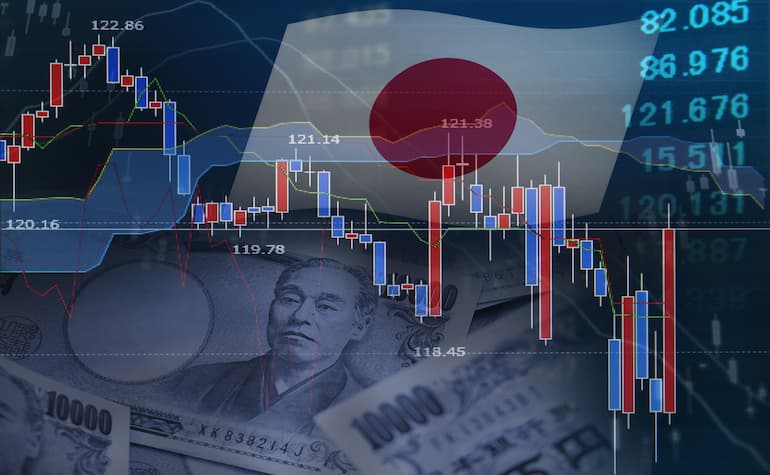

USDJPY The USDJPY is on the march higher again after a better than expected Non-Farm payroll figure on Friday saw sentiment shift hawkishly toward Fed monetary policy with Fed fund futures now pricing in a 70% chance of a 25bp hike at the FOMC May meeting, up from around a 50-50 split earlier in the week. The policy divergence in the US and Japan and the subsequent yield differentials on their respective 10 year government bonds has been the main driver of this pair in the last 12 months. You can see the close relationship of this in the chart below.
The black line is the difference between 10 year yields on US 10 years – Japanese 10 year years, the orange line, the USDJPY rate. As the US yields increase their gap to their Japanese counterparts, the USDJPY will be pressured upwards as traders look for low risk carry trades. The Yen was also not helped recently by comments from the new incoming governor of the BoJ that indicated that any change to the current dovish policy was not imminent.
Key levels to watch USDJPY has been forming a textbook uptrend since late March. With the upward trend line tested and holding as support on a handful of occasions, a resistance level of 133.85 has so far held any further upside, but is looking vulnerable. Ways to trade this are 1, Playing the range, buying low at the trendline, selling high at the resistance level.
Though whilst the uptrend is in place the more cautious approach would be to stick to buys. 2, Waiting for a break of these levels for the next push. The longer this takes, and the tighter the range gets the more explosive this move could be. While economic announcements out of Japan are very light on the ground this week, The US will be releasing both CPI and PPI figures, how these inflation figures look will have a measurable effect on market sentiment towards Federal Reserve policy and will almost certainly see some big moves in the USD and rates markets, so the break of this range may come as early as tomorrow night.
American manufacturer of farm machinery and industrial equipment Deere & Company (NYSE:DE) announced the latest financial results for the quarter ending January 29, 2023, before the market open in the US on Friday. Revenue was reported at $12.652 billion for the quarter (up by 32% year-over-year) vs. $11.337 billion expected. Earnings per share also topped analyst estimates at $6.55 per share vs. an estimate of $5.565 per share.
The company expects revenue of between $8.75 to $9.25 billion in the fiscal year 2023. CEO commentary ''Deere’s first-quarter performance is a reflection of favorable market fundamentals and healthy demand for our equipment as well as solid execution on the part of our employees, dealers, and suppliers to get products to our customers,'' CEO of the company, John C. May said in a press release. ''We are, at the same time, benefiting from an improved operating environment, which is contributing to higher levels of production,'' May concluded.
Stock reaction Shares of Deere were up around 5% at the market open on Friday, trading at $427.32 a share. Stock performance 1 month: -1.38% 3 months: -2.43% Year-to-date: -6.02% 1 year: +5.89% Deere & Company stock price targets Stifel: $477 Citigroup: $505 BMO Capital: $450 Wells Fargo: $485 Morgan Stanley: $522 Argus Research: $475 Credit Suisse: $582 JP Morgan: $440 UBS: $452 Deutsche Bank: $374 Goldman Sachs: $420 Citigroup: $425 Deere & Company is the 114 th largest company in the world with a market cap of $119.74 billion. You can trade Deere & Company (NYSE:DE) and many other stocks from the NYSE, NASDAQ, HKEX, ASX, LSE and DE with GO Markets as a Share CFD.
Sources: Deere & Company, TradingView, MarketWatch, MetaTrader 5, Benzinga, CompaniesMarketCap
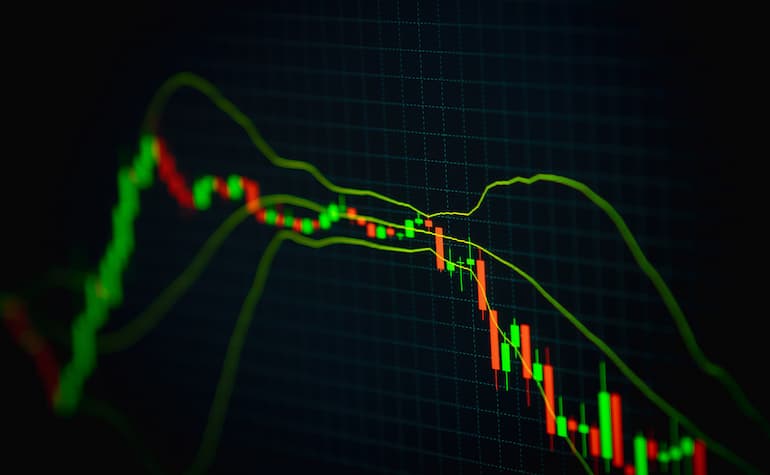
Bollinger Bands are one of the most popular indicators that FX and CFD traders use, invented in the 1980’s they are a technical analysis tool that are widely used by short and long term traders. The main uses for Bollinger Bands is determining turning points in the market at oversold and overbought levels and also as a trend following indicator. Like any technical indicator Bollinger Bands should be used with your own analysis to confirm trades and help set entry and exit levels, they are a fairly simple indicator that focuses on price and volatility only and shouldn’t, in my opinion be used in isolation.
While effective, to use them successfully you will need to be aware of the fundamentals and other technical indicators such as major support or resistance levels. How Bollinger Bands are calculated Bollinger Bands are composed of three lines. The middle line is a simple moving average (SMA), the default period being 20.
The upper and lower bands are the SMA plus or minus 2 standard deviations by default, the SMA period and Deviations can be adjusted in the settings of the indicator if desired, but the standard settings are the most popular settings among traders. When the price hits the upper band the market could be seen as “overbought” when it hits the lower band it could be seen as “oversold”, they can also be used as levels where trends are confirmed, e.g. hitting upper band could be seen as the start of a strong uptrend and vice versa. Day Trading strategies using Bollinger Bands Bollinger Bands are used mainly in two different trading styles, for contrarians looking for overbought and oversold levels to enter fade trades, or confirmation of trend for trend following systems. Both systems have their pros and cons, as with most indicators it will depend on the market “fee” for the time used, a choppy whipsawing market will see the fading system work very well, a strong trending market will see the trend following system work very well.
As with any technical system, the selection of the market to trade and being aware of the fundamentals driving the FX market at that time are critical.. Just had a Fed meeting where they surprised with a 100bp rate hike? Don’t use the fade system on USD pairs!
A good technical system I have found is useful is a mixture of both of these strategies, using the Bollinger Bands to confirm a trend, then using the fading strategy to trade pullbacks of this trend. Lets look at the example below from the AUDNZD – 5 minute chart from the 23 rd March 2023 In the above example, which is a common price action across all FX pairs, you would be using the Bolling Bands to confirm a down trend after a close below a major low. Once the possible trend is confirmed, we will be using the “overbought” level of the upper band to enter a short trade, with a take profit exit on 2 closes below the lower band, indicating the market may have gone into “oversold” territory and was time to take some money off the table.
This process would be repeated while lower highs were being made, a close above a major recent high along with a close above the upper Bollinger Band would indicate the trend may have come to an end. This can be seen on the chart below, later in the session on the same pair. At this point you would exit the short selling of the down trend and reverse to a long bias, or if your analysis on fundamentals were negative for this pair, wait for a new downtrend to form for another shorting run.
The Bollinger Squeeze Strategy Another strategy popular with FX traders is known as the Bollinger squeeze strategy. A squeeze occurs when the price has a big move, then consolidates in a tight range, this also sees the Bollinger bands go from wide to “squeeze” in a much narrower range, hence the name of the strategy. A trader would be looking for a breakout and close below or above the Bollinger bands of this squeezed range for a trade entry, see the example below from the EURUSD 5 Minute chart on 23 rd of March 2023 When the price breaks through the upper or lower band after this period of consolidation a buy or a sell signal is generated.
An initial stop is traditionally placed just above (or below in a long position) the range of the consolidation. TP rules could be similar to the previous strategy, i.e. multiple closes below the lower Bollinger Bans in the case of a short, or using the middle Bollinger Band as a trailing stop in the move is explosive and looks to continue. Summary As you can see there are multiple uses for Bollinger Bands in a FX day traders toolbox, including using them for overbought and oversold trade signals in a trending market and the Squeeze strategy where an explosive move often follows a period of consolidation.
There are also many more strategies using this indicator which I encourage you to research for yourself.

BioNTech SE (NASDAQ: BNTX) reported Q4 2022 financial results on Monday. The German pharmaceutical company reported revenue of $4.563 billion for the quarter, topping analyst estimate of $3.897 billion. Earnings per share (EPS) also beat analyst estimates at $9.876 per share vs. $8.296 EPS expected.
CEO commentary ''We made significant progress in 2022 by advancing our pipeline and launching the world’s first Omicron BA.4/BA.5 adapted bivalent COVID-19 vaccine. In addition, multiple new modalities achieved encouraging clinical data and we progressed nine new programs into clinical trials,'' said professor Ugur Sahin, M.D., CEO and Co-Founder of BioNTech said in a press release. ''As we look to 2023 and beyond, we plan to continue investing in our transformation with a focus on building commercial capabilities in oncology and working towards registrational trials. Our mid-term goal is to seek approval for multiple oncology products in cancer indications with high unmet medical need,'' he added.
The stock was down by -3.59% at market close on Tuesday at $123.19 per share. Stock performance 1 month: -5.55% 3 months: -29.76% Year-to-date: -17.72% 1 year: -25.70% BioNTech SE price targets HC Wainwright & Co.: $210 JP Morgan: $142 Goldman Sachs: $156 Morgan Stanley: $216 B of A Securities: $239 SVB Leerink: $224 Canaccord Genuity: $192 BioNTech SE is the 576 th largest company in the world with a market cap of $29.99 billion. You can trade BioNTech SE (NASDAQ: BNTX) and many other stocks from the NYSE, NASDAQ, HKEX, ASX, LSE and DE with GO Markets as a Share CFD.
Sources: BioNTech SE, TradingView, MarketWatch, MetaTrader 5, Benzinga, CompaniesMarketCap
This week, the Bank of Canada (BoC) released its decision to hold interest rates at the current level of 4.50%. In the rate statement, the BoC indicated that inflation has eased to 5.9%, and the expectation for weaker economic growth and a moderation of wage growth could see inflation continue on its downward trajectory. The BoC highlighted that it projects that CPI inflation could reach the 3% level by the middle of the year, with core inflation reaching the target level of 2% in time to come.
Following the release of the decision, the Canadian Dollar weakened, with the USDCAD trading higher to test the 1.38 round number resistance level. This move higher was compounded by the recent strength of the DXY, a result of Fed Chair Powell’s testimony where he indicated that the Federal Reserve was ready to speed up rate hikes if the data warranted. The USDCAD could continue with the uptrend to trade significantly higher toward the next key resistance level of 1.39, especially if the US Non-Farm employment change to be released on Friday is stronger than expected.
However, it is likely that the USDCAD could first retrace briefly to the 1.37 price level, which aligns with the 23.60% Fibonacci Retracement level before a continuation to the upside. This brief retracement is also supported by the Relative Strength Index (RSI) as it indicates a likelihood to turn down from the overbought region.

This week, the Australian Consumer Price Index (CPI) y/y data was released at 6.8% (Forecast: 7.2% Previous: 7.4%) which signals a slowdown in inflation growth. In addition, the consecutive release of lower-than-expected CPI data highlights the possibility of a new trend of decreasing inflation for the Australian economy. With the view that inflation has peaked and is possibly on a downturn, the Reserve Bank of Australia (RBA) could decide to pause further rate hikes at its upcoming cash rate decision on Tuesday next week.
Keeping interest rates at 3.60% could lead to the AUDUSD trading slightly lower. The AUDUSD is currently trading between the key resistance level of 0.6765 and the support level of 0.6565, with the formation of a bearish pennant. If the AUDUSD maintains below the resistance level, look for a potential breakout to the downside, to retest the key support level of 0.6565.
This move lower could be driven by the recovery in strength on the DXY and if the RBA decides to hold interest rates at 3.60%.