

市场资讯及洞察

石油市场习惯于在停止结算之前就看上去已经定下来了。这就是现在的设置。
随着伊朗周边冲突的加剧,霍尔木兹海峡的交通量急剧下降,越来越多的船只因关闭AIS或自动识别系统而陷入黑暗,这些信号通常显示船只在哪里移动。霍尔木兹不只是另一条航道。它是世界上最重要的能源阻塞点之一,因此,当能见度开始消失时,供应风险就会回到对话的中心。
为什么现在这很重要
这很重要,有两个原因。
头条新闻是一回事。市场影响是另一回事。石油不仅关乎有多少桶,还关系到这些桶能否流动,谁愿意为它们投保,买家准备等待多长时间,以及交易者认为他们需要在多大风险的基础上定价。
目前,有三件事同时发生冲突:航运中断、外交脆弱以及市场已经严重倾向于一个方向。这种组合可以使布伦特原油的走势比基本面本身通常所暗示的要快。
是什么推动了这一举动
1 供应能见度恶化
第一个驱动程序很简单。市场看得更少,这往往会让市场更加紧张。
通过霍尔木兹的过境量急剧下降,而越来越多的交通量涉及不再广播标准跟踪信号的船只。简而言之,正常通过重要走廊的船只越来越少,越来越多的活动也变得越来越难以追踪。这并不自动意味着供应即将崩溃。但这确实意味着不确定性正在上升。
2 伊朗的储存缓冲区可能有限
第二个驱动因素是伊朗的出口和储存限制。
陆上储存容量估计约为4000万桶,市场正在关注有人所说的16天红线。到那时,长期的出口中断可能会开始迫使减产,以避免对储油库造成损害。对于新读者来说,要点很简单。如果石油不能储存足够长的时间,问题可能不再是出口延迟,而是开始成为真正的供应问题。
3 定位可以放大移动
第三个驱动因素是定位,这只是市场简写,说明在下一步行动发生之前交易者已经如何进行设置。
在这种情况下,投机性原油头寸显得严重片面。这很重要,因为当市场向一个方向倾斜得太远时,触发急剧调整并不需要太多时间。新的地缘政治冲击可能迫使交易者迅速采取行动,而一旦开始,价格的上涨幅度可能会超过单纯基础新闻所能证明的合理性。
为什么市场在乎
石油冲击很少能在能源市场内得到控制。
较高的原油价格可能会开始出现在运费、制造业和家庭能源账单中。这意味着通货膨胀预期可能会再次开始攀升。各国央行已经在努力管理粘性通货膨胀和疲软增长之间的艰难平衡,因此石油价格上涨会使这项工作变得更加艰难。
这不仅仅是一个关于石油生产商获得提振的故事。当能源成本上升时,航空公司、运输公司和其他对燃料敏感的企业可能会迅速承受压力。如果石油价格上涨使通货膨胀保持强于预期,则更广泛的股市可能还必须重新考虑政策前景。
连锁反应远不止石油
还有一个货币角度,它不如最初出现的那么简单。
当原材料价格上涨时,与大宗商品挂钩的货币,例如澳元,通常会获得支撑。但是这种关系不是自动的。如果石油价格因为全球需求改善而攀升,那可能会有所帮助。如果由于地缘政治风险激增而攀升,则市场可能会转向避险模式,即使大宗商品价格上涨,这也可能打压澳元。
这就是让这种举动比乍一看更有趣的原因。同样的石油涨势可以支撑市场的一个部分,同时给另一部分带来压力。
框架中的资产和名称
布伦特原油仍然是广泛供应风险中最明显的解读。如果交易者想要最简洁的头条新闻表达,通常是他们首先看的地方。
- 埃克森美孚是画面中最明显的名字之一。油价上涨可以支撑已实现的销售价格和短期的盈利势头,尽管这从来都不像石油上涨、囤积那么简单。成本、生产结构和更广泛的情绪仍然很重要。
- NexTera Energy 又增加了一层。这个故事不仅仅是关于化石燃料的。当能源安全成为一个更大的问题时,国内电力弹性、电网投资和替代发电的理由也将得到加强。
- 澳元/美元是另一个值得关注的市场。澳大利亚与大宗商品周期密切相关,因此原材料价格走强有时可以支撑该货币。但是,如果市场对恐惧的反应大于对增长的反应,那么通常的顺风可能不会成立。
对于新读者来说,关键是石油走势不会以整齐的、可预测的线条在市场中传播。它们不均匀地向外波动,帮助某些资产,给其他资产施加压力,有时两者兼而有之。
可能会出什么问题
强烈的叙述与单向交易不同。
停火可以比预期更快地稳定航运。欧佩克+可以通过提高产量来抵消部分紧张局势。来自中国的需求数据可能会令人失望,将焦点转移到消费疲软而不是供应受限上。而且,如果地缘政治溢价消退,石油回落的速度可能比当前情绪所暗示的要快。
对于新读者来说,要点很简单。石油涨势可以是真实的,但不是永久性的。短期内,中断风险可能证明此举是合理的,然后如果这些风险缓解或需求疲软,则迅速逆转。
市场不再孤立地对石油进行定价。这是定价可见性、运输安全性以及供应中断蔓延到通货膨胀、货币和更广泛的风险情绪中的风险。
这就是为什么Hormuz很重要,即使对于从未自己交易过一桶原油的读者来说也是如此。
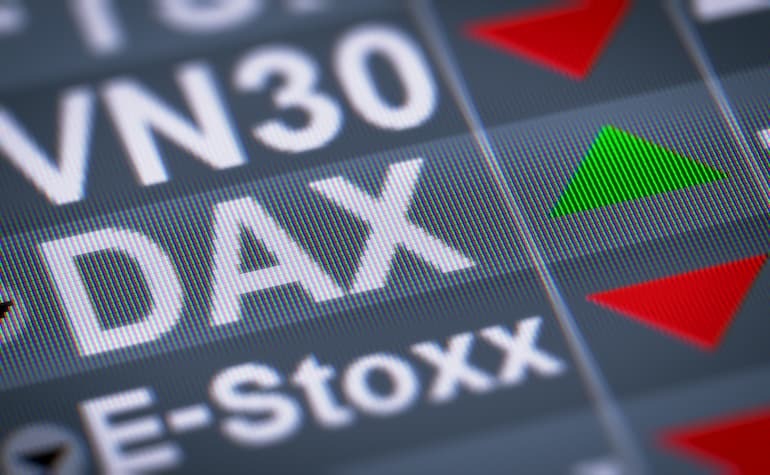

The DAX cooled off in yesterday’s session off the back of higher-than-expected German inflation data. With analysis expecting the Year-on-Year rate to fall to 6%, the actual number was higher at 6.2%. This has raised some concerns over the fight against inflation in Germany, putting an end to the three-day green streak for the DAX.
Technically, price bounced nicely off the support zone around 15,500-15,600. This level has acted as both a key area of resistance and support in the past 6 months. Since the first breakout above that zone in March, price has been ranging sideways ever since.
Multiple attempts to break and hold above the January 2022 high have failed, and the recent sell-off coincided nicely at the mid-range level. From a purely support and resistance technical view, there are two scenarios that could occur. The first would be a fall back down to the key support level around 15,600.
The second could be a positive catalyst news even that kicks price through the mid-range resistance level and back up towards the January 2022 high for a 4th attempt at breaking through. Since the recent low 2 weeks ago, the price action formed a more bullish market structure on the lower timeframes. We’ve seen a clean higher high and higher low.
While this bullish structure holds, bulls could remain in control.

In June, the Reserve Bank of Australia (RBA) surprised markets with a decision to hike rates by 25bps, taking the Australian cash rate to 4.10%. This was decided on the basis that further increases were required to provide greater confidence that inflation would return to the target range within a reasonable timeframe. This decision led to the AUDUSD climbing steadily from the 0.6650 price level up toward the 0.69 round number resistance area.
Currently, the AUDUSD is trading along the 0.6670 price level, just below the 23.60% Fibonacci retracement level, in the lead-up to the RBA decision on 4th July. While markets anticipate that the RBA could hold rates at 4.10%, given that the consumer price index (CPI) has fallen significantly from 6.8% to 5.6%, another surprise hike from the RBA could still be possible as inflation is still well above the target range. As the AUDUSD found relative support along the 0.6595 price level and with the Relative Strength Index (RSI) trending to the upside, a decision from the RBA to hike rates to 4.35% could lead the AUDUSD to climb steadily toward the immediate resistance level of 0.69.
Watch for the price to break above the 0.67 round number level, to signal a confirmation of the upside, with the 0.68 price level coinciding with the 61.8% Fibonacci retracement level providing brief resistance on the path up to the 0.69 resistance area.
Since March 2023, the GBPUSD had been trading higher as the US Federal Reserve and the Bank of England (BoE) maintained along their path to continue raising rates, as they battled to bring inflation down to their 2-3% target level. As the DXY recovered in strength, this led the GBPUSD to reverse from the high of 1.3130, trading down toward the lower bound of the bullish channel, along the 1.28 price level. Although the Consumer Price Index (CPI) data in July had a signaled a slowdown of inflation growth to 7.9%, this is still well above the BoE’s target level and significantly higher, compared to the other major economies.
At the upcoming meeting on 3rd August, the BoE is expected to raise rates by 25bps, a fourteenth successive tightening, taking rates to 5.25% the highest since December 2007. However, it cannot be ruled out that the BoE could further surprise markets with a 50bps rate hike, similar to its actions in June. At the upcoming meeting on 3rd August, the BoE is expected to raise rates by 25bps, a fourteenth successive tightening, taking rates to 5.25% the highest since December 2007.
However, it cannot be ruled out that the BoE could further surprise markets with a 50bps rate hike, similar to its actions in June.
Australian CPI figures today see a rapid cooling in Aussie inflation, coming in at 5.6% y/y against an expected 6.1% and a big drop from April’s 6.8% shock to the upside. This saw a rapid re-pricing of rate hike odds at the next RBA meeting on July 4 th, with interbank futures signaling odds have dropped to 17% of a 25bp move, from 25% pre-CPI. Unsurprisingly a rapid fall in AUDUSD was also a consequence of this market repricing, after finding some support at the 50% retracement level of the June low to highs this week, AUDUSD pushed lower to test the 618% Fibonacci level before finding some buyers.
These two levels will be worth watching, whether AUDUSD can regain and again find support at the 50% retracement or that level now becomes resistance and puts the 61.8% retracement level in danger of giving way.

USD was firmly in the red in Tuesdays session, with the US Dollar Index (DXY) having it’s largest drop since mid-July. A rally in DXY during the Asian and early European session dramatically reversed after big misses on the JOLTS report and consumer confidence saw a dovish repricing in rates markets and a risk-on back in charge. Stocks rallied and the Dollar tumbled throughout the rest of the session.
DXY hitting lows of 103.36, breaking through the minor R/S level of 103.60 after testing the major resistance zone of the May/June/August highs. DXY now sitting on its upward trendline which has been in play since mid-July, which so far has lent some support. Looking ahead today there will be more jobs data (ADP) and Prelim GDP for USD traders to navigate.
AUD, NZD and EUR were all firmer against the USD. High beta AUD and NZD were the clear outperformers while EUR saw similar gains, all benefitting from USD weakness and a risk-on environment as opposed to anything currency specific. AUD was also given an extra boost by gains in iron ore.
AUDUSD hit a high of 0.6487, testing last week’s highs and the resistance just below the psychological 0.6500 level. NZDUSD up to 0.5977 also pushing to the highs of its recent range. Ahead today a pivotal CPI figure out of Australia may see some of these levels tested.
EURUSD hit highs of 1.0891, retaking the support level at 1.0840 and looking to test the big figure at 1.09 to the upside. Eurozone inflation figures out of Germany and Spain released later today will be the main risk events for EUR traders. JPY rallied against the USD later in the session on the retreat of US Treasury yields after weak US data.
Earlier in the session though USDJPY breached the August highs resistance level to trade up to a high of 147.38 (which was its highest level since November) before the aforementioned weak US data and move lower in UST yields saw a dramatic reversal. BoJ intervention on the Yen still on the back of JPY traders’ minds. Today’s calendar has some decent risk events likely to cause volatility in FX markets, starting with Aussie CPI, then CPI readings from the Eurozone and topped off with GDP and more jobs data out of the US.

Despite runaway US treasury yields which saw 10-year yields hit their highest level since 2007, the USD was flat in Monday’s session as it seems improved risk sentiment and a technically overbought Dollar Index (DXY)held it in check. DXY traded within a tight range with a low of 103.13 and a high of 103.50, where it was again rejected at the major resistance set at the July and August to date highs. USD traders focus today will be on FedSpeak from Bowman, Goolsbee, and Barkin whose comments will be closely watched ahead of Jackson Hole later in the week.
EUR was the outperforming major currency, with EURUSD pushing hard to reclaim the psychological 1.09 level but failing to hold convincingly above. Another headline to hit the wires was HSBC giving a bullish take on the EUR "in part built on the idea of upside for the EUR from overly dovish rate expectations for the ECB". They noted that while headline inflation figures are cooling, core inflation is proving stickier.
JPY resumed its march lower on Monday, reversing its 2-day rally from late last week. The jump higher in US yields saw carry traders back in action taking the USDJPY back above 146.00 from lows of 145.15. A note from JP Morgan stated that they believe the MoF will not intervene in the FX market at around 145 level as they did previously, with JPM analysts believing the threshold level for BoJ intervention being around 150 level.
AUD and NZD saw marginal gains vs the USD with the Kiwi the lagging vs the Aussie after New Zealand trade figures showed a deficit of 1.1bln in July, vs the prior surplus of 9mln. AUDUSD reclaimed the big figure at 0.6400, AUDNZD holding above the key 1.0800 level. A quiet calendar ahead today for both AUD and NZD, with general market sentiment likely to be the main drivers in price action for the rest of the week.