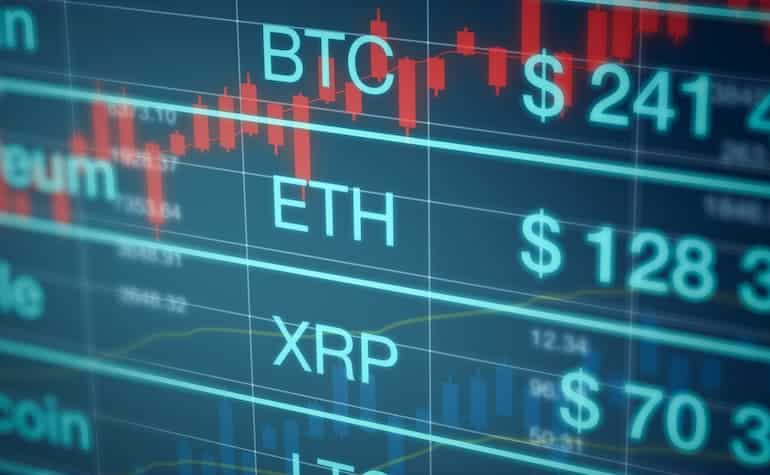
Following the previous Bitcoin analysis ( https://www.gomarkets.com/au/articles/economic-updates/bitcoin-usd-technical-analysis/ ), bitcoin continues to break below pattern after pattern, recently breaking out and re-testing a descending flag pattern on a 4h time frame as seen below: With the next major support sitting around $17,619, it won’t be a surprise if bitcoin comes down to that area. Looking at the correlation between Bitcoin and Ethereum, the last 7 days of price action shows a correlation of.89, which is a positive value that indicates a positive correlation between the two. A positive correlation means that the two moves very similar to one another. [caption id="attachment_273298" align="alignnone" width="602"] (https://cryptowat.ch/correlations)[/caption] [caption id="attachment_273299" align="alignnone" width="527"] (https://cryptowat.ch/correlations)[/caption] For ETHUSD (Ethereum), making similar patterns to BTCUSD, has also recently broken out of a descending flag pattern, signalling a probable continuation of the 4h downtrend, there is a high probability of ETHUSD reaching the next major support around $1012.
More downside for major cryptos?

Related Articles

หุ้นด้านการป้องกัน ASX กลับมาอยู่ในรายการเฝ้าระวังมากขึ้น และจากข้อมูลของสถาบันวิจัยสันติภาพระหว่างประเทศสตอกโฮล์ม (SIPRI) การใช้จ่ายทางทหารระดับโลกสูงถึง 2.718 ล้านล้านดอลลาร์สหรัฐในปี 2024 เพิ่มขึ้น 9.4% ในแง่จริง
การตั้งค่าการป้องกันปัจจุบันของออสเตรเลียกำหนดไว้ในกลยุทธ์ป้องกันแห่งชาติปี 2024 และเอกสารการวางแผนการลงทุนที่เกี่ยวข้อง ซึ่งสรุปลำดับความสำคัญของการระดมทุนด้านความสามารถระยะยาวนอกจากนี้ แคนเบอร์รายังชี้ให้เห็นถึงการลงทุนด้านความสามารถจำนวน 330 พันล้านเหรียญสหรัฐจนถึงปี 2034 รวมถึงเงินทุนเพิ่มเติมสำหรับนักสู้พื้นผิว ความพร้อม การโจมตีระยะไกล และระบบอิสระ
นี่คือส่วนที่คนส่วนใหญ่พลาดไป: หุ้นป้องกัน ASX ไม่ใช่ทั้งหมดที่มีการซื้อขายเหมือนกันบางคนนั่งอยู่ใกล้กับการต่อเรือเรือบางส่วนเป็นชื่อแบบต่อต้านโดรนและบางรายเป็นผู้ประกอบการที่มีขนาดเล็กและมีความเสี่ยงสูงซึ่งสัญญาหนึ่งอาจมีความสำคัญมากกว่าที่ตลาดสันนิษฐานมาก

5 คำถามความผันผวนที่เทรดเดอร์ชาวออสซี่ถามตอนนี้
ชื่อห้าชื่อนี้ไม่ใช่รายการซื้อ แต่เป็นรายการเฝ้าระวังที่ใช้งานได้จริงสำหรับนักลงทุนที่พยายามทำความเข้าใจว่าโมเมนตัมการจัดซื้ออาจปรากฏใน ASX ที่ไหนจริงๆ
1) ออสตัล (ASX: ASB)
Austal เป็นหนึ่งในบริษัทจดทะเบียน ASX ที่สัมผัสโดยตรงกับท่อสร้างเรือเรือของออสเตรเลียมากที่สุด แม้ว่าการดำเนินการตามสัญญา อัตรา และระยะเวลาการจัดส่งยังคงเป็นตัวแปรที่สำคัญ
พวกเขาไม่ใช่แค่ชนะสัญญาแบบสุ่ม แต่พวกเขาได้ลงนามในข้อตกลงทางกฎหมายขนาดใหญ่ (ข้อตกลงการสร้างเรือเชิงกลยุทธ์) ที่ทำให้พวกเขาเป็นพันธมิตรอย่างเป็นทางการในการสร้างเรือทหารขนาดกลางรุ่นต่อไปของออสเตรเลียในออสเตรเลียตะวันตก
ในเดือนกุมภาพันธ์ 2026 รัฐบาลได้ให้แสงสีเขียวแก่ออสตัลในโครงการมูลค่า 4 พันล้านดอลลาร์นี่ไม่ใช่สำหรับเรือเพียงลำเดียว แต่สำหรับเรือ “Landing Craft Heavy” จำนวน 8 เรือเหล่านี้เป็นเรือขนส่งขนาดใหญ่ (ยาวประมาณ 100 เมตร) ที่ออกแบบมาเพื่อบรรทุกรถถังหนักและอุปกรณ์ไปยังชายหาดโดยตรงแต่นี่คือส่วนที่คนส่วนใหญ่พลาดการสร้างเรือคือการวิ่งมาราธอน ไม่ใช่การวิ่ง.
ดังที่คุณเห็นในไทม์ไลน์การจัดส่ง ในขณะที่การก่อสร้างเริ่มต้นในปี 2026 เรือสุดท้ายจะไม่ได้รับการจัดส่งจนถึงปี 2038สำหรับนักลงทุน หมายความว่า Austal มีกระแสรายได้ “รับประกัน” ในอีก 12 ปีข้างหน้า แต่พวกเขาจะต้องสามารถจัดการต้นทุนได้ดีมากในช่วงเวลานานนั้นเพื่อให้ได้กำไรจริงๆ
2) โดรอนซีลด์ (ASX: DRO)
หากคุณเคยเห็นฟุตเทจของโดรนขนาดเล็กที่ขัดขวางสนามรบสมัยใหม่ DroneShield กำลังสร้างส่วนหนึ่งของ “สวิตช์ปิด”จุดมุ่งเน้นคือเทคโนโลยีต่อต้านโดรน รวมถึงระบบที่ตรวจจับ ขัดขวาง หรือกำจัดโดรนโดยใช้สงครามอิเล็กทรอนิกส์ เซ็นเซอร์ และเครื่องมือที่นำด้วยซอฟต์แวร์ แทนที่จะอาศัยอาวุธปืนแบบดั้งเดิมเท่านั้น
ภายในต้นปี 2026 DroneShield ได้ข้ามป้ายกำกับของสตาร์ทอัพที่มีแนวโน้มและเข้าสู่ขั้นตอนการค้าที่ใหญ่กว่ามากรายงานรายได้ประจำปี 2025 ที่ 216.5 ล้านเหรียญสหรัฐ เพิ่มขึ้น 276% จากปีงบประมาณ 2024 และกล่าวว่าเริ่มต้นปีงบประมาณ 2026 ด้วยรายได้ที่มุ่งมั่น 103.5 ล้านเหรียญสหรัฐ
จุดหนึ่งที่ตลาดอาจมองข้ามคือเลเยอร์ซอฟต์แวร์ในแบบจำลองDroneShield รายงานรายได้จากซอฟต์แวร์เป็นบริการ (SaaS) จำนวน 11.6 ล้านดอลลาร์ในปี 2025 และกล่าวว่ากำลังทำงานเพื่อให้ SaaS สร้างรายได้ 30% ภายในห้าปีรูปแบบการสมัครสมาชิกรวมถึงการอัปเดตซอฟต์แวร์สำหรับระบบที่ปรับใช้ ซึ่งเพิ่มกระแสของรายได้ที่เพิ่มขึ้นเรื่อยๆ ควบคู่ไปกับการขายฮาร์ดแวร์
ในบรรดาหุ้นป้องกัน ASX DroneShield เป็นหนึ่งในวิธีที่ตรงที่สุดในการติดตามธีม Counter-UASนอกจากนี้ยังเป็นหนึ่งในชื่อที่ความรู้สึกสามารถแกว่งได้อย่างรวดเร็ว เนื่องจากเรื่องราวการเติบโตสามารถเรทปรับได้ทั้งขึ้นและลงเมื่อเวลาการสั่งซื้อเปลี่ยนไป
หุ้นป้องกันที่ต้องดู: ผู้ชนะและผู้แพ้สงครามอิหร่าน
3) ระบบไฟฟ้าออปติก (ASX: EOS)
EOS สร้างทั้ง “สมอง” และ “กล้ามเนื้อ” สำหรับแพลตฟอร์มทหารเป็นที่รู้จักกันดีในด้านระบบอาวุธระยะไกล ซึ่งช่วยให้ผู้ปฏิบัติงานสามารถควบคุมป้อมปืนอาวุธจากภายในยานพาหนะที่มีการป้องกันและสำหรับระบบเลเซอร์พลังงานสูงที่มุ่งเป้าไปที่การป้องกันต่อต้านโดรนEOS กล่าวว่าการล้มเหลวที่ไม่มีเงื่อนไขสูงถึง 459.1 ล้านเหรียญสหรัฐในช่วงต้นปี 2026 หลังจากการชนะสัญญาหลายครั้งจนถึงปี 2025นั่นชี้ให้เห็นถึงฐานงานที่ปลอดภัยที่ใหญ่กว่ามาก แม้ว่าระยะเวลาการจัดส่งและการแปลงรายได้ยังคงมีความสำคัญ
EOS ลงนามในสัญญา 71.4 ล้านยูโร ประมาณ 125 ล้านดอลลาร์สหรัฐกับลูกค้ายุโรปสำหรับระบบอาวุธเลเซอร์พลังงานสูง 100 กิโลวัตต์EOS กล่าวว่าระบบนี้ออกแบบมาเพื่อต้นทุนต่ำต่อการถ่ายภาพและสามารถใช้โดรนได้ถึง 20 โดรนต่อนาทีรัฐบาลออสเตรเลียได้จัดสรรจำนวน 1.3 พันล้านเหรียญสหรัฐในช่วง 10 ปีสำหรับการซื้อกิจการต่อต้านโดรน และ EOS ได้เปิดเผยว่าเป็นส่วนหนึ่งของทีมเสนอราคา LAND 156 ที่ประสบความสำเร็จนั่นไม่ได้รับประกันรายได้ในอนาคต แต่สนับสนุนการมองเห็นระยะกลางในตลาดที่ บริษัท กำหนดเป้าหมายอยู่แล้ว
EOS อ่านเป็นเรื่องราวฟื้นฟู แต่เรื่องที่ยังคงขึ้นอยู่กับการดำเนินการบริษัทได้ปรับเปลี่ยนทิศทางเกี่ยวกับระบบอาวุธระยะไกล ระบบต่อต้านโดรน และเลเซอร์ ซึ่งทุกพื้นที่เชื่อมโยงกับการใช้จ่ายด้านการป้องกันที่แข็งแกร่งขึ้นคำถามสำคัญคือสามารถแปลงความคืบหน้าและท่อส่งไปให้เป็นรายได้ที่ส่งมอบได้ในขณะที่ยังคงรักษาวินัยในงบดุลได้หรือไม่
4) โคแดน (ASX: CDA)
บางครั้งCodan ถูกทิ้งออกจากรายการหุ้นป้องกันแบบสบาย ๆ เพราะมีความหลากหลายมากขึ้นนั่นอาจเป็นการกำกับดูแลในผลลัพธ์ H1 FY26 Codan กล่าวว่าธุรกิจการสื่อสารของบริษัทออกแบบการสื่อสารที่สำคัญสำหรับตลาดด้านทหารและตลาดความปลอดภัยสาธารณะทั่วโลกรายได้จากการสื่อสารเพิ่มขึ้น 19% เป็น 221.8 ล้านเหรียญสหรัฐบริษัทยังกล่าวว่า DTC ส่งเสริมการเติบโตอย่างแข็งแกร่งจากความต้องการด้านการป้องกันและระบบไร้คนขับ โดยมีรายได้จากระบบไร้คนขับเพิ่มขึ้น 68% เป็น 73 ล้านเหรียญสหรัฐCodan กล่าวว่าประมาณครึ่งหนึ่งของรายได้ไร้คนขับนั้นเชื่อมโยงกับการใช้งานการป้องกันปฏิบัติการในเขตความขัดแย้ง
นี่คือที่ที่เรื่องราวกลายเป็นความแตกต่างมากขึ้นในตะกร้าหุ้นด้านการป้องกัน ASX Codan อาจนำเสนอโปรไฟล์ที่แตกต่างกัน โดยมีความไวต่อหัวข้อที่บริสุทธิ์น้อยลง การกระจายการดำเนินงานที่กว้างขึ้น และการเปิดเผยความหมายต่อการสื่อสารทางทหารและระบบไร้คนขับ โดยไม่ต้องเป็นชื่อธีมเดียวการกระจายตัวนี้อาจหมายความว่าหุ้นไม่ได้ซื้อขายเหมือนชื่อป้องกันแบบบริสุทธิ์เสมอไป
ราคาน้ำมันที่สูงขึ้นอาจหมายถึงอะไรสำหรับ Exxon, Chevron และ Woodside
5) ไฮคอม (ASX: HCL)
HighCom ตั้งอยู่ที่ปลายการเก็งกำไรของรายการนี้ และควรติดฉลากด้วยวิธีนี้บริษัท กล่าวว่าธุรกิจต่อเนื่องสองแห่ง ได้แก่ HighCom Armor ซึ่งจัดหาการป้องกันการปะทุน และ HighCom Technology ซึ่งจัดหาและบำรุงรักษาระบบทางอากาศขนาดเล็กและขนาดกลางที่ไม่มีลูกเรือ ระบบทางอากาศที่ไม่มีทีมงาน และการสนับสนุนด้านวิศวกรรม การบูรณาการ การบำรุงรักษา และการโลจิสติกส์ที่เกี่ยวข้องสำหรับ ADF และกองทัพในภูมิภาคอื่น ๆ
ในช่วง 1 FY26 รายได้จากการดำเนินงานอย่างต่อเนื่องลดลง 59% เป็น 10.9 ล้านเหรียญสหรัฐ ในขณะที่ EBITDA เคลื่อนที่สูญเสียไปที่ 5.4 ล้านเหรียญสหรัฐจากกำไร 1.9 ล้านเหรียญสหรัฐในปีก่อนหน้าHighCom ยังเปิดเผยรายได้จากเทคโนโลยี HighCom 5.1 ล้านเหรียญ รวมถึง 3.5 ล้านเหรียญสหรัฐจากอะไหล่ระบบอากาศขนาดเล็กที่ไม่มีลูกเรือ (SUAS) และ 1.6 ล้านเหรียญสหรัฐจากบริการด้านการรักษาความยั่งยืนให้กับกระทรวงกลาโหมออสเตรเลีย
ดังนั้นใช่ HighCom เป็นหนึ่งในหุ้นป้องกัน ASX ที่อ่อนไหวทางการเงินมากขึ้นในคณะกรรมการแต่ยังเป็นชื่อที่เล็กกว่าที่สามารถแสดงให้เห็นว่าการจัดซื้อจะกรองเข้าสู่อุปกรณ์การสนับสนุน การรักษาความยั่งยืน และอุปกรณ์ป้องกันผู้เชี่ยวชาญได้อย่างไร
ข้อสังเกตตลาดที่สำคัญ
- ติดตามเหตุการณ์สำคัญของโปรแกรม ไม่ใช่แค่หัวข่าวทางการเมืองการมอบสัญญา การเริ่มต้นการผลิต ตารางการจัดส่ง และงานยั่งยืนมักมีความสำคัญมากกว่าวันประกาศเพียงวันเดียว
- แยกการเปิดรับแสง Pure-play จากการเปิดรับแสงที่หลากหลายDroneShield และ EOS มีความใกล้ชิดกับธีมเทคโนโลยีการป้องกันที่เข้มข้นมากขึ้น ในขณะที่ Codan นำการเปิดเผยการสื่อสารไปสู่การผสมผสานทางธุรกิจที่กว้างขึ้น
- ดูธีมความสามารถของอำนาจในออสเตรเลียAustal และ EOS เชื่อมโยงกับการผลิตในท้องถิ่น การบูรณาการ และห่วงโซ่อุปทานของออสเตรเลีย ซึ่งสนับสนุนรูปแบบความสามารถทางอำนาจที่กว้างขึ้นในกลุ่มนี้
- ให้ความสนใจกับงบดุลและการแปลงเงินสดโมเมนตัมการจัดซื้ออาจเป็นจริงแม้ว่าเวลาจะยุ่งเหยียดก็ตามครึ่งล่าสุดของ HighCom เป็นการเตือนความจำถึงสิ่งนั้น
ความผันผวนทั่วโลกและ CFD: วิธีการซื้อขายหลังจากการช็อตทางการเมืองทางภูมิศาสตร์
ความเสี่ยงและข้อ จำกัด
หัวข่าวฝ่ายป้องกันสามารถมองเห็นได้ทันทีรายได้มักไม่ใช่งานกองทัพเรือที่สำคัญของออสตัลขยายไปถึงทศวรรษหน้าสัญญา EOS ได้รับการจัดส่งเป็นเวลาหลายปีการไหลของคำสั่งซื้อของ DroneShield ดูเหมือนแข็งแกร่ง แต่ บริษัท ยังคงแยกรายได้ที่มุ่งมั่นออกจากโอกาสทางไปป์ไลน์ที่กว้างขึ้นHighCom แสดงอีกด้านหนึ่งของเหรียญการเปิดเผยต่อการจัดซื้อไม่ได้แปลเป็นการดำเนินการทางการเงินที่ราบรื่นโดยอัตโนมัติ
การอ้างอิงถึงหุ้นป้องกันที่จดทะเบียน ASX เป็นข้อมูลทั่วไปเท่านั้น ไม่ใช่คำแนะนำในการซื้อ ขาย หรือถือหลักทรัพย์หรือ CFDหุ้นเหล่านี้อาจมีความผันผวนสูงและมีความอ่อนไหวต่อระยะเวลาสัญญา นโยบายของรัฐบาล การเมืองทางภูมิศาสตร์ ความเสี่ยงในการดำเนินการ และเงื่อนไขของตลาดความคาดหวังด้านความคืบหน้า และรายได้ไม่ใช่การรับประกันผลการดำเนินงานในอนาคต
พร้อมที่จะซื้อขายนอกเหนือจากกลุ่มใหญ่แล้วหรือยัง?
เปิดบัญชี · เข้าสู่ระบบ

เมื่อวันที่ 28 กุมภาพันธ์ 2026 เมื่อการโจมตีร่วมของสหรัฐฯและอิสราเอลเริ่มขึ้น ตัวเลขบนหน้าจอเริ่มเคลื่อนไหวในลักษณะที่รู้สึกทางคลินิก แม้ว่าความเป็นจริงบนพื้นดินกับการเสียชีวิตอย่างน่าเศร้าของพลเรือนที่เสียชีวิตในอิหร่านก็รู้สึกอะไรนอกจากนี้ตามที่พวกเขาบอกว่าตลาดไม่มีเข็มทิศทางศีลธรรม แต่พวกเขามีเครื่องชั่งน้ำหนักและตอนนี้พวกเขากำลังชั่งน้ำหนักการเปลี่ยนแปลงของเศรษฐกิจโลกทั้งหมดจากแบบจำลอง “just-in-time” เป็นวงจร “just-in-case”
ตลาดอะไรบ้างที่ส่งสัญญาณ
เมื่อวันที่ 2 มีนาคม เทปดัชนียังคงระมัดระวังในขณะที่การป้องกันเพิ่มขึ้นในอดีต ความขัดแย้งสามารถเร่งการเติมสินค้าและการสั่งซื้อ แต่ขนาดใหญ่แค่ไหน (และความเร็วแค่ไหน) ยังคงขึ้นอยู่กับงบประมาณ การอนุมัติ และคอขวดในการจัดส่ง
ผู้ชนะ
1.ฮันวาอวาสเปซ (012450.KS)
Hanwha เป็นหนึ่งในชื่อที่ซื้อขายอย่างกระตือรือร้นมากขึ้นซึ่งเชื่อมโยงกับธีม “K-Defence” ซึ่งเป็นตลาดของบริษัทที่มองว่าเป็นซัพพลายเออร์ที่ปรับขนาดได้มากขึ้นในวงจรปืนใหญ่และกระสุนทั่วโลกที่เข้มงวดความสามารถและความน่าเชื่อถือในการจัดส่ง
เมื่อการเติมเต็มกลายเป็นเรื่องเร่งด่วนความสามารถในการผลิตในขนาดมักมีความสำคัญเท่ากับแพลตฟอร์มเองความต้องการส่งออกที่เชื่อมโยงกับระบบเช่น K9 Thunder และ Chunmoo ได้เสริมการเล่าเรื่องการไหลของคำสั่งซื้อที่คงทนแม้ว่าผลลัพธ์ยังคงขึ้นอยู่กับงบประมาณ การอนุมัติ และระยะเวลาการจัดส่ง
สิ่งสำคัญที่สามารถเคลื่อนไหวความรู้สึกได้: การอัปเดตสมุดคำสั่งซื้อ อัตราการผลิต และการประกาศการส่งออกตามมา
2.นอร์ทรอป กรัมแมน (NOC)
Northrop มุ่งเน้นไปเมื่อนักลงทุนปรับราคาความเสี่ยงต่อการปรับปรุงเชิงกลยุทธ์และโปรแกรมขนาดใหญ่ที่ทำงานยาวนานตลาดป้องกันมักถูกมองว่ามีความสำคัญต่อภารกิจสามารถคงอยู่ได้ตลอดวงจรไม่ประมาณหนึ่งในสี่และมากกว่าว่าโมเมนตัมจะคงที่หรือไม่หากลำดับความสำคัญในการปรับปรุงความทันสมัยยังคงดำเนินอยู่ (และตารางเวลาเปลี่ยนไปหรือไม่หากไม่ทำเช่นนั้น)
ตัวแปรสำคัญที่สามารถเคลื่อนย้ายความรู้สึกได้: อัตราการจัดซื้อ ระยะเวลาสัญญา และภาษาการระดมทุนที่เกี่ยวข้องกับโปรแกรม
3.อาร์ทีเอ็กซ์ คอร์ปอเรชั่น (RTX)
RTX กลับไปที่ศูนย์กลางของเทปเนื่องจากนักลงทุนกำหนดราคาวงจรเติมตัวกั้นและเศรษฐกิจของการป้องกันทางอากาศแบบความเร็วสูงการสูญเสียมีราคาแพงและเมื่ออัตราการใช้งานเพิ่มขึ้น รัฐบาลมักจะต้องเติมสินค้าคงคลังและในหลาย ๆ กรณีจะเพิ่มทุนการขยายการผลิตซึ่งสามารถขยายความล่าช้าและเพิ่มการมองเห็นรายได้
ตัวแปรสำคัญที่สามารถเคลื่อนย้ายความรู้สึกได้: คำสั่งซื้อการเติมเต็ม ตัวบ่งชี้การขยายการผลิต และปริมาณการส่งมอบ
4.ล็อคฮีดมาร์ติน (LMT)
Lockheed ดึงดูดความสนใจเนื่องจากตลาดมุ่งเน้นไปที่ความต้องการด้านการป้องกันขีดขุด และคำถามที่โต๊ะจัดซื้อทุกแห่งเผชิญในสภาพแวดล้อมที่มีความเร็วสูง: สินค้าคงคลังสามารถสร้างใหม่ได้เร็วแค่ไหน?หากการใช้ประโยชน์ยังคงสูงขึ้น ผู้ชนะมักจะเป็นผู้รับเหมาในตำแหน่งที่ดีที่สุดในการผลิตและส่งมอบที่เชื่อถือได้การเปิดเผยป้องกันขีปนาวุธของ Lockheed ทำให้มันเชื่อมโยงอย่างใกล้ชิดกับเรื่องราวการเติมเต็ม
ตัวแปรสำคัญที่สามารถเคลื่อนย้ายความรู้สึกได้: สัญญาณทางลาดการผลิต เศรษฐกิจหน่วย และอัตราการสั่งซื้อที่ขับเคลื่อนโดยงบประมาณ
5. ระบบ BAE (BA.L)
ด้วยความล่าช้าของมูลค่า 83.6 พันล้านปอนด์และบทบาทสำคัญในโครงการเรือดำน้ำ AUKUS BAE จึงมุ่งเน้นไปที่จุดมุ่งหมายเนื่องจากบางส่วนของยุโรปแสดงถึงความทะเยอทะยานในการใช้จ่ายด้านการป้องกันที่สูงขึ้นหุ้นเพิ่มขึ้น 6.11% สู่ระดับสูงสุดในรอบ 52 สัปดาห์ท่ามกลางการหมุนเวียน “ความเสี่ยง” โดยมีผู้ค้าติดตามเหตุการณ์สำคัญของ AUKUS และการจัดซื้อกิจการป้องกันทางอากาศและขีปนาวุธของยุโรป รวมถึง “Sky Shield”
ตัวแปรสำคัญที่สามารถเคลื่อนย้ายความรู้สึกได้: ตัวเร่งปฏิกิริยาที่อาจเกิดขึ้นคือการเพิ่มขึ้นอย่างชัดเจนในการใช้จ่ายของเยอรมันซึ่งช่วยเพิ่มการไหลของคำสั่งซื้อทั่วหน่วยยุโรปของ BAE ในขณะที่ความเสี่ยงที่สำคัญ ได้แก่ อัตราผลตอบแทนของสหราชอาณาจักรที่เพิ่มขึ้นอย่างรวดเร็ว ความผันผวนของปอนด์สเตอร์ลิงที่เกิดขึ้นใหม่ หรือการรับกำไร “ภัยคุกคามของสันติภาพ”
ผู้แพ้: ไม่ใช่ 'หุ้นสงคราม' ทุกตัวสูงขึ้น
6.แอโรไวรอนเมนท์ (AVAV)
AeroVironment เพิ่มขึ้น 18% เมื่อเปิดก่อนที่จะลดลง 17% ระหว่างวันหลังจากรายงานว่ากองกำลังอวกาศของสหรัฐฯ กำลังเปิดสัญญา 1.4 พันล้านเหรียญสหรัฐอีกครั้งการเคลื่อนไหวดังกล่าวเน้นว่ากระบวนการจัดซื้อและความเสี่ยงจากสัญญาสามารถขับเคลื่อนความผันผวนได้อย่างไรแม้ในสภาพแวดล้อมเฉพาะเรื่องที่สนับสนุน
7.กราโตส ดีเฟนซ์ (KTOS)
Kratos นั่งอยู่ในธีมโดรนและกระสุนที่ดึงดูดความสนใจเมื่อความขัดแย้งในตะวันออกกลางทวีความรุนแรงขึ้นหุ้นยังคงขายหมดหลังจากทำรายได้ ซึ่งเน้นความเสี่ยงทั่วไปในภาคการป้องกันKratos ประกาศการเสนอขายหุ้นติดตามจำนวนมากในช่วง 1.2 พันล้านเหรียญสหรัฐถึง 1.4 พันล้านเหรียญสหรัฐ การเคลื่อนไหวนี้เสริมสร้างงบดุลและสามารถสนับสนุนการลงทุนในโครงการในอนาคต
สำหรับผู้ค้าที่มุ่งเน้นไปที่การเล่าเรื่อง “พรีเมียมความขัดแย้ง” ระยะสั้น การเจือจางสามารถเปลี่ยนการตั้งค่าได้อย่างรวดเร็วแม้ว่าเงื่อนไขอุปสงค์จะดูสนับสนุนตลาดอาจคืนราคาหุ้นหากผู้ถือหุ้นแต่ละคนเป็นเจ้าของธุรกิจส่วนที่เล็กกว่าในที่สุด
8.เครื่องที่ใช้งานง่าย (LUNR)
ชื่อเทคโนโลยีอวกาศเชิงเก็งกำไรบางแห่งล้าไปเนื่องจากนักลงทุนดูเหมือนจะชื่นชอบ บริษัท ที่มีรายได้เชื่อมโยงกับการป้องกันที่มั่นคงมากขึ้น
9.โบอิ้ง (BA)
โบอิ้งลดลงประมาณ 2.5% ในเซสชันแม้ว่าแผนกป้องกันจะมีความหมาย แต่ธุรกิจเชิงพาณิชย์ก็สามารถอ่อนไหวต่อความต้องการการบิน การหยุดชะงักของพื้นที่อากาศและการเคลื่อนไหวของราคาน้ำมันได้มากขึ้น
10.สปิริต แอโรซิสเทมส์ (SPR)
Spirit AeroSystems ยังคงเชื่อมโยงอย่างใกล้ชิดกับวงจรการผลิตเครื่องบินทั่วโลกในฐานะผู้จัดจำหน่ายโครงสร้างอากาศยานรายใหญ่ ผลลัพธ์ล่าสุดแสดงให้เห็นถึงความสูญเสียที่เพิ่มขึ้นแม้ว่ายอดขายจะสูงขึ้น ซึ่งสะท้อนให้เห็นถึงต้นทุนการผลิตที่เพิ่มขึ้นอย่างต่อเนื่องในโปรแกรมเครื่องบินหลักแรงกดดันเหล่านี้ส่งผลต่อความเชื่อมั่นของนักลงทุนในแนวโน้มระยะสั้นการเข้าซื้อกิจการที่วางแผนไว้โดยโบอิ้งอาจเปลี่ยนตำแหน่งของ บริษัท ในห่วงโซ่อุปทาน แต่ความเสี่ยงในการดำเนินการและความเสถียรในการผลิตยังคงเป็นศูนย์กลางในการกำหนดราคาหุ้นในตลาด
สิ่งที่ต้องดูต่อไป
- การเพิ่มขึ้นเทียบกับการลดการเพิ่มขึ้น: การเปลี่ยนไปสู่การทูตหรือการอภิปรายการหยุดยิงสามารถเปลี่ยนแปลงความเชื่อมั่นเกี่ยวกับหุ้นการป้องกันได้อย่างรวดเร็ว
- น้ำมันและการขนส่ง: พลังงานที่เพิ่มขึ้นสามารถกระชับเงื่อนไขทางการเงินและแรงกดดันภาคส่วนของวัฏจักรได้
- งบประมาณและรางวัล: บางครั้งการเคลื่อนไหวของราคาอาจเกิดขึ้นก่อนการตัดสินใจสัญญา โดยมีความชัดเจนเกิดขึ้นเมื่อรางวัลเสร็จสิ้น
- กำลังการผลิต: บริษัท ที่มีประวัติการผลิตและการจัดส่งที่พิสูจน์แล้วมักดึงดูดความสนใจของนักลงทุนมากที่สุด
- ข้อ จำกัด ห่วงโซ่อุปทาน: ดินหายาก ระบบขับเคลื่อนและอุปกรณ์อิเล็กทรอนิกส์ยังคงเป็นปัญหาที่อาจเกิดขึ้นซึ่งสามารถจำกัดปริมาณการผลิตได้อย่างรวดเร็ว
เลนส์ระยะยาว
ความขัดแย้งของอิหร่านปี 2026 เป็นโศกนาฏกรรมของมนุษย์เป็นอันดับแรกสำหรับตลาด อาจแสดงถึงการเปลี่ยนแปลงในการจัดลำดับความสำคัญของการใช้จ่ายด้านความมั่นคงแห่งชาติภายในกรอบการคลังหากค่าใช้จ่ายด้านการป้องกันยังคงเพิ่มขึ้นในช่วงหลายปี บริษัทที่มีกำลังการผลิตที่ปรับขนาดได้และเทคโนโลยีแบบบูรณาการอาจดึงดูดความสนใจของนักลงทุนอย่างต่อเนื่องอย่างไรก็ตามตลาดเคลื่อนไหวเป็นวงจรธีมโครงสร้างสามารถคงอยู่ได้ แต่ยังสามารถเปลี่ยนราคาได้อย่างรวดเร็วเมื่อสมมติฐานเปลี่ยนไปการวิเคราะห์และการตระหนักถึงความเสี่ยงยังคงเป็นสิ่งสำคัญ
การอ้างอิงถึง บริษัท ภาคส่วนหรือการเคลื่อนไหวของตลาดเฉพาะมีไว้สำหรับการแสดงความคิดเห็นของตลาดทั่วไปเท่านั้นและไม่ถือเป็นคำแนะนำ ข้อเสนอ หรือการชักชวนให้ซื้อหรือขายผลิตภัณฑ์ทางการเงินใด ๆ ปฏิกิริยาของตลาดต่อเหตุการณ์ทางภูมิรัฐศาสตร์หรือเศรษฐกิจมหภาคอาจมีความผันผวนและคาดเดาไม่ได้ และผลลัพธ์อาจแตกต่างจากความคาดหวังอย่างมีนัยสำคัญ

So FY24 earnings are now done and from what we can see the results have been on the whole slightly better than expected. The catch is the numbers that we've seen for early FY25 which suggested any momentum we had from 2024 may be gone. So here are 8 things that caught our attention from the earnings season just completed.
Resilient Economy and Earnings Performance Resilience surprises remain: The Australian economy has shown remarkable resilience despite higher inflation and overall global pessimism. The resilience was reflected in the ASX 300, which closed the reporting season with a net earnings beat of 3 percentage points - a solid beat of the Street's consensus. This beat was primarily driven by better-than-expected margins, indicating that companies are effectively managing cost pressures through flexes in wages, inventories and nonessential costs.
The small guy is falling by wayside: However, the reporting outside of the ASX 300 paints a completely different picture. Over 53 per cent of firms missed estimates, size cost efficiencies and other methods larger firms can take were unable to be matched by their smaller counterparts. The fall in the ex-ASX 300 stocks was probably missed by most as it represents a small fraction of the ASX.
But nonetheless it's important to highlight as it's likely that what was seen in FY24 in small cap stocks will probably spread up into the larger market. Season on season slowdown is gaining momentum Smaller Beats what also caught our attention is the three-percentage point beat of this earnings season is 4 percentage points less than the beat in February which saw a seven-percentage point upside. That trend has been like this now for three consecutive halves and it's probable it will continue into the first half of FY25.
The current outlook from the reporting season is a slowing cycle, reducing the likelihood of positive economic surprises and earnings upgrades. Dividend Trends Going Oprah - Dividend Surprises: Reporting season ended with dividend surprises that were more aligned with earnings surprises, with a modest DPS (Dividends Per Share) beat of 2 percentage points. This marked a significant improvement from the initial weeks of the reporting season when conservative payout strategies led to more dividend misses.
The stronger dividends toward the end of the season signal some confidence in the future outlook despite conservative guidance. However, firms that did have banked franking credits or capital in the bank from previous periods they went Oprah and handed out ‘special dividends’ like confetti. While this was met with shareholder glee, it does also suggest that firms cannot see opportunity to deploy this capital in the current conditions.
That reenforces the views from point 2. Winners and Losers - Performance Growth Stocks Outperform: Growth stocks emerged as the clear winners of the reporting season, with a net beat of 30 percentage points. This performance was driven by strong margin surprises and the best free cash flow (FCF) surprise among any group.
However, there was a slight miss on sales, which was more than offset by higher margins. Sectors like Technology and Health were key contributors to the outperformance of Growth stocks. Stand out performers were the likes of SQ2, HUB, and TPW.
Globally-exposed Cyclicals Underperform: Global Cyclicals were the most disappointing, led by falling margins and sales misses. The earnings misses were attributed to slowing global growth and the rising Australian Dollar. Despite these challenges, Global Cyclicals did follow the dividend trend surprised to the upside.
Contrarian view might be to consider Global Cyclicals with the possibility the AUD begins to fade on RBA rate cuts in 2025. Mixed Results in Other Sectors: Resources: Ended the season with an equal number of beats and misses. Margins were slightly better than expected, and there was a positive cash flow surprise for some companies.
However, the sector faced significant downgrades, with FY25 earnings now expected to fall by 3.2 per cent. Industrials: Delivered growth with a nine per cent upside in EPS increases, although slightly below expectations. Defensives drove most of this growth, insurers however such as QBE, SUN, and HLI were drags.
Banks: Banks received net upgrades for FY25 earnings due to delayed rate cuts and lower-than-expected bad debts. However, earnings are still forecasted to fall by around 3 per cent in FY25. Defensives: Had a challenging reporting season, with net misses on margins.
Several major defensive stocks missed expectations and faced downgrades for FY25, which led to negative share price reactions. Future Gazing - Guidance and Earnings Outlook Vigilant Guidance has caused downgrades: As expected, many companies used the reporting season to reset earnings expectations. About 40 per cent in fact provided forecasts below consensus expectations, which in turn led to earnings downgrades for FY25 from the Street.
This cautious approach reflects the uncertainty in the economic environment and the potential for slower growth ahead, which was reflected in the FY24 numbers. Flat Earnings Forecast for FY25: The initial expectation of approximately 10 per cent earnings growth for FY25 has completely evaporated to just 0.1 per cent growth (yes, you read that correctly). This revision includes adjustments for the treatment of CDIs like NEM, which reduced earnings by 2.8 percentage point, and negative revisions in response to weaker-than-expected results, guidance, and lower commodity prices.
Resources were particularly impacted, with a 7.7 percentage point downgrade, leading to a forecasted earnings decline of 2.8 percent for the sector. Gazing into FY26: Early projections for FY26 suggest a 1.3 percent decline in earnings, driven by the expected declines in Resources and Banks due to net interest margins and commodity prices. However, Industrials are currently projected to deliver a 10.4 percent EPS growth, would argue this seems optimistic given the slowing economic cycle.
The Consensus Downgrades to 2025 Earnings: The consensus for ASX 300 earnings in 2025 was downgraded by 3 per cent during the reporting season. This reflects a broad range of negative revisions, with 23 percent of stocks facing downgrades. Biggest losers were sectors like Energy, Media, Utilities, Mining, Health, and Capital Goods all saw significant consensus downgrades, with Media particularly facing downgrades as budgets are slashed in half.
Flip side Tech, Telecom, Banks, and Financial Services, saw aggregate earnings upgrades. Notably, 78 percent of the banking sector received upgrades, reflecting some resilience in this group. Cash Flow and Margin Surprises Positive Cash Flow: Operating cash flow was a positive surprise, with 2 percentage point increase for Industrial and Resource stocks reporting cash flow at least 10 per cent above expectations.
The main drivers of this cash flow surprise were lower-than-expected tax and interest costs, along with positive EBITDA margin surprises. Capex: There were slightly more companies with higher-than-expected capex, but the impact on overall Free Cash Flow (FCF) was modest. Significant positive FCF surprises were seen in companies like TLS, QAN, and BHP, while WES, CSL, and WOW had negative surprises.
Final nuts and bolts Seasonal Downgrade Patterns: The peak in downgrades typically occurs during the full-year reporting season, so the significant downgrades seen in August are not necessarily a negative signal for the market. As the year progresses, the pace of downgrades may slow, and there could be some positive guidance surprises during the 2024 AGM season. However, with a slowing economic cycle, the likelihood of positive surprises is lower compared to 2023.
Overall, the reporting season highlighted the resilience of the Australian economy and the challenges facing certain sectors. While Growth stocks outperformed, the outlook for FY25 remains cautious with flat earnings growth and sector-specific headwinds. Investors will need to navigate a mixed landscape with potential opportunities in contrarian plays like Global Cyclicals, but also be mindful of the broader economic uncertainties.
Recent Articles

When the Trump administration pushed global tariffs to 15% in late February, geopolitical risk in the Middle East flared again, and Kevin Warsh's nomination to chair the Federal Reserve sent a hawkish jolt through bond markets, gold did the thing gold is expected to do in periods of stress. It went up.
Bitcoin did something different. It tracked the Nasdaq. From its October 2025 peak above US$126,000, it fell nearly 50% to the high US$60,000s by early March. The divergence is the story. Gold acted more like a refuge. Bitcoin acted more like a high-beta tech stock with extra leverage strapped on.
For a CFD trader, meaning anyone trading the price move with borrowed exposure rather than owning the underlying, that distinction is not academic. It tells you what you are actually trading when you take a position in either market.
What drove the move
Gold is being lifted by three currents at once: central bank stockpiling, investor demand as a hedge against currency debasement, and reactive inflows on tariff and geopolitical headlines.
Bitcoin's drivers are noisier especially as it still benefits from institutional adoption, spot exchange-traded funds (ETFs) and a long-running narrative about being "digital gold". But its short-term price is increasingly set by leverage. Algorithmic risk desks now bucket Bitcoin alongside tech equities, so when the VIX, Wall Street's fear gauge, spikes, those models may cut Bitcoin exposure automatically. That is mechanical, not philosophical.
Why the market cares
That is why two assets both routinely labelled "safe havens" can trade in opposite directions on the same day.
What CFD traders can watch
The catch with gold is that the run already looks stretched. The roughly 14% drop across a couple of January sessions was a reminder that crowded trades cut both ways, especially when leveraged institutions need to raise cash and sell what is liquid. Bitcoin can move several percent in an hour for reasons that have nothing to do with the macro story in the morning's news. With CFD leverage, that volatility is amplified in both directions.
What could go wrong
The bottom line
Gold and Bitcoin are not the same trade in different clothes. Gold has behaved more like an old-school crisis hedge in 2026. Bitcoin has behaved more like a leveraged growth asset that performs best when central banks are pumping liquidity into the system. Both can be useful to track via CFDs. Neither is a guaranteed shelter. Knowing which one you are actually trading, and why, is the difference between hedging risk and accidentally doubling up on it.

Markets enter May with the federal funds target range at 3.50% to 3.75%, the Fed having concluded its 28-29 April meeting, and the next decision not due until 16-17 June. Brent crude is trading near US$108 per barrel, with the IEA describing the ongoing Iran conflict as the largest energy supply shock on record as the Strait of Hormuz remains effectively closed.
The macro tension this month is straightforward but uncomfortable: an oil-driven inflation impulse landing into a labour market that surprised to the upside in March, while Q1 growth came in soft.
The Federal Reserve has revised its 2026 PCE inflation projection to 2.7% and continues to signal one cut this year, though the timing remains contested. With no FOMC scheduled in May, every high-impact release may carry more weight than usual into the June meeting.
Growth: business activity and demand
The growth picture entering May is mixed. The Q1 GDP advance estimate landed on 30 April, while softer retail sales and inventory data have made the demand picture harder to read.
ISM manufacturing has been a quieter source of optimism, with recent prints holding in expansionary territory. Energy costs and tariff effects are now the variables most likely to shape the next move in business activity.
Labour: payrolls and employment data
The April Employment Situation is one of the most concentrated risk events of the month. March payrolls came in stronger than expected, while earlier data revisions left the trend less clear. April will help show whether the labour market is genuinely re-accelerating or simply absorbing seasonal noise.
Inflation: CPI, PPI and PCE
April inflation lands as the most market-relevant data block of the month. The March consumer price index (CPI) rose 3.3% over the prior 12 months, with energy up 10.9% on the month and gasoline up 21.2%, accounting for almost three quarters of the headline increase. With Brent holding near US$105 to US$108 through the latter half of April, a further passthrough into the April CPI energy component looks plausible.
Core CPI and core personal consumption expenditures (PCE) remain the better read on underlying trend.
Policy, trade and earnings
May has no FOMC meeting, so policy attention shifts to Fed speakers, the path of any leadership transition, and the dominant geopolitical backdrop. Chair Jerome Powell's term concludes around the middle of the month. President Donald Trump has nominated Kevin Warsh as the next Fed chair, with the Senate Banking Committee having held a confirmation hearing.
The Iran conflict, now in its ninth week, remains the single largest source of macro tail risk, with the Strait of Hormuz blockade and stalled US-Iran talks setting the tone for energy markets and broader risk appetite. Q1 earnings season is in its peak weeks, with peak weeks expected between 27 April and 15 May, and 7 May the most active reporting day.
What to monitor this month
- Iran-US negotiations and the operational status of the Strait of Hormuz
- Fed speakers and any change in tone between meetings
- Q1 earnings, especially from retail, energy and cyclical names
- Weekly EIA crude inventories
- Any tariff-related announcements that may affect inflation expectations
Bottom line
May is not a quiet month just because there is no FOMC meeting. Payrolls, CPI, PPI, retail sales and PCE all land before the June policy decision, while oil remains the dominant external shock.
For markets, the key question is whether the data points to a temporary energy-driven inflation lift, or a broader inflation problem arriving at the same time as softer growth. That distinction may shape the next major move in bonds, the US dollar, gold and equity indices.

Asia-Pacific markets start May with a more complicated macro backdrop than earlier in 2026. Regional growth has shown resilience, but higher energy prices are testing inflation expectations, trade balances and policy flexibility across fuel-importing economies.
For traders, the month's focus is likely to sit across three linked areas.