

市场资讯及洞察
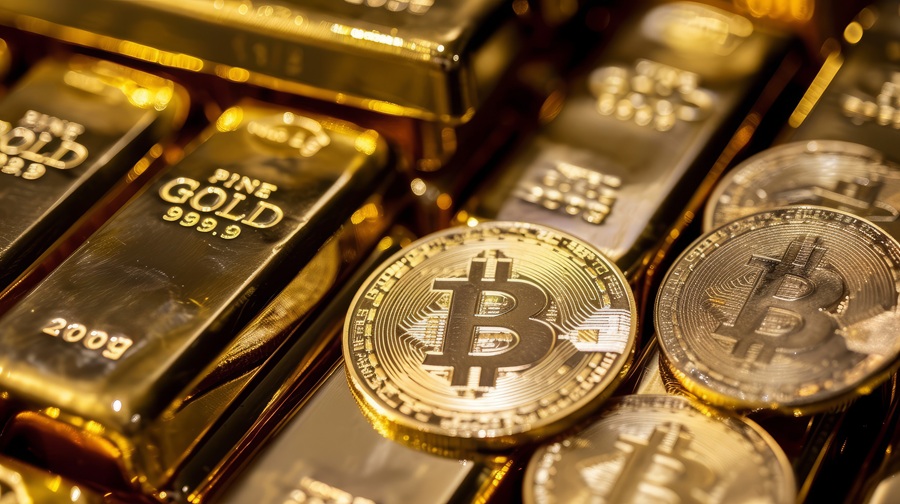
当特朗普政府在 2 月底将全球关税推高至 15%、中东地缘政治风险再次燃起,且凯文·沃什(Kevin Warsh)的美联储主席提名向债市发出鹰派震慑时,黄金表现出了它在压力时期应有的姿态:应声上涨
比特币的表现则截然不同——它紧随纳斯达克的跌势。从 2025 年 10 月超过 126,000 美元 的巅峰起步,到 3 月初已暴跌近 50%,回落至 60,000 美元上方。这种走势的分化才是重点:黄金表现得更像避难所,而比特币则像是一个捆绑了额外杠杆的高贝塔(High-beta)科技股。
对于差价合约(CFD)交易者——即那些通过杠杆博取价差而非持有实物的投资者来说,这种区别并非学术讨论,它直接揭示了当你进入这两个市场时,你交易的本质究竟是什么。
驱动力分析
黄金正同时受到三股力量的推动:全球央行的持续囤积、投资者对冲货币贬值的需求,以及针对关税政策和地缘政治新闻的响应式避险资金流入。
比特币的驱动因素显得更为复杂且充满“噪音”,尤其是考虑到它仍受惠于机构化的渗透、现货 ETF 的支撑,以及那套关于“数字黄金”的长盛不衰的叙事。然而,其短期价格逻辑已日益转向由杠杆水平主导。量化风控柜台(Algorithmic risk desks)如今已将比特币与科技权益类资产划入同一“风险池”。因此,每当华尔街的“恐惧指标” VIX 飙升时,这些交易模型往往会自动触发对比特币敞口的减持。这种抛售是机械化的程序反应,而非投资逻辑层面的根本动摇。
市场为何关注
这正解释了为什么两类通常都被冠以“避险资产”头衔的标的,却可能在同一天呈现出截然相反的走势。
CFD 交易员观察要点
黄金的问题在于,这一轮涨势目前显得有些“力竭”。1 月份那几个交易日内约 14% 的跌幅提醒了我们:拥挤交易 (Crowded trades) 是一把双刃剑,尤其是当杠杆机构需要套现筹措资金,并不得不抛售手中流动性最好的资产时。比特币可能在短短一小时内波动数个百分点,而其原因可能与当早宏观新闻中的叙事毫无关系。而在 CFD 杠杆的加持下,这种波动性会在多空两个方向上被同步放大。
哪些变数可能扭转局面?


The OPEC group has announced plans to increase production of Crude oil to reduce the panic and ease the supply crunch. However, some analysts believe that the amount will be insufficient reduce the price. The organisation agreed to increase production to 648,000 barrels from 400,000 per day beginning in August.
Brent crude and WTI dropped in price in response, although they did settle as the day progressed. Background The price of oil initially spiked in response to the Russian and Ukraine crisis as sanctions were placed on Russia and supply chains began to come under stress. This caused a supply shock, and prices began to rocket up.
The added pressure of record high inflation has only accelerated the prices higher. Despite the increase in production, the emerging countries who produce oil are already struggling to keep up with their production targets. For instance, Nigeria, Venezuela, and Libya are struggling to produce their required amount for various reasons and have been set over ambitious targets.
This leaves the USA and Saudi Arabia are left to pick up the slack. Geopolitical Problems Political forces are also at play whenever oil is mentioned. Russia has such a powerful role in the production.
Restrictive economic sanctions placed on them since the crisis began has only added to uncertainty and volatility. Analysts believe that reducing the Russian influence on OPEC may reduce the volatility of oil prices, however this strategy will ultimately fail if Russia produces less oil and not more. Isolating Russia and placing more sanctions on them may prove counterproductive to dealing with oil supply.
Initial price action The price of oil dropped on the news with both WTI and Brent Crude oil dropping significantly. WTI dropped by 3.44% whilst Brent dropped 2.93%. Both prices remain volatile and in pattern of medium-term consolidation.
The price remains at the mercy of inflation rates and geopolitical influences.

Nike Inc. (NKE) reported its latest financial results for its fiscal 2022 fourth quarter after the closing bell in the US on Monday. World’s largest sporting goods company topped both revenue and earnings per share estimates. The company reported revenue of $12.234 billion for the quarter vs. $12.061 billion expected.
Earnings per share reported at $0.90 per share vs. estimate of $0.80 per share. ''NIKE’s results this fiscal year are a testament to the unmatched strength of our brands and our deep connection with consumers," John Donahoe, President and CEO of Nike said in a press release after the results. ''Our competitive advantages, including our pipeline of innovative product and expanding digital leadership, prove that our strategy is working as we create value through our relentless drive to serve the future of sport," Donahoe added. Nike Inc. (NKE) chart Shares of Nike were down by around 2.13% at the end of trading day on Monday at $110.42 per share. Here is how the stock has performed in the past year: 1 Month -4.73% 3 Month -18.03% Year-to-date -33.70% 1 Year -27.47% Nike price targets Cowen & Co. $133 Deutsche Bank $152 Credit Suisse $130 Citigroup $123 Baird $150 UBS $168 Morgan Stanley $159 HSBC $132 Wells Fargo $150 Nike Inc. is the 61 st largest company in the world with a market cap of $173.90 billion.
You can trade Nike Inc. (NKE) and many other stocks from the NYSE, NASDAQ, HKEX and the ASX with GO Markets as a Share CFD. Sources: Nike Inc., TradingView, MarketWatch, Benzinga, CompaniesMarketCap

The New Zealand economy took a hit in the first quarter as Covid 19 ran rampant and interest rates rose as the Reserve Bank of New Zealand increased interest rates to combat inflation. The contraction was exaggerated as imports were reduced. Growth across the country was slowed.
Production based output or the GDP fell by 0.2% which was below the analyst’s expectation of a 0.6% increase. The figure was also a substantial level below the 3.0% rise seen in the December quarter. Primary industries drove the decrease.
Lower output in the food, beverage, and tobacco manufacturing industry as well as the agriculture, forestry and fishing industries were key reason for the reduction in growth. Housing prices dropped as the rising interest rates began to hit mortgage holders in the hip pocket. Prices dropped 5.6% in the three months to May.
The Reserve Bank of New Zealand also tempered its expectations predicting a modest 0.7% increase for the March quarter. New Zealand spent much of the quarter fighting the Omicron spread of Covid-19. It was the real time the small island country had to deal with a significant covid outbreak.
Despite this, domestic travel data remained strong. The country also in a bid to help the travel industry, opened it borders to international visitors. The Reserve Bank has already raised interest rates five times since October in a bid to stem inflation from getting worse.
The Bank also made it clear that slowing down inflation would take priority over protecting the economy against a recession. The New Zealand dollar dropped on the news before rallying and is currently buying 0.63 USD. The NZD recovered after the drop before settling.
The NZD.USD pair has been in a downward trend since March 2021. It has seen a recent test of the 2-year lows.
Energy prices have continued to soar with the US indices struggling again as the West debates placing more sanctions on Russia. The Nasdaq closed 3.62% down overnight and is officially in a Bear market after falling 20% since the November 2021 highs. The Dow Jones finished down 2.37% and has also confirmed a correction as it closed down 10% from the January highs.
The S&P 500 was also down 2.95%. In Europe the FTSE finished flat, recovering most of the morning losses to end the day down 0.40% overall. The DAX also worked back some of its morning losses but still closed the day down 1.98%.
Commodities continue to boom with the threats of an embargo on Russian supplies driving the market sentiment. Oil rose to a 14 year high touching $139 a barrel for Brent Crude. However, the price did fall back to the $130 level as the day wore on.
Natural gas also rocketed up 42% compared to Friday over the concerns of a shortfall if Russia were to cut off its supply to Western Europe. British Prime Minister Boris Johnson outlined that the West may need to increase Oil and Gas production reduce the reliance on Russia and enable sanctions to be implemented. The increase in supply pressure, especially in the short term may see the volatility continue.
Nickel was the largest mover overnight rising an incredible 73%. Nickel miners and commodity plays on the ASX may continue to be relevant as the volatility surrounding commodities continues. Bitcoin is trading relatively flat at the moment with BTC/USD at $38,027 at 10.00 pm GMT.
Ethereum is trading at 1.94% lower at $2500 at 10.00 GMT. FOREX The GBP/USD fell sharply finishing down 1.01% as investors continue moving to safe-haven currencies. The EUR/USD performed marginally better dropping 0.7%.
The NZD and AUD, which had been performing strongly in the prior week also tapered against both the USD and EUR. Gold continued to show strength as it hovers just below the $2000 per ounce level. The impact of the CPI figures that will be out on Friday may further impact gold prices.
NIO Inc. (NIO) reported its first quarter financial results before the market open in the US on Thursday. The Chinese electric vehicle maker reported revenue of $1.563 billion in the first quarter (up by 24.2% year-over-year), topping analyst estimate of $1.561 billion. Loss per share reported at -$0.12 per share, lower than the -$0.15 loss per share expected.
The company delivered a total of 25,768 vehicles in Q1 2022, an 28.5% increase vs. Q1 2021. William Bin Li, founder, chairman and CEO of the EV company commented on NIO’s performance in Q1: ''We set new record-high quarterly deliveries of 25,768 vehicles in the first quarter of 2022, and hit the milestone of exceeding 200,000 vehicle deliveries in May within four years since our first delivery.'' "Despite the volatilities of supply chain and the challenges in vehicle delivery resulting from the recent COVID-19 resurgence, we witnessed robust demand for our complementary products and achieved an all-time high order inflow in May 2022.
On April 29, 2022, the first batch of tooling trial builds of the ET5 rolled off the production line at the new manufacturing plant at NeoPark in Hefei. We expect to start delivery of the ET5 in September 2022. In addition, we will further enhance our product offering by introducing the ES7, a new mid-to-large five-seater SUV based on NIO Technology 2.0 (NT2.0), in June and expect to start its delivery in late August," Li added.
The company expects deliveries of between 23,000 to 25,000 in Q2 and revenue of between $1.473 billion and $1.591 billion. NIO Inc. chart Shares of NIO fell by around 6% during the trading day on Thursday at $18.93 per share despite beating analyst estimates for Q1, mainly due to future outlook for Q2. Here is how the stock has performed in the past year: 1 Month +44.35% 3 Month +42% Year-to-date -40.31% 1 Year -55.78% NIO price targets B of A Securities $26 UBS $32 Mizuho $60 Morgan Stanley $34 Barclays $34 Deutsche Bank $70 Goldman Sachs $56 NIO is the 14 th largest automaker in the world with a market cap of $31.54 billion.
You can trade NIO Inc. (NIO) and many other stocks from the NYSE, NASDAQ, HKEX and the ASX with GO Markets as a Share CFD. Sources: NIO Inc., TradingView, MarketWatch, Benzinga, CompaniesMarketCap
US and European equity markets remained volatile as fighting between Russian and Ukraine forces continued and negotiation talks failed to result in any progress. Both parties however have committed to another round of discussions. The VIX, Wall Street’s volatility measure surged 12% to 30 indicating the increased fear investors are feeling from the ongoing situation.
The Dow Jones and the S&P 500 both closed down 0.5% and 0.25% respectively, the Nasdaq finished up 0.4% as tech and growth stocks outperformed. In Europe, the FTSE finished down 0.4% and the DAX 0.7%. Not surprisingly, with SWIFT bans and other banking sanctions levied against Russia, the financial sector was the poorest performer overnight in the USA.
Brent Crude oil has ticked back over to $101.10USD as a consequence of the conflict and is still expected to rise further. An OPEC meeting is scheduled for tomorrow however there is no expectation of a significant change. Gold hasn’t seen much change and is still hovering around $1,908USD.
The price has remained stable after bouncing from its recent highs. The RBA is meeting today at 2.30 pm to discuss interest rates and their outlook of the Australian economy, however, no change is expected as they deal with the current sentiment relating to the Russia and Ukraine crisis. Inflation is still the key concern, though a mild Wage Price Index figure last week has given the RBA some room to continue the mostly dovish tone seen at recent meetings.
Above expected retail figures came out yesterday increasing 1.8% and beating most expectations. The USA federal reserve is also indicating that it may be more cautious in tackling inflation through interest rates although they are still expected to increase rates in March with a 25 bp rate rise fully priced in by the market. On the back of the retail figures and improving risk sentiment, the AUD/USD was up 1.46% from the session lows and could be one to watch for the day.
The EUR/JPY was down 1.3% indicating a move out of the Euro to safe haven currencies on the back of the continuing conflict. In cryptos, Bitcoin was a standout pushing up 11.18% to be trading at 41,933.30USD as of 9.00 pm GMT. This jump in price and increase in volume is likely due to many users in Russia moving to attentive payment as the Ruble continues to dive.