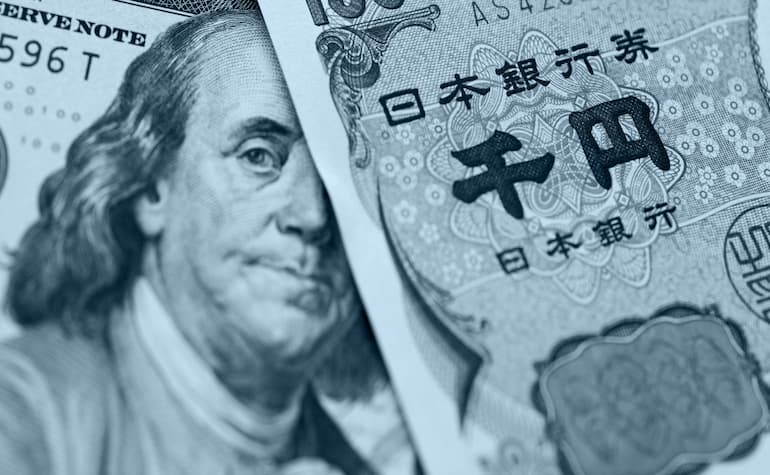
In 2022, it was believed that the Bank of Japan (BoJ) intervened three times, in September when the USDJPY was at 145.80, and in October and November when the USDJPY was at the 151.50 and 146.50 price levels respectively. For each of the 3 interventions, the USDJPY reversed strongly by more than 500pips. With the recent steady climb in the USDJPY in August, rising from 138 to the high of 146.50, there have been increasing comments from members of the BoJ and Japanese government regarding the need for an intervention.
The BoJ has avoided interventions, possible for the interim, by announcing increased flexibility on its yield-curve control (YCC). However, the markets viewed the action as insufficient and the stronger DXY continued to take the USDJPY higher. Continued upside on the USDJPY cannot be ruled out, especially if the DXY continues to strengthen significantly.
However, if the USDJPY continues to trade between the 145 and 146.50 price range, the possibility for an intervention from the BoJ increases. For an impactful intervention, the scale and timing of the decision would not be scheduled. A signal would be based on price volatility, in this case, if the USDJPY breaks through the bullish Ichimoku cloud and down from the 145-round number support level, which aligns with the 23.6% Fibonacci retracement level.
A reversal of 500 pips, similar to previous interventions, could see the USDJPY retest the trendline, along the 140 price level, with interim support at the 61.8% Fibonacci retracement and 141.60 price level.
By
JinDao Tai
The information provided is of general nature only and does not take into account your personal objectives, financial situations or needs. Before acting on any information provided, you should consider whether the information is suitable for you and your personal circumstances and if necessary, seek appropriate professional advice. All opinions, conclusions, forecasts or recommendations are reasonably held at the time of compilation but are subject to change without notice. Past performance is not an indication of future performance. Go Markets Pty Ltd, ABN 85 081 864 039, AFSL 254963 is a CFD issuer, and trading carries significant risks and is not suitable for everyone. You do not own or have any interest in the rights to the underlying assets. You should consider the appropriateness by reviewing our TMD, FSG, PDS and other CFD legal documents to ensure you understand the risks before you invest in CFDs.
市場對頂尖製程晶圓及先進封裝(Advanced Packaging)的瘋狂胃納,其增長速度早已遠遠超越了全球供應鏈所能溫和承受的極限。這種極端的供需失衡,正強行逼迫各大 AI 龍頭大廠積極評估「第二供貨源(Second-source)」—— 呢點要稍為校準:這並不代表大廠們正在拋棄台積電,而是他們在實戰中迫切需要多一條通往大規模量產的備用防線。
支撐英特爾未來繼續狂飆的牛市邏輯非常直觀:**全球 AI 算力需求依舊極其瘋狂**,台積電的產能死鎖在短期內根本無法解開,這倒逼跨國科技巨頭必須不計代價尋求具備實質技術公信力的第二代工防線。如果英特爾能成功將目前的秘密測試與意向訂單逐步轉化為實質性的商業產出,全球長線資金將繼續為其晶圓代工戰略瘋狂計價。
最後,不容忽視的是更宏觀的 **AI 資本開支大週期**。一旦 Google、微軟、亞馬遜和 Meta 等超大規模雲端商(Hyperscalers)未來在龐大的基礎設施投入上放緩步伐、或是 AI 商業化變現的投資回報率(ROI)不如預期,成個半導體板塊都將迎來泥沙俱下的結構性大回撤,無論英特爾 Foundry 的製程進展得幾咁完美也無法獨善其身。
綜上所述,主導接下來外匯與股票交叉盤生死的黃金變數包括:輝達會否發出實質生產訂單、18A 工藝的最新良率進展、英特爾代工業務的虧損限度、台積電先進封裝擴產速度,以及北美雲端巨頭們的 AI 資本開支是否依舊強悍。




.jpeg)
.jpeg)