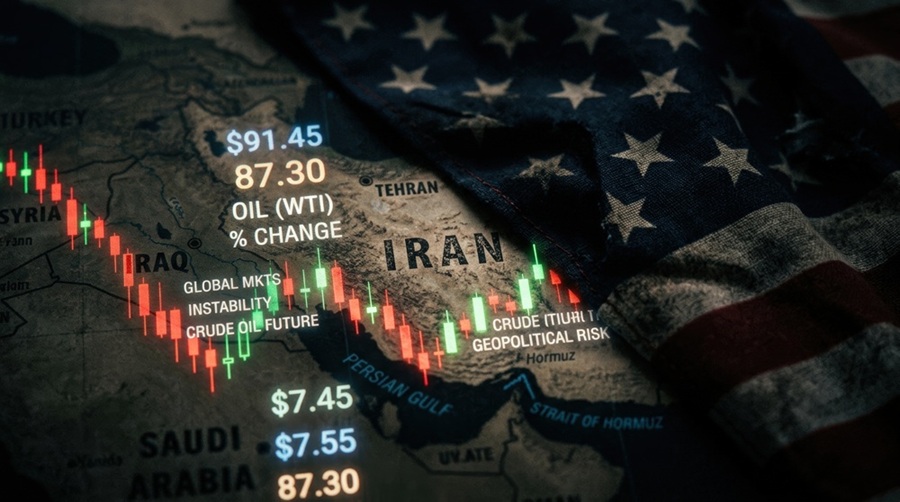
Oil has seen its first real slip up in price since March. The commodity had been running on the back of high inflation and supply issues stemming from the Russian and Ukraine crisis. During the run Oil peaked at $137 a barrel before entering a period of consolidation.
The recent catalyst for the drop was OPEC announcing that 2023 would likely result in lower demand for Oil. In addition, the threat of Chinese lockdowns is once again rearing its ugly head, adding to the woes. Furthermore, there have been discussion in recent days and week with the President of the USA, Joe Biden pushing for an increase in production.
The price has now fallen out of the wedge and is testing the support level. A strong USD Oil historically moves inversely to the USD. This is because oil is priced in US dollars.
Therefore, when the US dollar is strong fewer US dollars are required to buy a barrel of oil. Conversely, when the USD is weak, more USD is required, increasing the price of Oil. Consequently, with the USD being as strong as it is currently, the price of oil had to at some point fall.
Slowing Growth A recession could be a strong driver for a dip in the price of oil as negative growth has reduces the demand for commodities. Growing economies require Oil and other commodities to develop their infrastructure. Therefore, a recession will likely lead to less manufacturing and less infrastructure development due to a reduction in demand.
Technical Analysis The price of Brent is approaching an important area of support. It can be observed that the price of Brent has broken down from its wedge pattern and following back into the longer-term trend. The price is sitting on its short-term support level of $97.
This level is also of extra importance because it also doubles as the 200-day average. It can therefore be expected that there will be a great deal of volume traded near this zone and that to break through it will require a great deal of selling pressure.

The information provided is of general nature only and does not take into account your personal objectives, financial situations or needs. Before acting on any information provided, you should consider whether the information is suitable for you and your personal circumstances and if necessary, seek appropriate professional advice. All opinions, conclusions, forecasts or recommendations are reasonably held at the time of compilation but are subject to change without notice. Past performance is not an indication of future performance. Go Markets Pty Ltd, ABN 85 081 864 039, AFSL 254963 is a CFD issuer, and trading carries significant risks and is not suitable for everyone. You do not own or have any interest in the rights to the underlying assets. You should consider the appropriateness by reviewing our TMD, FSG, PDS and other CFD legal documents to ensure you understand the risks before you invest in CFDs.