Noticias del mercado & perspectivas
Anticípate a los mercados con perspectivas de expertos, noticias y análisis técnico para guiar tus decisiones de trading.
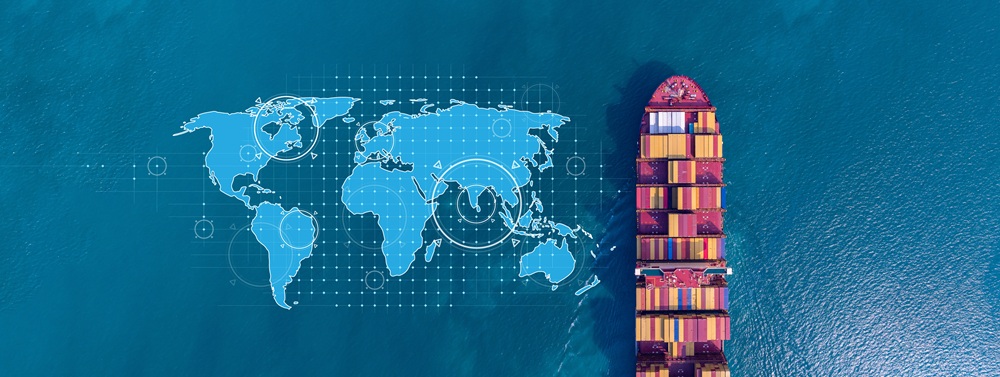
El anuncio del alto el fuego del 8 de abril y las discusiones paralelas en torno a una tregua de 45 días no han resuelto la interrupción del Estrecho de Ormuz. Por ahora, han puesto un tope al peor escenario posible, pero el tráfico de petroleros se mantiene en una fracción de los niveles normales y la demanda iraní de tarifas de tránsito señala un cambio estructural, no temporal.
Lo que comenzó como un conflicto regional se ha convertido en un shock energético global, y la pregunta para los mercados ya no es si Ormuz fue interrumpido, sino cómo permanentemente la interrupción cambia el piso de precios para el petróleo.
Puntos clave
- Alrededor de 20 millones de barriles por día (bpd) de petróleo y productos derivados del petróleo normalmente pasan por el Estrecho de Ormuz entre Irán y Omán, lo que equivale a aproximadamente una quinta parte del consumo mundial de petróleo y aproximadamente el 30% del comercio mundial de petróleo marítimo.
- Esto es un choque de flujo, no un problema de inventario. Los mercados petroleros dependen del rendimiento continuo, no del almacenamiento de información estático.
- Si la interrupción persiste más allá de unas pocas semanas, el Brent podría pasar de un pico a corto plazo a un shock de precios más amplio, con riesgo de estanflación.
- El tráfico de petroleros a través del estrecho cayó de alrededor de 135 barcos por día a menos de 15 en el pico de interrupción, una reducción de aproximadamente 85%, con más de 150 embarcaciones ancladas, desviadas o retrasadas.
- El 8 de abril se anunció un alto el fuego de dos semanas, con negociaciones de tregua de 45 días en curso. Irán ha señalado por separado una demanda de tarifas de tránsito para los buques que utilizan el estrecho, lo que, de formalizar, representaría un piso geopolítico permanente en los costos de energía.
- Los mercados han comenzado a alejarse del crecimiento y la exposición tecnológica hacia los nombres de energía y defensa, lo que refleja la opinión de que el petróleo elevado se está convirtiendo en un costo estructural en lugar de una prima de riesgo temporal.
El punto de choque petrolero más crítico del mundo
El Estrecho de Ormuz maneja aproximadamente 20 millones de barriles diarios de petróleo y productos derivados del petróleo, lo que equivale a alrededor del 20% del consumo mundial de petróleo y alrededor del 30% del comercio mundial de petróleo marítimo. Con la demanda mundial de petróleo cercana a los 104 millones de bpd y la capacidad sobrante limitada, el mercado ya estaba fuertemente equilibrado antes de la última escalada.
El estrecho también es un corredor crítico para el gas natural licuado. Alrededor de 290 millones de metros cúbicos de GNL transitaron por la ruta cada día en promedio en 2024, lo que representa aproximadamente el 20% del comercio mundial de GNL, siendo los mercados asiáticos el principal destino.
La Agencia Internacional de Energía (AIE) ha descrito a Ormuz como el punto de choque del tránsito petrolero más importante del mundo, señalando que incluso las interrupciones parciales pueden desencadenar movimientos desmedidos de precios. El crudo Brent se ha movido por encima de los 100 dólares el barril, lo que refleja tanto la estanqueidad física como una prima de riesgo geopolítico al alza.

Tanques inactivos a medida que los flujos son lentos
Los datos de envío y seguros ahora apuntan a tensión en tiempo real. Se informa que más de 85 grandes transportistas de crudo están varados en el Golfo Pérsico, mientras que más de 150 embarcaciones han sido ancladas, desviadas o retrasadas a medida que los operadores reevalúan la cobertura de seguridad y seguros. Eso dejaría un estimado de 120 millones a 150 millones de barriles de crudo inactivos en el mar.
Esos volúmenes representan solo de seis a siete días de rendimiento normal de Hormuz, o un poco más de un día de consumo mundial de petróleo.
Los datos actualizados de envío y seguros confirman ahora que más de 150 embarcaciones han sido ancladas, desviadas o retrasadas, por encima de las 85 reportadas inicialmente. Los 1.3 días de cobertura de consumo mundial del crudo inactivo siguen siendo la limitación vinculante: se trata de un shock de flujo, no un problema de almacenamiento, y el alto el fuego aún no se ha traducido en un rendimiento restaurado de manera significativa.
Un mercado basado en el flujo, no en el almacenamiento de información
Los mercados petroleros funcionan en movimiento continuo. Las refinerías, las plantas petroquímicas y las cadenas de suministro mundiales están calibradas para lograr entregas estables a lo largo de rutas marítimas predecibles. Cuando los flujos a través de un punto de choque que lleva aproximadamente una quinta parte del consumo mundial de petróleo y alrededor del 30% del comercio mundial de petróleo marítimo se interrumpen, el sistema puede pasar del equilibrio al déficit en cuestión de días.
La capacidad de producción sobrante, concentrada en gran medida dentro de la OPEP, se estima en sólo 3 millones a 5 millones de bpd. Eso queda muy por debajo de los volúmenes en riesgo si los flujos de Ormuz se ven gravemente perturbados.
Riesgos de inflación y macroderrames
El impacto inflacionario de un choque petrolero suele llegar en oleadas. Los precios más altos del combustible y la energía pueden elevar rápidamente la inflación general a medida que los costos de gasolina, diésel y energía se muevan al alza.
Con el tiempo, los mayores costos de energía pueden pasar por fletes, alimentos, manufactura y servicios. Si la perturbación persiste, la combinación de una inflación elevada y un crecimiento más lento podría elevar el riesgo de un entorno estanflacionario y dejar a los bancos centrales enfrentando una difícil compensación.
Sin compensación fácil, un sistema con poca holgura
Lo que hace que el episodio actual sea particularmente agudo es la falta de holgura en el sistema global.
La oferta y la demanda mundiales cerca de 103 millones a 104 millones de bpd dejan poco colchón de sobra cuando un punto de choque que maneja casi 20 millones de bpd, o cerca de una quinta parte del consumo mundial de petróleo, se ve comprometido. La capacidad sobrante estimada de 3 millones a 5 millones de bpd, en su mayoría dentro de la OPEP, cubriría sólo una fracción de los volúmenes en riesgo.
Las rutas alternativas, incluidas las tuberías que eluden Ormuz y el envío reencaminado, solo pueden compensar parcialmente los flujos perdidos, y generalmente a un costo más alto y con plazos de entrega más largos.
Conclusión
Hasta que se restablezca el tránsito por el Estrecho de Ormuz y se vea como creíblemente seguro, es probable que los flujos mundiales de petróleo sigan deteriorados y las primas de riesgo sean elevadas. Para los inversionistas, los formuladores de políticas y los tomadores de decisiones corporativas, la pregunta central es si el petróleo puede moverse hacia donde necesita ir, todos los días, sin interrupción.


Baidu Inc. (BIDU) reported its unaudited Q2 results on Tuesday. The Chinese technology company topped both revenue and earnings per share estimates for the quarter. Revenue reported at $4.424 billion for Q2 (down by 5% year-over-year) vs. $4.395 billion expected.
Earnings per share at $2.36 per share for the quarter vs. $1.59 per share estimate. Robin Li, CEO of Baidu: "Despite a challenging macro environment caused by Covid-19, Baidu Core generated RMB23.2 billion in revenues in the second quarter, while Baidu AI Cloud revenues maintained rapid growth momentum of 31% year over year and 10% quarter over quarter." "Apollo Go further solidified its position as the world's largest autonomous ride-hailing service provider. Apollo Go completed 287K rides in the second quarter, and accumulated one million rides on July 20, becoming an important alternative means of people's everyday travel in the Yizhuang region of Beijing.
Moreover, in a momentous landmark, Apollo Go became the first provider to offer fully driverless ride-hailing services – i.e. completely without human drivers present in the car - on open roads in Chongqing and Wuhan, allowing us to further scale up our operations at an accelerated pace," Li added. "Baidu Core delivered a non-GAAP operating margin of 22% in the second quarter, up from 17% in the first quarter of 2022, as we continued to optimize our costs and enhance operational efficiency," said Rong Luo, CFO of the company. "Going forward, we remain committed to quality revenue growth and sustainable business models," Luo concluded. Baidu Inc. (BIDU) chart Shares of Baidu were down by around 7% on Tuesday at $137.49 per share. Here is how the stock has performed in the past year: 1 month +2.82% 3 months -1.72% Year-to-date -7.29% 1 year -12.15% Baidu price targets Benchmark $270 Citigroup $223 Barclays $235 JP Morgan $125 Mizuho $285 HSBC $180 Baidu Inc. is the 334 th largest company in the world with a market cap of $47.08 billion.
You can trade Baidu Inc. (BIDU) and many other stocks from the NYSE, NASDAQ, HKEX and the ASX with GO Markets as a Share CFD. Sources: Baidu Inc., TradingView, MetaTrader 5, Benzinga, CompaniesMarketCap


The price of wheat is finally starting to show positive signs after an aggressive sell off that has been ongoing since May 2022. There is hope that the price of the commodity may begin to climb again with the price finally finding some support. The price has been impacted by growing fears that production may slip may increasing volatility and increasing in price.
Pressure from Global Warming has effected the production/farming of the grain reducing supply. India in particular which is the second largest producer of wheat, has suffered from rising heat levels with its production dropping by 3% in 2021/22. Furthermore, the constant ambiguity surrounding the Russian and Ukraine crisis still has the potential move the price even higher adding to a potential supply crunch.
Technical Analysis The Price chart for wheat shows how the price ran during the initial stages of the Russian and Ukraine crisis, before failing to breakout and entering an aggressive downtrend. This shift is essentially a long-term reversion to the mean moving back towards the 200-day average and prior long term supports. The price action is a common follow on from sharp and fast rises in prices.
The price has now settled and consolidating between $770-$850 and importantly broken out of the downtrend. Adding to the evidence for a potential reversal is that there is a divergence between the RSI and the current price. As it can be seen, the RSI is itself in an upward channel and has crossed through the 50 level.
This can be compared to the actual price which is still consolidating. Divergences can be an early indicator that a reversal is about to occur. This current price action is showing the potential for a bounce based on the factors discussed above and presents a potential long trade with a risk reward of around 2.5:1.
For this trade, the recent resistance point of $940 can be the first target. If the price can pass through this level, it may be able to reach $970. Placing a stop loss below the recent low wick at 830 provides solid risk management in case the price goes in a different direction.


Wheat Trading Opportunities Wheat is a well-known soft commodity that is vital for any kind of bread product. It also has important uses for the feedstock for cattle which is vital in economies with large agricultural sectors. The supply and demand for wheat can be volatile with changes occurring for a multitude of different reasons.
The most recent spike in price was caused by the Russian and Ukraine Crisis. The soft commodity saw a large spike largely due to the economic sanctions placed on Russia and supply chain pressures that the war caused in Ukraine. Both countries are large exporters of wheat with Ukraine producing about a fifth of the world’s high-grade wheat and 7% of all wheat across the world.
Therefore, the supply shock had a large effect on the supply available driving up the price. Some of the other countries that produce the bulk of the worlds supply include China, the USA, Canada, Australia, and India were able to benefit from the higher prices. A strong USD Like all commodities, wheat is quoted in USD.
This means that when the USD is strong, the price of the commodity becomes weaker because the producer must sell their produce for less. Due to recent market volatility the USD has risen as investors have looked to the USD for safety. This has in turn negatively affected the price of wheat The Price of Oil The price of oil plays a role in the overall price of wheat.
This is because oil is an important input cost for wheat. Oil is needed for both the transportation and the actual farming of wheat. As the price of oil increases the costs must then be offset by the wheat producers who then raise their resale price.
Therefore, when forecasting what the price of wheat may do in the future, assessing the future of the price of oil can be a helpful tool. Emerging economies Countries with developing economies tend to be higher importers and consumers of wheat. In addition, countries in the Middle East and Africa import lots of wheat because they do not have an environment that is conducive to producing wheat.
For instance, in countries in the desert such Egypt where there is little water, and it is exceptionally dry such as Egypt very little wheat is produced. This explains why Egypt is one of the highest exporters of wheat and if the demand from these countries it would likely impact on the overall price. Technical Analysis The price chart of wheat tells an important story.
It can be observed that the wheat futures initially spiked at the beginning of the war in Ukraine as the market reacted to the initial supply shock. The price then moved into a tight consolidation tightly before breaking out towards the highs. However, this breakout failed, and was unable to rise above the key resistance level at $1354.
The price of wheat then entered a downward trending channel where it currently remains. The price has also broken down below the 200 Day Moving Average which does not bode well for bullish moves in the short term. Before this break down, wheat had not fallen substantially below the 200-day moving average since June 2020.
On the other hand, the price is currently sitting in the top half of the channel. The price may be able to break out of the channel to the upside. In addition, it is also sitting in area of long-term support between 750-850 USD.
Wheat Future Contract CFD’s can now be traded on MT5 on GoMarkets platforms


The USA and other Western nations have intimated that they are planning to block Russia's access to its international stockpile of gold. Russia has so far been able to use gold to support the Rubel as a tool to reduce the impact of sanctions. Russia has been able to trade gold assets for more liquid foreign exchange that have not been subject to current sanctions.
Tech stocks continued their momentum overnight as the Nasdaq closed at its highest level since February 9, up 1.93%. Intel was a top performer overnight as it rose 6.94% on reports that it may assist NVIDIA corporation in chip manufacturing. Uber also had a stellar night increasing by 4.96% after it reached an agreement to list NYC taxis on its app.
The Dow Jones closed 1.02% higher as material stocks performed well. The S&P 500 reflected the positive momentum as it closed the day up 1.43%. In Europe, the FTSE had a relatively flat day.
The material sector performed strongly, supporting the index as it closed up 0.09%. The DAX also had a relatively flat day finishing down 0.069%. Commodities Brent Crude oil failed to carry on its rise as it dropped back 2.69% to $118.14.
Although the price is still holding above the $115 level. The gold price saw a mini spike out of its consolidation as it jumped by 0.69% to USD 1957.41. The move can be somewhat attributed to the potential for new sanctions on Russia.
Natural Gas had another bumper day as it rose by 5.81%. The price extended break out as it closed at its three-month highs of $5.464. The USA may be forced to increase its exports to Europe to offset any disruption in supply from Russia.
Cryptocurrency Bitcoin performed solidly overnight. It is currently testing the highs of its recent range and as the BTC/USD approaches the $46,000 resistance level. The pair closed at $44,091, a 2.56% increase, at 22.36 GMT.
Ethereum has kept its strong week going with another 2.59% rise holding the $3118 at 22.42 GMT. The ETH/USD has seen a recent period of consolidation before overnight breaking above the trend line. The JPY continues to be smashed against most other currencies.
The USD/JPY rose by 0.97% to 122.324. The GBP/JPY also saw a huge move moving 0.88% to close at 161.330. The AUD/USD had a mixed day.
Initially, the currency pair sold down, however it recovered later to close at 0.7512. The EUR/USD has seen a settling of its price as Ukraine and Russian conflict has settled. The pair finished trading at 1.0998 USD.

Global indices were choppy overnight, mainly finishing lower on the back of failed peace talks and Russia continued advances in Ukraine. According to reports from the French government, the Russian president Vladimir Putin intends to take the country by any means and that “the worst is to come”. The reports sent the FTSE 100 down 2.57%.
The decline was further aided by the removal of Russian equities from the index. In addition, the DAX followed dropping 2.16%. In the USA the NASDAQ closed down 1.56% as the tech sector saw more selling.
The FANG stocks were all down continuing from what has been a volatile week. The Dow Jones and the SP500 performed a little better but were still up and down during the trading session. Overall, the S&P500 finished down 0.53% and the Dow Jones 0.29% respectively.
Money continues to flow into commodities as pressure is growing for Western countries to ban Russian oil and gas imports. Gold continues to provide strength in the volatile market holding $1936 USD per ounce. Oil touched $119 USD a barrel before tapering to $110.
Nickel was also a strong mover jumping 6% to $27,815 its highest level since April 2011. Wheat continued its rise another 5.46%. Palladium, another commodity in which Russia is a large producer, is also up 3.2% to $2,753.68 by 12.43 GMT.
Palladium is a crucial metal needed by Automakers for catalytic converters to curb emissions. Iron Ore showed some strength increasing by 5.5% to $153USD per tonne. In currencies, the BTC/USD pair lost momentum at $42,541 USD down 3% at 10.45 pm GMT.
Ethereum is also down 4.48% over the last 24 hours. The EUR/USD fell to fresh levels of 1.1032 its lowest level since May 2020. The markets remain volatile and very reactive to news coming out of Europe as the weekend approaches.


US indices had a bumper day of trading as the Federal Reserve increased interest rates by 25 basis points. The Reserve is also expected to raise rates to between 1.75% and 2.00% by the end of the year, with 7 increases expected till the end of 2022. The Federal Reserve made it clear that they are doing their utmost to fight inflation.
Jerome Powell also indicated that the economy shouldn't need to enter into a recession. Whilst the Federal Reserve lowered economic projections for 2022 and increased inflation most of this had already been priced in. The Nasdaq finished the very strong session up 3.77% as tech stocks rebounded after initially selling down on the Federal Reserve’s announcement.
It was supported by the Dow Jones and the S&P500 which were up 1.55% and 2.24% respectively. In Europe, the FTSE had a solid day rising 1.62% and the DAX performed very well increasing by 3.76%. The Chinese stock market both in Hong Kong and on the mainland was also roaring yesterday on the back of a commitment from China’s State Council to sure up and introduce policies to boost its economy.
The CSI 300 index gained 4.3% and the Hang Seng index jumped 9.1%, its largest jump since 2008. This may provide some confidence for the region. Commodities Commodity prices continue their retreat from their highs a few weeks ago.
Brent Crude Oil continues to hover below 100 USD finishing the day at 97.96 USD a drop of 0.74%. Gold was able to hold its support level at 1917 USD per ounce and bounced after initially dropping below 1,900 USD due to the interest rate announcement. Natural gas continues to tighten its price range and increased by 2.80% Cryptocurrency Bitcoin had a high volume buying day as buyers stepped up and the price of BTC/USD increased by 4.83% to 41,202 USD.
Bitcoin remains rangebound however the volume increase indicates attention may be returning. Similar results occurred for Ethereum with the ETH/USD increasing by 5.60% to 2,766 USD. FOREX The USD was weak against most other currencies following the Federal Reserve's announcement.
The AUD had a strong day backed by its commodities moving up 1.29% against the USD. The EUR/USD and GBP/USD both reacted positively to Federal Reserve’s announcement, with them moving up 0.71% and 0.81% respectively. Against the CHF the USD was able to hold up relatively well at the 0.9400 level.
The market will likely continue to react to the news from the Federal Reserve as the week draws to an end.