Noticias del mercado & perspectivas
Anticípate a los mercados con perspectivas de expertos, noticias y análisis técnico para guiar tus decisiones de trading.
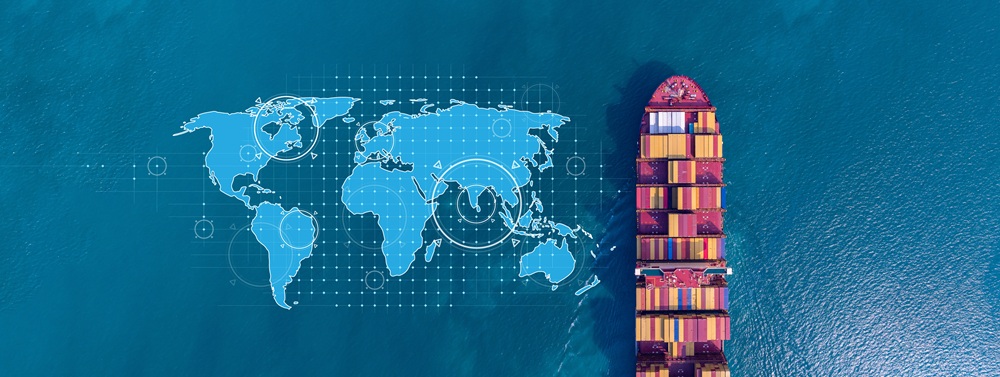
El anuncio del alto el fuego del 8 de abril y las discusiones paralelas en torno a una tregua de 45 días no han resuelto la interrupción del Estrecho de Ormuz. Por ahora, han puesto un tope al peor escenario posible, pero el tráfico de petroleros se mantiene en una fracción de los niveles normales y la demanda iraní de tarifas de tránsito señala un cambio estructural, no temporal.
Lo que comenzó como un conflicto regional se ha convertido en un shock energético global, y la pregunta para los mercados ya no es si Ormuz fue interrumpido, sino cómo permanentemente la interrupción cambia el piso de precios para el petróleo.
Puntos clave
- Alrededor de 20 millones de barriles por día (bpd) de petróleo y productos derivados del petróleo normalmente pasan por el Estrecho de Ormuz entre Irán y Omán, lo que equivale a aproximadamente una quinta parte del consumo mundial de petróleo y aproximadamente el 30% del comercio mundial de petróleo marítimo.
- Esto es un choque de flujo, no un problema de inventario. Los mercados petroleros dependen del rendimiento continuo, no del almacenamiento de información estático.
- Si la interrupción persiste más allá de unas pocas semanas, el Brent podría pasar de un pico a corto plazo a un shock de precios más amplio, con riesgo de estanflación.
- El tráfico de petroleros a través del estrecho cayó de alrededor de 135 barcos por día a menos de 15 en el pico de interrupción, una reducción de aproximadamente 85%, con más de 150 embarcaciones ancladas, desviadas o retrasadas.
- El 8 de abril se anunció un alto el fuego de dos semanas, con negociaciones de tregua de 45 días en curso. Irán ha señalado por separado una demanda de tarifas de tránsito para los buques que utilizan el estrecho, lo que, de formalizar, representaría un piso geopolítico permanente en los costos de energía.
- Los mercados han comenzado a alejarse del crecimiento y la exposición tecnológica hacia los nombres de energía y defensa, lo que refleja la opinión de que el petróleo elevado se está convirtiendo en un costo estructural en lugar de una prima de riesgo temporal.
El punto de choque petrolero más crítico del mundo
El Estrecho de Ormuz maneja aproximadamente 20 millones de barriles diarios de petróleo y productos derivados del petróleo, lo que equivale a alrededor del 20% del consumo mundial de petróleo y alrededor del 30% del comercio mundial de petróleo marítimo. Con la demanda mundial de petróleo cercana a los 104 millones de bpd y la capacidad sobrante limitada, el mercado ya estaba fuertemente equilibrado antes de la última escalada.
El estrecho también es un corredor crítico para el gas natural licuado. Alrededor de 290 millones de metros cúbicos de GNL transitaron por la ruta cada día en promedio en 2024, lo que representa aproximadamente el 20% del comercio mundial de GNL, siendo los mercados asiáticos el principal destino.
La Agencia Internacional de Energía (AIE) ha descrito a Ormuz como el punto de choque del tránsito petrolero más importante del mundo, señalando que incluso las interrupciones parciales pueden desencadenar movimientos desmedidos de precios. El crudo Brent se ha movido por encima de los 100 dólares el barril, lo que refleja tanto la estanqueidad física como una prima de riesgo geopolítico al alza.

Tanques inactivos a medida que los flujos son lentos
Los datos de envío y seguros ahora apuntan a tensión en tiempo real. Se informa que más de 85 grandes transportistas de crudo están varados en el Golfo Pérsico, mientras que más de 150 embarcaciones han sido ancladas, desviadas o retrasadas a medida que los operadores reevalúan la cobertura de seguridad y seguros. Eso dejaría un estimado de 120 millones a 150 millones de barriles de crudo inactivos en el mar.
Esos volúmenes representan solo de seis a siete días de rendimiento normal de Hormuz, o un poco más de un día de consumo mundial de petróleo.
Los datos actualizados de envío y seguros confirman ahora que más de 150 embarcaciones han sido ancladas, desviadas o retrasadas, por encima de las 85 reportadas inicialmente. Los 1.3 días de cobertura de consumo mundial del crudo inactivo siguen siendo la limitación vinculante: se trata de un shock de flujo, no un problema de almacenamiento, y el alto el fuego aún no se ha traducido en un rendimiento restaurado de manera significativa.
Un mercado basado en el flujo, no en el almacenamiento de información
Los mercados petroleros funcionan en movimiento continuo. Las refinerías, las plantas petroquímicas y las cadenas de suministro mundiales están calibradas para lograr entregas estables a lo largo de rutas marítimas predecibles. Cuando los flujos a través de un punto de choque que lleva aproximadamente una quinta parte del consumo mundial de petróleo y alrededor del 30% del comercio mundial de petróleo marítimo se interrumpen, el sistema puede pasar del equilibrio al déficit en cuestión de días.
La capacidad de producción sobrante, concentrada en gran medida dentro de la OPEP, se estima en sólo 3 millones a 5 millones de bpd. Eso queda muy por debajo de los volúmenes en riesgo si los flujos de Ormuz se ven gravemente perturbados.
Riesgos de inflación y macroderrames
El impacto inflacionario de un choque petrolero suele llegar en oleadas. Los precios más altos del combustible y la energía pueden elevar rápidamente la inflación general a medida que los costos de gasolina, diésel y energía se muevan al alza.
Con el tiempo, los mayores costos de energía pueden pasar por fletes, alimentos, manufactura y servicios. Si la perturbación persiste, la combinación de una inflación elevada y un crecimiento más lento podría elevar el riesgo de un entorno estanflacionario y dejar a los bancos centrales enfrentando una difícil compensación.
Sin compensación fácil, un sistema con poca holgura
Lo que hace que el episodio actual sea particularmente agudo es la falta de holgura en el sistema global.
La oferta y la demanda mundiales cerca de 103 millones a 104 millones de bpd dejan poco colchón de sobra cuando un punto de choque que maneja casi 20 millones de bpd, o cerca de una quinta parte del consumo mundial de petróleo, se ve comprometido. La capacidad sobrante estimada de 3 millones a 5 millones de bpd, en su mayoría dentro de la OPEP, cubriría sólo una fracción de los volúmenes en riesgo.
Las rutas alternativas, incluidas las tuberías que eluden Ormuz y el envío reencaminado, solo pueden compensar parcialmente los flujos perdidos, y generalmente a un costo más alto y con plazos de entrega más largos.
Conclusión
Hasta que se restablezca el tránsito por el Estrecho de Ormuz y se vea como creíblemente seguro, es probable que los flujos mundiales de petróleo sigan deteriorados y las primas de riesgo sean elevadas. Para los inversionistas, los formuladores de políticas y los tomadores de decisiones corporativas, la pregunta central es si el petróleo puede moverse hacia donde necesita ir, todos los días, sin interrupción.


The CHF has moved almost parabolically against the JPY and is almost touching 150, which would mark a 40 year first. With the Bank of Japan indicating its need to maintain current interest rate levels which are already among the lowest in the western world, the currency has been severely weakened. Statement that has come from some of its members indicate that there is no intention to adjust their Dovish policy even while the JPY continued to be smashed from pillar to post.
The CHF on the other hand been one of the stronger currencies outside of the USD as the countries, especially in recent months. With relatively low inflation and high volatility in the region the CHF has stood up well against most other currencies and been a source of stability. Therefore, the pair represents a trading opportunity by taking advantage of extremes of both a strong and weak currency.
The chart shows the pair has moved almost parabolically on the weekly timeframe. The price is currently at multi decade highs, with the 149.75 price the highest it has been since 1980. Whilst the 150 level is not a specific resistance point, it poses as a psychological level that may prove difficult to break out of.
On the daily chart, the recent break above 140 required 3 months of consolidation before it broke above the level. Since then, the breakout has largely been without any retracement or pullback. Therefore, it would not be unexpected for the price to pullback, especially as it gets closer to the 150 level.
The RSI is also supporting a pullback as it is in highly overbought territory at 80. If it does retrace then it may bounce off the recent support level at 142/143, and then rise target of 158 may become possible. If the Bank of Japan does decide to change its tune in regard to its dovish policy, then this trade does have the potential to go the other way with the JPY increasing in value very quickly, although at this stage there is nothing to indicate that this will occur.


The Kroger Company (KR) released its latest financial results for Q2 on Friday. The American grocery supermarket chain reported revenue of $34.638 billion for the quarter vs. $34.461 billion estimate. Earnings per share also beat analyst estimates at $0.90 per share vs. $0.82 per share expected. "Kroger delivered strong second quarter results propelled by our Leading with Fresh and Accelerating with Digital strategy.
We are incredibly thankful for our dedicated associates who continue to deliver a full, fresh and friendly customer experience," CEO of Kroger, Rodney McMullen said in a press release. "Our consistent performance underscores the resiliency and flexibility of our business model, which enables Kroger to thrive in many different operating environments. We are applying technology and innovation to improve freshness, grow Our Brands, and create a seamless shopping experience so our customers can get what they want, when and how they want it, with zero compromise on quality, selection and affordability." We will continue to focus on providing affordable, fresh food to our customers, investing in wages and the associate experience, and creating zero hunger, zero waste communities because when we do those things well, we deliver attractive and sustainable shareholder returns," McMullen added. The Kroger Company (KR) chart The stock price of Kroger rose by around 5% on Friday, trading at $51.07 a share.
Here is how the stock has performed in the past year: 1 month +8.20% 3 months -0.02% Year-to-date +12.86% 1 year +19.71% Kroger price targets Credit Suisse $55 Oppenheimer $51 Guggenheim $57 Morgan Stanley $41 Deutsche Bank $53 BNP Paribas $60 The Kroger Company is the 450 th largest company in the world with a market cap of $36.27 billion. You can trade The Kroger Company (KR) and many other stocks from the NYSE, NASDAQ, HKEX and the ASX with GO Markets as a Share CFD. Sources: The Kroger Company, TradingView, MetaTrader 5, MarketBeat, CompaniesMarketCap


The United States used 30.28 trillion cubic feet of natural gas in 2021, making them the world’s largest consumer of natural gas. Natural gas consumption in the United States has two seasonal peaks, largely reflecting weather-related fluctuations in energy demand. One of the biggest consumptions of gas is industrial, residential and commercial cooling and heating systems (eia, 2022).
As the world’s largest user of natural gas transitions out of summer, will this change indicate a decrease of their natural gas consumption? Could the decrease in demand for cooling be reflected on the technical charts? On a daily timeframe, natural gas has been on a steady upward trend since the end of June, in tandem with the beginning of summer in the US (seen on the chart below).
A trendline from the beginning of that trend until now can be drawn, and we can see recently that line has been broken by a daily candlestick, closing below the trendline which can indicate a change in trend for natural gas. After the strong break below of the trendline followed by multiple bearish daily candlesticks, we can consequently expect further downside movement for natural gas, after breaking through a strong support at $8.4, in all probability with natural gas currently sitting at $7.895 we could see natural gas come down to the next support level around $7.57.


NIO Q2 results have arrived NIO Inc. (NIO) reported its unaudited second quarter financial results on Wednesday. The Chinese electric vehicle maker reported revenue of $1.538 billion for the quarter, beating analyst estimate of $1.458 billion. Loss per share reported at -$0.20 per share vs. -$0.16 loss per share expected.
William Bin Li, founder, chairman and CEO of the EV company commented on NIO’s performance in Q2: ''We delivered 25,059 vehicles in the second quarter of 2022, representing a growth of 14.4% year-over-year despite the COVID-19 related challenges. With the teams’ concerted efforts, our deliveries started to recover and achieved 10,052 and 10,677 units in July and August, respectively." "The second half of 2022 is a critical period for NIO to scale up the production and delivery of multiple new products. The ES7, our first mid-large five-seater smart electric SUV based on NIO Technology 2.0 (NT2.0), has become a new favorite of the market with its superior performance, comfort and digital experience.
We witnessed a robust order inflow for the ES7 and started its deliveries at scale in August. We also look forward to starting the mass production and delivery of the ET5 in late September. With the compelling product portfolio and well-established brand awareness, NIO will attract a broader user base and embrace robust growth in the coming quarters," Li concluded.
NIO has delivered a total of 238,626 vehicles as of August 31, 2022. The company expects deliveries of between 31,000 to 33,000 in Q3 and revenue of between $1.913 billion and $2.030 billion. NIO Inc. (NIO) chart The stock was up by around 3% at the market open in the US on Wednesday, trading at $17.88 a share.
Here is how the stock has performed in the past year: 1 month -14.66% 3 months -16.05% Year-to-date -45.99% 1 year -55.14% NIO price targets B of A Securities $26 UBS $32 Mizuho $60 Morgan Stanley $34 Barclays $34 Deutsche Bank $70 Goldman Sachs $56 NIO Inc. is the 15 th largest automaker in the world with a market cap of $28.62 billion. You can trade NIO Inc. (NIO) and many other stocks from the NYSE, NASDAQ, HKEX and the ASX with GO Markets as a Share CFD. Sources: NIO Inc., TradingView, MarketWatch, Benzinga, CompaniesMarketCap


Brent Crude and West Texas Intermediate Oil both fell to their lowest levels since January as fresh recession fears swept the market. Brent dropped to $87 a barrel and WTI to $81. The prices dropped following OPEC’s decision to cut the production by 100,000 barrels a day of supply from October.
In recent months with the Russian and Ukraine conflict raging, OPEC had to lift production as supply dipped. However, with the decreasing health of the global economy and a incredibly strong US dollar demand for overseas oil has dipped. Poor economic data from China and its Covid zero strategy has also pushed concerns of weaker demand.
In fact, China’s crude oil important dropped by 9.4% from a year earlier signalling the slowdown in demand. Furthermore, with the US federal reserve expected to remain hawkish until inflation is back to a sustainable level, in the short term there is little resistance in the way of the US dollar continuing to grind its way higher, further pressuring the price of oil. Whilst the current dip may provide some relief for consumers, with uncertainty from the Kremlin and Putin potentially capping their energy exports, the short term volatility will likely continue.
As it can be seen from the charts below, both WTI and Brent have broken down through their key support levels. The price may struggle to fall lower in the immediate short term and may need to consolidate in the short term before pushing lower again.


With central banks aggressively hiking interest rates to combat inflation, one specific country stands alone in maintaining a dovish stance. The country is Japan, and the consequence of the Central Bank of Japan’s ultra-dovish policy has been a massive weakening of its currency. Against almost all other currencies the JPY has been depreciating aggressively.
Specifically, the USD/JPY and the NZD/JPY are shaping as potentially trading opportunities. Both trading opportunities are largely based on a technical breakout as opposed to a pure fundamental breakout. NZD/JPY This currency pair is forming into a symmetrical triangle pattern.
Importantly the price has been contracting and the range getting smaller. This shows that the price is reaching an equilibrium point between buyers and sellers. However, at some point and the price will not be able to contract further and will have to break out either to the upside or the downside.
The general rule of a symmetrical triangle is to wait until the price breaks before taking a position because the price has not indicated if it will break upward or downward. In addition, the RSI indicates a similar pattern showing consolidation in the same type of triangle. Therefore, a break of this RSI triangle may correlate and support a break out on the actual price.
USD/JPY This pair has seen an even more extreme move upward. After pulling back to the recent support at the 23.6% Fibonacci retracement level, the price has risen again and is looking to test the highs at 139.5 JPY. In order to find a new target the chat needs to be zoomed out to the monthly in order to see the next resistance point which is at 145JPY.
This would also take the price to almost 25 year highs. With more economic data to come out of the USA later this week.