Noticias del mercado & perspectivas
Anticípate a los mercados con perspectivas de expertos, noticias y análisis técnico para guiar tus decisiones de trading.
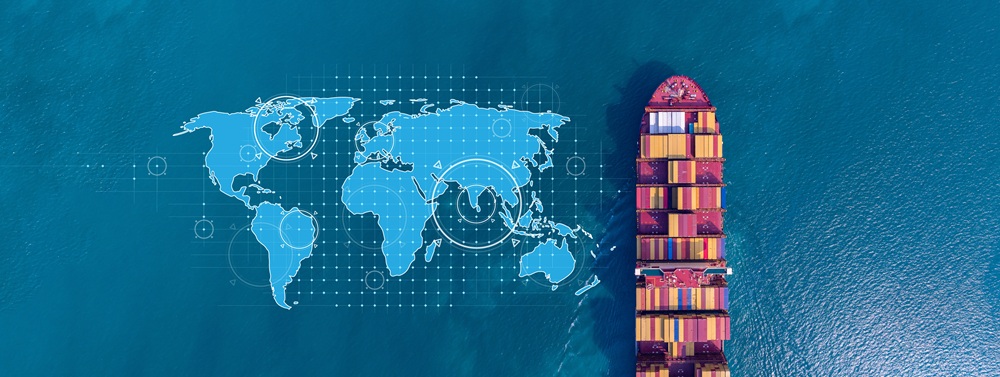
El anuncio del alto el fuego del 8 de abril y las discusiones paralelas en torno a una tregua de 45 días no han resuelto la interrupción del Estrecho de Ormuz. Por ahora, han puesto un tope al peor escenario posible, pero el tráfico de petroleros se mantiene en una fracción de los niveles normales y la demanda iraní de tarifas de tránsito señala un cambio estructural, no temporal.
Lo que comenzó como un conflicto regional se ha convertido en un shock energético global, y la pregunta para los mercados ya no es si Ormuz fue interrumpido, sino cómo permanentemente la interrupción cambia el piso de precios para el petróleo.
Puntos clave
- Alrededor de 20 millones de barriles por día (bpd) de petróleo y productos derivados del petróleo normalmente pasan por el Estrecho de Ormuz entre Irán y Omán, lo que equivale a aproximadamente una quinta parte del consumo mundial de petróleo y aproximadamente el 30% del comercio mundial de petróleo marítimo.
- Esto es un choque de flujo, no un problema de inventario. Los mercados petroleros dependen del rendimiento continuo, no del almacenamiento de información estático.
- Si la interrupción persiste más allá de unas pocas semanas, el Brent podría pasar de un pico a corto plazo a un shock de precios más amplio, con riesgo de estanflación.
- El tráfico de petroleros a través del estrecho cayó de alrededor de 135 barcos por día a menos de 15 en el pico de interrupción, una reducción de aproximadamente 85%, con más de 150 embarcaciones ancladas, desviadas o retrasadas.
- El 8 de abril se anunció un alto el fuego de dos semanas, con negociaciones de tregua de 45 días en curso. Irán ha señalado por separado una demanda de tarifas de tránsito para los buques que utilizan el estrecho, lo que, de formalizar, representaría un piso geopolítico permanente en los costos de energía.
- Los mercados han comenzado a alejarse del crecimiento y la exposición tecnológica hacia los nombres de energía y defensa, lo que refleja la opinión de que el petróleo elevado se está convirtiendo en un costo estructural en lugar de una prima de riesgo temporal.
El punto de choque petrolero más crítico del mundo
El Estrecho de Ormuz maneja aproximadamente 20 millones de barriles diarios de petróleo y productos derivados del petróleo, lo que equivale a alrededor del 20% del consumo mundial de petróleo y alrededor del 30% del comercio mundial de petróleo marítimo. Con la demanda mundial de petróleo cercana a los 104 millones de bpd y la capacidad sobrante limitada, el mercado ya estaba fuertemente equilibrado antes de la última escalada.
El estrecho también es un corredor crítico para el gas natural licuado. Alrededor de 290 millones de metros cúbicos de GNL transitaron por la ruta cada día en promedio en 2024, lo que representa aproximadamente el 20% del comercio mundial de GNL, siendo los mercados asiáticos el principal destino.
La Agencia Internacional de Energía (AIE) ha descrito a Ormuz como el punto de choque del tránsito petrolero más importante del mundo, señalando que incluso las interrupciones parciales pueden desencadenar movimientos desmedidos de precios. El crudo Brent se ha movido por encima de los 100 dólares el barril, lo que refleja tanto la estanqueidad física como una prima de riesgo geopolítico al alza.

Tanques inactivos a medida que los flujos son lentos
Los datos de envío y seguros ahora apuntan a tensión en tiempo real. Se informa que más de 85 grandes transportistas de crudo están varados en el Golfo Pérsico, mientras que más de 150 embarcaciones han sido ancladas, desviadas o retrasadas a medida que los operadores reevalúan la cobertura de seguridad y seguros. Eso dejaría un estimado de 120 millones a 150 millones de barriles de crudo inactivos en el mar.
Esos volúmenes representan solo de seis a siete días de rendimiento normal de Hormuz, o un poco más de un día de consumo mundial de petróleo.
Los datos actualizados de envío y seguros confirman ahora que más de 150 embarcaciones han sido ancladas, desviadas o retrasadas, por encima de las 85 reportadas inicialmente. Los 1.3 días de cobertura de consumo mundial del crudo inactivo siguen siendo la limitación vinculante: se trata de un shock de flujo, no un problema de almacenamiento, y el alto el fuego aún no se ha traducido en un rendimiento restaurado de manera significativa.
Un mercado basado en el flujo, no en el almacenamiento de información
Los mercados petroleros funcionan en movimiento continuo. Las refinerías, las plantas petroquímicas y las cadenas de suministro mundiales están calibradas para lograr entregas estables a lo largo de rutas marítimas predecibles. Cuando los flujos a través de un punto de choque que lleva aproximadamente una quinta parte del consumo mundial de petróleo y alrededor del 30% del comercio mundial de petróleo marítimo se interrumpen, el sistema puede pasar del equilibrio al déficit en cuestión de días.
La capacidad de producción sobrante, concentrada en gran medida dentro de la OPEP, se estima en sólo 3 millones a 5 millones de bpd. Eso queda muy por debajo de los volúmenes en riesgo si los flujos de Ormuz se ven gravemente perturbados.
Riesgos de inflación y macroderrames
El impacto inflacionario de un choque petrolero suele llegar en oleadas. Los precios más altos del combustible y la energía pueden elevar rápidamente la inflación general a medida que los costos de gasolina, diésel y energía se muevan al alza.
Con el tiempo, los mayores costos de energía pueden pasar por fletes, alimentos, manufactura y servicios. Si la perturbación persiste, la combinación de una inflación elevada y un crecimiento más lento podría elevar el riesgo de un entorno estanflacionario y dejar a los bancos centrales enfrentando una difícil compensación.
Sin compensación fácil, un sistema con poca holgura
Lo que hace que el episodio actual sea particularmente agudo es la falta de holgura en el sistema global.
La oferta y la demanda mundiales cerca de 103 millones a 104 millones de bpd dejan poco colchón de sobra cuando un punto de choque que maneja casi 20 millones de bpd, o cerca de una quinta parte del consumo mundial de petróleo, se ve comprometido. La capacidad sobrante estimada de 3 millones a 5 millones de bpd, en su mayoría dentro de la OPEP, cubriría sólo una fracción de los volúmenes en riesgo.
Las rutas alternativas, incluidas las tuberías que eluden Ormuz y el envío reencaminado, solo pueden compensar parcialmente los flujos perdidos, y generalmente a un costo más alto y con plazos de entrega más largos.
Conclusión
Hasta que se restablezca el tránsito por el Estrecho de Ormuz y se vea como creíblemente seguro, es probable que los flujos mundiales de petróleo sigan deteriorados y las primas de riesgo sean elevadas. Para los inversionistas, los formuladores de políticas y los tomadores de decisiones corporativas, la pregunta central es si el petróleo puede moverse hacia donde necesita ir, todos los días, sin interrupción.


US indices retraced overnight as the market took a step back to assess the recent rally. The Nasdaq finished down 1.32%, the Dow Jones Index was down 1.29% and the S&P 500 was 1.23% in the red. Despite the selling, the session was still a far cry from recent sell-offs.
In Europe, the DAX slumped 1.31% after showing some strength early in the day. The FTSE continues to be the stronger of the indices due to its geographical protection against the Russian/Ukraine conflict and the rising oil and other commodity prices. CPI figures in the UK announced earlier in the day were slightly higher than expected at 6.2% vs an expected rate at 6%.
However, the UK has already enacted steps to combat inflation ahead of many other countries. Commodities Oil prices spiked again, as disruptions to Russian and Kazakh crude exports will reduce exports by up to 1 million barrels a day or 1% of global production due to storm damage. This caused oil shorts to squeeze as Brent Crude to pump 6.04% to 121.40 USD.
Gold continues to build a base as it closed the night up 1.21% to 1,944.03 USD per ounce. Natural Gas made early gains but was not able to hold its highs as it sold off from the supply zone at 5.3 USD. Natural gas is still holding the 5.10 USD support level as it ended the day o.41% down.
Cryptocurrency Bitcoin had a choppy day as it remained range-bound for the session as the BTC/USD closed up 0.22% overall. Ethereum again continues to outperform BTC and rose by 1.44% as it gets closer to breaking out of the $3050 level. ETH/USD ended the day at $3016.
FOREX The AUD/USD touched $0.75 overnight but has not yet been able to push through the area of resistance. The pair is one to keep an eye on as movement in either direction may provide an opportunity for the market to pounce. The USD/JPY also continues to go up in an almost vertical direction.
The pair finished up 0.32% for the session. The GBP/USD finished 0.44% lower on the back of the UK inflation figures, with the pair trading at 1.3200 USD.


The OPEC group has announced plans to increase production of Crude oil to reduce the panic and ease the supply crunch. However, some analysts believe that the amount will be insufficient reduce the price. The organisation agreed to increase production to 648,000 barrels from 400,000 per day beginning in August.
Brent crude and WTI dropped in price in response, although they did settle as the day progressed. Background The price of oil initially spiked in response to the Russian and Ukraine crisis as sanctions were placed on Russia and supply chains began to come under stress. This caused a supply shock, and prices began to rocket up.
The added pressure of record high inflation has only accelerated the prices higher. Despite the increase in production, the emerging countries who produce oil are already struggling to keep up with their production targets. For instance, Nigeria, Venezuela, and Libya are struggling to produce their required amount for various reasons and have been set over ambitious targets.
This leaves the USA and Saudi Arabia are left to pick up the slack. Geopolitical Problems Political forces are also at play whenever oil is mentioned. Russia has such a powerful role in the production.
Restrictive economic sanctions placed on them since the crisis began has only added to uncertainty and volatility. Analysts believe that reducing the Russian influence on OPEC may reduce the volatility of oil prices, however this strategy will ultimately fail if Russia produces less oil and not more. Isolating Russia and placing more sanctions on them may prove counterproductive to dealing with oil supply.
Initial price action The price of oil dropped on the news with both WTI and Brent Crude oil dropping significantly. WTI dropped by 3.44% whilst Brent dropped 2.93%. Both prices remain volatile and in pattern of medium-term consolidation.
The price remains at the mercy of inflation rates and geopolitical influences.


Nike Inc. (NKE) reported its latest financial results for its fiscal 2022 fourth quarter after the closing bell in the US on Monday. World’s largest sporting goods company topped both revenue and earnings per share estimates. The company reported revenue of $12.234 billion for the quarter vs. $12.061 billion expected.
Earnings per share reported at $0.90 per share vs. estimate of $0.80 per share. ''NIKE’s results this fiscal year are a testament to the unmatched strength of our brands and our deep connection with consumers," John Donahoe, President and CEO of Nike said in a press release after the results. ''Our competitive advantages, including our pipeline of innovative product and expanding digital leadership, prove that our strategy is working as we create value through our relentless drive to serve the future of sport," Donahoe added. Nike Inc. (NKE) chart Shares of Nike were down by around 2.13% at the end of trading day on Monday at $110.42 per share. Here is how the stock has performed in the past year: 1 Month -4.73% 3 Month -18.03% Year-to-date -33.70% 1 Year -27.47% Nike price targets Cowen & Co. $133 Deutsche Bank $152 Credit Suisse $130 Citigroup $123 Baird $150 UBS $168 Morgan Stanley $159 HSBC $132 Wells Fargo $150 Nike Inc. is the 61 st largest company in the world with a market cap of $173.90 billion.
You can trade Nike Inc. (NKE) and many other stocks from the NYSE, NASDAQ, HKEX and the ASX with GO Markets as a Share CFD. Sources: Nike Inc., TradingView, MarketWatch, Benzinga, CompaniesMarketCap

The New Zealand economy took a hit in the first quarter as Covid 19 ran rampant and interest rates rose as the Reserve Bank of New Zealand increased interest rates to combat inflation. The contraction was exaggerated as imports were reduced. Growth across the country was slowed.
Production based output or the GDP fell by 0.2% which was below the analyst’s expectation of a 0.6% increase. The figure was also a substantial level below the 3.0% rise seen in the December quarter. Primary industries drove the decrease.
Lower output in the food, beverage, and tobacco manufacturing industry as well as the agriculture, forestry and fishing industries were key reason for the reduction in growth. Housing prices dropped as the rising interest rates began to hit mortgage holders in the hip pocket. Prices dropped 5.6% in the three months to May.
The Reserve Bank of New Zealand also tempered its expectations predicting a modest 0.7% increase for the March quarter. New Zealand spent much of the quarter fighting the Omicron spread of Covid-19. It was the real time the small island country had to deal with a significant covid outbreak.
Despite this, domestic travel data remained strong. The country also in a bid to help the travel industry, opened it borders to international visitors. The Reserve Bank has already raised interest rates five times since October in a bid to stem inflation from getting worse.
The Bank also made it clear that slowing down inflation would take priority over protecting the economy against a recession. The New Zealand dollar dropped on the news before rallying and is currently buying 0.63 USD. The NZD recovered after the drop before settling.
The NZD.USD pair has been in a downward trend since March 2021. It has seen a recent test of the 2-year lows.

Energy prices have continued to soar with the US indices struggling again as the West debates placing more sanctions on Russia. The Nasdaq closed 3.62% down overnight and is officially in a Bear market after falling 20% since the November 2021 highs. The Dow Jones finished down 2.37% and has also confirmed a correction as it closed down 10% from the January highs.
The S&P 500 was also down 2.95%. In Europe the FTSE finished flat, recovering most of the morning losses to end the day down 0.40% overall. The DAX also worked back some of its morning losses but still closed the day down 1.98%.
Commodities continue to boom with the threats of an embargo on Russian supplies driving the market sentiment. Oil rose to a 14 year high touching $139 a barrel for Brent Crude. However, the price did fall back to the $130 level as the day wore on.
Natural gas also rocketed up 42% compared to Friday over the concerns of a shortfall if Russia were to cut off its supply to Western Europe. British Prime Minister Boris Johnson outlined that the West may need to increase Oil and Gas production reduce the reliance on Russia and enable sanctions to be implemented. The increase in supply pressure, especially in the short term may see the volatility continue.
Nickel was the largest mover overnight rising an incredible 73%. Nickel miners and commodity plays on the ASX may continue to be relevant as the volatility surrounding commodities continues. Bitcoin is trading relatively flat at the moment with BTC/USD at $38,027 at 10.00 pm GMT.
Ethereum is trading at 1.94% lower at $2500 at 10.00 GMT. FOREX The GBP/USD fell sharply finishing down 1.01% as investors continue moving to safe-haven currencies. The EUR/USD performed marginally better dropping 0.7%.
The NZD and AUD, which had been performing strongly in the prior week also tapered against both the USD and EUR. Gold continued to show strength as it hovers just below the $2000 per ounce level. The impact of the CPI figures that will be out on Friday may further impact gold prices.

NIO Inc. (NIO) reported its first quarter financial results before the market open in the US on Thursday. The Chinese electric vehicle maker reported revenue of $1.563 billion in the first quarter (up by 24.2% year-over-year), topping analyst estimate of $1.561 billion. Loss per share reported at -$0.12 per share, lower than the -$0.15 loss per share expected.
The company delivered a total of 25,768 vehicles in Q1 2022, an 28.5% increase vs. Q1 2021. William Bin Li, founder, chairman and CEO of the EV company commented on NIO’s performance in Q1: ''We set new record-high quarterly deliveries of 25,768 vehicles in the first quarter of 2022, and hit the milestone of exceeding 200,000 vehicle deliveries in May within four years since our first delivery.'' "Despite the volatilities of supply chain and the challenges in vehicle delivery resulting from the recent COVID-19 resurgence, we witnessed robust demand for our complementary products and achieved an all-time high order inflow in May 2022.
On April 29, 2022, the first batch of tooling trial builds of the ET5 rolled off the production line at the new manufacturing plant at NeoPark in Hefei. We expect to start delivery of the ET5 in September 2022. In addition, we will further enhance our product offering by introducing the ES7, a new mid-to-large five-seater SUV based on NIO Technology 2.0 (NT2.0), in June and expect to start its delivery in late August," Li added.
The company expects deliveries of between 23,000 to 25,000 in Q2 and revenue of between $1.473 billion and $1.591 billion. NIO Inc. chart Shares of NIO fell by around 6% during the trading day on Thursday at $18.93 per share despite beating analyst estimates for Q1, mainly due to future outlook for Q2. Here is how the stock has performed in the past year: 1 Month +44.35% 3 Month +42% Year-to-date -40.31% 1 Year -55.78% NIO price targets B of A Securities $26 UBS $32 Mizuho $60 Morgan Stanley $34 Barclays $34 Deutsche Bank $70 Goldman Sachs $56 NIO is the 14 th largest automaker in the world with a market cap of $31.54 billion.
You can trade NIO Inc. (NIO) and many other stocks from the NYSE, NASDAQ, HKEX and the ASX with GO Markets as a Share CFD. Sources: NIO Inc., TradingView, MarketWatch, Benzinga, CompaniesMarketCap