The information provided is of general nature only and does not take into account your personal objectives, financial situations or needs. Before acting on any information provided, you should consider whether the information is suitable for you and your personal circumstances and if necessary, seek appropriate professional advice. All opinions, conclusions, forecasts or recommendations are reasonably held at the time of compilation but are subject to change without notice. Past performance is not an indication of future performance. Go Markets Pty Ltd, ABN 85 081 864 039, AFSL 254963 is a CFD issuer, and trading carries significant risks and is not suitable for everyone. You do not own or have any interest in the rights to the underlying assets. You should consider the appropriateness by reviewing our TMD, FSG, PDS and other CFD legal documents to ensure you understand the risks before you invest in CFDs. These documents are available here.
Any references to Australian or international shares, sectors, indices, ETFs, crypto-related stocks or other instruments are provided for market commentary and watchlist purposes only and do not constitute a recommendation, offer or solicitation to buy, sell or hold any financial product or adopt any investment strategy. International markets may involve additional risks, including currency fluctuations, regulatory differences, market structure differences, reduced liquidity and higher volatility. Company-specific, sector-specific and macroeconomic risks may also affect performance.
Commentary on geopolitical developments, economic data, central bank decisions, earnings, policy changes and other global or financial market events is based on information available at the time of publication and may change without notice. Such events can lead to sudden market moves, price gaps, reduced liquidity, wider spreads and increased volatility, particularly in leveraged products such as CFDs. Forward-looking statements, expectations and scenario analysis are inherently uncertain and should not be relied on as guarantees of future market behaviour or outcomes.
Indian Rupee gains further as US midterm elections keeps US Dollar under pressure
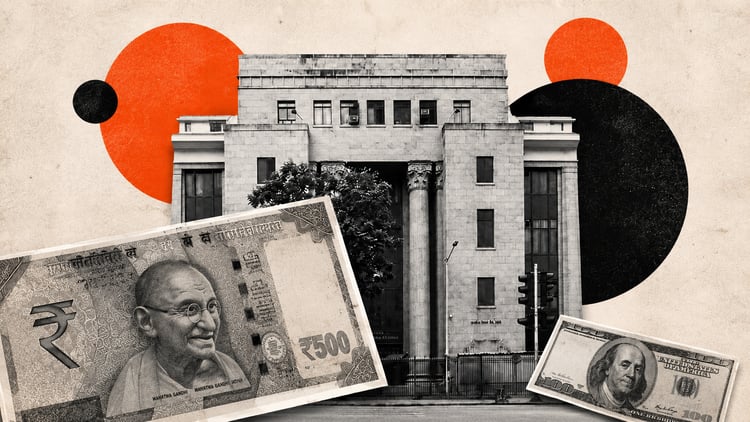
- The Indian Rupee rallies further against the US Dollar as the latter underperforms.
- Democrats win majority in Senate and are leading in voting for House.
- ING doesn’t see a structural weakness in the US Dollar due to Democrats' victory.
The Indian Rupee (INR) extends its advance against the US Dollar (USD) on Wednesday, with early trends in United States (US) midterm elections pointing to the victory of Democrats in both the House and the Senate.
In the opening trade, the USD/INR pair is down 0.1% to near 94.60 as the US Dollar underperforms. As of writing, the US Dollar Index (DXY), which gauges the Greenback’s value against six major currencies, trades 0.4% down to near 101.48. The DXY is still sharply lower even after recovering significant intraday losses after sliding to near 101.25.
What is the current status of US midterm elections?
According to the BBC, Democrats have won 50 majority seats in Senate, while counting is still going on. In the House, 294 out of 435 seats have been counted and Democrats are leading with 184 seats. For a clear majority, any party needs to win 218 seats
The scenario of Democrats winning both the House of Representatives and the Senate is expected to have a significant impact on the US Dollar.
ING warned earlier that “fears of tougher regulation could weigh on Artificial Intelligence (AI) stocks (we’ve recently seen how that can hit the greenback), while markets could price in greater risks of decision-making gridlock around issues such as government funding and the debt ceiling.”
However, ING ruled out fears of a structural directional shift in the Dollar, explaining that the greenback “continues to respond predominantly to the Fed story, which shouldn’t face an immediate and direct impact from the midterm result”.
Key US economic releases
This week, investors will pay close attention to key US economic releases, notably Nonfarm Payrolls (NFP) data for October, which will be released on Friday. The NFP data will likely influence Federal Reserve’s (Fed) interest rate expectations significantly.
Ahead of the official US employment data release, financial markets will focus on the US ADP Employment Change data for October, which will be published later in the day at 13:15 GMT. The data is expected to show that the private sector created 69K fresh jobs lower than 90K in September.
USD/INR Technical Analysis

In the daily chart, USD/INR trades at 94.7405, maintaining a bearish near-term bias as spot holds beneath the 20-day exponential moving average (EMA) at 95.1559. The pair has retreated from recent highs and remains capped by this dynamic resistance, while the Relative Strength Index (RSI) around 37 suggests lingering downside pressure, though not yet in oversold territory.
On the topside, immediate resistance is seen at the 20-day EMA near 95.16, and a daily close above this barrier would be needed to ease the current downside bias and allow for a recovery phase. With no clear structural supports indicated by the current dataset, traders may look to the recent swing lows and psychological handles below the market as potential demand areas, while the prevailing configuration continues to favor sellers as long as price trades under the 20-day EMA.
(The technical analysis of this story was written with the help of an AI tool. Know more.)
Indian Rupee FAQs
The Indian Rupee (INR) is one of the most sensitive currencies to external factors. The price of Crude Oil (the country is highly dependent on imported Oil), the value of the US Dollar – most trade is conducted in USD – and the level of foreign investment, are all influential. Direct intervention by the Reserve Bank of India (RBI) in FX markets to keep the exchange rate stable, as well as the level of interest rates set by the RBI, are further major influencing factors on the Rupee.
The Reserve Bank of India (RBI) actively intervenes in forex markets to maintain a stable exchange rate, to help facilitate trade. In addition, the RBI tries to maintain the inflation rate at its 4% target by adjusting interest rates. Higher interest rates usually strengthen the Rupee. This is due to the role of the ‘carry trade’ in which investors borrow in countries with lower interest rates so as to place their money in countries’ offering relatively higher interest rates and profit from the difference.
Macroeconomic factors that influence the value of the Rupee include inflation, interest rates, the economic growth rate (GDP), the balance of trade, and inflows from foreign investment. A higher growth rate can lead to more overseas investment, pushing up demand for the Rupee. A less negative balance of trade will eventually lead to a stronger Rupee. Higher interest rates, especially real rates (interest rates less inflation) are also positive for the Rupee. A risk-on environment can lead to greater inflows of Foreign Direct and Indirect Investment (FDI and FII), which also benefit the Rupee.
Higher inflation, particularly, if it is comparatively higher than India’s peers, is generally negative for the currency as it reflects devaluation through oversupply. Inflation also increases the cost of exports, leading to more Rupees being sold to purchase foreign imports, which is Rupee-negative. At the same time, higher inflation usually leads to the Reserve Bank of India (RBI) raising interest rates and this can be positive for the Rupee, due to increased demand from international investors. The opposite effect is true of lower inflation.
Related Articles