

Vá mais longe com a GO Markets
Opere com mais inteligência com uma corretora global de confiança. Spreads baixos, execução rápida, sem taxas de depósito, plataformas avançadas e suporte ao cliente premiado.
20 Anos de Solidez
Celebrando 20 anos de excelência em trading.
Feito para traders desde 2006.
Para iniciantes
Começando agora?
Explore o básico e fortaleça sua confiança.
Para traders intermediários
Leve sua estratégia mais longe
Acesse ferramentas avançadas para insights mais profundos do que nunca.
Profissionais
Para traders profissionais
Conheça nossa oferta exclusiva para traders de alto volume e investidores sofisticados.
Tire o máximo proveito de cada transação.
Confira nossas ofertas especiais por tempo limitado.

Get Started with GO Markets
Whether you’re new to markets or trading full time, GO Markets has an
account tailored to your needs.


Confiado por traders no mundo todo
Desde 2006, a GO Markets tem ajudado centenas de milhares de traders a buscar seus objetivos de negociação com confiança e precisão, amparados por regulamentação robusta, atendimento com foco no cliente e educação premiada.
*Trustpilot reviews are provided for the GO Markets group of companies and not exclusively for GO Markets Ltd.






































*Awards were awarded to GO Markets group of companies and not exclusively to GO Markets Ltd.
Descubra mais da GO Markets
Plataformas & ferramentas
Contas de negociação com tecnologia integrada, suporte ao cliente premiado e acesso fácil a opções de financiamento flexíveis.
Academia
Aprenda as habilidades, estratégias e a mentalidade por trás do sucesso no trading de longo prazo.
Contas & preços
Compare tipos de conta, veja os spreads e escolha a opção que melhor atende aos seus objetivos.

Vá mais longe com a GO Markets
Explore milhares de oportunidades de negociação com ferramentas de nível institucional, execução impecável e Suporte premiado. Abrir uma conta é rápido e fácil.


Vá mais longe com a GO Markets
Explore milhares de oportunidades de negociação com ferramentas de nível institucional, execução impecável e Suporte premiado. Abrir uma conta é rápido e fácil.
Notícias & insights
Ferramentas poderosas para todos os estilos e preferências de negociação.
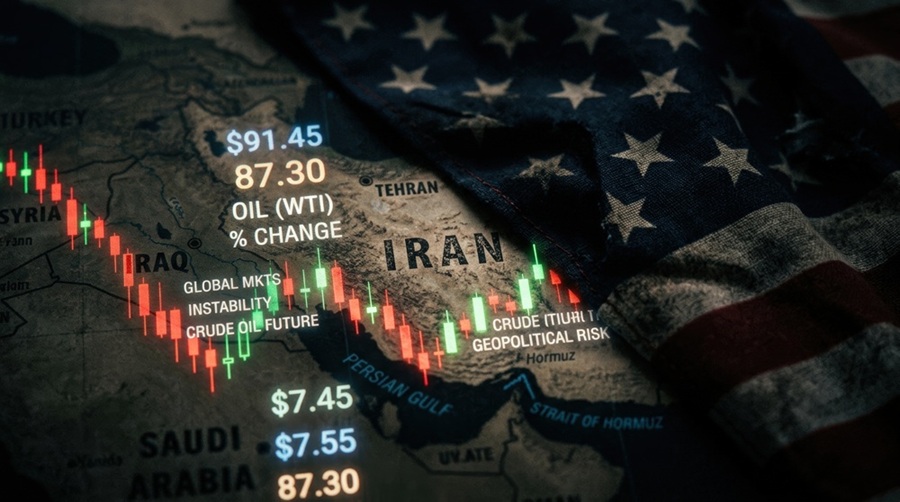
O mercado de petróleo tem o hábito de parecer estável logo antes de parar de ser liquidado. Essa é a configuração agora.
O tráfego pelo Estreito de Ormuz caiu drasticamente à medida que o conflito em torno do Irã se intensificou, e mais embarcações estão escurecendo ao desligar o AIS, ou Sistema de Identificação Automática, sinais que geralmente mostram para onde os navios estão se movendo. Ormuz não é apenas mais uma rota marítima. É um dos pontos de estrangulamento energéticos mais importantes do mundo; portanto, quando a visibilidade começa a desaparecer, o risco de fornecimento volta ao centro da conversa.
Por que isso importa agora
Isso é importante por alguns motivos.
A mudança da manchete é uma coisa. A implicação do mercado é outra. O petróleo não se trata apenas de quantos barris existem, mas também de saber se esses barris podem se mover, quem está disposto a segurá-los, quanto tempo os compradores estão preparados para esperar e quanto risco extra os comerciantes acham que precisam precificá-los.
No momento, três coisas estão colidindo ao mesmo tempo: navegação interrompida, diplomacia frágil e um mercado que já está fortemente inclinado em uma direção. Essa combinação pode fazer com que o Brent se mova mais rápido do que os fundamentos normalmente sugerem.
O que está impulsionando a mudança
1 A visibilidade do fornecimento está se deteriorando
O primeiro driver é simples. O mercado pode ver menos, e isso tende a deixá-lo mais nervoso.
O trânsito por Ormuz caiu drasticamente, enquanto uma parcela crescente do tráfego envolveu navios que não estão mais transmitindo sinais de rastreamento padrão. Em linguagem simples, menos embarcações estão se movendo normalmente por um corredor crítico e mais atividades estão se tornando mais difíceis de rastrear. Isso não significa automaticamente que o fornecimento está prestes a entrar em colapso. Mas isso significa que a incerteza está aumentando.
2 O buffer de armazenamento do Irã pode ser limitado
O segundo fator é a restrição de exportação e armazenamento do Irã.
A capacidade de armazenamento terrestre é estimada em cerca de 40 milhões de barris, e o mercado está observando o que alguns descrevem como uma linha vermelha de 16 dias. Esse é o ponto em que uma interrupção prolongada nas exportações pode começar a forçar cortes na produção para evitar danos aos reservatórios. Para leitores mais novos, a conclusão é simples. Se o petróleo não puder deixar o armazenamento por tempo suficiente, o problema pode deixar de ser o atraso nas exportações e começar a se tornar um problema genuíno de abastecimento.
3 O posicionamento pode amplificar o movimento
O terceiro fator é o posicionamento, que é apenas uma abreviação do mercado de como os negociadores já estão configurados antes que o próximo movimento aconteça.
Nesse caso, o posicionamento especulativo do petróleo bruto parece fortemente unilateral. Isso é importante porque, quando um mercado está muito inclinado em uma direção, não é preciso muito para desencadear um ajuste brusco. Um novo choque geopolítico pode forçar os comerciantes a agir rapidamente e, uma vez que isso comece, o preço pode subir mais do que as notícias subjacentes por si só poderiam justificar.
Hormuz crisis: Understanding global oil risk
What happens when the world’s key energy chokepoint stops flowing? Dive deep into our full breakdown of oil shocks, supply deterioration, and the market ripple effects.
Por que o mercado se importa
Um choque de petróleo raramente permanece contido no mercado de energia.
Os preços mais altos do petróleo bruto podem começar a aparecer nas contas de frete, manufatura e energia doméstica. Isso significa que as expectativas de inflação podem começar a subir novamente. Os bancos centrais já estão tentando administrar um equilíbrio difícil entre inflação estável e crescimento mais fraco, então o aumento do petróleo pode dificultar esse trabalho.
E essa não é apenas uma história sobre produtores de petróleo recebendo carona. Companhias aéreas, empresas de transporte e outras empresas sensíveis ao combustível podem ser rapidamente pressionadas quando os custos de energia aumentam. Mercados acionários mais amplos também podem ter que repensar as perspectivas políticas se o petróleo mais alto mantiver a inflação mais firme do que o esperado.
Os efeitos em cascata vão muito além do petróleo.
Há também um ângulo monetário, e é menos simples do que parece à primeira vista.
Moedas vinculadas a commodities, como o dólar australiano, geralmente recebem apoio quando os preços das matérias-primas sobem. Mas essa relação não é automática. Se o petróleo está subindo porque a demanda global está melhorando, isso pode ajudar. Se estiver subindo porque o risco geopolítico está aumentando, os mercados podem passar para o modo de isenção de risco, e isso pode pesar sobre o dólar australiano, mesmo com o aumento dos preços das commodities.
É isso que torna esse tipo de movimento mais interessante do que parece à primeira vista. A mesma alta do petróleo pode apoiar uma parte do mercado e pressionar outra.
Ativos e nomes no quadro
O petróleo Brent continua sendo a leitura mais clara sobre o amplo risco de oferta. Se os traders desejam a expressão mais limpa da manchete, geralmente é aqui que eles olham primeiro.
- ExxonMobil é um dos nomes mais óbvios no quadro. Os preços mais altos do petróleo podem apoiar os preços de venda realizados e a dinâmica dos lucros de curto prazo, embora nunca seja tão simples quanto comprar petróleo, estocar. Custos, mix de produção e sentimentos mais amplos ainda são importantes.
- NextEra Energy adiciona outra camada. Essa história não é apenas sobre combustíveis fósseis. Quando a segurança energética se torna uma preocupação maior, o argumento a favor da resiliência energética doméstica, do investimento na rede e da geração alternativa também pode se fortalecer.
- AUD/USD é outro mercado que vale a pena observar. A Austrália está intimamente ligada aos ciclos de commodities, portanto, preços mais fortes das matérias-primas às vezes podem sustentar a moeda. Mas se os mercados estão reagindo mais ao medo do que ao crescimento, esse vento favorável usual pode não se manter.
Para leitores mais novos, o ponto principal é que os movimentos do petróleo não se espalham pelos mercados em uma linha clara e previsível. Eles se espalham de forma desigual, ajudando alguns ativos, pressionando outros e, às vezes, fazendo as duas coisas ao mesmo tempo.
6 markets to watch as TACO meets oil shock fears
With global trade dynamics shifting rapidly, understanding the "Trump Shock" and its impact on supply chains and currency pairs is vital. Explore how to position your portfolio for upcoming trade volatility.
O que poderia dar errado
Uma narrativa forte não é o mesmo que uma negociação unidirecional.
Um cessar-fogo poderia estabilizar os fluxos marítimos mais rápido do que o esperado. A OPEP+ poderia compensar parte da rigidez elevando a produção. Os dados de demanda da China podem decepcionar, voltando o foco para o consumo fraco, em vez da oferta restrita. E se o prêmio geopolítico diminuir, o petróleo poderá recuar mais rapidamente do que sugere o clima atual.
Para leitores mais novos, a conclusão é simples. Os ralis do petróleo podem ser reais sem serem permanentes. Uma mudança pode ser justificada no curto prazo pelo risco de interrupção e, em seguida, reverter rapidamente se esses riscos diminuírem ou se a demanda diminuir.
O mercado não está mais precificando o petróleo isoladamente. É a visibilidade dos preços, a segurança do transporte e o risco de que a interrupção do fornecimento se espalhe pela inflação, pelas moedas e por um sentimento de risco mais amplo.
É por isso que Ormuz é importante, mesmo para leitores que nunca negociam um barril de petróleo bruto.

Your next earnings setup starts here
Stay ahead of major beats, misses, and market surprises. Log in to your terminal, open a new account, or explore our dedicated earnings academy.
Need help? Contact our support team

Passamos as últimas três edições desta série mapeando o encanamento da economia de 2026: os bancos que ancoram a capital, os utilitários que fornecem os elétrons, e os fabricantes de chips construindo o silício. À medida que a temporada de reportagens de abril se aproxima de seu ato final, a atenção se volta para a porta da frente.
Meta, Amazon e Apple estão no ponto em que a construção da IA atende consumidores e empresas do dia a dia.
Por que o retorno sobre o investimento agora é o foco
Uma divisão rígida, às vezes chamada de “Grande Dispersão”, está se abrindo entre empresas que viabilizam a IA e empresas que a monetizam. A Meta e a Amazon estão no centro de um ciclo massivo de despesas de capital (capex), contra um gasto estimado em todo o setor de aproximadamente USD 650 bilhões a USD 700 bilhões em 2026.
É por isso que as métricas de retorno sobre o investimento (ROI) estão em primeiro lugar.
- É Meta's A segmentação de anúncios baseada em IA é forte o suficiente para justificar seu programa de gastos?
- É Amazônia Os serviços da Web (AWS) estão se reacelerando com rapidez suficiente para suportar o impulso personalizado de silício?
- Pode maçã manter sua avaliação premium mostrando que o ciclo do iPhone 17 é real, mesmo em um mercado chinês mais difícil?
Em 2026, a questão não é mais apenas quem pode construir os data centers. É quem pode transformar esses investimentos em lucros sustentáveis e de alta margem. Com os mercados de energia mais calmos após o recente cessar-fogo, as avaliações de tecnologia tiveram algum espaço para respirar. Agora, o mercado quer evidências.
IMPORTANT: REPORTING SCHEDULES CAN CHANGE WITHOUT NOTICE. REPORTING DATES AND RELEASE TIMES ARE FROM COMPANY INVESTOR RELATIONS CALENDARS WHERE MARKED CONFIRMED; OTHERWISE THEY ARE GO MARKETS ESTIMATES. CONSENSUS EPS, REVENUE AND ANALYST-RANGE DATA ARE FROM THIRD-PARTY MARKET CONSENSUS SOURCES, AS OF 20 APRIL 2026 (AEST). COMPANY GUIDANCE, BACKLOG AND OPERATING METRICS ARE FROM THE LATEST COMPANY FILINGS OR RESULTS PRESENTATIONS UNLESS STATED OTHERWISE. FIGURES AND SCHEDULES MAY CHANGE WITHOUT NOTICE.
Meta Platforms, Inc.
Global Release Countdown (AMC)
Market intelligence: $META
Analysis: Meta price drivers and scenarios
What is MTIA 2nm? This is Meta's "home-grown" AI chip. The 2nm refers to ultra-advanced, high-efficiency technology. By building their own silicon with Broadcom, Meta aims to slash their massive electricity bills and end their total reliance on buying expensive NVIDIA hardware. If this works, it protects Meta's profit margins even if they keep spending billions on AI.
Meta has moved from its "Year of Efficiency" into what CEO Mark Zuckerberg calls the "Era of Personal Superintelligence". By April 2026, AI appears to have sharpened the company’s core advertising engine, with some reports suggesting ad click rates rose by around 3% to 5%. But the bigger strategic issue is Meta’s multi-year Broadcom partnership to co-develop custom 2nm MTIA chips, with the aim of reducing reliance on NVIDIA and lowering operating costs over time. The risk is that Meta could beat on earnings and still disappoint if management points to higher spending and a longer payoff period. The real question is whether efficiency gains are keeping pace with the capital expenditure (capex) bill.
Call focus and key signals
Sentiment analysis: Meta Platforms
Interactive scenario analysis: $META
Spending cycle becomes productive
Sources: Reporting dates and release times are from company investor relations calendars where marked Confirmed; otherwise they are GO Markets estimates. Consensus EPS, revenue and analyst-range data are sourced from Bloomberg and Earnings Whispers, as at 20 April 2026 (AEST). Company guidance, backlog and operating metrics are sourced from the latest company filings or results presentations. Any scenario analysis reflects GO Markets analysis. Figures and schedules may change without notice.
Beyond the chipmakers
As the "show me the money" year unfolds, discover how AI demand is impacting Tesla, NextEra, and Exxon.
Amazon: the capex bet moves to centre stage
Amazon is no longer just a retail story. It is increasingly a cloud and advertising business, with a thin-margin logistics network attached. In 2026, the narrative is centred on what reports have described as a roughly US$200 billion capex plan, aimed largely at building out AWS’s AI infrastructure.
Amazon.com, Inc.
Global Release Countdown (AMC)
Market Intelligence: $AMZN
Analysis: Amazon price drivers and scenarios
Amazon is no longer primarily a retail story. In 2026, the narrative centres on approximately US$200 billion in planned capex, directed largely at building out AWS's AI infrastructure. That is an extraordinary commitment, and the market is watching closely to see whether the returns are following. One metric matters most: AWS growth.
Key signals to watch
Sentiment Analysis · Amazon.com Inc.
Interactive scenario analysis: $AMZN
Spending cycle lands well
Sources: Reporting dates and release times are from company investor relations calendars where marked Confirmed; otherwise they are GO Markets estimates. Consensus EPS, revenue and analyst-range data are sourced from Bloomberg and Earnings Whispers, as at 20 April 2026 (AEST). Company guidance, backlog and operating metrics are sourced from the latest company filings or results presentations. Any scenario analysis reflects GO Markets analysis. Figures and schedules may change without notice.
Apple: quality still needs proof
Apple has looked like the defensive favourite in hardware, helped by record free cash flow (FCF) of US$43.64 billion and the strength of its Services segment. But the latest debate is whether that defensive status can turn back into growth. Third-party shipment data has indicated a roughly 20% rise in China for iPhone 17, challenging the idea that the market is already mature.
Apple Inc.
Global Release Countdown (AMC)
Market intelligence: $AAPL
Analysis: Apple price drivers and scenarios
Apple is still widely seen as a quality print, but expectations are higher now. Margin resilience alone is no longer enough. The market wants evidence that Apple Intelligence, the company’s on-device AI platform, can extend the upgrade cycle and support more recurring, high-margin Services revenue over time.
Key signals to watch
Sentiment analysis: Apple Inc.
Interactive scenario analysis: $AAPL
Support for growth narrative
Sources: Reporting dates and release times are from company investor relations calendars where marked Confirmed; otherwise they are GO Markets estimates. Consensus EPS, revenue and analyst-range data are sourced from Bloomberg and Earnings Whispers, as at 20 April 2026 (AEST). Company guidance, backlog and operating metrics are sourced from the latest company filings or results presentations. Any scenario analysis reflects GO Markets analysis. Figures and schedules may change without notice.
Thematic risks
What could shift the picture
Three risks could change the narrative, regardless of how the numbers print.
Meta and Amazon are both running enormous capex programmes, with payoff periods that stretch well beyond a single quarter. If either company delivers an in line or weaker result while also lifting full year spending guidance, the market may start to see the gap between investment and return as a structural issue rather than a temporary one. That would matter for the sector as a whole, not just for one stock.
Apple's China story has shown some resilience in third party data, but it remains sensitive to trade policy, consumer confidence and local competition. Any signal from management that demand is softening faster than expected, or that local rivals are gaining meaningful share in the mid range and premium segments, could reset the earnings growth outlook more quickly than consensus currently assumes.
In a market where higher income consumers are holding up while lower income groups remain under pressure, ad spending patterns and device upgrade cycles can diverge sharply from headline averages. If Meta's ad pricing weakens because smaller businesses pull back, or if Apple's upgrade cycle is concentrated within a narrower demographic, results could disappoint even with broadly stable macro conditions.
The bottom line
The 2026 reality check
As this earnings season moves towards its close, the story is shifting away from survival and towards operational execution in the intelligence era.
$META
AI ad efficiency is facing its biggest test yet. Can the Broadcom silicon bet start to show up in margins?
$AMZN
AWS re-acceleration remains the critical signal. A US$200 billion capex push needs a growth rate to match.
$AAPL
Quality still needs proof. Apple Intelligence has to show it can extend the upgrade cycle, not just refresh it.
For Meta, Amazon and Apple, the test is whether heavy investment in silicon, models and infrastructure is turning into measurable cash flow and durable margins. In a more uneven economy, the market appears to be rewarding companies that can show real demand and clearer monetisation. The earnings numbers matter, but management commentary on the return on that investment may matter more.
Your next earnings setup starts here
Stay ahead of major beats, misses, and market surprises. Log in to your terminal, open a new account, or explore our dedicated earnings academy.
Need help? Contact our support team

A temporada de resultados de abril nos EUA está chegando a um mercado que quer mais do que uma boa história. JPMorgan já estabeleceu um alto padrão com um resultado forte, e a atenção agora está se voltando para a sala de máquinas do S&P 500: infraestrutura de IA, na qual três empresas estão no centro dessa história.
Por que essa janela de ganhos é importante para a IA
Microsoft, Alphabet e NVIDIA não são apenas participantes do ciclo de IA, elas estão construindo a arquitetura física e de software da qual outras empresas dependem: os chips, as regiões da nuvem, os modelos e as ferramentas. Se esses gastos gerarem retornos, os primeiros sinais podem começar a aparecer em seus resultados trimestrais nas próximas semanas.
Cada empresa representa um teste diferente.
- Microsoft: Se a adoção da IA corporativa está se traduzindo em expansão de receita e margem
- Alfabeto: Se possuir a pilha completa, de chips à nuvem e distribuição, é uma vantagem duradoura ou simplesmente uma posição cara a ser defendida
- NVIDIA: Se o ciclo de hardware ainda está se mantendo, acelerando ou começando a se estabilizar
Em 2026, a questão não é mais se o investimento em IA está acontecendo, os compromissos de capital são substanciais e já declarados publicamente. A questão é se esses gastos estão gerando retornos com rapidez suficiente para justificar a escala dessas apostas.
IMPORTANT: REPORTING SCHEDULES CAN CHANGE WITHOUT NOTICE. REPORTING DATES AND RELEASE TIMES ARE FROM COMPANY INVESTOR RELATIONS CALENDARS WHERE MARKED CONFIRMED; OTHERWISE THEY ARE GO MARKETS ESTIMATES. CONSENSUS EPS, REVENUE AND ANALYST-RANGE DATA ARE FROM THIRD-PARTY MARKET CONSENSUS SOURCES, AS OF 16 APRIL 2026 (AEST). COMPANY GUIDANCE, BACKLOG AND OPERATING METRICS ARE FROM THE LATEST COMPANY FILINGS OR RESULTS PRESENTATIONS UNLESS STATED OTHERWISE. FIGURES AND SCHEDULES MAY CHANGE WITHOUT NOTICE.
Microsoft Corporation
Global Release Countdown (AMC)
Market Intelligence: $MSFT
Analysis: Microsoft price drivers and scenarios
Microsoft is being tested on a specific question: can it turn heavy AI spending into margin expansion? A result above US$4.14 could ease concerns over "capex fatigue" and demonstrate whether Azure growth is re-accelerating alongside enterprise AI adoption.
Factors that could move the markets
Sentiment Analysis · Microsoft Corp.
Interactive scenario analysis: $MSFT
Strong result, backed by real AI progress
Sources: Reporting dates and release times are from company investor relations calendars where marked Confirmed; otherwise they are GO Markets estimates. Consensus EPS, revenue and analyst-range data are sourced from Bloomberg and Earnings Whispers, as at 16 April 2026 (AEST). Company guidance, backlog and operating metrics are sourced from the latest company filings or results presentations. Any scenario analysis reflects GO Markets analysis. Figures and schedules may change without notice.
Beyond the chipmakers
As the "show me the money" year unfolds, discover how AI demand is impacting Tesla, NextEra, and Exxon.
Alphabet: search to infrastructure
Alphabet has transformed from a search business into a sprawling AI infrastructure play, and this result will test whether that transformation is delivering. The US$185 billion capex forecast for 2026 is extraordinary, close to double last year's spending.
EPS is expected to decline slightly year on year, precisely because that infrastructure spending is consuming capital. The question is whether Google Cloud's growth is fast enough to show a credible path back to margin recovery, and whether Ironwood, the seventh-generation custom AI chip, is proving its cost-per-query advantage at scale.
Alphabet Inc.
Global Release Countdown (AMC)
Market Intelligence: $GOOGL
Analysis: Alphabet price drivers and scenarios
Alphabet has shifted to being viewed as a broader AI infrastructure play. The question is whether Cloud growth can support a path back to margin recovery while the massive US$185bn infrastructure buildout absorbs capital.
Factors that could move the markets
Sentiment Analysis · Alphabet Inc.
Interactive scenario analysis: $GOOGL
Ironwood efficiency drives upside
Sources: Reporting dates and release times are from company investor relations calendars where marked Confirmed; otherwise they are GO Markets estimates. Consensus EPS, revenue and analyst-range data are sourced from Bloomberg and Earnings Whispers, as at 16 April 2026 (AEST). Company guidance, backlog and operating metrics are sourced from the latest company filings or results presentations. Any scenario analysis reflects GO Markets analysis. Figures and schedules may change without notice.
NVIDIA: the hardware cycle read through
NVIDIA is no longer simply a chip company. It has become what analysts now describe as the central bank of compute, the entity whose product determines how much AI capacity the world can actually deploy.
The upcoming Q1 FY2027 result will test whether the new Vera Rubin R100 GPU architecture, which entered mass production ahead of schedule, is already contributing to revenue, and whether NVIDIA can sustain gross margins above 75% as inference, rather than training, becomes the dominant workload. Inference is more competitive and more price-sensitive than training, so margin resilience here matters.
NVIDIA Corporation
Global Release Countdown (AMC)
Market Intelligence: $NVDA
Analysis: NVIDIA price drivers and scenarios
NVIDIA’s outlook depends on whether Rubin R100 can keep gross margins above 75% as inference becomes a bigger part of demand. Because inference is more price-sensitive than training, margins are the key test.
Factors that could move the markets
Sentiment Analysis · NVIDIA Corp.
Interactive scenario analysis: $NVDA
Rubin ramp supports growth
Sources: Reporting dates and release times are from company investor relations calendars where marked Confirmed; otherwise they are GO Markets estimates. Consensus EPS, revenue and analyst-range data are sourced from Bloomberg and Earnings Whispers, as at 16 April 2026 (AEST). Company guidance, backlog and operating metrics are sourced from the latest company filings or results presentations. Any scenario analysis reflects GO Markets analysis. Figures and schedules may change without notice.
Thematic Risks
What could shift the picture
Three risks could change the narrative regardless of how the numbers print. Each one is worth understanding before the results land.
If both Microsoft and Alphabet report in line or below expectations while reaffirming enormous spending plans, the market may start pricing the risk that AI monetisation is slower than the spending implies. That is not a stock-specific concern. It would be a broader de-rating event, affecting the valuations of companies across the technology sector.
The FTC investigation into Microsoft, the DOJ case against Alphabet, and emerging EU scrutiny of NVIDIA's CUDA software ecosystem are all active. A material legal development before the earnings calls could overshadow the financial results entirely. Regulatory risk in this sector is not theoretical. It is live and moving.
Microsoft's Maia 200 chip, Alphabet's Ironwood TPU, Amazon's Trainium and Meta's custom accelerators are all reducing how much the large cloud companies depend on NVIDIA hardware. If any of these companies signals a meaningful shift in its GPU procurement plans, that could create uncertainty around NVIDIA's forward order book.
The Bottom Line
The 2026 reality check
Microsoft and Alphabet report on the same evening, 29 April. NVIDIA follows in late May. Together, they offer the clearest read yet on whether the AI infrastructure buildout is generating returns fast enough to justify the extraordinary scale of capital being committed.
$MSFT
AI spend is shifting from cost to competitive advantage. The question is whether margins can follow.
$GOOGL
Vertical integration from chips to search to cloud may prove to be a moat, or an expensive position to defend.
$NVDA
This is the pulse of the AI hardware cycle, and a test of whether Rubin can keep the supercycle alive into 2027.
Taken together, they offer a read on a market that looks more physical, more capital-intensive and, for many traders, more real.
Your next earnings setup starts here
Stay ahead of major beats, misses, and market surprises. Log in to your terminal, open a new account, or explore our dedicated earnings academy.
Need help? Contact our support team
Modal for Manan
Lorem ipsum dolor sit amet, consectetur adipiscing elit. Suspendisse varius enim in eros elementum tristique. Duis cursus, mi quis viverra ornare, eros dolor interdum nulla, ut commodo diam libero vitae erat. Aenean faucibus nibh et justo cursus id rutrum lorem imperdiet. Nunc ut sem vitae risus tristique posuere.
