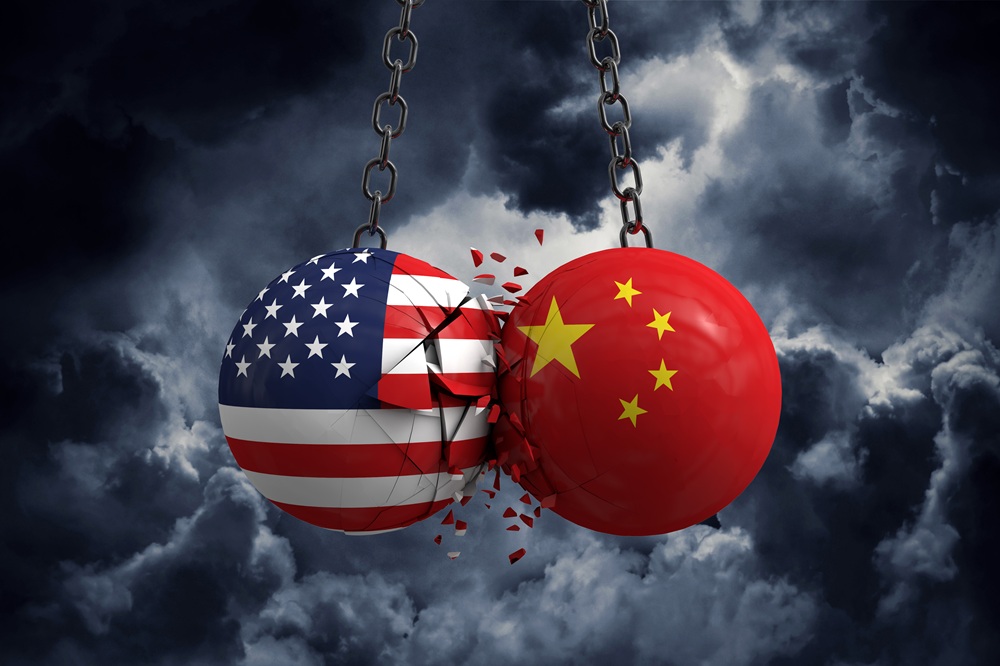
Investors globally and domestically are stuck in this weird holding pattern. We are all clearly waiting for more definitive signals on the direction of tariffs and broader policy settings, and despite US-China trade talks, we would argue this is news for news' sake – it is not fact. This uncertainty is casting a long shadow over the market, but you wouldn’t know it; the recent volatility has all but reversed equity losses.Beneath the surface, several important trends are shaping the outlook, particularly around the movement of prices for both commodities and consumer goods. For example, look at how local retailers respond with their own pricing strategies to deal with the ‘new trade order’. At the same time, expectations around index rebalancing are adding another layer of complexity, with market participants closely watching which companies might move in or out of major indices in the coming months as geopolitics and the digital age move weightings around.Investors are acutely aware that the next major move will likely be dictated by policy announcements, which could come at any moment and in any form, and so are scrutinising every development for clues.First - In this environment, we are very mindful of oil, any second-order effects that lower oil prices as a traded commodity and at the petrol pump, could have on the broader economy for Australia and, by extension, our China-linked economy. A deal between the US and China, but also Russia and Ukraine, would be huge for oil.Second, there is also an ongoing debate about whether the Australian economy and local equity markets will see any real benefit from a period of goods disinflation, or whether the impact will be more limited than some expect.Looking ahead to the June 2025 index review, expectations are that the level of change will be more subdued compared to what was seen in March. The most significant adjustment on the horizon is the likely addition of REA Group to the S&P/ASX 50 Index, replacing Pilbara Metals. Beyond that, Viva Energy is currently positioned within the 100–200 range and could move up if conditions are right, while Nick Scali is well placed to enter the 200 should a spot become available, and in a rate-cutting environment, consumer discretionary is going to be interesting. The June rebalance is due to be announced on June 6 and implemented on June 20, so there’s plenty of anticipation building as investors position themselves ahead of these changes.Zooming out to the macroeconomic front, several catalysts are likely to shape the market narrative in the weeks ahead.Consumer and business sentiment, first-quarter wage growth, and the April labour force data are all in sharp focus this week and next. The expectation is that consumer sentiment will have continued to decline in May, extending the broader deterioration that’s been in place since the US tariff announcements. Business surveys for April show that both confidence and conditions are holding steady, tracking above their long-run averages.Turning to Wednesdays, Wage index growth is expected to have accelerated in the first quarter, with forecasts pointing to a 0.8% increase quarter-on-quarter and a 3.9% rise year-on-year. This acceleration is being driven by a combination of ongoing tightness in the labour market, stronger enterprise bargaining agreements, and legislated increases in childcare wages.Thursday’s labour force data for April is expected to show 40,000 jobs added, with the unemployment rate holding steady at 4.1%. A slight uptick in participation to 66.9% is also anticipated, reflecting the ongoing strength of the jobs market.In the housing sector, the latest data is less encouraging. Building approvals fell by 8.8% in March, with a 13.4% drop in house approvals. These figures are weaker than both market and consensus expectations, and the annualised rate has now fallen to 160,000. This points to ongoing challenges in the construction sector and raises questions about the sustainability of the housing market recovery. This will bring the RBA and the newly elected Federal government into sharp focus – action is needed, but what that looks like is hard to define.Commodities markets have also seen significant movement, with oil prices dropping below US$60 per barrel, the lowest point since early 2021. This has brought OPEC into sharp focus. The crux question is whether OPEC will attempt to chase prices lower or instead move to stabilise the market. So far, they have pushed prices with deliberate oversupply to punish certain nations – this, however, is unsustainable and will have to change soonCouple this with weaker demand from Asia, and a volatile US dollar is also playing a role, with Brent crude now trading at $55 per barrel. These developments are feeding into broader concerns about global growth and the outlook for commodity exporters.Looking at the local currency and AUD has shown remarkable resilience, supported by a meaningful improvement in the country’s energy trade balance and a weaker US dollar. However, the next major test for the currency will come with the release of the US CPI data on Wednesday, which could set the tone for global markets in the near term – is the Fed out of the market in 2025? This will impact the USD.Looking at the globe, the market and financial landscape is still navigating a complex web of challenges, with persistent inflation, potential tariff implementations, and evolving economic dynamics all in play.Market participants are increasingly focused on how these factors interact and influence everything from consumer pricing to investment strategies. Central bank decisions, especially from the Federal Reserve, have been pivotal in moderating market sentiment, while ongoing discussions about trade policy continue to reshape the global economic environment. Tariffs, in particular, are forcing companies to rethink their supply chains. You only must look at the US reporting season and the likes of Ford, GM, Nike and the like, all scrapping forward guidance and highlighting the impact tariffs are having on cost. The second event that is now becoming ‘actual is that the higher input costs are often now being passed on to consumers. The broader issue here is that this can reduce household disposable income and slow broader economic growth.So, although the excitement of early April has subsided, it's only a social media release away. That means that we as investors are navigating a period of heightened uncertainty, with every policy announcement, economic data release, and market move being scrutinised harder than normal as we look for what it might signal about the path ahead.The interplay between inflation, tariffs, and shifting economic dynamics means that flexibility and vigilance will be essential for anyone looking to make sense of the current environment and position themselves for what comes next.

The information provided is of general nature only and does not take into account your personal objectives, financial situations or needs. Before acting on any information provided, you should consider whether the information is suitable for you and your personal circumstances and if necessary, seek appropriate professional advice. All opinions, conclusions, forecasts or recommendations are reasonably held at the time of compilation but are subject to change without notice. Past performance is not an indication of future performance. Go Markets Pty Ltd, ABN 85 081 864 039, AFSL 254963 is a CFD issuer, and trading carries significant risks and is not suitable for everyone. You do not own or have any interest in the rights to the underlying assets. You should consider the appropriateness by reviewing our TMD, FSG, PDS and other CFD legal documents to ensure you understand the risks before you invest in CFDs. These documents are available here.
Any references to Australian or international shares, sectors, indices, ETFs, crypto-related stocks or other instruments are provided for market commentary and watchlist purposes only and do not constitute a recommendation, offer or solicitation to buy, sell or hold any financial product or adopt any investment strategy. International markets may involve additional risks, including currency fluctuations, regulatory differences, market structure differences, reduced liquidity and higher volatility. Company-specific, sector-specific and macroeconomic risks may also affect performance.
Commentary on geopolitical developments, economic data, central bank decisions, earnings, policy changes and other global or financial market events is based on information available at the time of publication and may change without notice. Such events can lead to sudden market moves, price gaps, reduced liquidity, wider spreads and increased volatility, particularly in leveraged products such as CFDs. Forward-looking statements, expectations and scenario analysis are inherently uncertain and should not be relied on as guarantees of future market behaviour or outcomes.