Market news & insights
Stay ahead of the markets with expert insights, news, and technical analysis to guide your trading decisions.

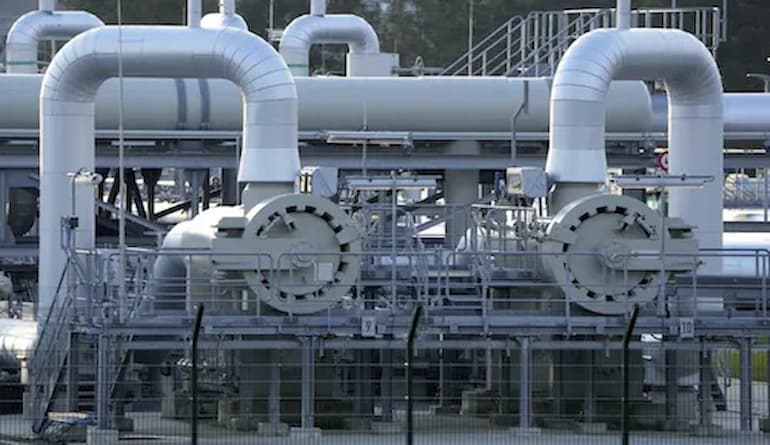
The 8 April ceasefire announcement and parallel discussions around a 45-day truce have not resolved the Strait of Hormuz disruption. They have, for now, capped the worst-case scenario, but tanker traffic remains at a fraction of normal levels and Iran's demand for transit fees signals a structural shift, not a temporary one.
What began as a regional conflict has become a global energy shock, and the question for markets is no longer whether Hormuz was disrupted, but how permanently the disruption changes the pricing floor for oil.
Key takeaways
- Around 20 million barrels per day (bpd) of oil and petroleum products normally pass through the Strait of Hormuz between Iran and Oman, equal to about one-fifth of global oil consumption and roughly 30% of global seaborne oil trade.
- This is a flow shock, not an inventory problem. Oil markets depend on continuous throughput, not static storage.
- If the disruption persists beyond a few weeks, Brent could shift from a short-term spike to a broader price shock, with stagflation risk.
- Tanker traffic through the strait fell from around 135 ships per day to fewer than 15 at the peak of disruption, a reduction of approximately 85%, with more than 150 vessels anchored, diverted, or delayed.
- A two-week ceasefire was announced on 8 April, with 45-day truce negotiations under way. Iran has separately signalled a demand for transit fees on vessels using the strait, which, if formalised, would represent a permanent geopolitical floor on energy costs.
- Markets have begun rotating away from growth and technology exposure toward energy and defence names, reflecting a view that elevated oil is becoming a structural cost rather than a temporary risk premium.
The world’s most critical oil chokepoint
The Strait of Hormuz handles roughly 20 million barrels per day of oil and petroleum products, equal to about 20% of global oil consumption and around 30% of global seaborne oil trade. With global oil demand near 104 million bpd and spare capacity limited, the market was already tightly balanced before the latest escalation.
The strait is also a critical corridor for liquefied natural gas. Around 290 million cubic metres of LNG transited the route each day on average in 2024, representing roughly 20% of global LNG trade, with Asian markets the main destination.
The International Energy Agency (IEA) has described Hormuz as the world’s most important oil transit chokepoint, noting that even partial interruptions may trigger outsized price moves. Brent crude has moved above US$100 a barrel, reflecting both physical tightness and a rising geopolitical risk premium.

Tankers idle as flows slow
Shipping and insurance data now point to strain in real time. More than 85 large crude carriers are reported to be stranded in the Persian Gulf, while more than 150 vessels have been anchored, diverted or delayed as operators reassess safety and insurance cover. That would leave an estimated 120 million to 150 million barrels of crude sitting idle at sea.
Those volumes represent only six to seven days of normal Hormuz throughput, or a little more than one day of global oil consumption.
Updated shipping and insurance data now confirm more than 150 vessels have been anchored, diverted, or delayed, up from the 85 initially reported. The 1.3 days of global consumption coverage from idle crude remains the binding constraint: this is a flow shock, not a storage problem, and the ceasefire has not yet translated into meaningfully restored throughput.
A market built on flow, not storage
Oil markets function on continuous movement. Refineries, petrochemical plants and global supply chains are calibrated to steady deliveries along predictable sea lanes. When flows through a chokepoint that carries roughly one-fifth of global oil consumption and around 30% of global seaborne oil trade are interrupted, the system can move from equilibrium to deficit within days.
Spare production capacity, largely concentrated within OPEC, is estimated at only 3 million to 5 million bpd. That falls well short of the volumes at risk if Hormuz flows are severely disrupted.
Inflation risks and macro spillovers
The inflationary impact of an oil shock typically arrives in waves. Higher fuel and energy prices may lift headline inflation quickly as petrol, diesel and power costs move higher.
Over time, higher energy costs may pass through freight, food, manufacturing and services. If the disruption persists, the combination of elevated inflation and slower growth could raise the risk of a stagflationary environment and leave central banks facing a difficult trade-off.
No easy offset, a system with little slack
What makes the current episode particularly acute is the lack of slack in the global system.
Global supply and demand near 103 million to 104 million bpd leave little spare cushion when a chokepoint handling nearly 20 million bpd, or about one-fifth of global oil consumption, is compromised. Estimated spare capacity of 3 million to 5 million bpd, mostly within OPEC, would cover only a fraction of the volumes at risk.
Alternative routes, including pipelines that bypass Hormuz and rerouted shipping, can only partly offset lost flows, and usually at higher cost and with longer lead times.
Bottom line
Until transit through the Strait of Hormuz is restored and seen as credibly secure, global oil flows are likely to remain impaired and risk premia elevated. For investors, policymakers and corporate decision-makers, the core question is whether oil can move where it needs to go, every day, without interruption.


Overview Qantas is Australia’s national carrier and the largest and oldest airline in the country. With the Qantas group comprising of Jetstar, Qantas, QantasLink, its frequent flyer service and a freight service, the airline is the sector leader domestically and a global competitor in the international aviation industry. It is also the third oldest airline still operating and has seen many evolutions over the years to be the giant that it is today.
With recent threats of inflation, recessions, and the pandemic, the airline has been dealt some challenging blows but has managed to work its way through due to some astute leadership by its Board and its CEO, Allan Joyce. Recent Events Short Term Troubles In the short term the airline has struggled to service its flights and ground crew. With Covid 19 and the flu still rampant the company has had to deal with cancelations and a reduction in its workforce as it has faced difficult logistical challenges.
In June 2022, 8.1% of Qantas flights were cancelled according to the Australian, Bureau of Infrastructure and Transport Research Economics. The company also lead the sector for delays in domestic flights. As a premium airline and the national carrier, the effect on the company’s reputation and goodwill, may prove to be costly.
Furthermore, building a long-term reputation of being unreliable may lead to a lowering of its market share as customer look to others. Bid for FIFO competitor hits a roadblock Qantas has a bid in place to acquire the airline that services much of the FIFO industry. Qantas had proposed a bid of $4.75 per share to buy the remaining 80% of the company of which it already own a 20% stake.
If the takeover were able to pass though regulatory approval it would provide the airline with a dominant share of the resources and industry. However, regulators at the ACCC expressed its concerns about the merger with the body outlining that the transaction may substantially weaken competition. Upcoming annual report The company is expected to release its annual report that will give further details on the company’s financial performance for the previous financial year.
The company is expecting to achieve EBITDA of between $450 million to 550 million dollars for the second half of the financial year. The impact of the oil crisis and the delta variant may heavily on the results. In addition, assuming operations can return to some normality in the next year, it is possible that the company will be able to return to profitability next year.
Strategy Long term strategy Qantas is transitioning its domestic, freight and international fleet to Airbus aircraft with longer ranges and an increased capacity over the currently used Boeing 737s. The shift towards Airbus’s called ‘Project Winton’ will improve fuel efficiency, range, and flexibility. The change may elevate Qantas’s ability to improve its bottom line as it allows for higher capacity and further range.
The flexibility of the aircraft enables Qantas’s fleet to remain more dynamic and for the company to meet the needs of both the international and domestic schedules. Specifically, the project will improve units’ costs vs the current fleet set up. Project Sunrise Qantas aims to be the first airline to connect the East Coast of Australia to key cities in Europe and the USA with direct flights.
Specifically, Sydney and Melbourne will be able to reach London, Paris, NYC, and Chicago with just one flight. Beginning in 2025 the program will utilise modified Airbus A350’s to make the journey. This strategy may provide the airline with an important point of difference as the first airline to partake in this route strategy.
The ‘project’ has two potential major advantages. Firstly, it allows for a reduction in costs. By removing layovers, the airline can save on costs associated to the airport and refueling and staff constraints.
Secondly, it allows Qantas to develop more route paths into Europe without the need to rely on code sharing agreements. Forecasting future cash flows and revenues The company is expected to return to profitability next year as it comes out the other side of the pandemic. The model used has predicted a revenue growth rate inline with the previous years of profitability.
Furthermore, considering the project sunrise the projecting is that the company can return to the revenue levels of 2017 – 2019 by the year 2024/2025. Whilst a conservative approach has been used, it is not unreasonable to have revenue get to this level earlier. The forecast revenues below are for the next 5/6 years.
In addition, it is assumed that during the year 2025 the company may see increased costs as it looks to establish its Project Sunrise and it goes through retraining of staff, crew, and maintenance staff. It is possible that in those initial years, Net profit may decrease due to this implementation. Forecast Revenue, in Million $ 2021 2022 2023 2024 2025 2026 2027 5,930 8,685 11,000 14,000 17,000 17,792 18,621 Last financial year, the airline was able to improve its Net Profit margin by from 5% to 14% by heavily reducing its capital expenditure.
The pandemic caused the company to reduce its maintenance and purchasing costs. As of the last annual report Qantas was in a strong short- term position with a current ratio of 1.5. with the new report imminent, the ability meets its short-term liabilities, specifically relating to the price of fuel will be an important metric to analyse. With a Debt/Asset ratio of 0.33 the company has a solid balance sheet and is not at an overleveraged position.
After assessing all the opportunities and risks and understanding a price target of $5.50 in the next 12 months is not an unreasonable target, with a return to profitability and the airline hopefully seeing the end of Covid 19 restrictions. Threats Inflation With record high levels of inflation, the cost of inputs across the supply chain for Qantas. With the increases in costs of most inputs the airline will have to be careful in its pricing to ensure it can survive the increase in costs.
With the increase in fuel being an obvious problem, other input costs will also negatively affect the airline. In Australia, inflation is currently hovering around 6%. However, with the airline being multinational, and operating globally it is exposed to the inflation risk of the country it operates in.
Recession With much of the work expecting a recession, the pressure on the travel industry may increase again. Whilst it may be a soft landing for Australia’s economy, exposure to the world markets places Qantas at a level of risk. Demand for travel may be reduced.
Coming out of the pandemic, this is something that Qantas may find tough to deal with. With the company already implementing various strategies to reduce costs, the question remains, how can costs be cut further. Oil Prices As inflation reared its ugly head across the much of the developed world, Qantas has suffered at the hands of peaking oil prices.
With the price of Crude oil peaking at over $130 US a barrel during the height of the Ukraine and Russian war the cost was passed on to the airline industry. In response to the increases in prices the company had to increase the price of air fares proportionally to offset the price. In addition, 90% of the fuel costs for Qantas were hedged through till June meaning they were likely spared the worst of the spike in fuel price.
The figures from the annual report will provide some guidance to how well the company was able to manage the supply shock. Pandemic The pandemic has seen lots of blood appear, especially in the travel industry. Whilst the worst of the pandemic seems to be over, the potential for a resurgence or another major outbreak of a virus is still very much real, and the travel industry has not forgotten.
Ultimately, the Airline remains in a strong financial position. However, it has shown that it is prone to unsystematic risks that have the potential to throw the company into chaos.


Deere & Co. (DE) reported its financial results on Friday for the third quarter ended July 31, 2022. The American manufacturer of farm machinery and industrial equipment reported revenue of $13 billion for the quarter, slightly above analyst estimate of $12.927 billion. Earnings per share fell short of estimates at $6.16 per share vs. $6.65 per share expected. ''We're proud of the extraordinary efforts by our employees to increase factory output and get products to customers under challenging circumstances,'' said John C.
May, CEO of Deere & Co. ''At the same time, our results reflected higher costs and production inefficiencies driven by the difficult supply-chain situation.'' ''Looking ahead, we believe favorable conditions will continue into 2023 based on the strong response we have experienced to early-order programs.'' ''We are working closely with our factories and suppliers to meet higher levels of customer demand next year. Additionally, we are confident the company’s smart industrial strategy and leap ambitions will continue unlocking new value for customers through Deere’s advanced technologies and solutions,'' May concluded. Deere & Co. (DE) chart The stock was down by around 1% at the open on Friday at $364.12 per share.
Here is how the stock has performed in the past year: 1 month +17.85% 3 months +45% Year-to-date +32% 1 year +71% Deere & Co. price targets JP Morgan: $325 Citigroup: $340 Deutsche Bank: $388 Barclays: $400 Credit Suisse: $472 Deere & Co. is the 113 th largest company in the world with a market cap of $112.47 billion. You can trade Deere & Co. (DE) and many other stocks from the NYSE, NASDAQ, HKEX and the ASX with GO Markets as a Share CFD. Sources: Deere & Co., TradingView, MarketWatch, Benzinga, CompaniesMarketCap


Target Corporation (TGT) reported its second quarter earnings results before the opening bell on Wall Street on Wednesday. The US retailer reported revenue of $26.037 billion (up 3.5% year-over-year), which was slightly above analyst estimate of $26.032 billion. Earnings per share reported at $0.39 per share (down 89.2% year-over-year) vs. $0.79 per share expected. ''I’m really pleased with the underlying performance of our business, which continues to grow traffic and sales while delivering broad-based unit-share gains in a very challenging environment,'' Brian Cornell, chairman and CEO of Target Corporation commented on the second quarter results. ''I want to thank our team for their tireless work to deliver on the inventory rightsizing goals we announced in June.
While these inventory actions put significant pressure on our near-term profitability, we’re confident this was the right long-term decision in support of our guests, our team and our business. Looking ahead, the team is energized and ready to serve our guests in the back half of the year, with a safe, clean, uncluttered shopping experience, compelling value across every category, and a fresh assortment to serve our guests’ wants and needs,'' Cornell concluded. Target Corporation (TGT) chart The stock was down by 2.69% on Wednesday at $174.85 per share.
Here is how the stock has performed in the past year: 1 month +12.04% 3 months +8.50% Year-to-date -24.24% 1 year -29.18% Target price targets JP Morgan $190 Wells Fargo $195 Piper Sandler $190 Barclays $175 UBS $205 Deutsche Bank $198 Morgan Stanley $190 Goldman Sachs $171 Target Corporation is the 166 th largest company in the world with a market cap of $81.37 billion. You can trade Target Corporation (TGT) and many other stocks from the NYSE, NASDAQ, HKEX and the ASX with GO Markets as a Share CFD. Sources: Target Corporation, TradingView, MetaTrader 5, Benzinga, CompaniesMarketCap


Li Auto Inc. (LI) reported its unaudited second quarter financial results on Monday. The Chinese automaker fell short of analyst estimates for the quarter. World’s 16 th largest automaker reported revenue of $1.207 billion vs. $1.416 billion expected.
The company reported a loss per share of -$0.04 for the quarter vs. -$0.02 loss per share expected. ''We delivered solid second quarter results in an environment with challenges and uncertainties through operational and product excellence. Our vehicles continued to win family users, not only illustrating the strength of our vehicle and the growing appeal of our brand, but also reaffirming the effectiveness of our strategy,'' Xiang Li, founder, chairman, and CEO of Li Auto said in a press release. Tie Li, CFO of Li Auto also commented on the latest results: ''We are pleased with our solid second quarter results in the face of numerous pandemic-related challenges.
Driven by our strong vehicle deliveries, our revenues reached RMB8.73 billion for the second quarter, up 73.3% year over year. The power of our product, our execution consistency, and operational resilience enabled us to mitigate the cost inflation affecting the entire industry. As a result, our second quarter gross margin remained relatively solid at 21.5%, up 2.6 percentage points year over year, and our cash flow from operations reached RMB1.13 billion.
In addition, with the ongoing at-the-market offering of up to US$2.0 billion of American depositary shares, we are further strengthening our capital base to support our robust growth trajectory going forward.'' Li Auto delivered 28,687 vehicles in Q2 – an increase of 63.2% year-over-year. Li Auto Inc. (LI) chart The share price of Li Auto was down by around 1% on Monday, trading at $32.11 a share. Here is how the stock has performed in the past year: 1 Month -18.62% 3 Month +44.73% Year-to-date -0.72% 1 Year +15.22% Li Auto price targets Citigroup $58 UBS $52 Morgan Stanley $41 Barclays $40 Deutsche Bank $35 Jefferies $44 Li Auto is the 585 th largest company in the world with a market cap of $30.74 billion.
You can trade Li Auto Inc. (LI) and many other stocks from the NYSE, NASDAQ, HKEX and the ASX with GO Markets as a Share CFD. Sources: Li Auto Inc., TradingView, MetaTrader 5, Benzinga, CompaniesMarketCap


Rivian Automotive Inc. (RIVN) announced its Q2 financial results after the closing bell in the US on Thursday. The American automaker reported revenue of $364 million vs. estimate of $335.378 million. The company reported a loss per share of -$1.62 per share vs. -$1.63 per share expected. ''The second quarter of 2022 represented important progress as we delivered against key operational and commercial milestones.
We continued to ramp production on our R1 and RCV platform lines, producing 4,401 total vehicles during the quarter compared to 2,553 in the first quarter of 2022. We also rolled out EDV 700s with Amazon in more than a dozen cities in the United States, started production validation builds for the EDV 500, launched our fast charging Rivian Adventure Network, and initiated our new consumer vehicle reservation system. We remain focused on fully ramping our 150,000 installed annual units of capacity in Normal, Illinois to meet the strong demand for our products.
Our net consumer pre-order backlog as of June 30, 2022 was approximately 98,000 and momentum continues to increase,'' the company said in a letter to shareholders. ''In the second quarter of 2022, we produced 4,401 vehicles. Our equipment, people, systems, and supply chain continue to show progress as we work towards our 2022 production guidance of 25,000 units. Supply chain continues to be the limiting factor of our production; however, through close partnership with our suppliers we are making progress.
We expect to be able to add a second shift for vehicle assembly towards the end of the third quarter.'' Rivian Automotive Inc. (RIVN) chart Shares of Rivian were up by 4.14% at the close of trading on Thursday at $38.89 a share. Here is how the stock has performed year-to-date: 1 month +26.34% 3 months +60.29% Year-to-date -62.44% Rivian price targets HSBC $28 Mizuho $48 Citigroup $41 Morgan Stanley $31 B of A Securities $26 UBS $32 Barclays $34 Rivian is the 518 th largest company in the world with a market cap of $34.01 billion. You can trade Rivian Automotive Inc. (RIVN) and many other stocks from the NYSE, NASDAQ, HKEX and the ASX with GO Markets as a Share CFD.
Sources: Rivian Automotive Inc., TradingView, MetaTrader 5, Benzinga, CompaniesMarketCap


The Walt Disney Company (DIS) reported the latest financial results for its third fiscal quarter after the closing bell on Wednesday. World’s largest entertainment company reported revenue of $21.504 billion for the quarter (up 26% year-over-year), topping Wall Street forecast of $20.994 billion. Earnings per share reported at $1.09 per share (up 35% year-over-year) vs. $0.97 per share estimate. ''We had an excellent quarter, with our world-class creative and business teams powering outstanding performance at our domestic theme parks, big increases in live-sports viewership, and significant subscriber growth at our streaming services.
With 14.4 million Disney+ subscribers added in the fiscal third quarter, we now have 221 million total subscriptions across our streaming offerings,'' said Bob Chapek, CEO of Walt Disney in a press release. ''We continue to transform entertainment as we near our second century, with compelling new storytelling across our many platforms and unique immersive physical experiences that exceed guest expectations, all of which are reflected in our strong operating results this quarter,'' Chapek concluded. The Walt Disney Company (DIS) chart Shares of Disney were up by 3.98% at the close on Wednesday at $112.42 a share. The stock price rose by around 6% in the after-hours trading following the latest results announcement.
Here is how the stock has performed in the past year: 1 Month +20.97% 3 Month +86% Year-to-date -27.41% 1 Year -36.87% Walt Disney price targets RBC Capital $150 Truist Securities $125 Goldman Sachs $130 Wells Fargo $130 Keybanc $131 Barclays $120 Citigroup $145 Morgan Stanley $125 Deutsche Bank $130 The Walt Disney Company is the 47 th largest company in the world with a market cap of $204.78 billion. You can trade The Walt Disney Company (DIS) and many other stocks from the NYSE, NASDAQ, HKEX and the ASX with GO Markets as a Share CFD. Sources: The Walt Disney Company, TradingView, MetaTrader 5, Benzinga, CompaniesMarketCap