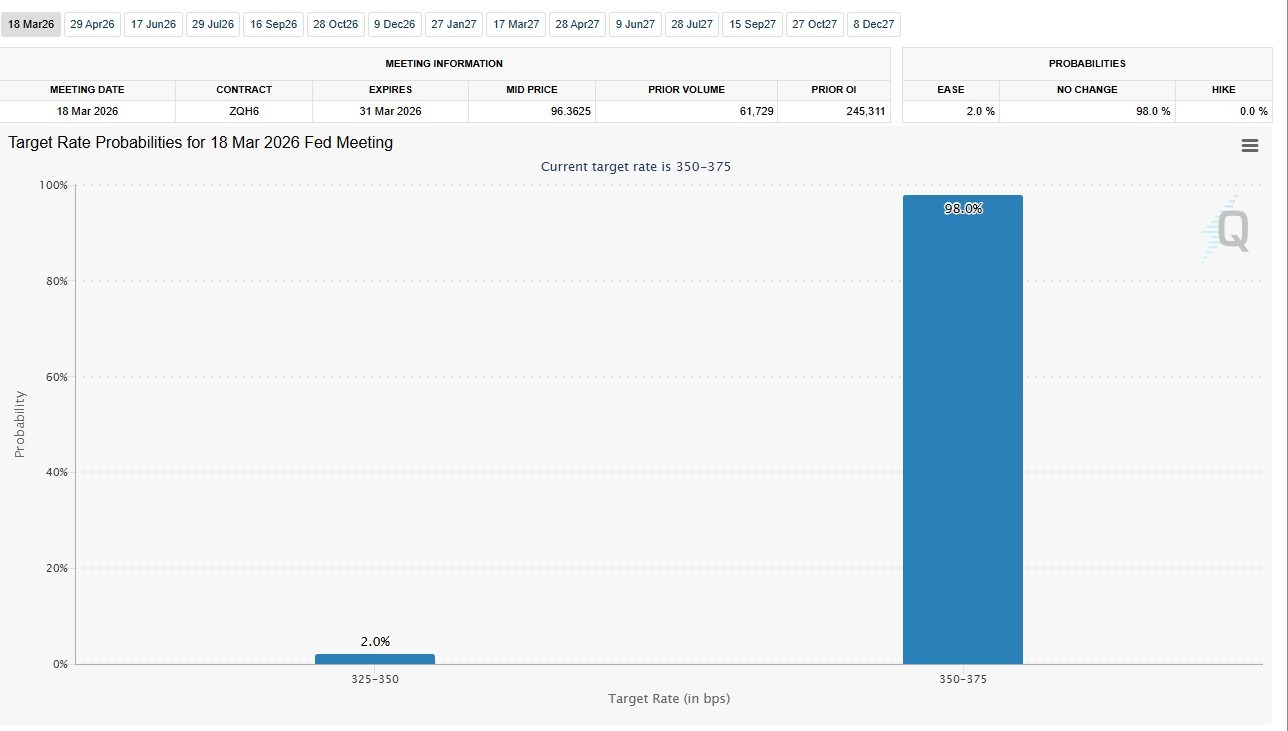
3月は米国資産にとって「再評価の月」となる見通しです。中心となるのはFOMC会合であり、CME FedWatchでは政策金利の据え置きがメインシナリオとなっています。こうした状況下では、市場はサプライズに対して敏感になりやすく、特に根強いインフレと需要減速のバランス認識を揺るがすような指標発表には注意が必要です。
金利と政策
主要日程
- FOMC会合(2日間): 3月18日~19日(オーストラリア東部夏時間)
- FRB政策決定(FOMC声明): 3月19日 午前5:00(オーストラリア東部夏時間)
- FRB議長記者会見: 3月19日 午前5:30(オーストラリア東部夏時間)
市場の注目点
たとえ金利が据え置かれたとしても、最新の経済見通しや政策声明、議長によるガイダンスを通じて、決定が市場を動かす可能性があります。
利上げ休止がほぼ織り込まれている中、市場の関心は「利上げか否か」から、FRBのメッセージが現在の金利パスを正当化するものか、あるいは「高金利の長期化」や「早期の緩和」へと期待を傾けるものかという点に移っています。
リスクのバランス(インフレ対成長・金融環境)に少しでも変化があれば、短期金利、米ドル、株式のバリュエーションの再評価につながる可能性があります。
インフレとFedWatchの織り込み状況
主要日程
- 消費者物価指数(CPI): 3月11日 午後11時30分(オーストラリア東部夏時間)
- 個人所得・支出/PCE(1月分個人消費支出): 3月13日 午後11時30分(オーストラリア東部夏時間)
市場の注目点
市場が政策金利の据え置きを織り込んでいる局面では、インフレ率が今後の政策経路を左右する重要な要因となります。
インフレ率が堅調に推移すれば、利上げ観測が強まり金融環境が引き締まる一方、インフレ率が鈍化すれば、据え置き観測が補強され、利下げ開始時期の前倒しが意識されます。
政策決定前に発表されるインフレ指標は市場価格の即時的な修正に大きな影響を与える傾向があり、その後のインフレや消費関連のデータは、月末のポジション調整やディスインフレ傾向に対する市場の確信度を左右します。
雇用統計:金利見通しを占う次の試金石
主要日程
- ISM製造業景況感指数:3月3日 午前2時(オーストラリア東部夏時間)
- ISM非製造業景況感指数:3月5日 午前2時(オーストラリア東部夏時間)
市場の注目点
雇用者数、失業率、賃金動向は、インフレ指標や政策決定といった主要イベントを前に、債券利回り、米ドル、株式市場の地合いを再形成する可能性があります。
実際には、データが予想外の結果となった場合、まず短期金利や金利ボラティリティに影響が及び、その後、特に需要の減退や賃金圧力の緩和という前提が覆されるような場合には、市場全体のリスクセンチメントや株価へと波及します。
株式、関税、そして地政学
市場が注目していること
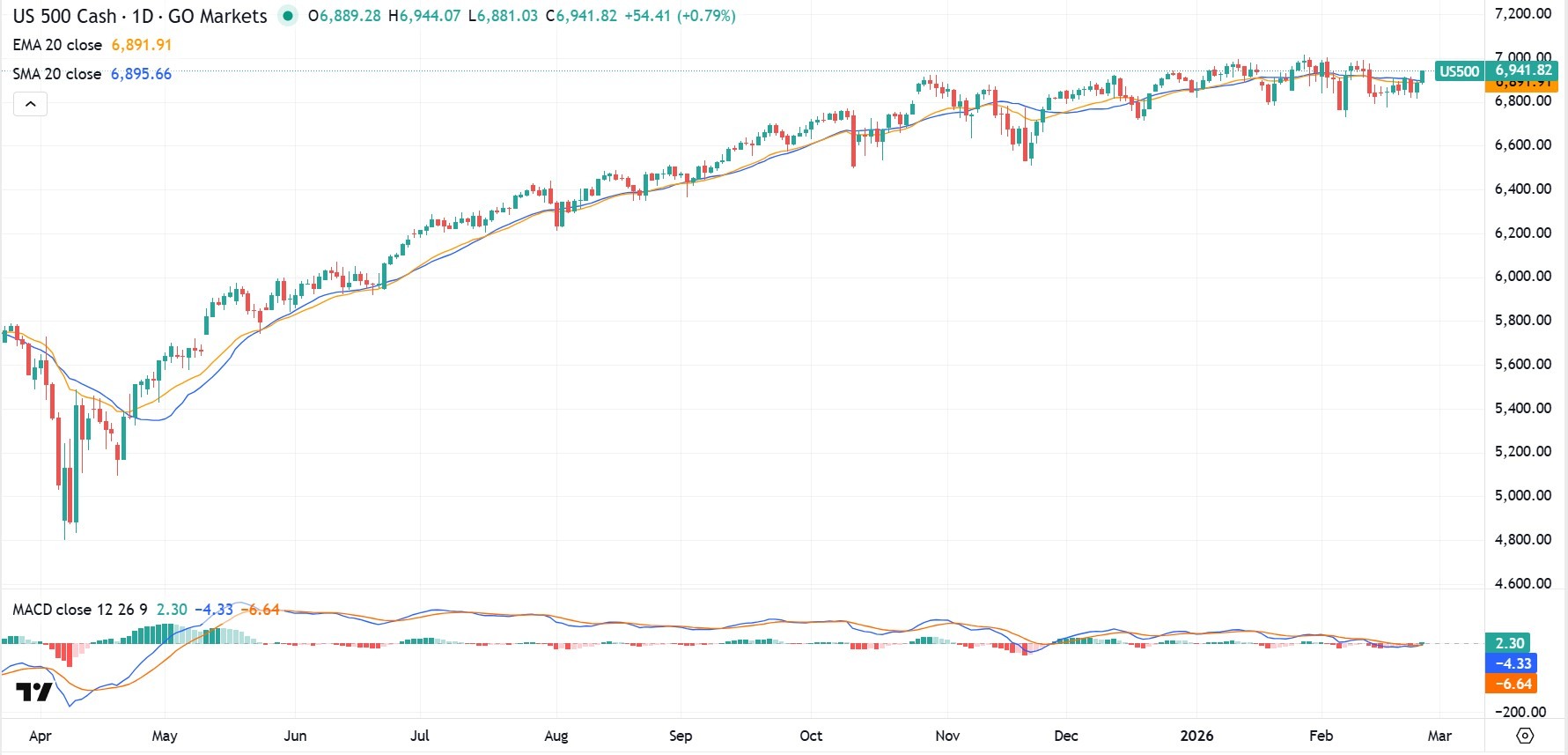
米国株価指数は、金利動向に対して依然として高い敏感さを示しています。S&P 500指数(SPX)とナスダック100指数(NDX)はここ数週間、比較的高い水準で推移しており、VIX指数がインプライド・ボラティリティの状況を示唆しています。
経済指標カレンダー以外では、決算シーズンの終盤が個別銘柄のボラティリティを引き起こす可能性があります。関税や貿易政策も依然としてマクロ経済上のリスク要因であり、輸入業者に対する公式なガイダンスがコスト、利益率、セクター心理に影響を与える可能性があります。
また、米連邦最高裁判所は、IEEPA(国際緊急経済権限法)はその法律に基づく関税の賦課を認めるものではないとの判断を下しました。これが、トランプ氏の関税政策の法的根拠をめぐる不確実性を高める可能性があります。
地政学の面では、中東情勢の緊張再燃が原油価格の上昇と重なっており、CPI(消費者物価指数)発表やFOMC(連邦公開市場委員会)開催週におけるインフレ期待やリスク選好度に影響を与える可能性があります(その他の要因と併せて)。

The information provided is of general nature only and does not take into account your personal objectives, financial situations or needs. Before acting on any information provided, you should consider whether the information is suitable for you and your personal circumstances and if necessary, seek appropriate professional advice. All opinions, conclusions, forecasts or recommendations are reasonably held at the time of compilation but are subject to change without notice. Past performance is not an indication of future performance. Go Markets Pty Ltd, ABN 85 081 864 039, AFSL 254963 is a CFD issuer, and trading carries significant risks and is not suitable for everyone. You do not own or have any interest in the rights to the underlying assets. You should consider the appropriateness by reviewing our TMD, FSG, PDS and other CFD legal documents to ensure you understand the risks before you invest in CFDs. These documents are available here.
Any references to Australian or international shares, sectors, indices, ETFs, crypto-related stocks or other instruments are provided for market commentary and watchlist purposes only and do not constitute a recommendation, offer or solicitation to buy, sell or hold any financial product or adopt any investment strategy. International markets may involve additional risks, including currency fluctuations, regulatory differences, market structure differences, reduced liquidity and higher volatility. Company-specific, sector-specific and macroeconomic risks may also affect performance.
Commentary on geopolitical developments, economic data, central bank decisions, earnings, policy changes and other global or financial market events is based on information available at the time of publication and may change without notice. Such events can lead to sudden market moves, price gaps, reduced liquidity, wider spreads and increased volatility, particularly in leveraged products such as CFDs. Forward-looking statements, expectations and scenario analysis are inherently uncertain and should not be relied on as guarantees of future market behaviour or outcomes.