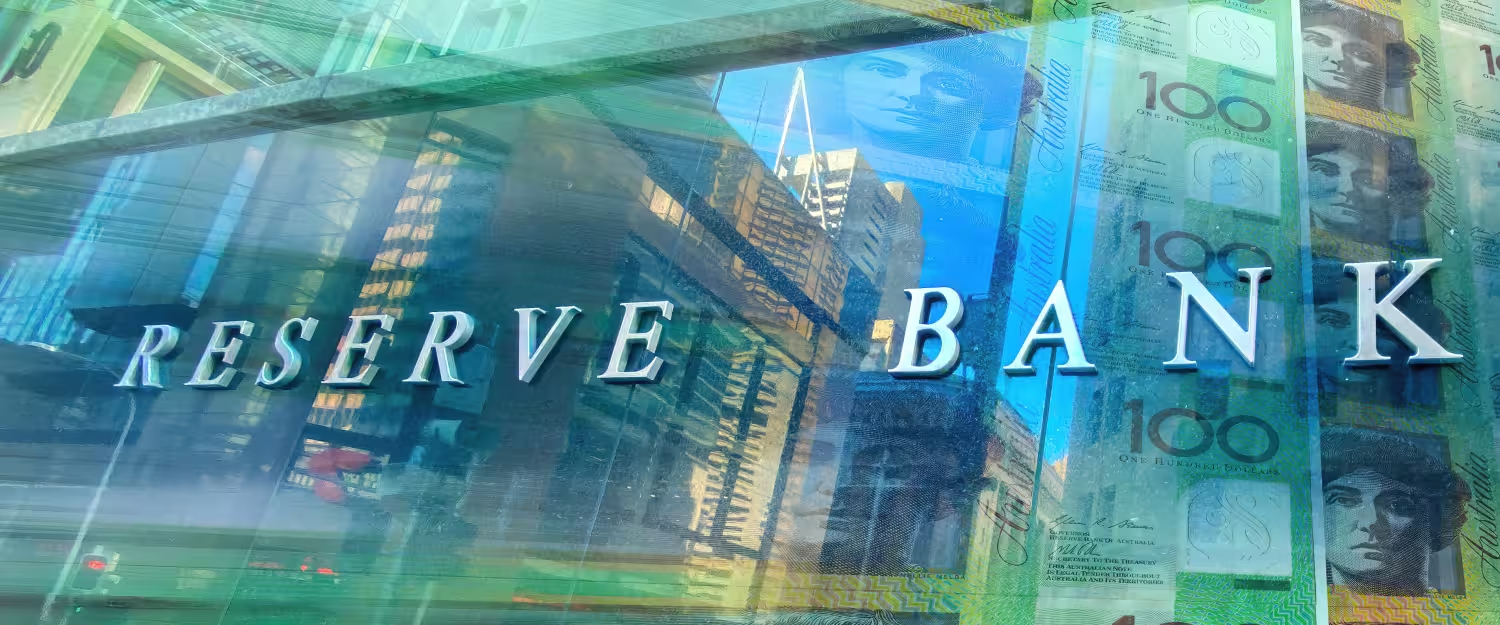
IPOについて知っておくべきこと

これは、非公開企業が公開市場へと踏み出すタイミングです。OpenAIやSpaceXのような企業に加え、ASX上場を目指す新たな企業について、市場がその事業内容や財務状況を初めて詳しく知る機会となります。

IPOとは?

IPOとは、「Initial(最初の)Public(公開の)Offering(売り物)」の略で、未上場企業が初めて証券取引所に株式を上場し、一般投資家に向けて売り出すことです。IPO前の株式は通常、創業者や初期従業員、ベンチャーキャピタルなど限られた投資家が保有していますが、上場後は、証券口座を持つ投資家が株式市場を通じて売買できるようになります。

トレーダーにとって、IPOは企業の株式に初めて直接アクセスできる機会となる場合があります。一方で、上場直後は過去の価格データが少なく、市場の関心や価格変動が大きくなりやすいため、リスクも高まります。

1,718億米ドル

2025年の世界IPO調達額、前年比39%増

3兆米ドル超

2026年の主要IPO候補企業の推定評価額合計

8

2025年の世界的なIPO件数、2021年前後の上場ブーム以来の大幅回復

世界の取引所で予定されているIPO

企業推定評価額取引所ステータス
Anthropic
Artificial intelligence
~US$350 billionNasdaqRumoured
Databricks
AI and data
~US$134 billionNasdaqExpected
Firmus Technologies
AI infrastructure
~A$6 billionASXExpected
Greencross
Pet care & veterinary
~A$4 billion plusASXRumoured
OpenAI
Artificial intelligence
~US$850 billionNasdaqExpected
Rokt
E-commerce adtech
~US$7.9 billionNasdaq and ASX CDIExpected
SpaceX
Aerospace and AI
~US$1.5 trillionNasdaqExpected
Stripe
Fintech
~US$140 billionNYSE/NasdaqRumoured
出典:2026年4月21日時点の企業発表、取引所資料、信頼できるメディア報道および市場コメントに基づく。推定評価額、取引所、上場ステータスは参考情報であり、予告なく変更される場合があります。

米国IPO候補企業

SpaceX、OpenAI、Anthropicなど

もっと…

ASX IPO候補企業

Firmus Technologies、Greencrossなど

もっと…

上場の仕組み

取締役会から取引所まで

上場時点では、機関投資家による評価はすでにある程度織り込まれていることが一般的です。6つのプロセスを理解することで、株式が一般市場で取引を開始する前に、どのような要素が価格に反映されている可能性があるのかを把握しやすくなります

準備段階

企業は、財務状況や企業構造、市場での位置づけを評価するため、主幹事証券会社を選びます。

上場申請

主幹事証券会社はデューデリジェンスを実施し、必要な開示書類を所管の規制当局に提出します。

ロードショー

企業は、機関投資家やアナリストに対して、事業内容や成長ストーリー(エクイティ・ストーリー)を直接説明します。この段階で需要が形成され、株価に対する期待値も固まっていきます。個人投資家が株式を見る前に、すでに一定の評価や関心が市場に織り込まれているのが一般的です。

価格決定

ロードショーで得られた投資家の反応を踏まえ、引受会社は最終的な公開価格と発行株式数を決定します。

上場日

株式は選定された取引所で取引を開始します。多くのトレーダーにとって、これはその株式を取引する最初の機会です。

IPO後

上場後、企業は定期的に財務情報を開示し、上場先の取引所が定めるガバナンス基準を満たす必要があります。

CFDでIPOを取引する

CFDがIPOのボラティリティに適している理由

IPO上場日は、市場心理が大きく変化しやすく、過去の価格データも限られています。こうした環境では、長期保有を前提とした投資だけではリスク管理が難しくなる場合があります。CFDなら、上昇・下落のどちらの方向にも対応しやすく、ポジションサイズも柔軟に調整できます。

ロングまたはショート

上場直後の急騰にも、過熱後の調整にも対応。CFDなら、上場日以降の上昇・下落どちらにもポジションを取れます。

より短い時間軸

IPOのボラティリティは上場直後に集中しやすく、CFDはこうした短期的な値動きに適しています。

リスク管理ツール

ストップロスやテイクプロフィットを活用することで、エントリー前にリスクを明確にできます。価格形成が進行中のIPOでは、こうした管理が重要です。

米国およびオーストラリア市場をカバー

1つの口座から、RoktやFirmus Technologiesなどを含む米国およびオーストラリア市場の株式CFDにアクセスできます。

IPO取引の準備はできましたか?

迅速な約定、競争力のある価格設定、リスク管理機能を備えた米国株・豪州株CFDにアクセスできます。

IPO取引の準備はできましたか?

迅速な約定、競争力のある価格設定、リスク管理機能を備えた米国株・豪州株CFDにアクセスできます。

始める

ニュースと分析

AI
Shares
Google TPUチップとNVIDIA:AIチップ戦争が市場に意味するもの

過去3年間、人工知能(AI)インフラへの投資は、比較的シンプルな論理に従ってきました。それは、ゴールドラッシュのためのつるはしやシャベルを作る企業を見つけること。そのリストの筆頭には、NVIDIAという一つの名前がありました。

そのチップは世界の多くのAIモデルを動かし、そのソフトウェアエコシステムは開発者を惹きつけて離しません。その株式は、この世代で最も劇的な富の創出事例の一つとなっています。

その後、Googleはラスベガスの会議室に現れ、自社製シリコンを世界に提供することに本腰を入れる姿勢を示しました。

何が起こったのか、そしてそれが投資家にとってなぜ重要なのかを解説します。

グーグルが抜いた伝家の宝刀 — AIチップ覇権戦争の深層 | GO Markets
TPUの基本構造:重要キーワード解説
TPU
Tensor Processing Unit(テンソル・プロセッシング・ユニット)。グーグルが開発した独自チップ。汎用的なグラフィックス処理ではなく、AI特有の数学的演算に完全に特化している。
GPU
Graphics Processing Unit(グラフィックス・プロセッシング・ユニット)。エヌビディア製チップ。元々はゲームの画像処理用に開発されたが、現在はAIモデルの学習における圧倒的な主導権を握る。
推論(Inference)
構築されたAIモデルを実社会のアプリケーションで稼働させるプロセス。膨大なリソースを要する「学習」フェーズとは性質が異なり、コスト効率が極めて高く、重要性が急速に増している。
CUDA
エヌビディアが提供する独自ソフトウェアレイヤー。同社の実質的な「競争優位の牙城(堀)」。数百万人の開発者がチップのハードウェア性能だけでなく、このコード資産によって他社へ移行できない構造になっている。

グーグルの最新発表:その全貌

ラスベガスで開催された「Google Cloud Next 2026」にて、グーグルは市場の勢力図を塗り替えかねない2つの重要な発表を行った。まず、同社が「自律型AIエージェントの本格的な普及期(エージェント時代)」と定義する大規模な推論環境向けに、初の大幅な最適化を施した第7世代TPU「Ironwood」の一般提供(GA)開始を確認した。さらに、同社は早くも第8世代のアーキテクチャを披露。大規模学習に特化した「TPU 8t」と、高速推論を担う「TPU 8i」という2つの専用チップのプレビューを行った。これらはいずれもTSMCの2nmプロセスを採用し、2026年後半にも一般提供が開始される見通しだ。

TPUは、エヌビディアの主力製品であるGPUに対するグーグルの独自対抗馬である。汎用ワークホースとして万能な処理能力を持つGPUに対し、TPUはAI演算を根底から処理するために設計されたプロフェッショナル仕様のチップと言える。グーグルは2016年からその内製化を進めてきたが、今回の第8世代はAIのライフサイクルを半分に分け、それぞれに完全特化した独立設計を採用した初の、そして極めて野心的な試みとなる。

市場に伝わる情報によると、「TPU 8t」の学習ポッド(数千個のチップ群)は、前世代のIronwoodポッドと比較して約3倍の計算力を誇り、ワット当たりのパフォーマンス(電力効率)も2倍に向上しているという。一方、推論用の「TPU 8i」は、企業のエンタープライズ顧客向けに、数百万ものAIエージェントを同時に、遅延なく処理することを目指して設計されている。

この後者の発表には、市場の構造変化を示唆する重要な意味が含まれている。先日の決算説明会において、スンダー・ピチャイCEOは、AI研究機関や金融市場のクオンツ・運用会社、ハイパフォーマンス・コンピューティング(HPC)領域からのTPU需要が急増していることを受け、グーグルが一部の戦略的顧客に対し、顧客自身のデータセンター内へ直接TPUの配備・提供を開始する方針を示唆した。グーグルはもはや、この強力なシリコンの優位性を自社サーバー内だけに留めておくつもりはないようだ。

グーグルは単なる「TPUの自社利用者」から「TPUのベンダー(供給者)」へと脱皮しつつあり、その巨大顧客リストはすでに埋まり始めている。

アンソロピックの計算リソース戦略

AIモデル「Claude」を開発するアンソロピック(Anthropic)は、グーグルとの間で、最大100万個の「Ironwood」TPUチップへのアクセスを確保する大規模なインフラストラクチャ契約を締結したことを確認した。この契約規模は数百億ドル(数兆円規模)に達するとみられ、両社から正式に発表されている。

このディールの本質を見極めるには、アンソロピックが展開している計算リソース(コンピューティング)戦略の全体像を俯瞰する必要がある。

計算リソース(マルチプラットフォーム)インフラ戦略
Amazon Trainium
アンソロピックの筆頭クラウドおよび学習パートナーはアマゾン(AWS)である。最先端モデルの開発を担う超大型スーパーコンピューター・クラスター「Project Rainier」は、米国内の複数のデータセンターに配置された「Trainium 2」チップ上で稼働している。同社は将来のキャパシティを含め、最大5ギガワット(GW)に及ぶTrainiumの供給契約を確約している。
Google TPU
最大100万個の「Ironwood」チップへのアクセス確保に加え、2027年以降はさらに3.5ギガワット(GW)規模のTPUキャパシティ拡充を行う契約を締結。アンソロピックは2023年からグーグルのTPUを採用しており、今回の拡張の背景として、圧倒的なコストパフォーマンス(費用対性能比)の高さを挙げている。
NVIDIA GPU
同社が推進する分散インフラ戦略の「第3の柱」。エヌビディア製のGPUは、先端研究や特殊なワークロード、特定の限定的な学習プロセスをサポートするために活用されている。特定ベンダーへの依存(ロックイン)を徹底して排除し、1ドル当たりの計算効率を極大化するための意図的な戦略である。

このマルチプラットフォーム戦略の全体像を正しく認識することは極めて重要である。なぜなら、一部のメディアでは今回のグーグルとの契約を「アンソロピックがエヌビディアからの乗り換え(スイッチ)を決断した」とセンセーショナルに報じているからだ。そのような見方は同社の緻密なインフラ設計を過小評価している。今回のグーグルとの協定は、AWSやエヌビディアとの関係を断絶するものではなく、あくまで並行したインフラの「拡張」であると捉えるべきだ。

単なるベンチマークの数値を越えた真の論点

単体チップごとの性能を比較した場合、現行世代の差はヘッドラインが騒ぎ立てるほど開いているわけではない。現在一般提供されているグーグルの「Ironwood」は、FP8精度で約4.6ペタフロップス(PFLOPS)の計算力を発揮する。一方、エヌビディアの「Blackwell B200」はFP16精度で約4.5ペタフロップスを叩き出す。ただし、これらは異なる演算精度に基づく数値であるため、同一の基準で単純比較する際には慎重な精査が必要となる。

しかし、こうしたカタログスペック上のベンチマーク比較ばかりに目を奪われていては、より大きな構造変化を見誤ることになる。

実際にこれらのチップが実戦配備される「ポッド(Pod)」あるいは「クラスター」のスケールにおいて、両者の差は顕著になる。9,216個のチップで構成されるIronwoodのスーパーポッドは、42.5エクサフロップス(EFLOPS)の処理能力に達する。これに対し、9,600個のチップを統合する第8世代の「TPU 8t」ポッドは、FP4精度で121エクサフロップスをターゲットにしている。グーグルはまた、単一の論理クラスター内で100万個のチップまでほぼ線形(リニア)に処理能力を拡張できると主張している。数十万個のチップを同時に稼働させるハイパースケーラーにとって、単体チップのベンチマークよりも、ポッド単位での経済性や拡張性(スケーラビリティ)の方が遥かに重要な評価基準となる。

性能ベンチマークの比較
AIチップ比較:計算能力と電力効率の推移
※演算精度に関する注意点:これらを直接比較する際には留意が必要です。Ironwoodの計算力はFP8、エヌビディアのB200はFP16、TPU 8t(ポッド仕様)はFP4精度を基準としています。一般的にFP4の数値を半分にすると、大まかなFP8相当の換算値が得られます。「ワット当たりパフォーマンス」はエヌビディアの旧世代「H100」をベースライン(100)としてインデックス化したものであり、グーグルが公表したデータに基づいています。第三者機関による独立した検証値ではありません。実際の運用結果はワークロード(処理負荷)や稼働環境によって変動する可能性があります。

エヌビディアの現在の立ち位置

市場調査会社IDCの推計によると、エヌビディアは現在、AIデータセンター向けチップ市場の約81%という驚異的なシェアを掌握している。これは極めて異例な市場支配力であり、足元の短期的な需要見通しも依然として強固だ。

直近のアナリスト予測も、エヌビディアの力強い収益成長が持続する可能性を示唆している。AIインフラへの旺盛な設備投資意欲と、新型プラットフォーム「Blackwell」の広範な採用がその背景にある。エヌビディア自身、2026年から2027年にかけての「Blackwell」および次世代「Vera Rubin」の受注残高が、合計で1兆USドル(約150兆円規模)に達するとの見通し(ガイダンス)を示している。

その一方で、AMDもラック規模のサーバーシステム開発を加速させており、確実な足がかりを築きつつある。IDC等の一部アナリストの試算によれば、AIアクセラレーター市場におけるAMDのシェアは、2年前のわずか数パーセント(一桁前半)から、現在は約10%にまで上昇している可能性があるという。また、アマゾンとグーグルによるカスタム内製チップ(ASIC)ビジネスの規模拡大も目覚ましい。アマゾン単体で見ても、「Trainium」「Graviton」「Nitro」を含むチップ関連事業の年間ランレート(売上高換算推計)は200億USドルを突破。前年比で3桁パーセントの成長を記録しており、2026年第1四半期も前四半期比で約40%のプラス成長を維持している。

エヌビディアに対する強気シナリオ(ブルケース)は依然として明白である。市場の需要はいささかも衰えておらず、同社の築いたエコシステムはAI計算スタック全体の深部まで完全に組み込まれている。

長期的な焦点は、こうした目先の高決算が続くかどうかではなく、次のアップグレードサイクルが到来した際に、同社が現在の強烈な価格決定権(マージン)を維持できるかという点にある。グーグル、アマゾン、マイクロソフトが自社製シリコン(内製チップ)の運用実績に自信を深める決算期を迎えるたびに、このマージン低下懸念の議論を裏付けるデータが積み重なっていく。巨大ハイテク企業側のインセンティブは明確だ。単一のサプライヤーへの過度な依存を減らしたいという動機があり、それを実現するための潤沢な投資余力(資本)も備えている。

市場構造・シェア動向
AIデータセンター向けチップ市場シェア(2026年推計値)
AIアクセラレーター市場の売上高に基づく推計シェア。3年前にはほぼゼロに等しかった巨大テック企業による「カスタム内製チップ(独自シリコン)」が急速に台頭している。なお、AMDのシェア推計は調査手法によってばらつきがあり、直近のアナリスト予測では4%〜10%の範囲で議論されている。
※出所:IDC推計、Silicon Analysis、各社公開財務データおよび報告書に基づく。これらの数値はあくまで近似値であり、定義や算出メカニズムによって将来的に大幅に修正される可能性があります。

マクロ視点での注目セクター・銘柄群

エヌビディア(NVDA)に関しては、足元の「短期的な収益爆発力」と「長期的な競争環境の激化」という2つのベクトルが逆の方向を向いている。市場予想を上回る好決算が連発されれば、現在のAIブームのサイクルが正当化される可能性がある。しかし、主要顧客であるハイパースケーラーが独自の半導体を内製化していくという「構造的なダイナミクス」そのものが逆流する可能性は極めて低いと考えられる。

アルファベット(GOOGL)にとって、Ironwoodの一般提供開始と第8世代の先行公開は、従来の広告一本足打法を超えた、巨大な収益化の機会(マネタイズ・ランウェイ)を意味する。グーグル・クラウド(Google Cloud)の2026年第1四半期売上高は前年同期比で63%増を記録し、主要ハイパースケーラーの中で最も高い成長率を叩き出した。アンソロピックやメタ(Meta)をアンカー顧客として確保した「TPU-as-a-Service(サービスとしてのTPU提供)」は、企業の推論ワークロードがグーグルのインフラへと本格的に流入し続けた場合、同社の成長持続期間を大幅に引き延ばす要因になり得る。

ここで、より玄人好みの投資妙味が存在するのは、サプライチェーンの深部だ。「TPU 8t」および「TPU 8i」は、いずれもTSMC(台湾セミコンダクター)の2nmプロセスでの製造を予定しており、学習チップの設計はブロードコム(AVGO)、推論チップの設計はメディアテック(MediaTek)が協業している。半導体アーキテクチャの覇権がどちらの陣営に転ぶかにかかわらず、最先端の製造を独占するTSMCや、東京エレクトロン、アドバンテストといった日本の半導体製造装置大手、さらに高度なパッケージング技術を提供するサプライヤー、液体冷却(液冷)技術を持つ企業、データセンター特化型の不動産投資信託(REIT)などは、どのチップが勝とうとも恩恵を享受できるポジションにある可能性がある。

電力インフラの拡充、液冷システムのサプライヤー、およびデータセンターREITは、今後も継続的な設備投資(CAPEX)拡大の波に乗る公算が大きい。主要クラウドプロバイダー4社のハイパースケーラー設備投資額を合計すると、2026年には7,000億USドル(約100兆円)を突破する勢いを見せており、これは2025年に記録した3,880億USドルからほぼ倍増という驚異的な規模だ。これほど巨額の資本投下が複数年にわたり維持されるという事実は、株式市場の枠を超え、広範なマクロ経済への強力なシグナルとして捉える必要がある。

サプライチェーンにおける着眼点: エヌビディアかグーグルかの二者択一で「勝者」を完全に断定できない局面であっても、インフラレイヤー全体は恩恵を受ける可能性がある。TSMCはすでに現行のIronwoodと次世代の第8世代チップの両方の製造を一手に引き受けている。先端パッケージング業者や液冷ソリューション企業、データセンターREITなどは、個別のチップシェアが変動しても、その需要を包括的に吸収できる構造になっている。

CFDトレーダーの注目ポイント
主要な監視対象銘柄・インデックス
NASDAQ 100
エヌビディアや主要ハイパースケーラーの決算から直接的な波及効果(リード・アクロス)を受ける主戦場。市場予想とのギャップ(サプライズ)は、株価指数全体のボラティリティを急上昇させる要因となる。
USD/CNH(ドル・オフショア人民元)
米国の対中関税政策やハイテク規制の感応度を測る指標。地政学的な不確実性の高まりを背景に、スプレッドの高止まりや、市場参加者の警戒姿勢が反映されやすい。
US10Y(米10年債利回り)
米国の10年債利回りが「4.5%」の節目を超えるかどうかは、高PERなハイテク株のバリュエーションを測る重要な参照点となる。企業のガイダンス(将来見通し)が想定以上に強い場合、債券市場の利回りを動かす触媒となるため注視が必要。
【免責事項】本資料は一般的な市場解説を目的とした情報提供のみを行うものであり、取引の推奨や個別の投資助言を構成するものではありません。CFD取引には元本を大きく上回る損失が生じる重大なリスクが伴います。過去の運用実績は将来の投資成果を保証または示唆するものではありません。

リスクはどこに潜んでいるか

AIインフラへの設備投資金額が増加しているからといって、それが自動的にすべての関連株の上昇を約束するわけではない。「チップ覇権戦争」というテーマから「全買い」という安易な投資判断に直結させる前に、いくつかの複雑なリスク要因を整理しておく必要がある。市場では以下の点が警戒されている。

バリュエーションの壁
エヌビディアをはじめとする主要ハイテク株の現在の株価水準は、将来の極めて高い成長シナリオをすでに織り込んでいる(織り込み済み)。今後の業績見通し(ガイダンス)のわずかな下振れや、利益率(マージン)の圧迫、あるいはインフラ需要の鈍化の兆候が少しでも見られれば、セクター全体に及ぶ大幅な割高感の再評価(調整)が引き起こされるリスクがある。
CUDAという深い堀
エヌビディアの持つ真の競争優位性は、単なるシリコンの処理速度ではない。過去10年間にわたり莫大な資金を投じて構築してきたライブラリ、開発ツール、ワークフロー、そして数百万人の開発者が依存するソフトウェアエコシステム(CUDA)そのものである。グーグルが進める「TorchTPU」構想は、この開発環境の乗り換えコスト(スイッチングコスト)を意図的に引き下げるための戦略だが、確立されたエコシステムの地殻変動には相応の歳月を要する。この開発プラットフォームの慣性は、市場で最も過小評価されやすいリスクの一つと言える。
実行・デリバリーのリスク
グーグルは過去にも驚異的なスペックのチップを発表してきた実績がある。今回はIronwoodの一般提供を開始し、第8世代のプレビューに漕ぎ着けた。しかし、これを商用グレードの厳格なサービス品質保証(SLA)とともに、外部のエンタープライズ顧客に対してスケジュール通り、かつ大規模に安定供給し続けることは、自社サービス内で内製チップを運用することとは全く次元の異なる、極めて高いハードル(実行リスク)を伴う。
市場シェアと絶対収益の乖離
AMDやグーグル、アマゾンがシェアを拡大する局面において、爆発的に拡大する市場全体のパイの中で、エヌビディアの「占有率(%)」自体は低下したとしても、同社の「絶対的な売上高(ドル建て)」は増え続けるというモザイク状のシナリオが十分に成立する。競争環境の激化というテーマを分析する投資家は、市場シェアの侵食と、実際の収益への打撃を明確に区別して評価すべきであり、これらは決して同義ではない。

投資家が導き出すべき示唆

このAIチップ戦争は、単一の勝者と単一の敗者が生まれるような単純な二項対立のストーリーではない。この市場の規模そのものが巨大化しすぎた結果、そして地政学的・戦略的な重要性が高まりすぎた結果、もはや特定の1社が恒久的に独占を維持し続けることが不可能な領域へと突入しているのだ。

エヌビディアは、本物の技術的卓越性と10年間に及ぶソフトウェア投資を通じて圧倒的なリードを築き上げた。その牙城は強固であり、目先の四半期決算もその優位性を反映し続ける可能性が高い。

しかし、その追撃者(チャレンジャー)たちは、もはやベンチマークののスライド1枚で資金調達を狙うスタートアップではない。彼らは時価総額数兆ドルを誇り、独自の半導体と世界最大級のクラウドインフラを保有し、単一の供給網への依存度を何としてでも引き下げたいという強烈なインセンティブを持った、米テック界の「超巨人」たちである。そして、その意志の固さは、巨額の設備投資計画(CAPEX)のコミットメントという形で市場に明示されている。

この長期的な覇権争いを見通す上で、投資家が注目すべき主変数は、もしかすると「AI計算需要の総量が増えるかどうか」ではないのかもしれない。「その拡大する需要から生み出されるマージン(利益)を、最終的に誰がどれだけ手中に収めるのか」、そして「それはどのようなバリュエーション倍率(マルチプル)で評価されるべきなのか」という点こそが、本質的な問いとなるだろう。投資家は、自身の許容リスク度合いや運用の目的に照らし合わせ、これらのパワーバランスの推移を冷徹に天秤にかけていく必要がある。

【シナリオに関する免責事項】 本文中に記載された市場シナリオや各種 catalayst(変動要因)の分析は、市場の前提条件をストレステストし、潜在的な動向を検証するための例示的なシミュレーションモデルであり、当社のハウスビュー(公式見解)、将来の市場予測、あるいは運用成果を保証または予言するものではありません。原油価格の動向、中央銀行の金融政策への言及、その他すべての市場ベンチマークは純粋に仮定のデータです。実際の市場環境は極めて高いボラティリティを伴い、予期せぬ要因によって急激に変化する可能性があります。

GO Markets
May 20, 2026
what is a K-shaped consumer economy
K-shaped consumer explained for traders
how consumer spending affects CFD markets
CFD trading signals from earnings season
Australian CFD traders US consumer stocks
how credit stress affects consumer stocks
K-shaped economy and AUD/USD
AI
Shares
K-shaped consumer explained: CFD watchlist signals for 2026

The “resilient consumer” line being recycled across earnings calls is doing a lot of work. Index-level data helps it along. Headline retail sales hold. Spending looks firm. Stop reading there and the story looks simple.

But it is not.

Underneath sits a split-screen economy, the K-shape, where one consumer is carried by asset wealth, US large-cap exposure and the AI rally, while another is stuck with the less glamorous arithmetic of petrol, credit card minimums and a car loan that gets harder to service with each statement.

For CFD traders, the average is the problem. What matters is which side of the K a stock, sector or currency pair is exposed to, because that is where margins, earnings guidance, single-stock CFDs, index performance, commodities and FX may start telling a more divided story.

The big "K"

The "K" is just a chart shape. One arm angles up. The other angles down. Apply that shape to households and you get a workable model of who is benefiting from the current cycle, and who is being squeezed by it.

The upper arm, where asset wealth is doing the heavy lifting

The upper arm is asset-rich. These households own homes, hold the bulk of equity exposure and have benefited from the AI-linked rally in US large-cap equities. Net worth has been rising faster than inflation, which means their spending may be less price-sensitive and less reliant on borrowing. Roughly 87 per cent of all US equities sit with the top 10 per cent of households and that concentration matters when markets rally, because the wealth effect lands in fewer pockets than people assume.

The K-shaped consumer One economy, two very different households
Upper arm
Wealth is still growing
+28%
US equity wealth, 12 months
Growth: Big Tech and AI stocks have helped wealth grow
Spending: Higher earners are still spending freely
Demand: Luxury and travel demand remain strong
Lower arm
Budgets are under pressure
2010
Auto loan stress near post-GFC highs
Prices: Much higher than levels seen in 2021
Credit: Card stress is rising across households
Timing: Pressure builds before headline data updates
Bull case
Rate cuts may give some relief
Caution
Stress could weaken broader spending
Disclaimer: This graphic is for general informational purposes only and presents scenario-based commentary, not financial advice or a recommendation to buy, sell or hold any security or financial product. References to equity wealth growth, auto-loan stress, household credit conditions and consumer spending are based on available Federal Reserve and New York Fed data as at May 2026 and may be revised. Historical comparisons and market performance, including AI-related equity gains, are not reliable indicators of future outcomes. Actual consumer, market and economic conditions may differ materially from those implied by the “Bull Case” or “Caution” scenarios.
The lower arm, where pressure shows up first

The lower arm tells a different story. With official US inflation still around 3.7 per cent, lower-income earners are spending more on essentials and falling back on credit. Auto loan delinquencies have climbed to their highest level since 2010.

That is not a recession signal on its own. It is a strain signal. And because strain rarely stays neatly contained, it can start to show up in the spending mix before it shows up in the headline data.

The clue markets cannot ignore

The punchline is this: the top 20 per cent of US earners now account for more than 60 per cent of total retail spend. Once you internalise that, a lot of consumer-stock charts start to make more sense.

USD IN FOCUS

Manage your catalysts

Prepare for upcoming events and review your approach before trading.

We have been here before

Same K-shape, faster upper arm

The split is not new, after all markets have seen versions of this before, because every few cycles, the same uncomfortable pattern comes back into view: one part of the consumer economy keeps moving, while another starts to drag.

Same K-shape,

faster upper arm

The K-shape is not new. What is different in 2026 is the speed and concentration of the upper arm. AI-linked equity wealth has supercharged the asset-rich consumer faster than in any earlier dispersion cycles.

~35%
~40%
~43%
~49%
01 · Dot-com Era

First sustained dispersion

Top 5 per cent income growth ran 4.1 per cent a year. Equity ownership began to concentrate significantly, marking the first modern iteration of the split.

Sources: Moody’s Analytics review of Federal Reserve data via Bloomberg, Sept 2025. Pew Research Center. IMF Finance & Development. Federal Reserve FEDS Notes.

Why the K-shape matters for CFDs

Aggregate data, such as headline retail sales, total consumer credit and broad index moves, averages everyone together. In a single-consumer economy, that average is useful but in a K-shaped economy, the average can mislead. What matters is which side of the K a company sits on and whether the price reflects that.

How the K reaches your screen
Step 01
Customer mix splits
Upper and lower arms spend differently.
Step 02
Earnings diverge
Margins, guidance, and credit profiles split.
Step 03
CFDs reprice
Where the trader sees the move on platform.
A simplified transmission view. Real-world price moves reflect many overlapping macroeconomic drivers.

That changes the way three things behave.

1. Dispersion: Two stocks in the same sector can post very different earnings depending on who their customer is. An index move can mask that. A single-stock CFD does not. A luxury retailer and a value retailer may both sit inside the consumer universe, but they are not trading the same household balance sheet. A premium travel name and a budget operator may both report on travel demand, but the customer mix can make the earnings story very different.

For traders, the sector label is only the first layer. The customer base is the second.

2. Margin pressure: Companies serving the lower arm may be increasingly forced to discount. PepsiCo, for example, has cut prices on certain snack lines by around 15 per cent. Margin compression at the bottom often does not show up in headline beats. It can show up later in guidance.

That is where CFD traders need to be careful with the first read. A company can beat revenue expectations and still guide cautiously if it had to protect volume with promotions, price cuts or weaker margins.

3. Credit signals: Big banks publish their own K-shaped commentary every quarter. JPMorgan’s recent quarterly update flagged that higher-income borrowers are holding up while lower-income cohorts are showing more strain in credit card charge-offs. JPMorgan reported managed revenue of US$50.5 billion in its most recent quarter. The headline is one thing. The K-shaped colour commentary inside the release is another.

That kind of language has, in past cycles, preceded a wider repricing of consumer-facing names. It does not guarantee one this time.

CFD sector examples

One way to analyse the K-consumer theme is to compare companies in pairs rather than looking only at single names. This is not about deciding which stock is good or bad. It is an illustrative way to compare how different customer bases may influence market commentary and price behaviour.

The CFD trader's watchlist
SectorUpper-armLower-armMonitoring
RetailLVMH, HermèsWalmart, TJXPricing power
TravelDelta, MarriottSpirit AirlinesLoad factors
AutosFerrari, PorscheFord, GMFinancing stress
HousingToll BrothersRocket CompaniesAffordability

Source attribution and disclaimer: Data and examples are drawn from S&P Global Market Intelligence, Federal Reserve Distributional Financial Accounts, ASX company announcements, RBA household credit data, PepsiCo’s February 2026 strategic update and Wesfarmers’ 2026 half-year results. Companies are categorised by their primary revenue-generating demographic based on recent annual reporting. The “CFD Trader’s Watchlist” is provided for general information and educational commentary only. Company names are used to illustrate the “K-shaped consumer” theme and are not financial advice, a recommendation, or a solicitation to buy, sell or hold any security, CFD, derivative or other financial product.

How the split reaches APAC screens

For Australian CFD traders, the K-consumer theme can reach local screens through three channels the US names alone do not capture:

1. Direct ASX read-throughs

The APAC tab in the watchlist maps the K onto Australian consumer names. Wesfarmers does most of the heavy lifting, because Kmart and Bunnings sit on opposite arms of the same business. Endeavour and Coles play discretionary against defensive in staples. Flight Centre and Webjet do the same in travel. Macquarie and Latitude split the credit story.

2. The China-luxury feedback loop

The upper arm is not only a US story. LVMH, Hermès and Richemont sit downstream of the high-end Chinese consumer. A softer luxury read in Asia can move broader risk appetite, mining sentiment and AUD/USD before it shows up in US data, which is why luxury can be an early signal.

3. AUD/USD as the macro carrier

A stretched US lower arm may push the Federal Reserve toward a more dovish stance. That could pressure the US dollar and support AUD/USD, depending on commodity sentiment and the RBA. The K-consumer story is not always a retail story. Sometimes it shows up in FX first.

Forward outlook

How the theme could play out

Base

Bank charge-off rates and discretionary retailer guidance start to confirm or unwind the dispersion narrative.

Upside

AI-linked equity gains keep feeding the wealth effect at the top end.

Downside

The next consumer credit report shows further deterioration in lower-income cohorts.

Watch list

Fed commentary on financial conditions, US consumer credit prints, bank earnings language and ASX consumer names.

Base

The K persists into mid-year, with broad indices continuing to mask it.

Upside

Rate cuts begin lifting both arms unevenly, with rate-sensitive, lower-income households getting some relief.

Downside

A sustained Brent move above US$120 pressures mid-tier discretionary spend and forces earnings downgrades.

Watch list

Fed dot plot revisions, oil supply shocks, retailer guidance, China luxury demand, AUD/USD and mining sentiment.

Scenario disclaimer: The “Next 30 days” and “Next 3 months” scenarios are illustrative “what-if” models for stress-testing a market thesis and identifying potential catalysts. They are not a house view, forecast, guarantee, or prediction of future market movement. Any Brent price targets, Fed policy references, or other market benchmarks are hypothetical only.

Continue Reading
Failure paths

Where the framework could break

Upper-arm reversal

If the AI rally rolls over, upper-arm spending could weaken faster than the data has suggested.

China factor

Luxury demand can weaken if China's high-end consumer slows.

Energy reversal

If energy prices fall rather than spike, the lower-arm squeeze eases and the dispersion trade unwinds.

AUD/USD divergence

AUD/USD can move against expectations if commodity prices fall or the RBA deviates from global policy paths.

Already priced in

By the time a theme is widely discussed, much of the move may already be priced into the instruments.

Execution

CFDs are leveraged. Wider dispersion can mean larger gap risk around earnings and tighter conditions for stop placement.

General information only. Scenarios are illustrative. Real-world conditions are subject to volatility and unforeseen shifts.

The bottom line

The K is not a forecast. It is a lens. It forces the question headline data ignores: whose consumer am I actually trading?

For CFD traders, answering that can be the difference between an index move and a single-stock CFD that tells the opposite story.

The next test is threefold:

  1. Earnings: Does upper-arm demand hold as luxury and tech reports land?
  2. Energy: Does Brent stay contained below US$90, or does a spike further squeeze the lower-arm budget?
  3. Credit: Does bank commentary continue to flag the income split JPMorgan called out this quarter?

The work is not to predict the break. It is to decide your response before it happens. By the time the headline lands, the price, and the opportunity, may have already moved.

Next week: Tesla, AI infrastructure and how the same dispersion logic plays out one layer up the stack.

Make your next move count

Stay sharp with watchlists, charts and alerts as conditions change.

GO Markets
May 6, 2026
AI
US Earnings
US earnings preview: Wall Street wants answers from Meta, Amazon and Apple

We have spent the last three instalments of this series mapping the plumbing of the 2026 economy: the banks that anchor the capital, the utilities that supply the electrons, and the chipmakers building the silicon. As the April reporting season moves into its final act, attention shifts to the front door.

Meta, Amazon and Apple sit at the point where the AI buildout meets everyday consumers and businesses.

Why return on investment is now the focus

A hard divide, sometimes called the “Great Dispersion”, is opening between companies that enable AI and companies that monetise it. Meta and Amazon are at the centre of a massive capital expenditure (capex) cycle, against an estimated industry-wide spend of roughly US$650 billion to US$700 billion in 2026.

That is why return on investment (ROI) metrics are front of mind.

  1. Is Meta’s AI-driven ad targeting strong enough to justify its spending programme?
  2. Is Amazon Web Services (AWS) re-accelerating fast enough to support the custom silicon push?
  3. Can Apple hold its premium valuation by showing the iPhone 17 cycle is real, even in a more difficult Chinese market?

In 2026, the question is no longer only who can build the data centres. It is who can turn those investments into sustainable, high-margin profit. With energy markets calmer after the recent ceasefire, technology valuations have had some room to breathe. Now the market wants evidence.

IMPORTANT: REPORTING SCHEDULES CAN CHANGE WITHOUT NOTICE. REPORTING DATES AND RELEASE TIMES ARE FROM COMPANY INVESTOR RELATIONS CALENDARS WHERE MARKED CONFIRMED; OTHERWISE THEY ARE GO MARKETS ESTIMATES. CONSENSUS EPS, REVENUE AND ANALYST-RANGE DATA ARE FROM THIRD-PARTY MARKET CONSENSUS SOURCES, AS OF 20 APRIL 2026 (AEST). COMPANY GUIDANCE, BACKLOG AND OPERATING METRICS ARE FROM THE LATEST COMPANY FILINGS OR RESULTS PRESENTATIONS UNLESS STATED OTHERWISE. FIGURES AND SCHEDULES MAY CHANGE WITHOUT NOTICE.

$META | Q1 2026 REPORTING PERIOD

Meta Platforms, Inc.

NASDAQ | Technology/Advertising | 29 Apr 2026
✓ CONFIRMED

Global Release Countdown (AMC)

00:00:00:00
Reported EPS
US$10.44
Reported Revenue
US$56.31bn
AUSTRALIA/ASIA 30 Apr | 6:05 am
US/LATAM 29 Apr | 4:05 pm
Market intelligence: $META

Analysis: Meta price drivers and scenarios

Ad click improvement (est.)
+3–5%
From AI-driven targeting
2026 capex estimate
~US$135bn
Market estimate range
Silicon strategy
MTIA 2nm
Broadcom co-development
Strategy note

What is MTIA 2nm? This is Meta's "home-grown" AI chip. The 2nm refers to ultra-advanced, high-efficiency technology. By building their own silicon with Broadcom, Meta aims to slash their massive electricity bills and end their total reliance on buying expensive NVIDIA hardware. If this works, it protects Meta's profit margins even if they keep spending billions on AI.

AVG
LOW US$6.30 AVG US$6.69 HIGH US$7.10

Meta has moved from its "Year of Efficiency" into what CEO Mark Zuckerberg calls the "Era of Personal Superintelligence". By April 2026, AI appears to have sharpened the company’s core advertising engine, with some reports suggesting ad click rates rose by around 3% to 5%. But the bigger strategic issue is Meta’s multi-year Broadcom partnership to co-develop custom 2nm MTIA chips, with the aim of reducing reliance on NVIDIA and lowering operating costs over time. The risk is that Meta could beat on earnings and still disappoint if management points to higher spending and a longer payoff period. The real question is whether efficiency gains are keeping pace with the capital expenditure (capex) bill.

Call focus and key signals

The Avocado AI model
Watch for ad click improvements tied to the "Avocado" AI model deployment, currently estimated to be lifting rates by up to 5%.
Signal: Monetisation efficiency
MTIA rollout status
Updates on the custom 2nm MTIA chip rollout with Broadcom will indicate Meta's long term cost structure flexibility.
Watch: Infrastructure independence
Reality Labs losses
Evidence of Reality Labs loss stabilisation would reduce the persistent drag on the overall earnings story.
Watch: Operating loss trend
Capex vs efficiency
The real question for investors is whether efficiency gains are keeping pace with the significant capex bill.
Signal: Spending productivity
Sentiment analysis: Meta Platforms

Interactive scenario analysis: $META

Select earnings outcome
Productive cycle

Spending cycle becomes productive

EPS above US$7.10, double-digit ad growth, and clear early efficiency gains from MTIA. The market may interpret that as a sign the spending cycle is becoming more productive rather than simply more expensive.
EPS level
Above US$7.10
Ad growth
Double digit
Efficiency
MTIA gains
Reaction
Strong rally
Sources & Data Methodology

Sources: Reporting dates and release times are from company investor relations calendars where marked Confirmed; otherwise they are GO Markets estimates. Consensus EPS, revenue and analyst-range data are sourced from Bloomberg and Earnings Whispers, as at 20 April 2026 (AEST). Company guidance, backlog and operating metrics are sourced from the latest company filings or results presentations. Any scenario analysis reflects GO Markets analysis. Figures and schedules may change without notice.

Expanded Coverage

Beyond the chipmakers

As the "show me the money" year unfolds, discover how AI demand is impacting Tesla, NextEra, and Exxon.

Amazon: the capex bet moves to centre stage

Amazon is no longer just a retail story. It is increasingly a cloud and advertising business, with a thin-margin logistics network attached. In 2026, the narrative is centred on what reports have described as a roughly US$200 billion capex plan, aimed largely at building out AWS’s AI infrastructure.

$AMZN | Q1 2026 REPORTING PERIOD

Amazon.com, Inc.

NASDAQ | Technology/Retail | 29 Apr 2026
✓ CONFIRMED

Global Release Countdown (AMC)

00:00:00:00
Reported EPS
US$2.78
Reported Revenue
US$181.5bn
AU/ASIA 30 Apr | 6:00 am
US/LATAM 29 Apr | 4:00 pm
Market Intelligence: $AMZN

Analysis: Amazon price drivers and scenarios

AWS growth threshold
20% YoY
Market floor expectation
2026 Capex plan (est.)
~US$200bn
Largely AWS AI infrastructure
Custom silicon
Trainium 3 and 4
In-house AI chip pipeline
AVG
LOW US$1.50 AVG US$1.69 HIGH US$1.90

Amazon is no longer primarily a retail story. In 2026, the narrative centres on approximately US$200 billion in planned capex, directed largely at building out AWS's AI infrastructure. That is an extraordinary commitment, and the market is watching closely to see whether the returns are following. One metric matters most: AWS growth.

Key signals to watch

AWS growth rate
Anything materially below 20% YoY could reinforce the bear case that spending is running well ahead of returns.
Watch: AWS growth vs 20% floor
Trainium supply commitments
Early supply commitments for Trainium 3 and 4 would signal how quickly the transition to in-house chips is progressing.
Watch: Trainium 3 and 4 progress
Retail margins under tariff pressure
Management commentary on whether Section 122 tariff costs are being absorbed or passed on is vital for the non-AWS story.
Watch: Retail operating margin
Advertising segment momentum
Sustained growth here provides a high-margin earnings cushion if retail margins are squeezed by logistics or tariffs.
Watch: Advertising revenue growth
Sentiment Analysis · Amazon.com Inc.

Interactive scenario analysis: $AMZN

Select earnings outcome
Investment Landing

Spending cycle lands well

EPS above US$1.90 and AWS growth above 24% with firmer retail margins. The market interprets this as proof the massive investment cycle is delivering efficient returns.
EPS Level
Above US$1.90
AWS Signal
Above 24%
Retail Margin
Firmer
Reaction
Positive rally
Sources & Data Methodology

Sources: Reporting dates and release times are from company investor relations calendars where marked Confirmed; otherwise they are GO Markets estimates. Consensus EPS, revenue and analyst-range data are sourced from Bloomberg and Earnings Whispers, as at 20 April 2026 (AEST). Company guidance, backlog and operating metrics are sourced from the latest company filings or results presentations. Any scenario analysis reflects GO Markets analysis. Figures and schedules may change without notice.

Apple: quality still needs proof

Apple has looked like the defensive favourite in hardware, helped by record free cash flow (FCF) of US$43.64 billion and the strength of its Services segment. But the latest debate is whether that defensive status can turn back into growth. Third-party shipment data has indicated a roughly 20% rise in China for iPhone 17, challenging the idea that the market is already mature.

$AAPL | Q2 FY2026 REPORTING PERIOD

Apple Inc.

NASDAQ | Consumer Technology | 30 Apr 2026
✓ CONFIRMED

Global Release Countdown (AMC)

00:00:00:00
Consensus EPS
US$1.91
Consensus Revenue
~US$109.0bn
AU/ASIA 01 May | 6:30 am
US/LATAM 30 Apr | 4:30 pm
Market intelligence: $AAPL

Analysis: Apple price drivers and scenarios

Free cash flow (FCF)
US$43.6bn
Record, prior period
Services run-rate target
~US$30bn
Quarterly revenue approach
China iPhone 17 shipments
+~20%
Third-party data estimate
AVG
LOW US$1.70 AVG US$1.91 HIGH US$1.94

Apple is still widely seen as a quality print, but expectations are higher now. Margin resilience alone is no longer enough. The market wants evidence that Apple Intelligence, the company’s on-device AI platform, can extend the upgrade cycle and support more recurring, high-margin Services revenue over time.

Key signals to watch

iPhone 17 demand in China
China remains the most closely watched variable. Third-party data has pointed to growth of around 20%, but earnings will provide the first company-sourced data point.
Watch: China revenue growth
Services revenue trajectory
Services is approaching a US$30 billion quarterly run rate and carries structurally higher margins. Further acceleration reduces reliance on iPhone cycle volatility.
Watch: Services revenue vs US$30bn
Apple Intelligence rollout
On-device AI is a key upgrade catalyst. Management commentary on adoption, features and international timing will shape refresh cycle expectations.
Watch: Apple intelligence milestones
Gross margin
Apple guided to a 48% to 49% range. Holding near the top signals product mix strength. A result below 48% raises questions about cost pressure.
Watch: Gross margin vs 48% to 49%
Sentiment analysis: Apple Inc.

Interactive scenario analysis: $AAPL

Select report outcome
Growth support

Support for growth narrative

EPS above US$1.94, firmer China iPhone 17 data and gross margin above 49%. The market may interpret that as support for the higher-quality growth narrative and validate the thesis that Apple Intelligence is beginning to drive a meaningful upgrade cycle.
EPS level
Above US$1.94
China demand
Firmer
Gross margin
Above 49%
Reaction
Bullish move
Sources & Data Methodology

Sources: Reporting dates and release times are from company investor relations calendars where marked Confirmed; otherwise they are GO Markets estimates. Consensus EPS, revenue and analyst-range data are sourced from Bloomberg and Earnings Whispers, as at 20 April 2026 (AEST). Company guidance, backlog and operating metrics are sourced from the latest company filings or results presentations. Any scenario analysis reflects GO Markets analysis. Figures and schedules may change without notice.

Thematic risks

What could shift the picture

Three risks could change the narrative, regardless of how the numbers print.

1. Spending without visible returns

Meta and Amazon are both running enormous capex programmes, with payoff periods that stretch well beyond a single quarter. If either company delivers an in line or weaker result while also lifting full year spending guidance, the market may start to see the gap between investment and return as a structural issue rather than a temporary one. That would matter for the sector as a whole, not just for one stock.

2. China as a variable, not a constant

Apple's China story has shown some resilience in third party data, but it remains sensitive to trade policy, consumer confidence and local competition. Any signal from management that demand is softening faster than expected, or that local rivals are gaining meaningful share in the mid range and premium segments, could reset the earnings growth outlook more quickly than consensus currently assumes.

3. The K-shaped consumer backdrop

In a market where higher income consumers are holding up while lower income groups remain under pressure, ad spending patterns and device upgrade cycles can diverge sharply from headline averages. If Meta's ad pricing weakens because smaller businesses pull back, or if Apple's upgrade cycle is concentrated within a narrower demographic, results could disappoint even with broadly stable macro conditions.

Note: These thematic risks may influence sector wide risk appetite independently of headline EPS results.
The bottom line

The 2026 reality check

As this earnings season moves towards its close, the story is shifting away from survival and towards operational execution in the intelligence era.

$META

AI ad efficiency is facing its biggest test yet. Can the Broadcom silicon bet start to show up in margins?

$AMZN

AWS re-acceleration remains the critical signal. A US$200 billion capex push needs a growth rate to match.

$AAPL

Quality still needs proof. Apple Intelligence has to show it can extend the upgrade cycle, not just refresh it.

For Meta, Amazon and Apple, the test is whether heavy investment in silicon, models and infrastructure is turning into measurable cash flow and durable margins. In a more uneven economy, the market appears to be rewarding companies that can show real demand and clearer monetisation. The earnings numbers matter, but management commentary on the return on that investment may matter more.

Your next earnings setup starts here

Stay ahead of major beats, misses, and market surprises. Log in to your terminal, open a new account, or explore our dedicated earnings academy.

Need help? Contact our support team

GO Markets
April 20, 2026
4月の米決算シーズンは、単なる成長ストーリー以上の成果を求める市場環境の中で幕を開けました。すでにJPモルガン・チェースが好決算を発表してハードルを高く設定するなか、市場の関心はS&P 500の原動力であるAIインフラへと移っており、その中心に位置する3社へスポットライトが当たっています。
AI
US Earnings
「マイクロソフト、アルファベット、エヌビディアの決算が迫る:AI投資は巨額のコストに見合うのか?」

4月の米決算シーズンは、単なる成長ストーリー以上の成果を求める市場環境の中で幕を開けました。すでにJPモルガン・チェースが好決算を発表してハードルを高く設定するなか、市場の関心はS&P 500の原動力であるAIインフラへと移っており、その中心に位置する3社へスポットライトが当たっています。

今回の決算期がAIセクターにおいて極めて重要である理由

マイクロソフト、アルファベット、エヌビディアの3社は、AIサイクルの単なる一参加者にとどまりません。他社が依存する半導体、クラウド領域、モデル、開発ツールといった物理的・ソフトウェア的なアーキテクチャそのものを構築している存在です。こうした巨額の投資が実を結びつつあるのか、その初期の兆候が今後数週間にわたって発表される各社の四半期決算から見え始める可能性があります。

3社はそれぞれ、市場にとって異なる試金石となります。

  • マイクロソフト: 企業におけるAI採用の動きが、実際の収益化やマージン(利益率)の拡大に結びついているかどうか
  • アルファベット: 半導体からクラウド、そして流通・配信まで、垂直統合型のフルスタックを自社保有していることが持続的な優位性となっているのか、あるいは単に防衛コストがかさむポジションにすぎないのか
  • エヌビディア: ハードウェアのサイクルが依然として維持、あるいは加速しているのか、それとも頭打ちの兆し(レベリングアウト)が見え始めているのか

2026年現在、AI投資が行われているかどうかという点についてはもはや議論の余地はなく、巨額の資本投下計画(CAPEX)はすでに公表されています。現在の論点は、それらの投資がこれほど大規模な賭けを正当化できるほどのスピードでリターンを生み出しているかどうかにあります。

【重要】決算発表スケジュールは予告なく変更される場合があります。発表予定日および時間は、各社のIR(投資家向け広報)カレンダーで「確定(Confirmed)」とされているものを除き、GO Marketsによる予測値です。コンセンサスEPS、売上高、およびアナリスト予想レンジのデータは、2026年4月16日(AEST)時点のサードパーティ市場コンセンサス情報に基づきます。企業の業績見通し(ガイダンス)、受注残高、および主要経営指標は、特記のない限り、最新の決算開示書類または説明会資料に基づきます。数値およびスケジュールは予告なく変更される可能性があります。

$MSFT | 2026年第1四半期 決算発表

マイクロソフト (Microsoft Corporation)

NASDAQ | テクノロジー | 2026年4月29日
発表日確定

決算発表までのカウントダウン (米市場引け後)

00:00:00:00
コンセンサスEPS
US$4.27
コンセンサス売上高
US$829億
日本時間 (JST) 4月30日 | 午前5:05
米国時間 (EDT) 4月29日 | 午後4:05
マーケットインテリジェンス:$MSFT

分析:マイクロソフトの株価変動要因とシナリオ

Azure 成長率目標
37-38%
為替変動の影響を除く(恒常為替レート)
AI 寄与度
+6-8 pts
Azure売上高におけるAIサービスの寄与分
FY26 設備投資 (CAPEX)
US$146bn
インフラ投資総額(約22兆円規模)
AVG
弱気(LOW) US$3.86 平均(AVG) US$4.04 強気(HIGH) US$4.14

マイクロソフトは「巨額のAI投資を利益率(マージン)の拡大へと転換できるか」という明確な課題に直面している。EPS(1株当たり利益)がUS$4.14を上回る結果となれば、「CAPEX(設備投資)疲労」に対する市場の懸念を和らげ、企業におけるAI導入の進展とともにAzureの成長が再加速していることを証明する可能性がある。

市場を動かす注目ファクター

Azureの成長率
恒常為替レートベースでの成長率が39%以上に再加速するかが焦点。これはAIワークロードが新たなインフラ容量を確実に埋め、遊休資産化していないことを示唆する。
シグナル:インフラ稼働率
自律型エージェントの導入動向
自律型AIエージェントへの移行が中核テーマ。Dynamics 365におけるエンタープライズ層の明確な導入拡大は、高単価サブスクリプションへの移行シナリオを裏付ける。
シグナル:ソフトウェア収益化
「Maia 200」によるコスト削減効果
内製AIチップが本番環境レベルで推論コストの引き下げに寄与している場合、直近で圧迫されていた粗利益率(グロスマージン)が回復基調に転じる可能性がある。
注目:粗利益率の回復
規制環境の動向
クラウドサービスの抱き合わせ販売(バンドル)に対する当局の継続的な監視は潜在的な逆風である。この点に関する経営陣のコメントは長期的な見通しにおいて極めて重要。
注目:独禁法コンプライアンス
センチメント分析 · マイクロソフト

インタラクティブ・シナリオ分析:$MSFT

決算シナリオを選択
AI収益化の証明

強気シナリオ:AI投資の成果が顕在化する好決算

EPSがUS$4.14を超え、Azureの成長率が39%以上に再加速した場合、AIへの設備投資が商業的なリターンに結びつき始めているという見方が強まる可能性がある。自律型エージェントが測定可能な費用対効果(ROI)を示し、2026年度の業績見通し(ガイダンス)が上方修正されるシナリオ。
EPS 結果
US$4.14 超
クラウド基調
再加速
ガイダンス
上方修正
想定市場反応
力強い上昇
情報源およびデータ算出メソッド

情報源:発表予定日および発表時間は、各社のIR(投資家向け広報)カレンダーで「確定(Confirmed)」とされているものを除き、GO Marketsによる予測値です。コンセンサスEPS、売上高、およびアナリスト予想レンジのデータは、2026年4月16日(AEST)時点のBloombergおよびEarnings Whispersの情報に基づいています。企業の業績見通し(ガイダンス)、受注残高、および主要経営指標は、最新の決算開示書類または説明会資料に基づきます。シナリオ分析はすべてGO Markets独自の分析を反映しています。数値およびスケジュールは予告なく変更される可能性があります。

フォーカス・セクターの拡大

半導体銘柄の「その先」を読む

AI投資の「真の収益化」が問われる2026年。爆発的なAI電力需要とインフラ展開が、テスラ、ネクステラ・エナジー、そしてエクソンモービルにどのような波及効果(リード・アクロス)をもたらしているのかを検証する。

アルファベット:検索から巨大AIインフラへの構造転換

アルファベットは従来の検索ビジネスから、巨大なAIインフラ銘柄(インフラ・プレイ)へと変貌を遂げた。今回の決算は、その構造転換が実際に成果を上げているかを測る試金石となる。2026年の設備投資(CAPEX)予想額である1,850億USドルは、前年のほぼ倍増となる桁外れのスケールだ。

まさにこの圧倒的なインフラ投資が資本を吸収(キャッシュを燃焼)しているため、EPS(1株当たり利益)は前年同期比で微減が予想されている。市場の焦点は、Google Cloudの成長スピードが利益率(マージン)回復への確かな道筋を示せるほど強力か、そして第7世代カスタムAIチップ「Ironwood」が大規模運用において「クエリ当たりのコスト優位性」を証明できるかどうかにかかっている。

$GOOGL | 2026年第1四半期 決算発表

アルファベット (Alphabet Inc.)

NASDAQ | テクノロジー | 2026年4月29日
発表日確定

決算発表までのカウントダウン (米市場引け後)

00:00:00:00
コンセンサスEPS
US$5.11
コンセンサス売上高
US$1099億
日本時間 (JST) 4月30日 | 午前6:30
米国時間 (EDT) 4月29日 | 午後4:30
マーケットインテリジェンス:$GOOGL

分析:アルファベットの株価変動要因とシナリオ

クラウド成長率
+48% YoY
対前年同期比(前四半期比での勢い)
TPU「Ironwood」
10x Peak
前世代チップとのピーク性能比
2026年 設備投資(CAPEX)
US$185bn
前年比ほぼ倍増のインフラ投資
AVG
弱気(LOW) US$2.50 平均(AVG) US$2.64 強気(HIGH) US$2.80

アルファベットは現在、単なる検索企業から「広範なAIインフラ銘柄」へと市場の評価軸がシフトしつつある。最大の焦点は、1,850億ドルという桁外れの巨大インフラ投資がフリーキャッシュフローを吸収する中で、クラウド部門の成長が利益率(マージン)回復への道筋を支え切れるかどうかにある。

市場を動かす注目ファクター

Google Cloud のモメンタム
市場は48%という驚異的な成長率が維持されるか注視している。特に大規模AI開発に向けて「Ironwood」TPUを採用する顧客基盤の拡大ペースが鍵を握る。
シグナル:エンタープライズAIの普及
検索エンジンとAIの統合力
計算負荷の重い「AIによる検索サマリー機能」が、広告を通じて適切に収益化(マネタイズ)されていれば、AI時代におけるコア検索事業のエコノミクス(経済性)が裏付けられる。
注目:検索ビジネスの経済性
CAPEXとマージンの軌道
1,850億ドルのCAPEXがフリーキャッシュフローを圧迫する中、市場は「いつインフラ投資のペースがピークアウトし、落ち着きを見せるのか」という経営陣のガイダンスを求めている。
注目:設備投資の天井(ピークアウト)
米司法省 (DOJ) による反トラスト法リスク
ChromeやAndroidの事業分割案に関する法廷闘争や控訴のスケジュールについて、経営陣がどのような見解を示すかが、市場のリスク・プライシング(織り込み)に直結する。
注目:規制当局への是正措置
センチメント分析 · アルファベット

インタラクティブ・シナリオ分析:$GOOGL

決算シナリオを選択
効率化の証明

強気シナリオ:Ironwoodの効率性が上値を主導

EPSがUS$2.80を超え、クラウド事業の成長率が45%を上回った場合、新チップ「Ironwood」が予想以上のペースで推論コストを削減し、同社の競争優位性を強固にしていることを示唆する。
EPS 結果
US$2.80 超
クラウド基調
力強い成長
Waymo (自動運転)
収益化加速
想定市場反応
センチメント好転
情報源およびデータ算出メソッド

情報源:発表予定日および発表時間は、各社のIR(投資家向け広報)カレンダーで「確定(Confirmed)」とされているものを除き、GO Marketsによる予測値です。コンセンサスEPS、売上高、およびアナリスト予想レンジのデータは、2026年4月16日(AEST)時点のBloombergおよびEarnings Whispersの情報に基づいています。企業の業績見通し(ガイダンス)、受注残高、および主要経営指標は、最新の決算開示書類または説明会資料に基づきます。シナリオ分析はすべてGO Markets独自の分析を反映しています。数値およびスケジュールは予告なく変更される可能性があります。

エヌビディア:ハードウェア・サイクルの波及効果(リード・アクロス)

エヌビディアはもはや単なる半導体メーカーではない。アナリスト陣が現在「計算リソースの中央銀行」と形容するように、同社の製品供給量が、世界で実際に稼働可能なAIキャパシティの総量を決定づける絶対的な存在となっている。

今回の2027年度第1四半期決算は、予定を前倒しして量産体制に入った次世代GPUアーキテクチャ「Vera Rubin R100」がすでに収益に寄与し始めているかを測る試金石となる。さらに、AIの主力ワークロード(処理負荷)が「学習」から「推論」へと移行する中で、同社が75%超の粗利益率(グロスマージン)を維持できるかどうかが最大の焦点となる。推論フェーズは学習フェーズに比べて市場競争が激しく、価格感応度も高いため、ここでの利益率の底堅さ(レジリエンス)の証明が極めて重要な意味を持つ。

$NVDA | 2027年度 第1四半期 決算発表

エヌビディア (NVIDIA Corporation)

NASDAQ | 半導体・半導体製造装置 | 2026年5月20日
発表日確定

決算発表までのカウントダウン (米市場引け後)

00:00:00:00
コンセンサスEPS
US$1.87
コンセンサス売上高
US$816.2億
日本時間 (JST) 5月21日 | 午前5:30
米国時間 (EDT) 5月20日 | 午後4:30
マーケットインテリジェンス:$NVDA

分析:エヌビディアの株価変動要因とシナリオ

売上高成長率
+73% YoY
対前年同期比(前四半期のベンチマーク)
データセンター部門シェア
91%超
総売上高に占める割合
Rubin R100
量産中
2026年4月に量産開始
AVG
弱気(LOW) US$760億 平均(AVG) US$780億 強気(HIGH) US$810億超

エヌビディアの今後の見通しは、需要の中心が推論へとシフトする中で、「Rubin R100」が75%超の粗利益率(グロスマージン)を維持できるかどうかにかかっている。推論モデルは学習モデルよりも価格感応度が高いため、マージンこそが最大の試金石となる。

市場を動かす注目ファクター

Rubinの量産立ち上げ(ランプアップ)
Blackwellからの移行を阻害することなく、Rubinの生産スケールを順調に拡大できるかが焦点。
シグナル:サプライチェーンの連続性
推論分野のマージン
推論関連の売上が拡大する中で、75%以上の粗利益率を維持できるかが重要な試金石となる。
シグナル:価格決定力の維持
ソブリンAI需要
欧州や中東における政府主導の投資が、ハイパースケーラー以外の顧客基盤を拡大する可能性がある。
シグナル:市場の裾野拡大
CUDAを巡る規制リスク
エヌビディアのソフトウェア優位性に対する欧米当局の監視の目が厳しくなれば、決算内容に関わらず株価が動く可能性がある。
注目:ソフトウェアの堀(モート)への規制
センチメント分析 · エヌビディア

インタラクティブ・シナリオ分析:$NVDA

決算シナリオを選択
成長期待の裏付け

強気シナリオ:Rubinの立ち上げが成長を牽引

売上高が810億USドルを上回った場合、Rubinの立ち上げが想定を上回るペースで進んでいることを示唆する。AI需要がソブリンAIやエンタープライズ市場へと拡大しており、2027年まで強気の業績見通し(ビジビリティ)が延長されるという見方を裏付けるだろう。
売上高 結果
US$810億 超
粗利益率
75% 超
ワークロード
推論需要が堅調
想定市場反応
全体へポジティブ波及
情報源およびデータ算出メソッド

情報源:発表予定日および発表時間は、各社のIR(投資家向け広報)カレンダーで「確定(Confirmed)」とされているものを除き、GO Marketsによる予測値です。コンセンサスEPS、売上高、およびアナリスト予想レンジのデータは、2026年4月16日(AEST)時点のBloombergおよびEarnings Whispersの情報に基づいています。企業の業績見通し(ガイダンス)、受注残高、および主要経営指標は、最新の決算開示書類または説明会資料に基づきます。シナリオ分析はすべてGO Markets独自の分析を反映しています。数値およびスケジュールは予告なく変更される可能性があります。

テーマ別リスク要因

メインシナリオを覆すリスク

決算の数値がどうであれ、市場のナラティブ(語り口)を一変させる可能性のある3つのリスクが存在する。決算発表を前に、これらを理解しておく価値がある。

CAPEX(設備投資)疲労

マイクロソフトとアルファベットの両社が市場予想通り、あるいはそれ以下の決算を発表しつつ、巨額の設備投資計画を維持した場合、市場は「AIの収益化は投資規模が示唆するよりも遅いのではないか」というリスクを織り込み始める可能性がある。これは個別銘柄の懸念にとどまらず、テクノロジーセクター全体のバリュエーション切り下がり(ディレーティング)を引き起こす波及イベントとなり得る。

規制リスクの先鋭化

マイクロソフトに対するFTC(米連邦取引委員会)の調査、アルファベットに対するDOJ(米司法省)の反トラスト法訴訟、そしてエヌビディアのCUDAエコシステムに対する欧州当局の監視はすべて現在進行形だ。決算発表前に重大な法的進展があれば、財務数値を完全に覆い隠してしまう可能性がある。このセクターにおける規制リスクは理論上の話ではない。リアルタイムで動いている脅威である。

カスタムシリコン(内製チップ)との競争激化

マイクロソフトの「Maia 200」、アルファベットの「Ironwood TPU」、アマゾンの「Trainium」、メタのカスタムアクセラレーターはすべて、巨大クラウド企業のエヌビディア製ハードウェアへの依存度を引き下げつつある。これらの企業のいずれかがGPU調達計画の有意義な変更を示唆した場合、エヌビディアの将来の受注残に対する不確実性が生じる可能性がある。

注記:これらのシステミック・リスクは、ヘッドラインのEPS(1株当たり利益)のブレとは独立して、市場のリスク選好度を左右し得るテーマ的な転換点(ピボット)を表しています。
結論(ボトムライン)

2026年のリアリティ・チェック(収益化の真贋)

マイクロソフトとアルファベットは4月29日の同日夕方に決算を発表する。エヌビディアは5月下旬に続く。これら3社の決算は、AIインフラ拡充に向けた前代未聞の巨額資本投下を正当化できるほどのスピードで、投資リターンが生み出されているかどうかを測る、これまでで最も明確な試金石となる。

$MSFT

AIへの支出は「単なるコスト」から「競争優位性の源泉」へとシフトしている。問題は、それに利益率(マージン)が伴うかどうかだ。

$GOOGL

半導体から検索、クラウドに至る垂直統合モデルは、強固な「堀(モート)」となるか、あるいは維持費の高くつく防衛陣地となるかが証明される。

$NVDA

これはAIハードウェア・サイクルの鼓動(パルス)そのものであり、次世代GPU「Rubin」がこのスーパーサイクルを2027年まで維持できるかどうかのテストである。

総じて、これらはより物理的で、より資本集約的で、そして多くのトレーダーにとって「より現実味を帯びた(more real)」市場を読み解く指標となる。

GO Markets
April 16, 2026
Why Tesla NextEra and Exxon matter this earnings season, what to watch in Tesla earnings 2026, how AI power demand affects NextEra Energy, what Exxon Mobil earnings could signal for oil markets, Tesla Megapack growth outlook 2026, NextEra data centre power demand explained, Exxon Mobil oil supply risk outlook, energy stocks to watch in April 2026
AI
Commodity
Tesla, NextEra and Exxon: Oil vs. AI demand this US earnings season

April’s US earnings season is arriving in a market that is asking harder questions. It is no longer enough for companies to tell a good story. Traders want to see whether the physical side of the next cycle is turning into real revenue, steadier margins and clearer guidance.

That is why Tesla, NextEra Energy and Exxon Mobil matter this month. Each sits close to a theme the market is trying to price right now: autonomy, electricity demand and oil supply risk. They are very different businesses, but together they offer a useful read on where attention may be shifting when the market wants something more tangible.

In 2026, those signals are colliding with a high-friction backdrop:

  1. AI power demand is pushing utilities, storage and grid capacity into focus
  2. Tesla needs to show that autonomy and energy can support the next chapter beyond EV margins
  3. Oil supply risk has pushed energy security back into the conversation

Why this part of the market matters

The broader theme here is simple. AI still matters. Growth still matters. But this earnings season may also test the companies supplying the power, infrastructure and fuel behind that story.

For beginner to intermediate traders, this matters because these stocks can move for very different reasons. Tesla can trade on margins and product narrative. NextEra can trade on power demand and capital spending plans. Exxon can move with crude, refining margins and buyback confidence. Looking at them together gives traders a clearer way to think about how the market is pricing the real economy side of the 2026 story.

IMPORTANT: REPORTING SCHEDULES CAN CHANGE WITHOUT NOTICE. REPORTING DATES AND RELEASE TIMES ARE FROM COMPANY INVESTOR RELATIONS CALENDARS WHERE MARKED CONFIRMED; OTHERWISE THEY ARE GO MARKETS ESTIMATES. CONSENSUS EPS, REVENUE AND ANALYST-RANGE DATA ARE FROM THIRD-PARTY MARKET CONSENSUS SOURCES, AS OF 14 APRIL 2026 (AEST). COMPANY GUIDANCE, BACKLOG AND OPERATING METRICS ARE FROM THE LATEST COMPANY FILINGS OR RESULTS PRESENTATIONS UNLESS STATED OTHERWISE. FIGURES AND SCHEDULES MAY CHANGE WITHOUT NOTICE.

$TSLA | Q1 2026 REPORTING PERIOD

Tesla Inc.

NASDAQ | Consumer Discretionary | 23 Apr 2026
Confirmed

Global Release Countdown (AMC)

00:00:00:00
Consensus EPS
US$0.41
Consensus Revenue
US$22.26bn
AU/ASIA 24 Apr | 6:05 am
US/LATAM 23 Apr | 4:05 pm
Market Intelligence: $TSLA

Analysis: Tesla price drivers and scenarios

Auto Gross Margin
17-19%
Target floor, excl. credits
Megapack Growth
+25% YoY
Projected energy deployment
Analyst range
US$0.32-0.48
EPS estimate range
AVG
LOW US$0.32 AVG US$0.41 HIGH US$0.48

The US$0.16 analyst range shows there is still a lot of uncertainty. The main question is how weaker vehicle deliveries compare with stronger, higher-margin energy storage contributions. A result above US$0.48 would suggest the autonomy and battery story is improving faster than the bear case expects.

Key factors that could move the result

Automotive gross margin
This is the most important number for Tesla’s core business. Markets want to see whether price cuts have started to settle, or whether margins are still under pressure.
Benchmark: 17% (excluding credits)
Energy storage (Megapacks)
This is the more durable growth story. Strong Megapack deployment and battery margins could help offset weaker vehicle deliveries
Focus: Storage growth versus pressure in the auto business
Full Self-Driving (FSD) & Robotaxi
This is the main narrative driver. Markets will watch for updates on FSD adoption and the robotaxi timeline to judge whether the move towards “physical AI” is becoming more credible.
Watch: Timing for next-generation autonomy technology
Regulatory credits
This is a quality check on the result. If EPS is boosted too much by credit sales, some traders may see the beat as less durable.
Watch: How much credit sales contribute to final EPS
Trade Execution: $TSLA

Earnings reaction framework: Q1 2026

Bull case
EPS above US$0.45, energy margins at 20%+ | FSD take rates rising
The result clears the top-tier analyst range. Commentary focuses on FSD scaling and Megapack production ramps rather than vehicle discounting. FY26 guidance is reaffirmed.
Possible reaction: stronger momentum, with short covering adding support
Base case
EPS between US$0.38 and US$0.43, auto margins stable | Near target
The result is close to expectations, but there is no major surprise from the energy business. The market stays focused on the robotaxi timeline. The initial move may be limited if the product mix looks unchanged.
Possible reaction: range-bound trading or a muted early response
Bear case
EPS below US$0.35, auto margins drop below 16% | Signs of FSD delays
The result misses even cautious expectations. Rising inventory suggests more discounting may be needed. The market starts to question whether the level of spending on AI and autonomy is too high.
Possible reaction: rotation out of the stock, especially if growth confidence weakens
Sentiment Analysis · Tesla Inc.

Interactive scenario analysis: $TSLA

Select earnings outcome
Growth momentum

Strong result, helped by energy and FSD

FSD and Energy do better than expected, which helps offset weaker car deliveries. Management gives the market more confidence that autonomy is getting closer to real revenue. Auto margins staying above 17% would also help.
EPS Outcome
Above US$0.45
Energy Signal
On track
Margins
At or above 17%
Likely Reaction
Strong rally

Sources & Data Methodology Sources: Reporting dates and release times are from company investor relations calendars where marked Confirmed; otherwise they are GO Markets estimates. Consensus EPS, revenue and analyst-range data are sourced from Bloomberg and Earnings Whispers, as at 14 April 2026 (AEDT). Company guidance, backlog and operating metrics are sourced from the latest company filings, results presentations or investor relations materials unless stated otherwise. Any scenario analysis reflects GO Markets analysis. Figures and schedules may change without notice.

From autonomy to electricity

If Tesla is the market’s test of whether physical AI can become a business, NextEra is a test of whether the power buildout behind AI is starting to show up more clearly in utility economics.

That is what makes the shift from Tesla to NextEra interesting. One is about ambition and platform narrative. The other is about power, contracts, infrastructure and return on capital.

$NEE | Q1 2026 REPORTING PERIOD

NextEra Energy, Inc.

NYSE | Utilities | 24 Apr 2026
Confirmed

Global Release Countdown (BMO)

00:00:00:00
Consensus EPS
US$0.91
Consensus Revenue
US$7.17bn
AUSTRALIA (AEST) 24 Apr | 9:35 pm
ASIA (UTC+8) 24 Apr | 7:35 pm
Market Intelligence: $NEE

Analysis: NEE price drivers and scenarios

Backlog Conversion
~29.8 GW
Energy Resources total backlog
Growth Framework
8%+ Annual
Adjusted EPS growth through 2032
Analyst Range
US$0.88 - 1.06
Q1 estimate spread
AVG
LOW US$0.88 AVG US$0.92 HIGH US$1.06

Against the 2026 ‘year of proof’ theme, the key issue is whether upcoming results turn strategic announcements into clearer execution signals. NextEra is a test of whether the power buildout behind AI is starting to show up clearly in utility economics.

Trade Execution: $NEE

Earnings reaction framework: Q1 2026

Key signals to watch

Contract Quality
Watch for movement from customer interest (20+ GW) to signed large load agreements.
Signal: Large load monetization
Natural Gas Hub Strategy
Firmer milestones on the approved up to 10 GW natural gas buildout approved earlier this year.
Signal: Infrastructure execution
Funding Clarity
Monitoring the impacts of the US$2.3bn equity sale and any potential Japanese funding progress.
Signal: Financing risk management
Sentiment Analysis · NextEra Energy

Interactive scenario analysis: $NEE

Select earnings outcome
Execution Focus

"Utility Renaissance" validates via execution signals

EPS above US$1.06 shifts attention to execution. Management points to signed large load agreements and clearer milestones for natural gas buildout. Progress converting 29.8 GW backlog into construction-ready projects strengthens sentiment significantly.
EPS Outcome
Above US$1.06
Infrastructure Signal
Contracts Signed
Likely Reaction
Sentiment Strengthens
Sources & Data Methodology

Sources: Reporting dates and release times are from company investor relations calendars where marked Confirmed; otherwise they are GO Markets estimates. Consensus EPS, revenue and analyst-range data are sourced from Bloomberg and Earnings Whispers, as at 13 April 2026 (AEST). Company guidance, backlog and operating metrics are sourced from the latest company filings or results presentations. Any scenario analysis reflects GO Markets analysis. Figures and schedules may change without notice.

From power to oil

If NextEra reflects the electricity side of the real economy story, Exxon Mobil reflects the fuel side. That matters in a market where supply risk can still reset inflation expectations, shift sector leadership and change how traders think about defensiveness.

$XOM | Q1 2026 REPORTING PERIOD

Exxon Mobil Corporation

NYSE | Energy | 29 Apr 2026
Estimated

Global Release Countdown (BMO)

00:00:00:00
Consensus EPS
US$1.66
Consensus Revenue
US$82.47bn
AUSTRALIA (AEST) 29 Apr | 8:30 pm
ASIA (UTC+8) 29 Apr | 6:30 pm
Market Intelligence: $XOM

Analysis: XOM price drivers and scenarios

Liquids Pricing Effect
+$1.9B - $2.3B
Positive 1Q realized price support
Energy Products Timing
-$3.3B to -$4.1B
Unfavourable 1Q accounting drag
Analyst Range
US$1.60 - 1.85
Low to high Q1 estimate spread
AVG
LOW US$1.60 AVG US$1.66 HIGH US$1.85

Exxon is the clearest oil-linked test in the market. The key issue is whether stronger oil and gas pricing can outweigh volume disruptions (6% production hit) and massive negative timing effects from Energy Products.

Trade Execution: $XOM

Earnings reaction framework: Q1 2026

Key signals to watch

Price Support vs Volume
Did the $2.3B pricing tailwind absorb the 6% Middle East production disruption?
Signal: Realized price strength
Timing Reversibility
Management commentary on whether the $4.1B timing drag is strictly non-cash and accounting-related.
Signal: Quality of earnings beat
Guyana Execution
Operational updates on the core upstream portfolio to ensure the long-term growth story remains constructive.
Signal: Upstream resilience
Sentiment Analysis · Exxon Mobil

Interactive scenario analysis: $XOM

Select earnings outcome
Price Support

Pricing tailwind more than absorbed the disruption

EPS above US$1.85 suggests high realized pricing from liquids absorbed volume hits. Management indicates timing effects were less severe than feared, with constructive operational updates from Guyana and the broader upstream portfolio.
EPS Outcome
Above US$1.85
Timing Impact
Smaller than feared
Likely Reaction
Sentiment Strengthens
Sources & Data Methodology

Sources: Reporting dates from company investor relations (Estimated for April 29, BMO). Consensus EPS and analyst-range data from Bloomberg and Earnings Whispers as at 13 April 2026 (AEDT). Scenario analysis reflects evaluateions of internal energy considerations. Figures and schedules are subject to change without notice.

Bottom line This late-April energy cluster is about more than three company reports. It is a live test of what the market wants to pay for in 2026. Tesla can show whether autonomy and energy are becoming more than a promise. NextEra can show whether rising electricity demand is turning into practical utility growth. Exxon can show whether oil strength still translates into durable earnings power. Taken together, they offer a useful read on the part of the market that looks more physical, more capital-intensive and, for many traders, more real.

Your next earnings setup starts here

Stay ahead of major beats, misses, and market surprises. Log in to your terminal, open a new account, or explore our dedicated earnings academy.

Need help? Contact our support team

GO Markets
April 15, 2026
US Earnings
AI
Defence, disruption and big finance: 3 names worth watching this earnings season

So here is the thing: April’s US earnings season is arriving in a market that still feels anything but normal. As GO Markets explains in The global US earnings playbook: The essential guide for traders, this reporting period is landing after a real shift in what markets care about. It is no longer just about chasing growth at any cost. It is about what the numbers are saying beneath the surface.

And in 2026, those signals are colliding with a high-friction backdrop:

  1. Geopolitical conflict: Ongoing tension in the Middle East
  2. Oil supply shock: Brent crude above US$100
  3. The Fed: A central bank still boxed in by sticky inflation

The durability pivot

Yes, AI is still the market’s main story but it's still the flashy engine getting most of the attention. But underneath that, there is a quieter move towards companies that look built to hold up better when conditions get harder.

When rates are uncertain and energy markets are under pressure, names like JPMorgan Chase and the major defence contractors start to carry more weight. They are not replacing the AI narrative, rather, they are becoming part of the way traders read risk appetite, earnings durability and, ultimately, where the market is looking for something more solid to hold on to.

! Important: Reporting schedules can change without notice. Reporting dates and release times are from company investor relations calendars where marked Confirmed; otherwise they are GO Markets estimates. Consensus EPS, revenue and analyst-range data are from third-party market consensus sources, as of 7 April 2026 (AEDT). Company guidance, backlog and operating metrics are from the latest company filings or results presentations unless stated otherwise. Figures and schedules may change without notice.
$JPM | Q1 2026 REPORTING PERIOD

JPMorgan Chase & Co.

NYSE | Financial Services | 14 Apr 2026
Reported

Global Release Countdown (BMO)

RELEASE LIVE
Reported EPS
US$5.94
Reported Revenue
US$50.54bn
Market Intelligence: $JPM

Analysis: JPM price drivers and scenarios

NII guidance
~US$103 billion
Full year | US$95 billionn ex:markets
ROTCE target
17%
Possible return on tangible common equity
Analyst range
US$5.02-5.70
Low to high estimate spread
AVG
LOW US$5.02 AVG US$5.39 HIGH US$5.70

The analyst spread of US$0.68 signals genuine disagreement about how the rate environment is flowing through to margins. A result above consensus but below the high end estimate may produce a muted reaction. A result above US$5.70 may shift the discussion.

Key swing factors for the result

Net interest income (NII)
The clearest macro lever. It reflects the gap between lending rates and deposit costs.
Guidance: US$103 billion for the full year
Return on tangible common equity (ROTCE)
A scale check. It indicates whether JPM is converting scale into efficiency. 17% is the benchmark.
Target: 17% ROTCE
Trading and investment banking
Strong Q1 growth was expected in fees and markets revenue. These lines can offset softness in lending, and stronger-than-expected performance here may shift the narrative away from rate sensitivity.
Watch: investment banking (IB) fees versus the prior quarter
Expense discipline
A bank can beat the EPS estimate and still sell off if expense growth is running too hot. Pairing the EPS result with the expense trajectory gives a fuller read on whether the beat is durable.
Watch: Expense outlook commentary
Trade Execution: $JPM

Earnings reaction framework: Q1 2026

Bull case
EPS above US$5.70, NII on track | ROTCE at or above 17%
The result comes in above the top of the analyst range. NII guidance holds or is revised higher. IB fees and markets revenue show strong Q1 growth. Expense commentary is constructive.
Possible reaction: momentum and repositioning
Base case
EPS between US$5.39 and US$5.70, NII in line | ROTCE near target
The result beats consensus but stays within the expected range. NII tracks guidance. The tone of the conference call may matter more than the headline number. The first move may fade if guidance is unchanged.
Possible reaction: muted or mixed initial response
Bear case
EPS below US$5.39 | NII misses | Expense growth surprises
The result comes in at or below the consensus midpoint. NII guidance is cut or qualified. Expense growth comes in above market expectations. IB or markets revenue disappoints.
Possible reaction: earnings multiple repricing

Reaction trigger to watch: The market response in the first 30 minutes after the result may indicate which scenario traders are leaning towards. A move above the prior session high on volume may support the bull case. A fade back into the range after an initial pop may point to the base case. A break below the prior session low on volume may suggest the bear case is gaining traction.

Sentiment Analysis · JPMorgan Chase

Interactive scenario analysis: $JPM

Select earnings outcome
Growth momentum

AI-linked offset, beat supported by NII and ROTCE

Stronger-than-expected demand for AI-related industrial lending may offset softer mortgage activity. Management maintains guidance as NII remains resilient in higher-for-longer conditions. IB fees and markets revenue may provide additional support. ROTCE at or above 17% would suggest the bank is converting scale into earnings efficiently.
EPS Outcome
Above US$5.70
NII Signal
On track
ROTCE
At or above 17%
Likely Reaction
Momentum may build

Sources & Data Methodology Sources: Reporting dates and release times are from company investor relations calendars where marked Confirmed; otherwise they are GO Markets estimates. Consensus EPS, revenue and analyst-range data are sourced from Bloomberg and Earnings Whispers, as at 7 April 2026 (AEDT). Company guidance, backlog and operating metrics are sourced from the latest company filings, results presentations or investor relations materials unless stated otherwise. Any scenario analysis reflects GO Markets analysis. Figures and schedules may change without notice.

From credit to defence

If JPMorgan gives the market an early read on the consumer, credit quality and business activity, the defence names may be telling a different story. This is the point where the focus may start to shift from the credit cycle to government-backed demand.

In a market still shaped by geopolitical risk, that matters. Long-dated programs can help support revenue visibility, even when the broader outlook looks less certain. That is one reason the sector remains on the watchlist.

$LMT | Q1 2026 REPORTING PERIOD

Lockheed Martin Corp.

NYSE | Aerospace | Defense | 23 Apr 2026
Confirmed

Global Release Countdown (BMO)

00:00:00:00
Reported EPS
US$6.44
Reported Revenue
US$18bn
AU | ASIA 23 Apr | 9:20 pm
US | LATAM 23 Apr | 7:20 am
Market Intelligence: $LMT

Analysis: LMT price drivers and scenarios

Order backlog
US$194 billionn
Record visibility
Book-to-bill
1.2x
Orders outpacing sales
Analyst range
US$6.90-7.10
Low to high estimate spread
AVG
LOW ~US$6.90 AVG ~US$6.94 HIGH US$7.10+

The consensus sits near the lower end of the analyst range. That positioning may leave room for upside if backlog growth and F-35 delivery timelines support execution. A print near the high end, above US$7.10, may extend the move, although the reaction would still depend on guidance and margins.

Key swing factors for the result

Backlog visibility
Primary evidence of demand. Book-to-bill above 1.2x would support full-year guidance and the production ramp.
Backlog: US$194 billion record
Free cash flow (FCF)
Defence stocks are often assessed on cash conversion. The market may look for confirmation of the US$6.5 billion floor.
Guide: US$6.5 billion - $6.8 billion
Missile segment growth
PrSM and THAAD deliveries remain key watchpoints. Strong space margins may help offset softness in aeronautics.
Watch: Fire Control margins
Margin pressure
Pension charges and production inflation remain risks. An earnings beat may fade if operating margins contract.
Watch: segment operating margin
Trade Execution: $LMT

Earnings reaction framework: Q1 2026

Bull case
EPS above US$6.70, backlog visibility confirmed | FCF guide holds
The result clears the upper half of the analyst range. Management reaffirms or raises the full-year FCF outlook. Strong Missiles and Fire Control (MFC) margins help offset any aeronautics supply chain lag.
Possible reaction: momentum may build and positioning may improve
Base case
EPS between US$6.30 and US$6.70 | Backlog steady at about US$194 billion
The result aligns with the US$6.38 consensus. F-35 delivery pace remains on track but offers no meaningful upside surprise. The market may wait for more specific segment guidance on the conference call.
Possible reaction: muted or mixed initial response
Bear case
EPS below US$6.30 | FCF guide qualified, margin contraction
The result falls towards the bottom of the analyst spread. Management cites further software delays or program losses. The FCF trajectory narrows towards the lower end of previous expectations.
Possible reaction: the share price may come under pressure

Reaction trigger to watch: The market response in the first 30 minutes after the result may indicate which scenario traders are leaning towards. A move above the prior session high on volume may support the bull case. A fade back into the range after an initial pop may point to the base case. A break below the prior session low on volume may suggest the bear case is gaining traction.

Sentiment Analysis · Lockheed Martin

Interactive scenario analysis: $LMT

Select earnings outcome
Backlog confirmed

Backlog and FCF confirmation may support continuation

EPS clears the top of the analyst range. Backlog holds at or above US$194 billion and book-to-bill stays above 1.2, which would suggest orders are replenishing faster than revenue is being recognised. FCF guidance holds within the stated range.
EPS outcome
Above US$7.00
Backlog signal
Above US$194 billion
FCF guide
Holds or improves
Likely reaction
Continuation may follow

Sources & Data Methodology Sources: Reporting dates and release times are from company investor relations calendars where marked Confirmed; otherwise they are GO Markets estimates. Consensus EPS, revenue and analyst-range data are sourced from Bloomberg and Earnings Whispers, as at 7 April 2026 (AEDT). Company guidance, backlog and operating metrics are sourced from the latest company filings, results presentations or investor relations materials unless stated otherwise. Any scenario analysis reflects GO Markets analysis. Figures and schedules may change without notice.

Not all defence names are the same

Lockheed Martin and Northrop Grumman may sit in the same defence bucket, but the market does not always read them the same way. Lockheed is more closely tied to the F-35 and current air combat demand. Northrop is more closely linked to next-generation programs such as the B-21 Raider and Sentinel.

That gives this section its contrast. One is often read through the lens of current defence demand. The other is more closely tied to longer-cycle strategic modernisation.

$NOC | Q1 2026 REPORTING PERIOD

Northrop Grumman Corp.

NYSE | Defense | Space Systems | 21 Apr 2026
Confirmed

Global Release Countdown (BMO)

00:00:00:00
Reported EPS
US$6.14
Reported Revenue
US$9.8 bn
AU | ASIA 21 Apr | 10:30 pm
US | LATAM 21 Apr | 8:30 am
Market Intelligence: $NOC

Analysis: NOC price drivers and scenarios

Consensus EPS
US$6.96
Quarterly analyst average
Order Backlog
US$95.7 billion
Record revenue visibility
FY 2026 EPS guide
US$27.40-US$27.90
Full-year 2026 outlook
AVG
LOW ~US$6.90 AVG ~US$6.96 HIGH US$7.20+

The consensus sits near the lower end of the analyst range. That offers a quick visual for whether the result is merely in line or strong enough to ease the guidance concerns that weighed on the stock after its last update. A result above US$7.20 may shift the conversation more materially.

Key swing factors for the result

Book-to-bill ratio
Currently at 1.10, suggesting orders are still running ahead of revenue recognition. This remains an important signal for multi-year growth visibility in defence.
Watch: 1.10 target
Guidance reset risk
Management’s guidance previously came in below market expectations. The market may be sensitive to any further softening in the 2026 outlook.
Watch: guidance commentary
Program concentration
The B-21 Raider and Sentinel carry outsized execution sensitivity. Updates on production ramp and funding may be the clearest drivers of sentiment for the stock.
Watch: B-21 and Sentinel updates
Capacity investment
Higher capital expenditure (capex) supports the industrial base over the longer term, but it may pressure near-term margins. Watch for signs that current investment is weighing on earnings power.
Watch: operating margins
Trade Execution: $NOC

Earnings reaction framework: Q1 2026

Bull case
EPS above US$6.30, backlog expansion above US$96 billion | Free cash flow (FCF) guidance raised
The result comes in above the cited threshold. Management says B-21 Raider production is ahead of schedule, with improving margins. Sentinel program restructuring costs remain below baseline expectations. International awards lift the book-to-bill ratio above 1.15.
Possible reaction: momentum may improve
Base case
EPS between US$6.00 and US$6.20, backlog steady at about US$95.7 billion
The result is broadly in line with the cited range. FCF targets for 2026 are reaffirmed but not expanded. Market focus shifts to organic sales growth metrics and segment operating margins. The initial reaction may depend on the timing of B-21 milestone payments.
Possible reaction: little reaction
Bear case
EPS below US$5.95 | margin pressure, guidance narrowed
The result lands near the low end of the analyst spread. Management flags higher infrastructure costs for Sentinel or delays in restricted space segment awards. Margin pressure in Aeronautics persists, and the 2026 revenue guide narrows towards the US$43.5 billion floor.
Possible reaction: shares may weaken

Reaction trigger to watch: The market response in the first 30 minutes after the result may indicate which scenario traders are leaning towards. A move above the prior session high on volume may support the bull case. A fade back into the range after an initial pop may point to the base case. A break below the prior session low on volume may suggest the bear case is gaining traction.

Sentiment Analysis · Northrop Grumman

Interactive scenario analysis: $NOC

Select earnings outcome
Stealth momentum

B-21 momentum, stronger execution and FCF support

EPS clears US$6.15. Management confirms a production capacity agreement for the B-21 Raider. Sentinel restructuring reaches Milestone B on schedule. Record backlog visibility and higher FCF guidance towards US$3.5 billion may support broader repositioning.
EPS outcome
Above US$6.15
B-21 Signal
Acceleration
FCF guide
$3.5 billionn range
Likely reaction
Momentum rally

Sources & Data Methodology Sources: Reporting dates and release times are from company investor relations calendars where marked Confirmed; otherwise they are GO Markets estimates. Consensus EPS, revenue and analyst-range data are sourced from Bloomberg and Earnings Whispers, as at 7 April 2026 (AEDT). Company guidance, backlog and operating metrics are sourced from the latest company filings, results presentations or investor relations materials unless stated otherwise. Any scenario analysis reflects GO Markets analysis. Figures and schedules may change without notice.

Bottom line

In a market shaped by geopolitical risk and shifting rate expectations, companies with visible demand and longer-cycle revenue may continue to attract attention. But sentiment can still turn quickly if valuations are stretched, rate expectations shift again, or tensions in the Middle East ease.

That is why the story still needs to be tested against the numbers, not just the narrative. GO Markets will be analysing more companies throughout this earnings season. For more updates, visit our earnings page, follow our social media channels, or check the weekly newsletters.

Your next earnings setup starts here

Stay ahead of major beats, misses, and market surprises. Log in to your terminal, open a new account, or explore our dedicated earnings academy.

Need help? Contact our support team

GO Markets
April 7, 2026

免責事項

本ページに記載されている企業、IPO候補、評価額、取引所、セクターおよび市場に関する情報は、公開時点で入手可能な公開情報に基づく参考情報であり、予告なく変更される場合があります。予定されている上場は、延期、変更または中止される可能性があります。また、本ページへの掲載は、当該企業の上場、またはGO Marketsを通じた株式もしくはCFDの取引提供を保証・示唆するものではありません。