Market news & insights
Stay ahead of the markets with expert insights, news, and technical analysis to guide your trading decisions.

The 8 April ceasefire announcement and parallel discussions around a 45-day truce have not resolved the Strait of Hormuz disruption. They have, for now, capped the worst-case scenario, but tanker traffic remains at a fraction of normal levels and Iran's demand for transit fees signals a structural shift, not a temporary one.
What began as a regional conflict has become a global energy shock, and the question for markets is no longer whether Hormuz was disrupted, but how permanently the disruption changes the pricing floor for oil.
Key takeaways
- Around 20 million barrels per day (bpd) of oil and petroleum products normally pass through the Strait of Hormuz between Iran and Oman, equal to about one-fifth of global oil consumption and roughly 30% of global seaborne oil trade.
- This is a flow shock, not an inventory problem. Oil markets depend on continuous throughput, not static storage.
- If the disruption persists beyond a few weeks, Brent could shift from a short-term spike to a broader price shock, with stagflation risk.
- Tanker traffic through the strait fell from around 135 ships per day to fewer than 15 at the peak of disruption, a reduction of approximately 85%, with more than 150 vessels anchored, diverted, or delayed.
- A two-week ceasefire was announced on 8 April, with 45-day truce negotiations under way. Iran has separately signalled a demand for transit fees on vessels using the strait, which, if formalised, would represent a permanent geopolitical floor on energy costs.
- Markets have begun rotating away from growth and technology exposure toward energy and defence names, reflecting a view that elevated oil is becoming a structural cost rather than a temporary risk premium.
The world’s most critical oil chokepoint
The Strait of Hormuz handles roughly 20 million barrels per day of oil and petroleum products, equal to about 20% of global oil consumption and around 30% of global seaborne oil trade. With global oil demand near 104 million bpd and spare capacity limited, the market was already tightly balanced before the latest escalation.
The strait is also a critical corridor for liquefied natural gas. Around 290 million cubic metres of LNG transited the route each day on average in 2024, representing roughly 20% of global LNG trade, with Asian markets the main destination.
The International Energy Agency (IEA) has described Hormuz as the world’s most important oil transit chokepoint, noting that even partial interruptions may trigger outsized price moves. Brent crude has moved above US$100 a barrel, reflecting both physical tightness and a rising geopolitical risk premium.

Tankers idle as flows slow
Shipping and insurance data now point to strain in real time. More than 85 large crude carriers are reported to be stranded in the Persian Gulf, while more than 150 vessels have been anchored, diverted or delayed as operators reassess safety and insurance cover. That would leave an estimated 120 million to 150 million barrels of crude sitting idle at sea.
Those volumes represent only six to seven days of normal Hormuz throughput, or a little more than one day of global oil consumption.
Updated shipping and insurance data now confirm more than 150 vessels have been anchored, diverted, or delayed, up from the 85 initially reported. The 1.3 days of global consumption coverage from idle crude remains the binding constraint: this is a flow shock, not a storage problem, and the ceasefire has not yet translated into meaningfully restored throughput.
A market built on flow, not storage
Oil markets function on continuous movement. Refineries, petrochemical plants and global supply chains are calibrated to steady deliveries along predictable sea lanes. When flows through a chokepoint that carries roughly one-fifth of global oil consumption and around 30% of global seaborne oil trade are interrupted, the system can move from equilibrium to deficit within days.
Spare production capacity, largely concentrated within OPEC, is estimated at only 3 million to 5 million bpd. That falls well short of the volumes at risk if Hormuz flows are severely disrupted.
Inflation risks and macro spillovers
The inflationary impact of an oil shock typically arrives in waves. Higher fuel and energy prices may lift headline inflation quickly as petrol, diesel and power costs move higher.
Over time, higher energy costs may pass through freight, food, manufacturing and services. If the disruption persists, the combination of elevated inflation and slower growth could raise the risk of a stagflationary environment and leave central banks facing a difficult trade-off.
No easy offset, a system with little slack
What makes the current episode particularly acute is the lack of slack in the global system.
Global supply and demand near 103 million to 104 million bpd leave little spare cushion when a chokepoint handling nearly 20 million bpd, or about one-fifth of global oil consumption, is compromised. Estimated spare capacity of 3 million to 5 million bpd, mostly within OPEC, would cover only a fraction of the volumes at risk.
Alternative routes, including pipelines that bypass Hormuz and rerouted shipping, can only partly offset lost flows, and usually at higher cost and with longer lead times.
Bottom line
Until transit through the Strait of Hormuz is restored and seen as credibly secure, global oil flows are likely to remain impaired and risk premia elevated. For investors, policymakers and corporate decision-makers, the core question is whether oil can move where it needs to go, every day, without interruption.


Andrew ‘Twiggy’ Forrest has bet on a winner in Australian Agricultural Company (AAC). The company is Australia’s largest integrated cattle and beef producer and is recognised as the oldest continuously operating company in Australia. In recent week’s key investment figure, Twiggy Forrest through his investment company Tattering, has doubled its holding from 8.97% to 17.4% at a cost of approximately $122 million making it a substantial holder.
The old investing and trading adage is that you should always follow the big money, and, in this case, the big money could not be much bigger then Twiggy. Company Overview AAC operations consist of properties, feedlots, and farms on around 6.4 million hectares of land in QLD and the Northern Territory representing almost 1% of all land mass in Australia. The company then exports the beef to key markets globally.
The company currently has a market capitalisation of $1.28 Billion and a share price of $2.11 as of 3pm EST 5 July 2022. Recent Performance The company has seen very strong earnings in recent years as they have improved their margins and reduced their costs. In the 2022 year their sales and production volumes dropped off.
At the same time Asian and Australian volume were down 21% and 24% respectively which do lead to some concern. With over half of its product being sold in Asia, the Asia pacific region specifically is a pause for concern. However, with the price of Wagyu beef sales increasing by 20%, the company has been able to offset the volume drop off and see revenue remain steady.
Opportunities The company has been expanding globally and this has seen a high demand for its products internationally. With a 56% increase year on year and a 21% volume increase in sales the USA represents a market that is hungry for AAC and its beef. The leadership of AAC has shown an impressive ability to minimise costs in times of low profitability and ensure the company does not operate with negative cashflow.
According to DataM Intelligence Analysis (2021) The price of Wagu Beef is expected to compound 7% annual for the rest of the decade. These figures bode well for AAC. Management has shown itself to be particularly impressive in reducing costs and improving margins particularly during difficult years during Covid 19.
It was able to improve its operating margin by 43% from the prior year showing just how effective it can be. Weaknesses With growing inflationary pressures and a global theatre that has seen many disruptions to the supply chain, the potential increase or blowout of costs related to the logistical movement of good may be cause for concern. Particularly with much of its market overseas, the potential for supply chain pressures is great for AAC.
In addition, any further border closures, or economic sanctions may prove to be problematic for the company. Technical Analysis The company’s share price has seen a significant rise in recent weeks in its price and pure volume of buying. The chart shows a significant coiling of the price as the buying volume was building and the sellers were drying up.
The price has also broken through the multi decade high of $2.13 on significant volume. The $2.13 level had added importance as it was also the midpoint of the 20-year range. In recent days the market has retested the $2.10 level but a short/medium term technical target of $3.38 is not out of the question.
In the Long term a price target based on the fundamentals of the company, the increase in price of Beef, management’s history of effective financial management and the growth pathways in the USA and Asia may see the share price rise towards $4.50.


After weeks of relentless selling the market provided a decent rally to end the week. The S&P 500 saw a nice jump rising 3.44% during Friday’s trading session. This may provide investors and traders some positive momentum for the beginning of the week.
Whilst the market is still holding a down trend, it was able to bounce of the bottom of the downward channel. Similar moves were seen on the NASDAQ and the Dow Jones as well as other global indices. In Australia, the ASX 200 was not quite as productive as the American indices in its Friday session.
The Aussie market may catch some of the gains from the Friday US session in the early part of the week. Inflationary pressures have eased somewhat with hard commodities such as Oil and Natural Gas have pulled back from their recent highs. This has also supported leading to money flowing back into growth markets.
Small Cap companies had an important day as the market rallied, lifting 3.31%. This marks the strongest day since July 2020 and some much-needed relief after a brutal sell off. As the end of the financial year approaches, tax selling should be expected on the market.
Furthermore, it is a time where funds and fixed weight portfolios rebalance their assets. Stocks in the spotlight Anteris Technologies, (AVR) The Bio/Medi Tech company saw great growth in its share price during the last week as it climbed more than 33%. The company announced a 6-month update of its first cohort of 5 patients using its DurAVR 3D Single piece aortic valve.
The results showed an 86% improvement in Haemodynamic/normal blood flows since the product was implanted into patients. The company’s share price rose to $28.30 its highest level since 2019 om the back of these results. With a relatively small float the share price can be quite volatile and have a high daily range.
BlueScope Steel (BSL) Blue Scope Steele has seen a large drop in its share price sitting just above its long-term support. The large Steele manufacturer has seen as the market reacts to an increase in costs for the manufacturing and construction sectors. The share price has been trending downward after peaking in August 2021.
Woolworths (WOW) Consumer staple Woolworth’s had a strong rally as its share price rose 7.26% to $35.46 after slipping to as low as $32.60 in the middle of June. The company’s share price has held up relatively well during the recent volatility as inflation and geopolitical pressure have seen much of the market slip.

The USA and the UK announced measures to ban Russian oil imports in order to isolate Russia from the global economy. This follows on from sanctions imposed on Russia’s top oligarchs and government officials along with its central bank in a bid to push against Russia’s war on Ukraine. The market responded to the news with a volatile trading session.
In the USA the NASDAQ finished the day down 0.28% after it had made a 2.6% during the middle of the day. The Dow Jones finished the day in a similar way finishing down 0.56% and the S&P 500 down 0.72%. The European markets were flat with the FTSE down 0.067% and the DAX down 0.024%.
The VIX index also reached 37 and is at its highest level since the start of the pandemic. Commodities On the back of the oil imports ban from Russia, Brent Crude jumped 7.7% at $132.75 before settling to $123.21. As a reference in 2021, the USA imported 8% of if its total oil imports from Russia.
Other commodities such as Nickel and Palladium continued their runs as bearish investors closed their positions causing a short squeeze. Gold was able to push through the $2000 resistance and touched its all-time high of $2075. Gold will be one to watch as the US Federal Reserve is poised to release its CPI figures on Friday.
With record levels of volume being transacted through gold, it is worth keeping watch on. 4-hour gold chart below: Bitcoin had another relatively flat day rising by.64% in the BTC/USD pair. Ethereum performed better with ETH/USD rising 3.28% although it could not finish above the previous day’s highs. The USD/AUD pair continues its grind up moving 0.63% as it moves to test resistance.
The USD/EUR looks to be consolidating although it did finish the day down 0.39%. The USD/JPY climbed for the second straight day climbing 0.32% as it continues tightening its range.

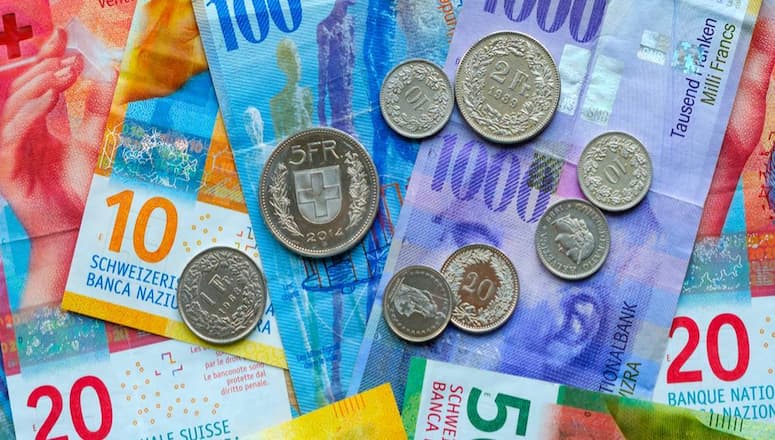
The Swiss National Bank, (SNB) has surprised the market and raised interest rates by 0.5% to combat inflation. The SNB was one of the last central banks holding firm in its dovish stance, however with growing inflation felt now was the time to intervene and raised rates from -0.75% interest to -0.25%. It was the first interest rate rise since 2007 and followed rate increases from the US Federal Reserve earlier this week.
Pressure had been building on the Swiss after recent data showed a near 14-year high rate of inflation. Similarly, the European Central Bank signalled it will kick off rate hiked in July. SNB Governor, Thomas Jordan flagged the potential for more interest rate hikes outlining that the currency was not as strong as it once was.
This leaves The Bank of Japan as the only developed central bank who not adjusted interest rates. In response to the announcement the USD tumbled 3.1% against the CHF as it saw it largest drop in almost 7 years. The EUR also dropped 1.8% against the CHF which saw it largest since January 2015.
The yields on Swiss 10 year bonds rose 18 basis points and Swiss stocks dropped by 3%. The USDCHF The EURUSD


The Dow Jones closed flat after another volatile day. The Nasdaq and the S&P 500 finished 2.04% and 0.74% lower respectively, as tech continued its sell-off and the Nasdaq confirmed its Bear market. The European markets performed a little better as optimism that the worst of Ukraine and Russian conflict may have passed.
The FTSE moved up 0.53% and the DAX 2.21%. As the conflict settles, renewed sentiment may return. Brent crude oil dipped again by 5.5% to USD 106.53 as it continues its pullback from its recent highs.
Iron Ore was also 6.2% lower to $144.90 a tonne from the pressure from China and could impact the Australian market. Gold has continued its pullback from its recent highs falling to $1949. Natural gas prices fell across the world with the prospect of another round of talks between Russia and Ukraine, along with wilder weather conditions.
Cryptocurrency looks set to operate under increased regulations. A last-minute attempt by European lawmakers to potentially create a soft ban on Bitcoin failed overnight. The key amendment that would have banned Proof-of-Work distributed ledger technology that is responsible for a considerable amount of carbon emissions.
The parliamentary committee will now seek a compromise solution that will address the sustainability of crypto asset mining without discriminating against specific technologies by proposing to include them in the EU Taxonomy for Sustainable Finance. This rule book seeks to classify what kind of investments can be deemed to match Environmental, Social, and Governance (ESG) criteria. Bitcoin has continued to hold its support level around $37,500 – 38,000 and the BTC/USD is up 2.40% at 9.50 pm GMT.
Ethereum continues to consolidate into a tight range with the ETH/USD going 1.75% lower. FOREX The AUD/USD struggled to hold above $0.73 and fell 1.40% to 0.7204%. The USD/EUR continues to consolidate as it reacts to the Ukraine and Russian conflict.
All eyes are still on the Federal Reserve which is expected to raise rates by 25 basis points later this week. The commentary associated with the rates will hopefully give some indication about how hawkish they are and their plans going forward.

US and European equity markets remained volatile as fighting between Russian and Ukraine forces continued and negotiation talks failed to result in any progress. Both parties however have committed to another round of discussions. The VIX, Wall Street’s volatility measure surged 12% to 30 indicating the increased fear investors are feeling from the ongoing situation.
The Dow Jones and the S&P 500 both closed down 0.5% and 0.25% respectively, the Nasdaq finished up 0.4% as tech and growth stocks outperformed. In Europe, the FTSE finished down 0.4% and the DAX 0.7%. Not surprisingly, with SWIFT bans and other banking sanctions levied against Russia, the financial sector was the poorest performer overnight in the USA.
Brent Crude oil has ticked back over to $101.10USD as a consequence of the conflict and is still expected to rise further. An OPEC meeting is scheduled for tomorrow however there is no expectation of a significant change. Gold hasn’t seen much change and is still hovering around $1,908USD.
The price has remained stable after bouncing from its recent highs. The RBA is meeting today at 2.30 pm to discuss interest rates and their outlook of the Australian economy, however, no change is expected as they deal with the current sentiment relating to the Russia and Ukraine crisis. Inflation is still the key concern, though a mild Wage Price Index figure last week has given the RBA some room to continue the mostly dovish tone seen at recent meetings.
Above expected retail figures came out yesterday increasing 1.8% and beating most expectations. The USA federal reserve is also indicating that it may be more cautious in tackling inflation through interest rates although they are still expected to increase rates in March with a 25 bp rate rise fully priced in by the market. On the back of the retail figures and improving risk sentiment, the AUD/USD was up 1.46% from the session lows and could be one to watch for the day.
The EUR/JPY was down 1.3% indicating a move out of the Euro to safe haven currencies on the back of the continuing conflict. In cryptos, Bitcoin was a standout pushing up 11.18% to be trading at 41,933.30USD as of 9.00 pm GMT. This jump in price and increase in volume is likely due to many users in Russia moving to attentive payment as the Ruble continues to dive.