Market news & insights
Stay ahead of the markets with expert insights, news, and technical analysis to guide your trading decisions.
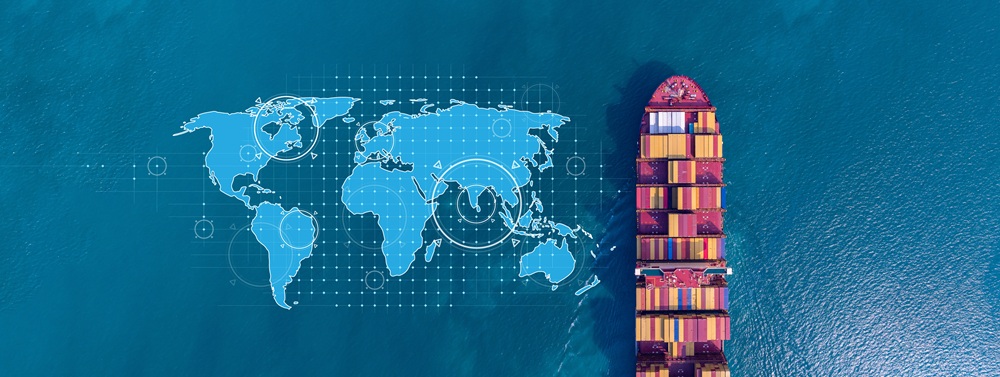
The 8 April ceasefire announcement and parallel discussions around a 45-day truce have not resolved the Strait of Hormuz disruption. They have, for now, capped the worst-case scenario, but tanker traffic remains at a fraction of normal levels and Iran's demand for transit fees signals a structural shift, not a temporary one.
What began as a regional conflict has become a global energy shock, and the question for markets is no longer whether Hormuz was disrupted, but how permanently the disruption changes the pricing floor for oil.
Key takeaways
- Around 20 million barrels per day (bpd) of oil and petroleum products normally pass through the Strait of Hormuz between Iran and Oman, equal to about one-fifth of global oil consumption and roughly 30% of global seaborne oil trade.
- This is a flow shock, not an inventory problem. Oil markets depend on continuous throughput, not static storage.
- If the disruption persists beyond a few weeks, Brent could shift from a short-term spike to a broader price shock, with stagflation risk.
- Tanker traffic through the strait fell from around 135 ships per day to fewer than 15 at the peak of disruption, a reduction of approximately 85%, with more than 150 vessels anchored, diverted, or delayed.
- A two-week ceasefire was announced on 8 April, with 45-day truce negotiations under way. Iran has separately signalled a demand for transit fees on vessels using the strait, which, if formalised, would represent a permanent geopolitical floor on energy costs.
- Markets have begun rotating away from growth and technology exposure toward energy and defence names, reflecting a view that elevated oil is becoming a structural cost rather than a temporary risk premium.
The world’s most critical oil chokepoint
The Strait of Hormuz handles roughly 20 million barrels per day of oil and petroleum products, equal to about 20% of global oil consumption and around 30% of global seaborne oil trade. With global oil demand near 104 million bpd and spare capacity limited, the market was already tightly balanced before the latest escalation.
The strait is also a critical corridor for liquefied natural gas. Around 290 million cubic metres of LNG transited the route each day on average in 2024, representing roughly 20% of global LNG trade, with Asian markets the main destination.
The International Energy Agency (IEA) has described Hormuz as the world’s most important oil transit chokepoint, noting that even partial interruptions may trigger outsized price moves. Brent crude has moved above US$100 a barrel, reflecting both physical tightness and a rising geopolitical risk premium.

Tankers idle as flows slow
Shipping and insurance data now point to strain in real time. More than 85 large crude carriers are reported to be stranded in the Persian Gulf, while more than 150 vessels have been anchored, diverted or delayed as operators reassess safety and insurance cover. That would leave an estimated 120 million to 150 million barrels of crude sitting idle at sea.
Those volumes represent only six to seven days of normal Hormuz throughput, or a little more than one day of global oil consumption.
Updated shipping and insurance data now confirm more than 150 vessels have been anchored, diverted, or delayed, up from the 85 initially reported. The 1.3 days of global consumption coverage from idle crude remains the binding constraint: this is a flow shock, not a storage problem, and the ceasefire has not yet translated into meaningfully restored throughput.
A market built on flow, not storage
Oil markets function on continuous movement. Refineries, petrochemical plants and global supply chains are calibrated to steady deliveries along predictable sea lanes. When flows through a chokepoint that carries roughly one-fifth of global oil consumption and around 30% of global seaborne oil trade are interrupted, the system can move from equilibrium to deficit within days.
Spare production capacity, largely concentrated within OPEC, is estimated at only 3 million to 5 million bpd. That falls well short of the volumes at risk if Hormuz flows are severely disrupted.
Inflation risks and macro spillovers
The inflationary impact of an oil shock typically arrives in waves. Higher fuel and energy prices may lift headline inflation quickly as petrol, diesel and power costs move higher.
Over time, higher energy costs may pass through freight, food, manufacturing and services. If the disruption persists, the combination of elevated inflation and slower growth could raise the risk of a stagflationary environment and leave central banks facing a difficult trade-off.
No easy offset, a system with little slack
What makes the current episode particularly acute is the lack of slack in the global system.
Global supply and demand near 103 million to 104 million bpd leave little spare cushion when a chokepoint handling nearly 20 million bpd, or about one-fifth of global oil consumption, is compromised. Estimated spare capacity of 3 million to 5 million bpd, mostly within OPEC, would cover only a fraction of the volumes at risk.
Alternative routes, including pipelines that bypass Hormuz and rerouted shipping, can only partly offset lost flows, and usually at higher cost and with longer lead times.
Bottom line
Until transit through the Strait of Hormuz is restored and seen as credibly secure, global oil flows are likely to remain impaired and risk premia elevated. For investors, policymakers and corporate decision-makers, the core question is whether oil can move where it needs to go, every day, without interruption.

The Perfect Storm Brewing in the Oil Market The oil and gas industry has been undergoing significant challenges due to the structural shift within the industry. A pandemic-induced economic downturn and an oil price war have now added another layer of uncertainty to the oil markets. Tensions between Saudi Arabia and Russia have disrupted the stability that the oil industry requires to be able to remain afloat during such difficult times.
Demand and Supply Shock The oil market is facing both a demand and supply shock, simultaneously. In other words, there is a flood of supply at a moment of diminishing demand. Demand: Different forms of lockdowns across the globe due to the pandemic means empty roads, grounded aircraft, plunging car sales and disrupted supply chains.
These industries are key consumers of oil. Supply: An oil price war between Saudi Arabia and Russia was the tip of the iceberg and triggered the flash crash in March. The oil kingdom raised output to full capacity to fight a price war with its rivals, destabilising the oil market at a critical time during the coronavirus pandemic.
Tensions among oil producers are not uncommon but crude oil prices experienced steep declines, due to weak fundamentals and geopolitical tensions. Multi-year Low The flash crash in March has nearly halved crude oil prices. During the month, trading was highly volatile - WTI and Brent Crude traded more than 45% lower to a multi-year low at $20.50 and $24.
Stimulus Packages Brought Some Stability The bold actions from central bankers and governments to implement new and massive monetary and fiscal packages to stem the downturn helped the oil market from a temporary bottom. As of writing, WTI and Brent Crude have stabilised and have consolidated around the $22 and $26 levels, respectively. USOUSD AND UKOUSD (Monthly Chart) Source: GO MT4 An Oil Storage Problem Global activities are slowing down on a massive scale, sapping demand while big producers like Saudi Arabia and Russia tugged in a price war are raising productions.
At this rate, giant oil producers are set to run out of storage capacities within a few weeks or months. The US and Saudi Arabia Negotiations The oil market had a breather this week. Risk sentiment has improved, and it was also reported that the US and Saudi Arabia are in discussions to end the price war and bring some stability to the oil markets.
Investors will rely on political intervention to halt the freefall. An oil storage problem, higher storage costs, faltering demand and a significant rise in production are creating a perfect storm for the oil market.

The G20 Summit The G20 Summit is an international forum for the governments and central bank governors from 19 countries and the European Union to discuss global economic challenges. Non-member countries can also be invited to attend the summit. The Group of Twenty nations attending the summit represents more than 80% of the global GDP, which is why it is one of the most important events for the financial markets.
In the light of mounting geopolitical risks, and rising threats of protectionism, these face-to-face communications about pressing global economic and financial issues will be of utmost significance. Japan will take on the G20 chair and the main themes for the summit will be as per the following: Global Economy Trade and Investment Innovation Environment and Energy Employment Women’s Empowerment Development Health President Trump-Xi Meeting Aside from the main event, many leaders also hold side meetings. This time, the attention will be on President Trump and Xi meeting.
Investors had a breather on the news that the meeting between the leaders of the world’s largest economies will actually take place. Best Scenario Both parties are facing mounting pressures to reach a deal. In the US, farmers are being hit the hardest from retaliatory tariffs from China, which are causing some political backlash for President Trump.
China, on the other side, is trying to sustain growth. While it is “unlikely” that both leaders will agree on deep structural differences at the summit, it remains a faint possibility. Worst Scenario It is hard to foretell how the one-to-one meeting will go and how President Trump will handle the trade talks.
It may highly depend on the impulses of the US President. The Probable Scenario Investors are expecting a similar “show” that took place in Buenos Aires – some kind of cease-fire and promises to initiate more negotiations. Investors are aware of the long road ahead for a trade deal.
Any signs of de-escalation of trade tensions will bring some momentary relief because as long as there is some sort of dialogue without tariff threats, it will be positive for markets. Other Important Issues Populism The populist parties generally come with disruptive policies which result in a spike in economic and financial volatility. Bloomberg reported that around 70% of the world’s most important economies are under the control of populist governments or non-democratic regimes.
While this forum is supposed to be a powerhouse for global trade and investment and the associated global economic challenges, the increasing number of populist leaders may make it difficult for leaders to find unity. Iran Tensions The tensions between the US and Iran are set to loom large. Allies and rivals of the US criticized the last-minute pullback on Iran strikes.
We note that President Trump did not lose time in telling other countries why should the US protect the shipping routes for other countries when the US has become by far the largest producer of energy. President Emmanuel Macron plans to discuss the current flare-up with President Trump as the EU is increasingly concerned over the risk of conflict. We expect the discussions around the Iran risks to gather some attention as well.
Hong-Kong Protests It is unlikely that the Hong-Kong protests will be discussed at the summit. Beijing could not have been clearer when it says it won’t allow the protests to be brought up at the G20 as no foreign force has the right to interfere in its domestic affairs. Stock markets The stock market is in a similar stage as it was back in 2018 ahead of the summit.
The announcement of the meeting between China and the US at the summit had buoyed up the stock markets at a time when major central banks turned dovish as well. On Monday, we saw the hopes of trade progress waned, and stock markets struggled to find a firm direction. We expect the shadow of the G20 meeting to remain on the stock markets.
Would stocks rally after the G20 summit as it did after the last summit back in December 2018? As of writing, the US Treasury Secretary, Steven Mnuchin comments raised hopes of trade progress: ‘We were about 90% of the way’ on China trade deal, and there’s a ‘path to complete this.’ However, President Trump’s comments were less optimistic, which temper the “90% complete” remarks. It is increasingly difficult to rely on the messages coming from the White House.
Earlier this week, we saw President Trump ramping pressure on Iran to later pullback the strikes on the country at the very last-minute which prompted remarks from both allies and rivals. The incoherence in the trade messages forced investors to navigate the markets cautiously. Stocks are finding “cautious” upside momentum while investors are also pouring money in metals.
Gold reached a high of $1,439 this week. Leading up to the G20 summit, it is hard to see how can a trade deal be negotiated in the next couple of days or at the summit, but investors expect a hold off on the next round of tariffs and a promise to return to the negotiable table. *Please click on the link for below for the list of the G20 members and the invited countries and international organizations that will be present in Japan. https://g20.org/en/summit/about/#participants

Wednesday was the bearer of bad news for Australia. Despite the buoyant employment report which briefly lifted its local currency, the Australian dollar plummeted on Westpac’s rate cut forecasts and the news of China’s Coal Ban. Simmering diplomatic tensions could be the trigger behind the ban.
The news that the Dalian port in China has blocked imports from Australia emerged on Wednesday. It was also reported: The port would cap the overall coal imports for 2019. Other major ports elsewhere in China have delayed clearing times.
The delayed cargoes would not be included in the 12 million tonnes under the 2019 quota. Dalian, Bayuquan, Panjin, Dandong and Beiliang are the five harbours overseen by Dalian customs which will not allow Australian coal to clear through customs. Imports from Russia and Indonesia will not be affected.
Beijing and Canberra’s clash back in 2017 over cybersecurity and China’s influence in Pacific Island nations were already showing signs of Australia’s deteriorating ties with China. However, tensions increased again last month when Australia withdrew the visa of a prominent Chinese businessman, just months after barring Huawei from supplying equipment to its 5G broadband network. At the moment, the comments from China are: The goals are to better safeguard the legal rights and interests of Chinese importers and to protect the environment.
Customs were inspecting and testing coal imports for safety and quality Beijing has been trying to restrict imports of coal more generally to support domestic prices. The coal ban put additional pressure on the Australian dollar which plummeted against major currencies. The AUDUSD pair lost its recent bullish momentum and dropped to 0.70 level.
AUDUSD (Hourly Chart) Source: GO MT4

The European Union Top Jobs The European Central Bank (“ECB”) President The European leaders nominated Christine Lagarde, a French lawyer and a politician serving as Managing Director and Chairwoman of the International Monetary Fund ("IMF") as the ECB President. The ECB is responsible for the monetary policy of the nineteen EU member countries. If elected, Christine Lagarde will be the first ECB president without any direct experience in setting central bank policy.
Being a lawyer and a politician rather than an economist, her nomination came as a surprise. However, her experience as the leader of the IMF and as a former French finance minister combined with her comments and opinions on central-banking issues over the years might have reassured governments of EU countries that her nomination will keep the euro-zone monetary policy steady. Christine Lagarde will probably face several challenges: Boosting Growth in the Eurozone Keep the eurozone together despite the rise of populist parties Display independence at a time where central banks’ independence is being threatened amid populist governments.
European Markets The European share market rose on the news of the nomination. Christine Lagarde reinforced the expectations that she will follow the footsteps of Mario Draghi, which is why the prospects of more stimulus package to support the ailing eurozone economy sent European shares higher. World Equity Indices (% Change) Source: Bloomberg Terminal The Shared Currency The Euro struggled to find the upside direction following the recent dovish ECB comments.
The nomination meant that at least in the short-to-mid-term, Christine Lagarde would continue with the easing policies which will oscillate sentiment for the shared currency. The EURUSD pair moved from a high of 1.1371 to a low of 1.1269 this week. EURUSD (1 Month Chart) Source: Bloomberg Terminal Other EU Top Jobs European Commission President: Ursula Von Der Leyen is a German politician servicing as Minister of Defence since 2013.
She will be the 13 th commission president if elected. She will also be the first woman in the post. European Council President: Charles Michel is a lawyer and the interim Belgium Prime Minister who was nominated to replace Donald Tusk.
He resigned over his support for the UN immigration pact but stayed in the caretaker role until the next elections. The convention is that the role is filled by former heads of state and government. European Parliament President: David Maria Sassoli is an Italian politician and a journalist and as President will act as the speaker of the house, chairing debates in the plenary and ensuring parliamentary procedures are followed.
High Representative of the Union for foreign affairs and security policy: Josep Borrell has been Spanish foreign minister under socialist Pedro Sanchez. He will be the chief coordinator and representative of the Common Foreign and Security Policy within the European Union.

A “Dovish” or “Hawkish” Rate Cut The Federal Reserve (Fed) is poised for its first-rate cut in a decade-long of economic expansion. Trade protectionism and a slowing world economy are the two primary factors behind the global push towards easing policies. As the world’s central banks are in a race to cut interest rate to stimulate their economies, the focus will be on the Fed this week which is likely going to engage in its first-rate reversal since the financial crisis.
Source: Bloomberg Terminal It should be highlighted that the US interest rate is still in the low levels despite years of economic growth. It is around half levels it was before the financial crisis. If the Fed starts a rate cut cycle, the central bank will have limited room to lift its economy, in case of future downturns.
American Economy The US economy remains strong, and a look at the recent economic figures may not by its own justify an interest rate cut. However, the Fed is mostly concerned about the slowing world growth, the effects of the ongoing trade war and subdued inflation. The labour market has remained the bright spot of the US economy.
Total nonfarm payroll employment increased by 224k in June and it is forecasted to come around 170k for July. In the latest report, the most prominent jobs gains were in the professional and business services, health care, transportation and warehousing. The unemployment rate in the US is near a 50-year low.
Wages have also risen in the past few days. Growth in consumer spending has also bounced back in the second quarter. Despite a low unemployment and strong overall growth, inflation pressure remains muted which is the source of worry for the central bank.
Gross Domestic Product increased at an annual rate of 3.1% in June. Last Friday, the annual preliminary GDP figure was significantly lower at 2.1% from 3.1% in the first quarter. However, it came above expectations as markets forecasted a drop to 1.8%.
Business Investment growth and the manufacturing sector have slowed notably, and the weak growth is mostly due to trade tensions and the rising threats of trade protectionism. The housing sector is also showing some signs of distress. All in all, the Fed does not see the economy in distress and will likely cut interest rate as a preventative measure.
A 25 or 50 Basis Points ? Market participants are pricing nearly 80% probability of a 25bps and above 20% probability of a 50bps rate cut. There were mixed messages on the dovishness of FOMC members which did not fully convince the markets that the Fed will engage in an aggressive rate cut cycle in the coming months.
If the Fed slashes interest rate this week, it will likely be a quarter-point precautionary cut. If the Fed is cutting interest rate for preemptive reasons in the face of a slowing economy and trade tensions, a 50 basis point might signal that the US economy is in distress which does not seem to be the aim of the Fed. Also, a 50 bps might signal that the Fed made a policy mistake in December in hiking rate.
The rate cut should have pleased President Trump, but President Trump renews attack on the Fed and is already telling the Federal Reserve that the quarter-point cut will not be enough. Stock Market To some extent, the rate cut has already been priced-in at least one rate cut as we have seen some record highs in the stock markets based on the return to the lower rate world. S&P500 reached a record high at 3,027.98 points Source: Bloomberg Terminal Nasdaq Composite reached an all-time high at 8,293.33.
Source: Bloomberg Terminal The ASX200 briefly rose to an all-time high at 6,875 on Tuesday before retreating to high levels seen in 2007. The Australian share market has returned to levels seen before the global financial crisis. Source: Bloomberg Terminal The stock markets are being buoyed mostly by monetary easing policies.
However, the fears of a fragile global trade system and volatile political climate are forcing investors to stay cautious. Yesterday’s tweets from the US President reiterates that actions in the global stock markets are a Tweet Away ! Many dubbed this week as one of the “busiest weeks of the year” because trade negotiations have resumed this week, and the markets are waiting to see if the Fed will lead the global push to lower rates.

Tesla Second Quarter 2019 Update Tesla, the electric car maker, reported its second-quarter earnings on Wednesday in late US trading hours. Despite record production and deliveries, Tesla missed revenue estimates. The company reported a net loss of $408 million.
Its share price fell by more than 20% since the beginning of the year after reaching a high of $380. Source: Bloomberg Terminal After the release of the second-quarter results, we saw a drop of 12% in the after-trading hours. Despite the wider-than-expected loss, the company reported a recovery compared to the first quarter: Net loss declined significantly compared to Q1.
The company ended the quarter with the highest level of cash and cash equivalents, which is $5.0bn. Model 3 has also received the highest ever ratings from stringent testing protocols. Model 3 deliveries reached an all-time record of 77,634 and were the best selling premium vehicle in the US.
Gigafactory Shanghai is taking place, and in quarter 2, they started moving machinery into the facility. The second generation of Model 3 which is a more cost-effective version, could be a long-term opportunity for Tesla. Preparations for Model Y started in Fremont in the second quarter.
Even though the earnings missed expectations, the company has improved, generated free cash flow and is sitting on more capital. “This quarter, we are simplifying our approach to guidance. We are most focused on expanding our manufacturing footprint in new regions, launching new products and continuing to improve the customer experience, while generating and using cash sustainably.” Click here for more information on trading Share CFDs, also, see our Index Trading page for information in trading Indicies.