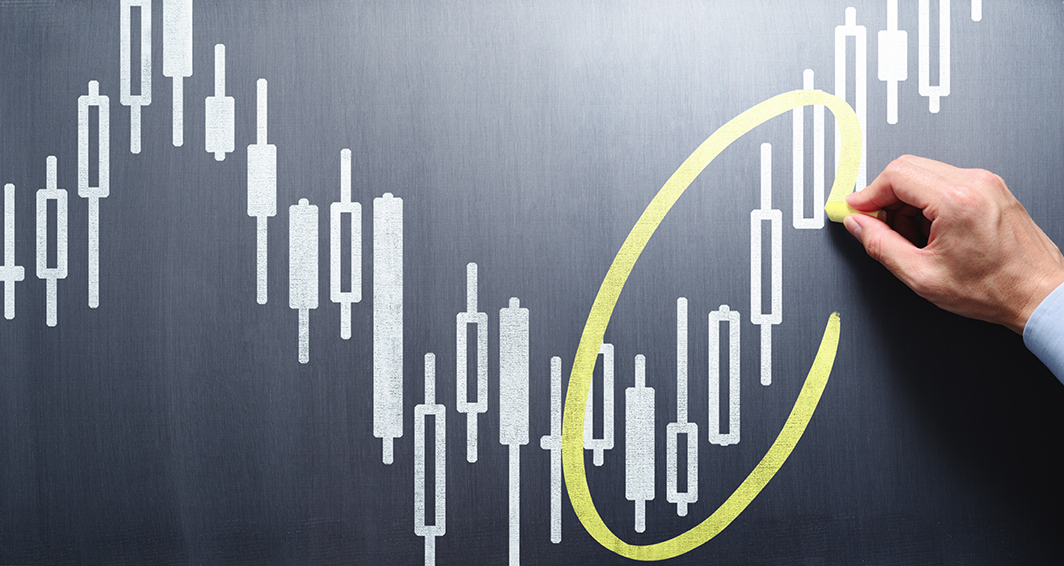
IntroductionSo, what is a Trading Edge?There is much written and many videos on social media that are out there singing the praises of developing a trading edge, and why it is a must if you want trading success, BUY in terms of practical “how do a get one” advice, most that is written seems to fall short of something substantive that you as a trader can work with.When you read articles discussing the concept of an "edge," they're talking about having some kind of advantage over other market participants; after all, there are always winners and losers in every trade.However, many traders are often mistakenly informed that edge relates solely to a system, but the reality is that it encompasses so much more than that. While systems certainly matter, your edge also includes how you think, act, and execute under pressure when YOUR real money is on the line.Your advantage may stem from speed, knowledge, technology, or experience, or better still a combination of all of these, the key point here is that you're not trading like so many others without the appropriate things in place and the consistency that is required when trading any asset class, on any timeframe to achieve on-going positive outcomes.Here's something worth considering before we have a deeper dive into your SEVEN secrets. Simply having a plan, trading it consistently, and evaluating it regularly gives you an advantage over more than 75% of traders out there. Most market participants lack these basic but critical elements of good trading practice. Just doing these fundamental things already puts you ahead of most, but refining further will truly set you apart from the crowd.At its core, a trading edge can be defined as a consistent, testable advantage that improves your odds over time. It's not about achieving perfection but developing repeatability in results and establishing statistically positive, i.e. evidence-based action that will work in your favour.So, despite what you may have seen or heard previously, a complete edge combines idea generation, timing, risk management, and execution; it's not just about focusing on high probability entries. It's a whole process, not a single isolated rule or signal.Just to give an example, a trading system that wins only 48% of the time may not seem that impressive on the surface to many, but if it consistently delivers a 2.5:1 reward-to-risk ratio can still achieve long-term profitability. The key issue in this example is the combination of numbers that creates the result, AND the word consistently.That IS an edge.In this article, we will explore SIX things that are not so regularly talked about in combination, this is the difference, and an approach that can move you towards creating such an edge.As we move through each of these, use this as your trading checklist for potentially taking action on the things that you need to take to the next level, and so take affirmative steps to sharpen your edge.Secret #1: An Edge Is Something You Build, Not Something You FindAs traders, we are always looking for the “holy grail”, that system or indicator that means we will be a success. As previously discussed, that is NOT what constitutes an edge. We need to let go of the idea that there's something magical waiting to be discovered and get to work on the things we need to.Your edge comes from testing, refining, and aligning strategies with your personal strengths and market access. The best edges are customised to your specific goals and circumstances, not simply downloaded from someone else's playbook, you may have heard on a webinar, conference or TikTok post.Your strategies should be a natural fit with your daily routine, available tools, trading purposes, and emotional style. If your approach you choose clashes with your lifestyle, mindset or experience, your execution and results will invariably suffer when you are in the heat of the market action and have decisions to make. For example, if you are a trader working a full-time job, it may be wise to either build a 4-hour chart trend model that matches your limited availability, consider some form of automation or restrict yourself to small windows of opportunity on very short timeframes for times that you can ringfence.We often come across systems that look attractive on the surface. When you copy others, you might get their trades, but you won't have their conviction (belief in your trading system is critical in terms of execution discipline) or context, e.g., their access to markets, and so you will find that you won't match their published results.Without the required deeper understanding of why a strategy works, you'll struggle to stick with it through the inevitable trades that don’t go your way, and drawdowns that WILL always test your resolve to keep with any system.So, the key takeaway is that you must make the investment in time, in yourself as a trader and do the work as you move towards building your edge. There are no shortcuts!Secret #2: Probability of Your Edge Is Only as Good as Your DataData that you can use in your decision-making for system development and refinement can come from accessing historical test data, but more importantly, YOUR results in live market trading (whether from journaling or automated tracking).The strength of this in developing an edge depends directly on two key things.Firstly, on data being clean, i.e. the key numbers relating to what happened, and sufficient detail with a sufficient critical mass of results that allows you to see beyond the profit/loss of a handful of trades. The meticulous recording to a high quality of this evidence makes it a priority if you are to create something meaningful on which to base decisions.Poor data creates false confidence in any system developed on such with fragile strategy and forces you to rely on guesswork to fill in any gaps or because you simply haven’t got enough numbers on which to make a strategic decision.Think about this for a moment, if you have 60 trades, across three strategies, and then of those 20 trades per strategy, 10 are FX and 10 are stock CFDS, and of those 10, 5 are long and 5 are short trades, to make substantive decisions on 5 trades hardly seems like enough evidence on which to base something so important. To think that this is ok, go full tilt into the market, your confidence based on a sample so small, there is a high chance your strategy will likely break under real market pressure.Always ensure the market conditions in your testing environment reasonably match your live trading environment.Even when using backtests to try to get more evidence, which on the surface seems worthwhile, it is not without pitfalls unless due care is taken. For example, back tests performed exclusively during trending market periods won't adequately prepare your system for range-bound price action.Secret #3: Simplicity May Beat Complexity Under PressureSimple systems prove easier to create, allow you to find errors when they are occurring, and of course follow in the heat of inevitably volatile market moments. The more clarity you have about exactly what to do and when, significantly reduces hesitation and increases follow-through when decisive trading action may matter most.A complex system, as a contrast, increases your “thinking load”, slows your reaction time when speed of decision may count, and if you have 14 criteria to tick before action, may lead to the “that’s close enough” temptation for trade actions. Adding more indicators without evidence rarely does anything but make your charts look more impressive and typically leads to more doubt and “short-cutting” rather than better results.As a formula, more rules = more system and trader fragility, which is potentially a good rule of thumb to have in place.Consider how some automation, for example, the use of exit-only EAS, can help simplify the execution of otherwise complex situations and achieve consistency.It is not inconceivable that a trader using a simple price-only breakout strategy consistently outperforms another with a 12-indicator system by executing cleanly during volatile news events when others freeze with so-called “analysis paralysis”.Secret #4: Edge Disappears Without Execution DisciplineYou could have the most brilliant, robustly tested, evidence-based strategy on the planet and yet the reality of why many traders fail to reach their potential is at the point of action. Plans are often skipped, rushed, or mismanaged, and the harsh reality is that your system of systems that you have invested a considerable amount of effort and time to develop may crumble without precise, consistent and disciplined execution.Emotional interference in decision making is something we discuss regularly at education sessions, whether from fear of loss, greed, revenge trading or the fear of missing out on potential profit, can kill performance, even when presented with textbook setups and times when price action is telling you it is time to get out. Even momentary lapses in judgment and actions originating from cognitive biases can undo hours or days of careful preparation or remove the profit from several previous trades.Recency bias can creep in quickly, even after a couple of losses, where hesitation in action in an attempt to avoid the same again costs you the opportunity that the “plan-following” trade can give you.What brings your edge to life is consistency in action, not just having a good plan. The discipline of follow-through can transform a considered and carefully developed system into actual profits, and quite simply, to fail to do this is unlikely to deliver the results you seek.Secret #5: Evolve or Expire — Markets Consistently Change, So Should YouMarket circumstances, fundamental drivers and shifts in these create different conditions not only in price action and direction, but volatility and effects in sentiment can be changed for the long term, not just the next hour. If markets evolve to a new way of acting, it is logical that your systems must, at a minimum, be able to accommodate this. This is part of your potential edge that few traders master (or even look at!), but your systems must evolve accordingly when markets change. What works brilliantly in the last few months may not necessarily work forever—diligently monitor changes and adjust your approach.Static systems will potentially degrade in outcomes without regular review and adaptation, or at best have significant periods of underperformance. Perhaps think of your strategy as requiring a review and maintenance plan like any sophisticated machine.In practical terms, system evolution means identifying when strategies do well and not so well, including evaluation of performance in different market conditions. With this information, you can make informed changes based on evidence, not random tinkering or looking for the next new indicator to add.Remember, you always have the ultimate sanction of switching a strategy off completely during specific market conditions that may mean risk is increased.Secret #6: Effective Risk Management Is an Edge MultiplierIt is difficult when talking about a multi-factor approach to hone down on the most influential factor, but this may be it.Your position sizing approach in not only single but multiple trades determines whether your edge, even when followed to the letter, can scale profitably or self-destruct dramatically. The same system can either give you ongoing positive outcomes or destroy an account based depending on how you size your positions.Risk too much, and you'll potentially blow your account up; risk too little, and you'll generate gains that make little difference to the choice you can make with any trading success.Your sizing should align with both your system's statistical properties as we discussed before and your psychological comfort zone, as the latter is equally something that will develop over time with sufficient belief in your system – a key factor as we have discussed at length in other articles, in the ability to be disciplined in trade execution.Only scale your position sizing after accumulating a critical mass of trades and establishing a clear set of rules based on a record of positive trading metrics for doing so. Premature scaling should only be done when you have proved not only that your system looks as though it performed favourably but also that you have the consistency to move to the next level.Finally on this point, and perhaps the topic of a future article in more detail, concerning the previous point relating to market conditions, once you have developed a way of identifying market conditions and fine tune strategies accordingly, there is of course the possibility of using this information to position size more effectively, To give a simple example something like market condition A =1% risk, market condition B = 2% risk.Summary and Your Actions...As stated earlier, a good approach to this article is to use it as a checklist. Invest some time to review the material covered here and make a judgment of where you are right now with some of the things covered.For some of you, there may be a few things to work on; for others, it may be just some checking and fine-tuning. Either way, identify at least one specific area to work on immediately. One insight that you implement properly is worth far more in terms of the difference it can make than a few insights you just acknowledge but forget to take action on.Ask yourself honestly: "On a scale of 1-10, how do I perform on each of the above in the pursuit of my current trading edge?Or perhaps where would I like it to be six months from now?"Build yourself a roadmap to achieve these, and of course, commit to and follow through in making it happen.
The 6 Secrets of Developing a Trading Edge – What it is and how you get one!

Related Articles

If you've spent any time looking at a trading terminal, you've seen it. A news headline breaks, a chart line snaps, and suddenly everyone is rushing for the same exit or the same entrance. It looks like chaos. In practice, it is often a chain of mechanical responses.
This matters for a couple of reasons. Many readers assume the story is the trade. It is not. The story, whether it is an interest rate decision, a supply shock or an earnings miss, is the fuel and the playbook is the engine.
Below are seven core strategies often used in contracts for difference (CFDs) trading. With CFDs, you are not buying the underlying asset. You are speculating on the change in value. That means a trader can take a long position if the price rises, or a short position if it falls.
Seven strategies to understand first
1. Trend following (the establishment play)
Trend following works on the idea that a market already in motion can remain in motion until it meets a clear structural obstacle. Some market participants view it as a chart-based approach because it focuses on the prevailing direction rather than trying to call an exact turning point.
The rationale: The aim is to identify a clear directional bias, such as higher highs and higher lows, and follow that momentum rather than position against it.
What traders look for: Exponential moving averages (EMAs), such as the 50-day or 200-day EMA, are commonly used to interpret trend strength, though indicators can produce false signals and are not reliable on their own.

How it works: The 50-period EMA can act as a dynamic support level that rises as price rises. In an uptrend, some traders watch for the market to make a new higher high (HH), then pull back towards the EMA before moving higher again. Each higher low (HL) may suggest buyers are still in control.
When price touches or comes close to the 50-period EMA during that pullback, some traders treat that area as a potential decision zone rather than assuming the trend will resume automatically.
What to watch: The sequence of HHs and HLs is part of the structural evidence of a trend. If that sequence breaks, for example if price falls below the previous HL, the trend may be weakening and the setup may no longer hold.
2. Range trading (the ping-pong play)
Markets can spend long stretches moving sideways. That creates a range, where buyers and sellers are in temporary balance. Range trading is built around this behaviour, focusing on moves near the bottom and top of an established range.
The rationale: Price moves between a floor, known as support, and a ceiling, known as resistance. Moves near those boundaries can help define the width of the range.
What traders look for: Some traders use oscillators such as the Relative Strength Index (RSI) to help judge whether the asset looks overbought or oversold near each boundary.

How it works: The support level is a price zone where buying interest has historically been strong enough to stop the market from falling further. The resistance level is where selling pressure has historically prevented further gains.
When price approaches support, some traders look for signs of a potential rebound. When it approaches resistance, they look for signs that momentum may be fading. RSI readings below 35 can suggest the market is oversold near support, while readings above 65 can suggest it is overbought near resistance.
What to watch: The main risk in range trading is a breakout, when price pushes decisively through either level with strong momentum. This may signal the start of a new trend and using a stop-loss just outside the range on each trade may help manage that risk.
3. Breakouts (the coiled spring play)
Eventually, every range comes under pressure. A breakout happens when the balance shifts and price pushes through support or resistance. Markets alternate between periods of low volatility, where price moves sideways in a tight range, and high-volatility bursts where price can make a larger directional move.
The rationale: Quiet consolidation can sometimes be followed by a broader expansion in volatility. The tighter the compression, the more energy may be stored for the next move.
What traders look for: Bollinger Bands are often used to interpret changes in volatility. When the bands tighten, a squeeze is forming. Some market participants view a move outside the bands as a sign that conditions may be changing.

How it works: Bollinger Bands consist of a middle line, the 20-period moving average, and 2 outer bands that expand or contract based on recent price volatility. When the bands narrow and come close together, the squeeze, the market has been unusually calm.
This is often described as a coiled spring. Energy may be building, and a sharper move can follow. Some traders treat the first move through an outer band as an early clue on direction, rather than a definitive signal on its own.
What to watch: Not every squeeze leads to a powerful breakout. A false breakout occurs when price briefly moves outside a band, then quickly reverses back inside. Waiting for the candle to close outside the band, rather than entering mid-candle, can reduce the risk of being caught in a false move.
4. News trading (the deviation play)
This is event-driven trading. The focus is on the gap between what the market expected and what the data or headline actually delivered. Economic data releases, such as inflation figures (CPI), employment reports and central bank decisions, can cause sharp, fast moves in financial markets.
The rationale: High-impact releases, such as inflation data or central bank decisions, can force a fast repricing of assets. The bigger the surprise relative to expectations, the larger the move may be.
What traders look for: Traders often use an economic calendar to track timing. Some focus on how the market behaves after the initial reaction, rather than treating the first move as definitive.

How it works: Before the news, price may move in a calm, tight range as traders wait. When the data is released, if the actual reading differs significantly from the consensus expectation, repricing can happen fast.
Gold, for example, may spike sharply on a CPI reading that comes in above expectations. However, the candle can also print a very long upper wick, meaning price reached the spike high but was then rejected strongly. Sellers may step in quickly, and price may retrace. This spike-and-retrace pattern is one of the more recognisable setups in news trading.
What to watch: The direction and size of the initial spike do not always tell the full story. Wick length can offer an important clue. A long wick may suggest the initial move was rejected, while shorter wicks after a data release may indicate a more sustained directional move.
5. Mean reversion (the rubber-band play)
Prices can sometimes move too far, too fast. Mean reversion is built on the idea that an overextended move may drift back towards its historical average, like a rubber band pulled too tight, then snapping back.
The rationale: This is a contrarian approach. It looks for stretches of optimism or pessimism that may not be sustainable, and positions for a return to equilibrium.
What traders look for: A common example is price moving well away from a 20-day moving average (MA) while RSI also reaches an extreme reading. In that setup, traders watch for a move back towards the mean rather than a continuation away from it.

How it works: The 20-period MA represents the market's recent average price. When price moves into an extreme zone, such as more than 3 standard deviations above or below that average, it has moved a long way from its recent trend.
An RSI above 70 can suggest the market is stretched to the upside, while below 30 can suggest the same to the downside. Some mean reversion traders use these combined signals as a sign that a pullback towards the 20-period MA may be possible, rather than assuming the move will continue to extend.
What to watch: Mean reversion strategies can carry significant risk in strongly trending markets. A market can remain extended for longer than expected, and a position entered against the short-term trend can generate large drawdowns. Position sizing and clear stop-losses are critical.
6. Psychological levels (the big figure play)
Markets are driven by people, and people tend to focus on round numbers. US$100, US$2,000 or parity at 1.000 on a currency pair can act as magnets. In financial markets, certain price levels can attract a disproportionate amount of buying and selling activity, not because of technical analysis alone, but because of human psychology.
The rationale: Large orders, stop-losses and take-profit levels can cluster around these big figures, which may reinforce support or resistance. This self-reinforcing behaviour is one reason these rejections can become meaningful for traders.
What traders look for: Traders often watch how price behaves as it approaches a round number. The market may hesitate, reject the level or break through it with momentum. Multiple wick rejections at the same level may carry more weight than a single one.

How it works: When price approaches a round number from below, some traders watch for long upper wicks, the thin vertical line above the candle body. A long upper wick means price reached that level, but sellers stepped in aggressively and pushed it back down before the candle closed.
One wick rejection may be notable. Three in a cluster may be more significant. Some traders use this accumulated rejection as part of the case for a short (sell) setup at that level.
What to watch: Psychological levels can also act as magnets in the opposite direction. If price breaks through with conviction, the level may then act as support. A decisive close above the level, rather than just a wick break, can be an early sign that the rejection setup is no longer holding.
7. Sector rotation (the economic season play)
This is a macro strategy. As the economic backdrop changes, capital may move from higher-growth sectors into more defensive ones, and back again. Not all parts of the sharemarket move in the same direction at the same time.
The rationale: In a slowing economy, discretionary spending may weaken while demand for essential services can remain more stable. Investors may rotate capital between sectors accordingly.
What traders look for: With CFDs, some traders express this view through relative strength, taking exposure to a stronger sector while reducing or offsetting exposure to a weaker one.

How it works: During a growth phase, when the economy is expanding, investors tend to prefer growth-oriented sectors like technology. As the economic environment shifts, perhaps due to rising interest rates, slowing earnings or increasing recession risk, a rotation point may emerge.
In the slowdown phase, the pattern can reverse. Technology may weaken while utilities may strengthen, as investors move capital into defensive, income-generating sectors. Early signals can include relative underperformance in growth sectors combined with unusual strength in defensives.
What to watch: Sector rotation is not usually an overnight event. It typically unfolds over weeks to months. Tracking the ratio between two sectors, often shown in a relative strength chart, can make this shift visible before it becomes obvious in absolute price terms.

Why risk management is the engine of survival
The headline move is one thing. The market implication for your account is another. If you do not manage the mechanics, the strategy does not matter.
Because CFDs are traded on margin, a small market move may have an outsized impact on the account. If leverage is too high, even a minor wobble may trigger a margin call or automatic position closure, depending on the provider's terms. This is not a theoretical risk. It is a common reason new traders lose more than they expected on a trade that was directionally correct.
The market does not always move in a straight line. Sometimes, price gaps from one level to another, especially after a weekend or major news event and in those conditions, a stop-loss may not be filled at the exact requested price. That is known as slippage. It is one reason large positions may carry additional risk into major announcements.
Bottom line
The vehicle is powerful, but the playbook is what helps keep you on the road.
The obvious trade is often already priced in. What matters more is understanding which market condition is in front of you. Is it trending, ranging, breaking out or simply reacting to a headline?
Readers assessing leveraged products often focus on position sizing, risk limits and product disclosure before deciding whether the product is appropriate for them. The headlines will keep changing. The maths of risk management does not.
Ready to trade beyond the majors?
Open an account · Log in
Disclaimer: This article is general information only and is intended for educational purposes. It explains common trading concepts and market behaviours and does not constitute financial product advice, a recommendation, or a trading signal. Any examples are illustrative only and do not take into account your objectives, financial situation or needs. CFDs are complex, leveraged products that carry a high level of risk. Before acting, consider the PDS and TMD and whether trading CFDs is appropriate for you. Seek independent advice if needed. Past performance is not a reliable indicator of future results.

So, here’s the thing...
If you have been following the tech story for the last decade, you have been trained to look at a very specific, very small patch of real estate in Northern California. But as we sit here in early 2026, the "connect-the-dots" moment for investors is this: the AI trade has stopped being about shiny software demos in Palo Alto and has started being about the physical industrialisation of compute.
Want to know more? Read our 2026 AI playbook
What changed, and why it matters
We have entered the "Year of Proof". The world’s largest companies, the hyperscalers, are projected to spend a staggering US$650 billion on capital expenditures this year. But here’s the part most people miss: that money is not staying in Silicon Valley. It’s flowing to the "picks and shovels" players in Idaho, Washington, Colorado and even overseas.
If you want to understand where the actual return on investment (ROI) may be landing this earnings season, you have to look outside the 650 area code. The shift from AI hype to AI industrialisation is changing the map.
Five companies shaping the next phase of AI
Micron Technology (MU), Boise, Idaho
Micron is the "memory backbone" of the current cycle. While everyone was watching the chip designers, many overlooked the fact that AI chips are far less useful without high-bandwidth memory (HBM). Micron is currently viewed by some analysts as a strong buy because its capacity is reportedly sold out through the end of 2026. Analysts are also eyeing a 457% jump in earnings per share (EPS) as the memory cycle reaches what some describe as a robust peak.
Microsoft (MSFT), Redmond, Washington
Microsoft is the enterprise backbone of this transition. It has moved beyond simple chatbots and is now building what analysts call "Intelligence Factories". While the stock has faced pressure recently over capacity constraints, underlying demand for Azure AI is reportedly still running ahead of capacity. The broader bull case is that Microsoft is moving into "Agentic AI", systems that do not just talk to users but may also execute multi-step business workflows.
Which Asian companies are betting big on artificial intelligence?
Amazon (AMZN), Seattle, Washington
Amazon is playing a long-term game of vertical integration. To reduce its reliance on expensive third-party hardware, it’s building its own AI chips in-house. Amazon Web Services (AWS) remains the primary driver of profitability, and the company is using its retail data to train specialised models that many Silicon Valley start-ups may struggle to replicate.
Palantir Technologies (PLTR), Denver, Colorado
If Micron provides the memory and Microsoft the platform, Palantir provides the "operating system" for the modern AI factory. The company has posted strong momentum, with US commercial sales recently growing 93% year over year. It’s often framed as a bridge between raw data and corporate profitability, which remains a key focus for investors in 2026.
Accenture (ACN), Dublin, Ireland
You cannot just "plug in" AI. Businesses often need to redesign processes around it, and that’s where Accenture comes in.
The company is viewed as an implementation bridge, with one analyst arguing that "GenAI needs Accenture" to move from pilot programs to production though the cautionary angle is that the AI story has not fully excited investors here yet because consulting revenue can take longer to show up than chip sales.
What could happen next?
The chart maps the three time horizons likely to shape the next phase of the AI industrialisation trade.
In the near term, markets are still reacting to chipmaker earnings, guidance, and any signs of capacity strain. Over the next month, attention shifts to the real-world inputs behind AI growth, especially power, financing, and infrastructure. By the 60-day window, the key question is whether AI spending is broadening into a wider market re-rating or running ahead of near-term returns.
Across all three periods, the focus is the same: proof. Investors are looking for signs that AI capital expenditure is translating into real demand for energy, land, and industrial capacity. That is why updates from companies tied to power and data centre buildout matter more than ever.
The psychological trap
The emotional trap many traders fall into right now is recency bias. You have seen NVIDIA and the "Magnificent 7" win for so long that it feels like they are the only way to play this. But the "obvious" trade is often the one that has already been priced in. Before acting, ask yourself: "Am I buying this stock because I understand its role in the physical AI supply chain, or because I’m afraid of missing the next leg of a rally that started two years ago?"
Ready to trade beyond the majors?
Open an account · Log in
Disclaimer: This content is general information only and should not be relied on as personal financial advice or a recommendation to buy, sell, or hold any financial product. References to companies or themes, including AI-related stocks, are illustrative only. Share and derivative markets can move sharply, and concentrated sectors such as AI and technology may experience elevated volatility, valuation risk, and liquidity risk. If you trade derivatives such as CFDs, leverage can magnify both gains and losses. Past performance is not a reliable indicator of future performance.
Recent Articles

When the Trump administration pushed global tariffs to 15% in late February, geopolitical risk in the Middle East flared again, and Kevin Warsh's nomination to chair the Federal Reserve sent a hawkish jolt through bond markets, gold did the thing gold is expected to do in periods of stress. It went up.
Bitcoin did something different. It tracked the Nasdaq. From its October 2025 peak above US$126,000, it fell nearly 50% to the high US$60,000s by early March. The divergence is the story. Gold acted more like a refuge. Bitcoin acted more like a high-beta tech stock with extra leverage strapped on.
For a CFD trader, meaning anyone trading the price move with borrowed exposure rather than owning the underlying, that distinction is not academic. It tells you what you are actually trading when you take a position in either market.
What drove the move
Gold is being lifted by three currents at once: central bank stockpiling, investor demand as a hedge against currency debasement, and reactive inflows on tariff and geopolitical headlines.
Bitcoin's drivers are noisier especially as it still benefits from institutional adoption, spot exchange-traded funds (ETFs) and a long-running narrative about being "digital gold". But its short-term price is increasingly set by leverage. Algorithmic risk desks now bucket Bitcoin alongside tech equities, so when the VIX, Wall Street's fear gauge, spikes, those models may cut Bitcoin exposure automatically. That is mechanical, not philosophical.
Why the market cares
That is why two assets both routinely labelled "safe havens" can trade in opposite directions on the same day.
What CFD traders can watch
The catch with gold is that the run already looks stretched. The roughly 14% drop across a couple of January sessions was a reminder that crowded trades cut both ways, especially when leveraged institutions need to raise cash and sell what is liquid. Bitcoin can move several percent in an hour for reasons that have nothing to do with the macro story in the morning's news. With CFD leverage, that volatility is amplified in both directions.
What could go wrong
The bottom line
Gold and Bitcoin are not the same trade in different clothes. Gold has behaved more like an old-school crisis hedge in 2026. Bitcoin has behaved more like a leveraged growth asset that performs best when central banks are pumping liquidity into the system. Both can be useful to track via CFDs. Neither is a guaranteed shelter. Knowing which one you are actually trading, and why, is the difference between hedging risk and accidentally doubling up on it.

Markets enter May with the federal funds target range at 3.50% to 3.75%, the Fed having concluded its 28-29 April meeting, and the next decision not due until 16-17 June. Brent crude is trading near US$108 per barrel, with the IEA describing the ongoing Iran conflict as the largest energy supply shock on record as the Strait of Hormuz remains effectively closed.
The macro tension this month is straightforward but uncomfortable: an oil-driven inflation impulse landing into a labour market that surprised to the upside in March, while Q1 growth came in soft.
The Federal Reserve has revised its 2026 PCE inflation projection to 2.7% and continues to signal one cut this year, though the timing remains contested. With no FOMC scheduled in May, every high-impact release may carry more weight than usual into the June meeting.
Growth: business activity and demand
The growth picture entering May is mixed. The Q1 GDP advance estimate landed on 30 April, while softer retail sales and inventory data have made the demand picture harder to read.
ISM manufacturing has been a quieter source of optimism, with recent prints holding in expansionary territory. Energy costs and tariff effects are now the variables most likely to shape the next move in business activity.
Labour: payrolls and employment data
The April Employment Situation is one of the most concentrated risk events of the month. March payrolls came in stronger than expected, while earlier data revisions left the trend less clear. April will help show whether the labour market is genuinely re-accelerating or simply absorbing seasonal noise.
Inflation: CPI, PPI and PCE
April inflation lands as the most market-relevant data block of the month. The March consumer price index (CPI) rose 3.3% over the prior 12 months, with energy up 10.9% on the month and gasoline up 21.2%, accounting for almost three quarters of the headline increase. With Brent holding near US$105 to US$108 through the latter half of April, a further passthrough into the April CPI energy component looks plausible.
Core CPI and core personal consumption expenditures (PCE) remain the better read on underlying trend.
Policy, trade and earnings
May has no FOMC meeting, so policy attention shifts to Fed speakers, the path of any leadership transition, and the dominant geopolitical backdrop. Chair Jerome Powell's term concludes around the middle of the month. President Donald Trump has nominated Kevin Warsh as the next Fed chair, with the Senate Banking Committee having held a confirmation hearing.
The Iran conflict, now in its ninth week, remains the single largest source of macro tail risk, with the Strait of Hormuz blockade and stalled US-Iran talks setting the tone for energy markets and broader risk appetite. Q1 earnings season is in its peak weeks, with peak weeks expected between 27 April and 15 May, and 7 May the most active reporting day.
What to monitor this month
- Iran-US negotiations and the operational status of the Strait of Hormuz
- Fed speakers and any change in tone between meetings
- Q1 earnings, especially from retail, energy and cyclical names
- Weekly EIA crude inventories
- Any tariff-related announcements that may affect inflation expectations
Bottom line
May is not a quiet month just because there is no FOMC meeting. Payrolls, CPI, PPI, retail sales and PCE all land before the June policy decision, while oil remains the dominant external shock.
For markets, the key question is whether the data points to a temporary energy-driven inflation lift, or a broader inflation problem arriving at the same time as softer growth. That distinction may shape the next major move in bonds, the US dollar, gold and equity indices.

Asia-Pacific markets start May with a more complicated macro backdrop than earlier in 2026. Regional growth has shown resilience, but higher energy prices are testing inflation expectations, trade balances and policy flexibility across fuel-importing economies.
For traders, the month's focus is likely to sit across three linked areas.