Market news & insights
Stay ahead of the markets with expert insights, news, and technical analysis to guide your trading decisions.

US and European market attention this week is centred on the US Personal Income and Outlays report (which includes the PCE price index), late-week flash PMI releases, and a continued ramp-up in the US earnings season.
Alongside key data, geopolitical developments, including renewed discussion around Greenland and tariff threats, remain part of the broader risk backdrop.
Quick facts:
- US PCE inflation: Closely watched by policymakers as an important inflation measure (released within the Personal Income and Outlays report).
- Flash PMIs: US, Eurozone, Germany, and the UK are due late week, offering a read on growth momentum.
- US earnings: Large-cap and index-heavy companies shaping sentiment at elevated index levels.
- Geopolitical headlines: Greenland and proposed tariff measures add a layer of uncertainty to broader risk sentiment.
- Equity indices: Trading at elevated levels, which may increase sensitivity to data and earnings surprises.
United States
What to watch
US markets reopen after the Juneteenth holiday, with the US data calendar featuring the PCE price index and core PCE measures. Outcomes that differ from expectations can influence interest-rate expectations and near-term risk sentiment.
Later in the week, flash PMIs offer a more current snapshot of activity across manufacturing and services. US earnings remain a key driver of sentiment, and with indices at elevated levels, valuation and guidance narratives may be tested as results are released.
Key releases and events
- Thu 22 Jan (US): BEA GDP release — Q3 2025 (Updated Estimate)
- Thu 22 Jan (US): BEA Personal Income and Outlays (Oct & Nov 2025) — includes PCE price index and core PCE
- Fri 23 Jan (US): S&P Global flash PMIs (manufacturing and services)
- Throughout the week: US earnings season continues
How markets may respond
- Equities: Indices have been trading at elevated levels. As of 10:30am AEDT, 20 January 2026, the S&P 500 was within ~50 points of its record high.
- USD: PCE results that differ from expectations can contribute to volatility in FX and USD-linked assets, while PMI data can influence shorter-term momentum.
- Earnings: In a market trading at elevated levels, earnings results and forward guidance can generate volatility even without large headline misses. Forward guidance and margin commentary are likely to be closely watched.
UK and eurozone
What to watch
In the UK, CPI and labour market data can influence rate expectations and perceptions of growth momentum. In Germany, producer price data offers insight into pipeline inflation pressures. Flash PMIs across the Eurozone, Germany, and the UK complete the week’s calendar and may influence near-term growth assessments.
Key releases and events
Eurozone and Germany
- Thu 22 Jan: Germany PPI
- Fri 23 Jan: Eurozone flash manufacturing PMI (with services PMI)
- Fri 23 Jan: Germany flash manufacturing PMI
United Kingdom
- Wed 21 Jan: UK CPI
- Thu 22 Jan: UK labour market report
- Fri 23 Jan: UK flash manufacturing PMI (with services PMI)
How markets may respond
- DAX: The German index has been trading at elevated levels. PMI and PPI outcomes may influence cyclical sectors, notably industrials and exporters.
- FTSE 100 and GBP: UK CPI and labour market data can affect rate expectations and GBP sensitivity, while PMI outcomes may influence sector-level performance within the index.
- EUR: Euro moves may reflect PMI momentum and inflation signals, though direction can still be heavily influenced by US outcomes and global risk sentiment.
Geopolitics
Reporting has focused on renewed discussion around Greenland and associated tariff threats. Reporting also outlines tariff rates and potential escalation timelines, though details and implementation remain subject to change, and the situation is fluid.
Market reaction has been limited so far. If rhetoric escalates, markets could see intermittent volatility across equities, commodities, and FX. safe-haven moves (including in gold) are possible, though reactions can be uneven and may reverse.
US and Europe calendar summary
- Wed 21 Jan: UK CPI
- Thu 22 Jan (US) / Fri 23 Jan(AEDT):
- US GDP (Q3 2025 updated estimate)
- US Personal Income and Outlays (Oct/Nov, includes PCE)
- UK labour market report
- Fri 23 Jan: Flash PMIs (US, Eurozone, Germany, UK)
Bottom line
- The Personal Income and Outlays report (including PCE inflation measures) is one of the key US macro events this week and may influence rate expectations if outcomes differ materially from expectations.
- With equity indices trading at elevated levels, markets may be more sensitive to negative surprises and guidance downgrades than to confirmatory data.
- European releases — particularly UK CPI and the flash PMIs — remain important locally but may still trade in the context of US outcomes and broader risk sentiment.
- Geopolitical developments around Greenland and tariffs remain a secondary but persistent source of uncertainty.


Asia-Pacific markets head into this week focused on China’s growth data, potential JPY volatility with a Bank of Japan (BoJ) meeting week, and Australia's labour force report and commodity prices. Geopolitical events also remain in focus globally, and the US earnings season’s progression may indirectly influence sentiment.
Quick facts:
- China: Q4 GDP and December industrial production data will be read as a test of whether growth is stabilising or simply slowing more gradually.
- Japan: The BoJ meets 22–23 January, and Japan CPI (Dec) is due on 23 January, keeping USD/JPY and rates in focus.
- Australia: Labour Force (Dec) is the key local catalyst, alongside whether metal prices continue to support the materials sector.
China
What to watch:
China’s focus shifts to hard activity data, with Q4 GDP and December activity indicators offering a read on growth momentum into 2026. Markets are increasingly focused on whether recent policy support is translating into clearer traction in the real economy.
Key releases:
- Mon 19 Jan: Q4 GDP, December industrial production (primary). Retail sales and fixed asset investment (secondary).
How markets may respond:
- Growth-sensitive sectors in Chinese equities may react if the data reinforces that domestic demand remains soft, especially if headline GDP diverges from expectations.
- Australian assets may respond to GDP and industrial output outcomes, with implications for materials stocks. The data may also influence AUD sentiment following recent consolidation.
Japan
With the BoJ meeting later in the week, markets may see pre-decision volatility as positioning shifts around how hawkish the BoJ narrative may be. While consensus expectations often lean toward no change, the statement and press conference will be watched closely for any change in tone.
Key events:
- Fri 23 Jan: Bank of Japan rate decision and press conference (high sensitivity)
- Fri 23 Jan: Japan CPI (Dec) (medium sensitivity)
- Thu 22 Jan: Trade statistics — first 20 days of Dec (provisional) (low sensitivity)
How markets may respond:
- USD/JPY: Often acts as a fast channel for repricing Japan risk during BoJ weeks, particularly if guidance shifts expectations for the next move.
- Nikkei 225: Japanese equities can remain responsive to FX stability, particularly across exporter-heavy sectors. All-time high levels of 54000 will be watched as a key level.
Australia
Australia’s week is dominated by the employment data, with external influences from China’s data and broader global risk conditions also in view. Markets will likely focus on the balance between employment growth and participation and what it implies for Reserve Bank of Australia (RBA) expectations.
Key release:
- Thu 22 Jan: Labour force, Australia (Dec) (high sensitivity)
How markets may respond:
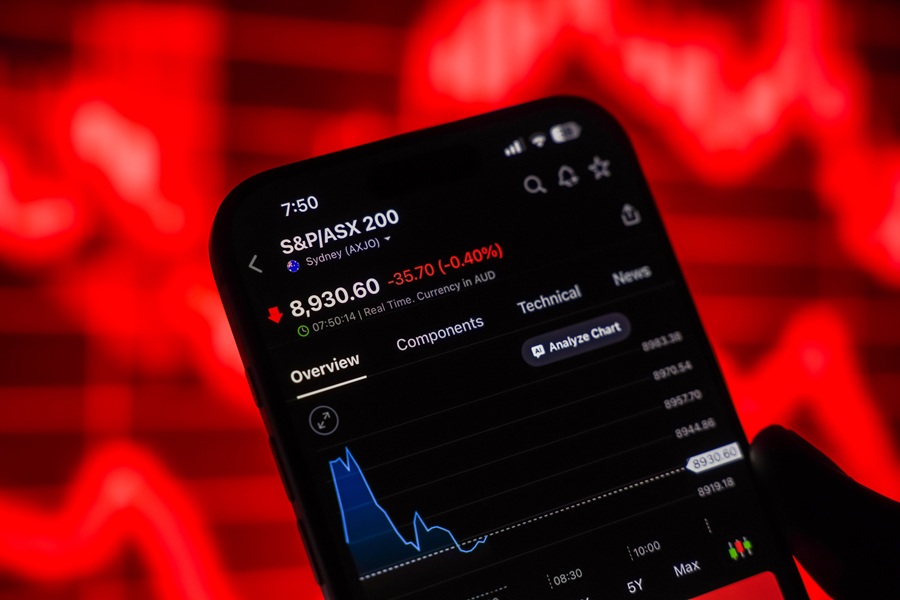
- ASX 200: Domestic cyclicals can react to the rates takeaway more than the headline jobs number. After the material-driven move back over 8800, this week will be key in determining whether a test of the psychologically important 9000 is on the cards.
- AUD/USD: Rate expectations can shift quickly. A stronger-than-expected jobs result could support the AUD, while a weaker print (or a rise in unemployment) could weigh on it.
Asia-Pacific calendar summary (AEDT)
- Mon 19 Jan: China GDP (Q4), industrial production and retail sales
- Tue 20 Jan: China Loan Prime Rate (1Y/5Y) (Jan)
- Thu 22 Jan: Australia employment (Dec); Japan trade statistics — first 20 days of Dec (provisional)
- Fri 23 Jan: BoJ rate decision and press conference; Japan CPI (Dec). PMI manufacturing in Australia and Japan.
Bottom line
Asia-Pacific markets enter the week with China’s growth data setting the regional tone, Japan facing heightened FX sensitivity into a BoJ meeting, and Australia focused on labour-market signals alongside commodity price direction.
Chinese GDP and industrial production are a test of whether activity is stabilising, with implications for regional risk appetite, materials pricing and the AUD.
In Japan, any shift in BoJ communication could drive USD/JPY volatility and spill into broader equity sentiment. For Australia, local employment data and external influences, particularly China and global risk conditions, are likely to shape short-term expectations across rates, equities and currency markets.


Markets are navigating a familiar mix of macro and event risk with China growth signals, US inflation updates, central-bank guidance and earnings that will help confirm whether the growth narrative is broadening or narrowing.
At a glance
- China: Q4 GDP + December activity + PBOC decision
- US: PCE inflation (date per current BEA schedule)
- Japan: BOJ decision (JPY/carry sensitivity)
- Earnings: tech, industrials, energy, materials in focus
- Gold: near record highs (yields/USD/geopolitics watch)
Geopolitics remain fluid. Any escalation could shift risk sentiment quickly and produce price action that diverges from current baselines.
China
- China Q4 GDP: Monday, 19 January at 1:00 pm (AEDT)
- Retail sales: Monday, 19 January at 1:00 pm (AEDT)
- PBOC policy decision: Monday, 19 January at 12.30 pm (AEDT)
China’s Q4 GDP and December activity data, together with the PBOC decision, will shape expectations for China's growth momentum and the durability of policy support.
Market impact
- Commodity-linked FX: AUD and NZD may react if growth expectations or the policy tone shifts.
- Equities: The Shanghai Composite, Hang Seng and ASX 200 could respond to any change in how investors view demand and stimulus traction.
- Commodities: Industrial metals and oil may move on any reassessment of China-linked demand.
US
- PCE Inflation: Friday, 23 January at 2:00 am (AEDT)
- PSI: Friday, 23 January at 2:00 am (AEDT)
- S&P Flash (PMI): Saturday, 24 January at 1:45 am (AEDT)
- Netflix: Tuesday, 20 January 2026 at 8:00 am (AEDT)
The personal consumption expenditures (PCE) price index is the Federal Reserve’s preferred inflation gauge and a key input for rate expectations and (by extension) Treasury yields, the USD, and growth stocks. Markets are likely to focus on whether the reading changes the inflation path that is currently priced, rather than simply matching consensus.
Market impact
- USD: May move if rate expectations shift, particularly against JPY and EUR.
- US equities: Growth and small caps, including the Nasdaq and Russell 2000, may be sensitive if the data or interpretation challenge the current rate outlook.
- Gold futures: May be influenced indirectly via moves in Treasury yields and the USD.
Japan
Key reports
- Inflation: Friday, 23 January at 10:30 am (AEDT)
- Bank of Japan (BoJ) Interest Rate Meeting: Friday, 23 January at ~2:00 pm (AEDT)
Markets will focus on what the BOJ signals about inflation, wages and the policy path. A shift in tone can move JPY quickly and flow through to broader risk via carry positioning.
Market impact:
- JPY/USD pairs and crosses: Pairs are sensitive to any guidance change and the USD/JPY has broken above 158, but the move could reverse if the BOJ strikes a more hawkish tone.
- Japan equities and global sentiment: Could react if the dynamics shift.
- Broader risk assets: May be influenced via moves in the USD and volatility conditions.
US earnings
- Netflix: Tuesday, 20 January 2026 at 8:00 am (AEDT)
- Johnson & Johnson: Wednesday, 21 January at 10:20 pm (AEDT)
- Intel Corporation: Thursday, 22 January at 8:00 am (AEDT)
A busy week of US earnings is expected with large-cap names across multiple sectors reporting. Early results and, importantly, forward guidance may help clarify whether growth is broadening or becoming more selective.
With the S&P 500 close to the psychological 7,000 level, earnings could be a catalyst for a fresh test of highs or a pullback if guidance disappoints.
Market impact
- Upside scenario: Results that exceed expectations and are supported by steady guidance could support sector and broader market sentiment.
- Downside scenario: Cautious guidance, particularly on margins and capex, could weigh on individual names and spill into broader indices if it becomes a repeated message.
- Read-through: Early reporters in each sector may influence expectations for related stocks, especially where peers have not yet provided updated guidance.
- Bottom line: This is a week where the market may trade the forward picture more than the rear-view numbers. The key is whether guidance supports the idea of broad, durable growth, or whether it points to a more selective backdrop as 2026 unfolds.
Gold
Continued strength in gold may support gold equities and gold-linked ETFs relative to the broader market but geopolitical developments and policy uncertainty may influence demand for defensive assets.
A sustained reversal in gold could be interpreted by some market participants as a sign of improved risk confidence. The driver set matters, especially whether the move is led by yields, USD strength, or a fade in event risk.


The Australian Securities Exchange (ASX) is one of the world's top 20 exchanges, hosting over 2,000 listed companies worth approximately $2 trillion.
Quick Facts:
- The ASX operates as Australia's primary stock exchange, combining market trading, clearinghouse operations, and trade and payment settlement.
- It represents roughly 80% of the Australian equity market value through its flagship ASX 200 index.
- 2,000+ companies and 300+ ETFs are listed on the exchange, spanning from mining giants to tech innovators.
How does the ASX work?
The ASX combines three critical functions in one system.
As a market operator, it provides the electronic platform where buyers and sellers meet. Trading occurs through a sophisticated computer system that matches orders in milliseconds, replacing the traditional floor-based trading that once defined stock exchanges globally.
The exchange also acts as a clearinghouse, ensuring trades settle correctly. When you buy shares, the ASX guarantees the transaction completes, managing the transfer of securities and funds between parties.
Finally, it serves as a payments facilitator, processing the money flows that accompany each trade. This integrated approach reduces settlement risk and keeps the market running smoothly.
What are ASX trading hours?
The ASX operates from 10:00am to 4:00pm Sydney time (AEST/AEDT) on business days, with a pre-open phase from 7:00am.
Stocks open alphabetically in staggered intervals starting at 10:00am, followed by continuous trading until the closing auction at 4:00pm.
The exchange observes Australian public holidays and adjusts for daylight saving time between October and April, which can affect coordination with international markets.
Top ASX Indices
S&P/ASX 200
This is the exchange's flagship index. It tracks the 200 largest companies by market capitalisation and represents approximately 80% of Australia's equity market.
It serves as the primary benchmark for most investors and fund managers and is rebalanced quarterly to ensure it reflects the current market leaders.
All Ordinaries Index
Commonly called the All Ords, this index covers the top 500 companies on the ASX.
It provides broader market exposure than the S&P/ASX 200, capturing roughly 80-90% of total market value.
The 11 ASX sectors
The ASX also breaks down into 11 sector-specific indices, allowing investors to track performance in areas like financials, materials, healthcare, and technology.
These indices can help identify which parts of the Australian economy are strengthening or weakening.

- Financials dominates as the largest sector, driven by Commonwealth Bank, NAB, Westpac, and ANZ. These banking giants provide lending, wealth management, and insurance services across Australia.
- Materials ranks second, led by mining powerhouses BHP and Rio Tinto. This sector extracts and processes resources, including iron ore, coal, copper, and gold.
- Consumer Discretionary includes retailers, media companies, and hospitality groups that benefit when household spending rises.
- Industrials encompasses construction firms, airlines, and professional services businesses.
- Healthcare features companies like CSL, a global biotech leader, and Cochlear, which produces hearing implants.
- Real Estate features property developers and Real Estate Investment Trusts (REITs) that own and manage commercial and residential assets.
- Communication Services includes telecommunications providers like Telstra alongside media and entertainment companies.
- Energy tracks oil and gas producers (many renewable energy companies typically fall under utilities).
- Consumer Staples covers essential goods providers like supermarkets and food producers.
- Information Technology includes software developers and IT services firms.
- Utilities covers electricity, gas, and water suppliers, including renewable energy.
Top ASX companies
Three companies consistently lead the S&P/ASX 200 by market capitalisation.
Commonwealth Bank (Mkt cap: A$259 bln)
Commonwealth Bank holds the top position on the ASX as Australia's biggest lender.
Founded in 1911 and fully privatised by 1996, CBA offers retail banking, business lending, wealth management, and insurance.
Its performance often signals the health of the domestic economy.
BHP Group (Mkt cap: A$241 bln)
BHP Group stands as the world's largest mining company.
Its diversified portfolio spans iron ore, copper, coal, and nickel operations globally.
It serves as a bellwether for Australian commodity markets.
CSL Limited (Mkt cap: A$182 bln)
CSL Limited leads the Australian healthcare sector as a global biotech firm.
Established in 1916, CSL develops treatments for rare diseases and manufactures influenza vaccines.
The company demonstrates Australian innovation competing on the world stage.
The ASX's role in Australia's economy
The ASX serves as a vital mechanism for capital formation in Australia. It tends to provide price signals that reflect market expectations.
When share prices rise, it suggests optimism about economic conditions. Falling markets may indicate concerns about future growth.
Australian companies raise funds through initial public offerings and follow-on share sales on the ASX, using proceeds to expand operations, fund research, or pay down debt.
Investors in these shares benefit from potential capital gains and dividend income. Many Australians build retirement savings through superannuation funds that invest heavily in ASX-listed companies.
Employment in financial services also depends partly on a healthy stock market. Brokers, analysts, fund managers, and supporting roles exist because of active capital markets.
Key takeaways
The ASX functions as a market operator, clearinghouse, and payments facilitator, providing the infrastructure that enables capital formation and supports retirement savings for millions of Australians.
Its flagship index, the S&P/ASX 200, tracks the 200 largest companies and captures about 80% of market capitalisation, while the All Ordinaries index covers the top 500.
Financials and Materials dominate the exchange, led by Commonwealth Bank, BHP, and CSL, reflecting Australia's strength in banking and resources.
You can trade the S&P/ASX 200 Index CFD and over 230 ASX Share CFDs on GO Markets.


US earnings season is where the market gets its cleanest burst of new information. For Australians, it usually lands while the country is asleep. This is not just “US company news”. It is the scoreboard for the Nasdaq, the S&P 500, and risk appetite more broadly, with spillover into SPI futures, the AUD, and sector mood at the ASX open.
What this guide covers
- The four-wave rhythm (why volatility clusters in predictable months)
- The order of play (banks → tech → retailers) and what each group tends to reveal
- Before market open (BMO) vs after market close (AMC)
- The few lines markets care about (surprise vs expectations, and the forward reset)
- How earnings information can flow through to Australia via futures, FX, and sector sentiment
US earnings season basics
Earnings season is the 4 to 6-week window after each quarter when most US-listed companies report a new set of numbers and a new story.
Calendar rhythm and clustering
Earnings does not arrive as a smooth drip. It typically arrives in four recurring waves. Most US reporting clusters around January, April, July, and October. Each wave covers the prior quarter, which is why markets spend the lead-up period building expectations, then reprice quickly as numbers and guidance hit.
The sequence is familiar: banks open, tech dominates the middle, retailers close. That order matters because each group updates a different part of the macro story. If you only track one set of reports, make it the Magnificent 7 — here’s the Mag 7 earnings calendar for 2026 (Aussie-friendly timing)
.png)
Time zones: the two windows
For Australians, the key is when the first move hits.
- AMC (after market close): often Sydney and Melbourne morning, sometimes near the ASX open
- BMO (before market open): often late night, with the initial reaction while Australia sleeps
Daylight saving shifts timings, but the structure is consistent: two windows, two different liquidity conditions.
How the market digests an earnings event
Earnings is rarely a single reaction. It is a sequence.
- Headline release (EPS and revenue versus consensus)
- Immediate price discovery (often in after-hours or pre-market liquidity)
- Call and Q&A (guidance, margins, and demand tone get tested)
- Next US cash session (follow-through, reversals, broader positioning)
- Australia opens into the aftershock (futures, FX, and sector mood already set)
Translation: volatility often clusters around reporting windows because the calendar can concentrate new information and repricing.
Expectations: the scoreboard the market uses
Markets do not price “good” or “bad” in isolation. They price the gap versus expectations, then adjust the forward story. That is why the same quarter can look strong on paper and still disappoint if it lands below what the market had already baked in.
Most headlines boil down to three checks. First, actual results versus consensus. Second, actual results versus what the company previously guided. Third, quality and durability. That tends to show up in margins, the mix across segments, and whether cash flow backs up the earnings number.
Guidance: the forward reset
Guidance is where the narrative can change without the quarter changing. A company can deliver the past cleanly, then move the goalposts for what comes next. That forward reset is often what drives the bigger repricing.
In practice, guidance usually lands in a few buckets. Revenue or EPS outlook sets the top-line and earnings path. Margin outlook tells you how confident management is about costs and pricing. Capex language signals how heavy the investment cycle is likely to be. Capital return talk, including buybacks, is a read on balance sheet posture and priorities.
Translation: markets trade forward narratives. Guidance is the mechanism.
The call: where tone becomes data
Prepared remarks are polished. The call is where the market stress-tests the story. The Q&A is where the edges show up, because that is where analysts push on the parts that matter and management has to answer in real time.
Listen for the tells. Demand language can shift from broad to patchy. Pricing can move from power to pressure. Margin confidence can sound steady or start to carry caveats. And the “we are not breaking that out” moments matter too. What management avoids can be as informative as what it highlights.
Key takeaways
- Earnings season clusters in four waves (January, April, July, October), so volatility often arrives in blocks.
- The sequence matters. Banks open the read on confidence, tech steers index tone, retailers often close the consumer chapter.
- From Australia, BMO and AMC are the two windows that shape what you wake up to.
- Markets trade surprise vs expectations, then the forward reset via guidance and call tone.
- The spillover typically shows up through futures, FX, and sector sentiment before the ASX open.
Glossary (quick definitions)
- EPS: earnings per share
- Consensus: the market’s compiled estimate set
- Guidance: management’s forward-looking outlook ranges/comments
- Margins: profitability as a percentage of revenue
- Capex: capital expenditure (investment spend)
- BMO/AMC: before market open / after market close (US reporting labels)
- After-hours / pre-market: trading sessions outside regular US cash hours
- Correlation: how tightly assets move together (often rises in macro or de-risking periods)


As geopolitical narratives continue to simmer, US and European markets move into the rest of the week with three dominant drivers: US inflation data, the start of US earnings season, and an unusual Fed-independence headline risk after the DOJ subpoenaed the Federal Reserve.
Quick facts:
- US consumer price index (CPI) and producer price index (PPI) are the key macro releases and are likely to impact the US dollar (USD) and other asset classes if there is a significant move from expectations.
- JPMorgan reports Tuesday, with other major US banks through the week, as the Q4 reporting season gets underway.
- Reporting around DOJ action involving the Fed, and Chair Powell’s prior testimony, created early market volatility on Monday, with markets sensitive to anything that may be perceived as undermining Fed independence.
- President Trump announced this morning that any country doing business with Iran will face a 25% tariff on all business with the US, effective immediately.
- Europe’s production and growth updates, including Eurozone industrial production and UK monthly GDP and trade data, are later in the week.
United States: CPI, Fed path, DOJ and Fed headline risk, and banks leading earnings
What to watch:
The US is carrying the highest event density in global data releases this week. CPI and PPI will both be watched for moves away from expectations.
Any meaningful surprise can shift Fed policy expectations. Markets are currently pricing a lower likelihood of a March rate cut (under 30%) than this time last week, based on fed funds futures probabilities tracked by CME FedWatch.
Bank earnings may set the tone for the reporting season as a whole. Forward guidance is likely to be as important as Q4 performance, with valuations thought to be high after another record close in the S&P 500 overnight.
Key releases and events:
- Tue 13 Jan (Wed am AEDT): CPI (Dec) (high sensitivity)
- Tue 13 Jan (Wed am AEDT): JPMorgan earnings before market open (high sensitivity for banks and risk tone)
- Wed to Thu: additional large-bank earnings cluster (high sensitivity for financials sentiment)
- Wed 14 Jan (Thu am AEDT): US PPI
- Thu 15 Jan (Fri am AEDT): US weekly unemployment
- Throughout the week: Fed member speeches
How markets may respond:
S&P 500 and US risk tone: US indices are near record levels. The S&P 500 closed at 6,977.27 on Monday. Hotter-than-expected inflation can pressure growth and small-cap equities in particular, and weigh on the market broadly. Softer inflation can support further risk-on behaviour.
USD: Inflation data is the obvious driver this week for the greenback, but any continuation of DOJ and Fed developments, or geopolitical escalation, may introduce additional USD influences.
With the USD testing the highest levels seen in a month, followed by some light selling yesterday, some volatility looks likely. Gold has also been bid as a potential safety trade and hit fresh highs in the latest session, suggesting demand for defensive exposure remains present.
Earnings (banks): In a market already priced near highs, results can still create volatility if they are not accompanied by supportive earnings per share (EPS), revenue and forward guidance. Financials will likely see the first-order response, but any early pattern in results and guidance can influence the broader market beyond the first few days.
UK and Eurozone: growth data influence amid continuing equity strength
What to watch:
In a week where Europe may be driven primarily by events in the US and geopolitical narrative, the Eurozone industrial production print is still a noteworthy local release.
In the UK, monthly GDP and trade numbers on Thursday may influence both the FTSE 100 and the pound, particularly if there is any meaningful surprise.
Key releases and events:
Eurozone
- Wed 14 Jan: Eurozone industrial production (Nov 2025) (medium sensitivity for cyclical sectors)
UK
- Thu 15 Jan: GDP monthly estimate (Nov 2025) (high sensitivity for GBP and UK rate expectations)
- Thu 15 Jan: UK trade (Nov 2025) (low to medium sensitivity)
How markets may respond:
EUR spillover from the US: Despite light Eurozone data, the US response is likely to matter most this week, with the US dollar index a major driver of broader G10 FX direction.
DAX (DE40): Germany’s index is also trading at or near record levels and closed at 25,405 on Monday. (2) If the index is extended, it may react more to global rate moves and shifts in perceived risk.
FTSE 100 and GBP: The FTSE hit a new high in the overnight session, driven particularly by materials and mining stocks. (5) Any GDP surprise can re-price GBP and UK equities quickly in an environment where growth concerns persist.
US and Europe calendar summary (AEDT)
- Wed 14 Jan: US CPI, US bank earnings kick-off (notably JPMorgan)
- Wed 14 Jan: Eurozone industrial production (Nov 2025)
- Thu 15 Jan: UK monthly GDP (Nov 2025) and UK trade (Nov 2025), US bank earnings continue
- Fri 16 Jan: US weekly unemployment, US bank earnings continue
Bottom line
- If US CPI surprises higher, markets may lean toward higher-for-longer interest rate pricing, which can pressure equity multiples and lift rates volatility.
- If bank earnings are solid but guidance is cautious, equities can still see two-way swings given index levels near records and high valuations.
- If DOJ and Fed headlines escalate, they may override normal data reactions to some degree. That could increase demand for perceived safe havens such as gold and lift FX volatility.
- For Europe, Eurozone production (Wed) and UK GDP and trade (Thu) are the key local data. The region is still likely to trade primarily off US outcomes and broader risk sentiment.


Asia-Pacific markets start the week with sentiment shaped by China’s mid-week trade data, USDJPY (USD/JPY) as Japan’s key volatility channel, and offshore reporting influencing Australian equities. With a light domestic data calendar, global events may do most of the work on risk appetite.
Quick facts:
- China's mid-week trade data is the primary regional risk event, with imports monitored for signs of domestic demand stability.
- USD/JPY remains the key volatility channel, which may influence Nikkei performance.
- Australian equities lack major domestic catalysts, leaving the ASX and AUD direction sensitive to China outcomes, geopolitics and US bank earnings.
This week’s Asia-Pacific focus is less about local policy and more about the transmission channels that typically set the tone.
For China, trade data may shape the growth narrative.
For Japan, the USD/JPY direction may influence equity momentum.
For Australia, offshore earnings, commodities and geopolitics may dominate in the absence of major domestic catalysts.
China: Shanghai may be influenced by trade data
What to watch:
With mid-week Chinese trade data, markets may view the release as a gauge of whether policy support is translating into growth activity or slowing any downturn.
Key release:
- Wed 14 Jan: Trade balance, exports and imports (December) (high sensitivity)
How markets may respond:
Shanghai Composite: Stronger trade data could support sentiment, though the quality and perceived longevity of any improvement may matter. Weak imports would likely be read as continued softness in domestic demand.
Australia (resources and AUD): China trade and credit tone can feed directly into bulk commodity expectations and regional risk appetite, with potential flow-through to ASX miners and AUDUSD (AUD/USD).

Japan: FX sensitivity remains the key factor
What to watch:
With no major policy decision scheduled, and the producer price index (PPI) the main data point, Japan’s influence this week may run primarily through USD/JPY moves after US data releases, and broader geopolitical headlines, particularly as markets reopen after Monday’s public holiday.
Key releases:
- Wed 14 Jan: Preliminary machine tool orders, year on year (y/y) (low sensitivity)
- Thu 15 Jan: PPI (medium sensitivity)
How markets may respond:
USD/JPY: The pair ended last week around 158, near recent highs. Moves can be volatile; markets will watch whether the pair holds recent strength or retraces, particularly around prior trading ranges.
Nikkei 225: The index hit a record high early last week before a modest two-day pullback, then closed higher on Friday. Equity momentum, often closely tied to FX stability, may be influenced by the strength or otherwise of USD/JPY.
Australia: offshore drivers dominate in a lighter data week
What to watch:
In the absence of significant domestic data releases, Australian markets may be more exposed to external influences. The main themes are China trade data, geopolitics, commodity prices and the start of the US earnings season, with banks in focus.
Key releases:
- Tue 13 Jan: Westpac consumer sentiment (low sensitivity)
- Thu 15 Jan: Melbourne Institute (MI) inflation expectations (low sensitivity)
How markets may respond:
ASX 200: The index has been consolidating around the 8,700–8,800 area (approx.). Local financial stocks may react to inferences made from US bank earnings. Stocks such as Macquarie Group are typically more sensitive to global market conditions and activity in investment markets, often drawing comparisons with US peers such as JPMorgan Chase (JPM).
AUDUSD (AUD/USD): AUD/USD has pulled back after last week’s gains and is trading near recent highs. Technical commentary is mixed, and price action can change quickly around major offshore events.
Other Asia-Pacific events
South Korea is expecting an interest rate decision on Thursday. Any deviation from market expectations for no change (currently 2.5% per Trading Economics) could create a minor FX ripple in regional currency pairs.
Asia-Pacific calendar:
- Mon 12 Jan: Japan public holiday
- Tue 13 Jan: Australia consumer sentiment
- Wed 14 Jan: China trade balance, exports and imports
- Thu 15 Jan: Bank of Korea rate decision; Japan PPI; Australia inflation expectations
Bottom line
- If China trade and credit data stabilise, regional equities may move higher, with AUD and ASX resource stocks among the key sensitivity points.
- If USD/JPY extends higher, the Nikkei may remain supported near highs, though FX volatility risk may increase.
- If US bank earnings disappoint, ASX financials could face near-term pressure despite limited domestic data.
- Information is accurate as at 23:00 AEDT on 11 January 2026. Economic calendar events, charts and market price data are sourced from TradingView.